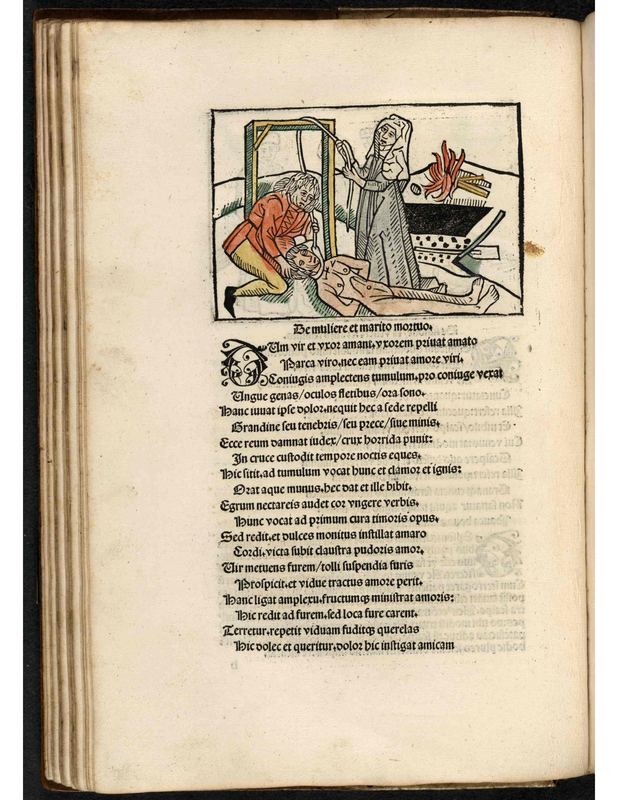
A naked women lies on the ground with her hands behind her back and a noose tied around her neck. A man appears to be untying the rope around her neck while another woman holds the opposite end of the rope. In the background there appears to be farmland and crops with a shovel and another unknown farming tool stuck in the ground.
Mr. Pitt Crawley introduces Miss Briggs, his aunt’s companion, to Lady Jane Sheepshanks, his betrothed, with a smug look on his face. Miss Briggs, on her way home from the library, is holding one of her books and has dropped two others. Lady Jane is half hidden behind Mr. Crawley, looking shy.
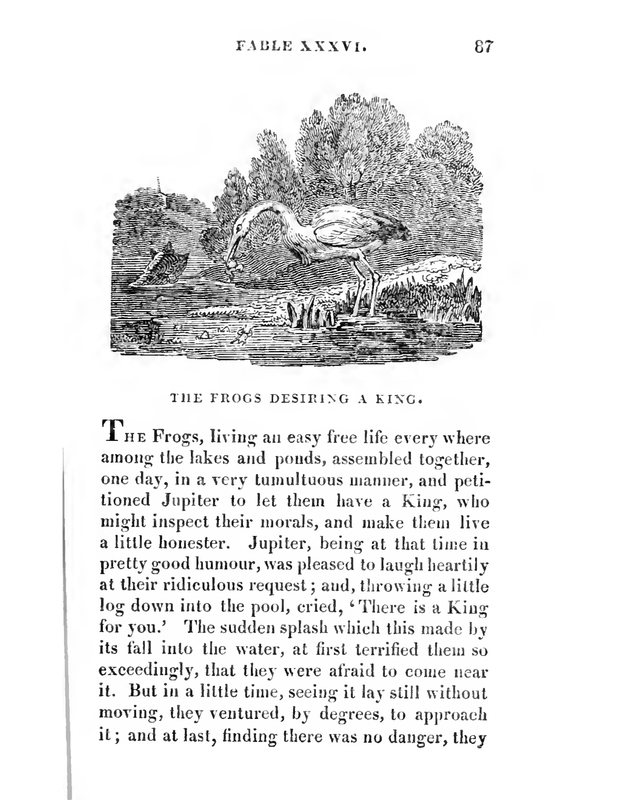
There is a bird (likely a heron) standing in a pond catching frogs. The bird has a frog in its mouth, and it is facing left. Directly behind the bird is a section of land that extends back and has large bushes on it. There are four more frogs below the bird as it bends down. Farther back in the water is the base of a tree sticking out of the water. In the far background is a hill covered with trees and a house partily sticking out from the trees.
Intending to go out to discover for himself whether the rumors of Napoleon’s victory are true, Joseph Sedley puts on his coat with help from Isidor, his valet. Jos is standing next to a chair over which another coat is draped, and on the wall behind Isidor hangs a large painting.
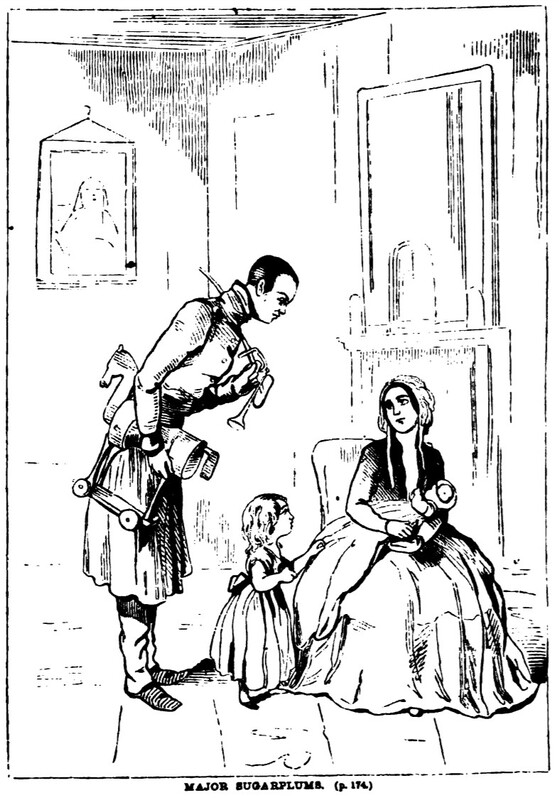
William Dobbin, carrying a toy sword, trumpet, and wooden horse on wheels, bows to Amelia Osborne. She is seated on a chair, holding her son Georgy, who is asleep. At her side is Mary Clapp, the landlord’s daughter, acting as the mistress of ceremonies to announce Dobbin. Below the illustration is printed its title and location in the story, “MAJOR SUGARPLUMS. (p. 174.)
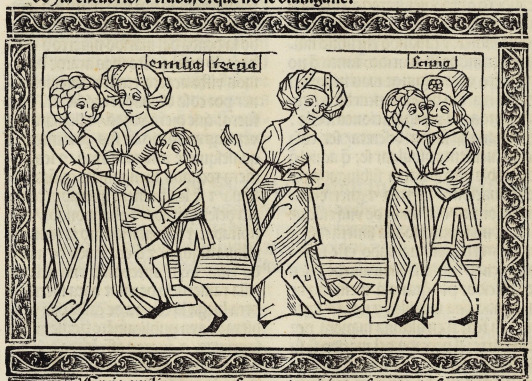
This engraving depicts Scipio Africanus, a Roman general, committing adultery with a young servant girl on the right side of the image. The name Scipio is engraved at the top to identify him. The woman in the centre of the engraving is his wife, Tertia Aemilia. She is depicted looking at her husband and his mistress as they commit adultery. Instead of confronting her husband about the affair, she devises a plan to get rid of the mistress. The left side of the engraving depicts Tertia Aemilia marrying the young servant girl off to a freedman. She does this so that no one finds out about the affair so that it does not ruin her reputation. Her name, written as “Emilia Tertia”, is engraved above her head to identify her. Boccaccio explains that he chose to write on Tertia Aemilia because the way she handled the affair and how she used her cunning was admirable.
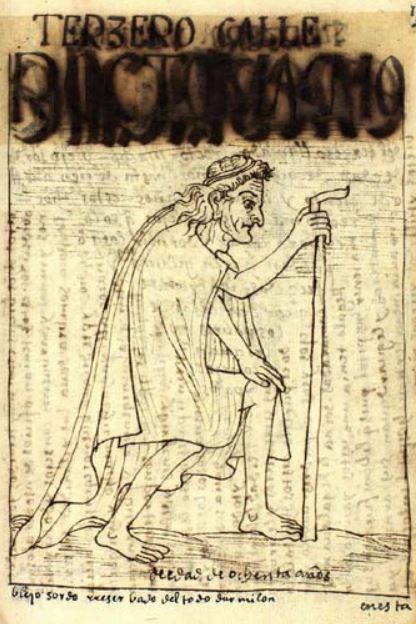
The author explains that there were ten paths for men to follow in the Inca Empire based on age division. This third path was called the rocto macho [deaf old men], which was for people who were ages eighty to around 150 years old. The author explains that this group of people were not capable of much except for eating and sleeping and were exempt from all military services. The old man depicted in the image is illustrated walking with a cane. The caption at the bottom of the image reads “de edad de ochenta años biejo sordo rreserbado del todo durmilon” which translates to “eighty years old, deaf old man exempt from service, sleeper.”
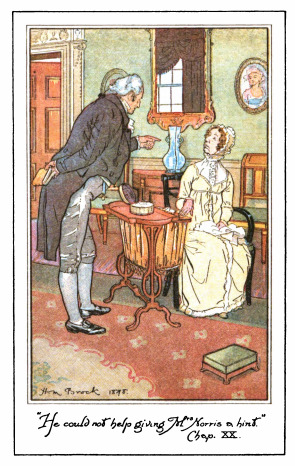
Here we see Sir Thomas Bertram reprimanding his sister-in-law, Mrs. Norris. While he was away in Antigua on business, Sir Thomas’ children, Tom, Edmund, Maria, and Julia, along with Mr. And Miss Crawford, Mr. Rushworth, and Mr. Yates, had decided to act out a production of the play, Lover’s Vows. Edmund had initially resisted, believing his father would not approve, but relented when Tom was going to ask more people to join the production. Not wanting anyone else involved, Edmund agreed to participate. Tom asked Fanny to join but she refused. Mrs. Norris encouraged this production, and upon returning home, Sir Thomas put an end to the play. He was disappointed that Mrs. Norris had encouraged it, believing that she would have convinced them otherwise, seen here. This scene occurs in chapter 20 as noted underneath the title of this image. The characters are shown in the traditional regency style. Mrs. Norris wears the regency style dress with an empire waist. Her hair is worn tied up, and she wears a mop cap. In her lap she holds her sewing project. Sir Thomas wears a waistcoat and tailcoat, and knickers that stop at the knee. The regency period dated to the early nineteenth century (1811-1820) when George, Prince of Wales, later George IV (r. 1820-1830), reigned as regent for his mentally ill father, King George III (r. 1760-1820). The regency period is associated with the rise of neoclassicism in art and fashion.
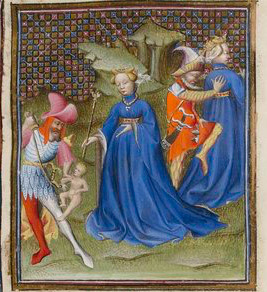
Athalia was a queen famous for her desperate desire for the throne. Her desire went so far that she had all the male descendants in the line of David killed, so that the throne would be hers. She didn’t know that her daughter saved her grandson, so after ruling for seven years, she one day found herself being removed from the throne so that he could rightfully rule. After many years of murder, Athalia found herself dying the same way that she had killed so many others. On the left side of the image, Athalia is seen dressed as a queen, having a male descendent killed with the help of a man. In the background and to the right, the image represents when Athalia was taken away from the throne, being escorted by by a man.
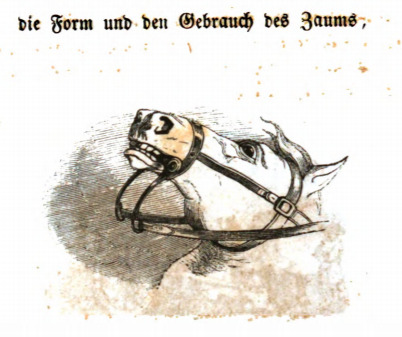
Here we see a horse with its bridle. The Houyhnhnms asks about the horses in Europe and how they live. Gulliver explains that humans or yahoos govern the country and care for the horses or Houyhnhnms, and how humans use their horses, including how humans use bridles on horses. The same image appears in the 1843 Krabbe edition.
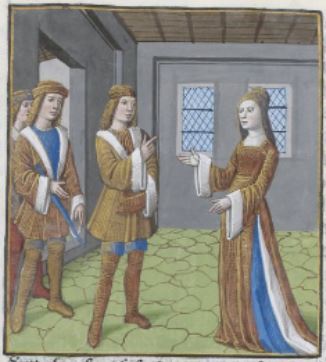
This image depicts Faustina Augusta on the right side of the image speaking with a group of three men on the left side of the image. There is no indication as to who these three men are. Faustina Augusta was the wife of Emperor Marcus Aurelius Antoninus and she was the first woman decreed by the Senate to be granted the title of Augusta. She was known for her beauty and for her infidelity to her husband, as she often engaged with other men, including gladiators.
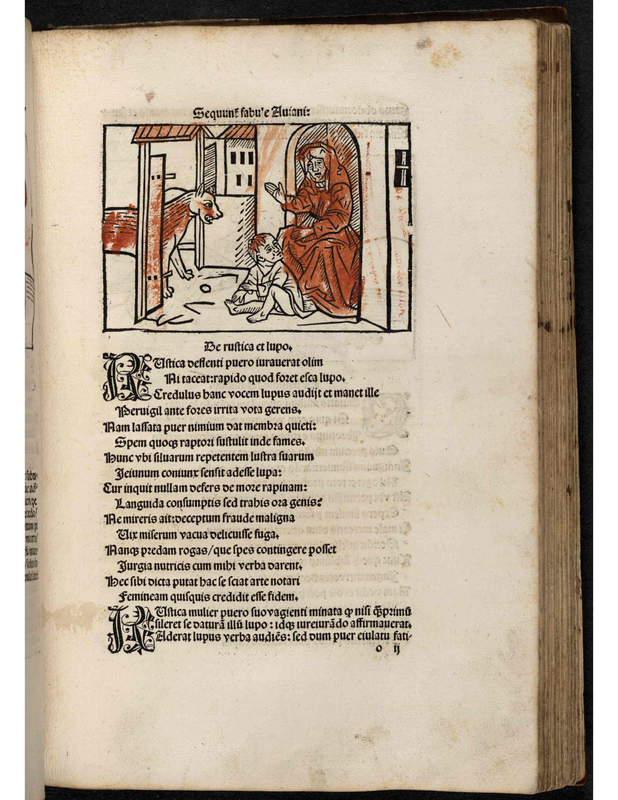
There is an illustration at the top of the page, and below this illustration is a body of text. In the illustration, a man is resting against a tree; another man is in front of him kneeling and holding his hands together towards the man resting against the tree. At the center of the illustration a naked woman can be seen holding a stick through a window what seems to be made of leaves.
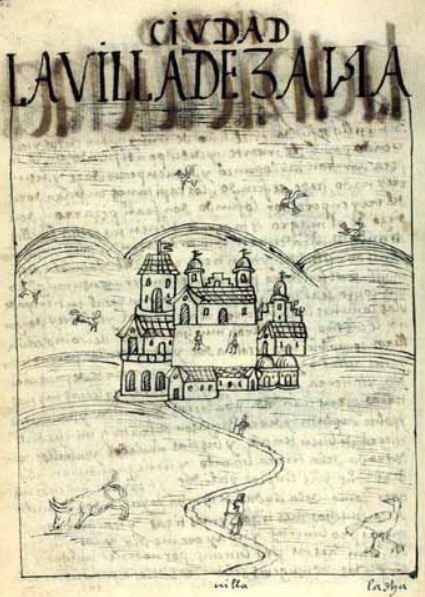
This image is depicted in the author’s chapter where he discusses cities, towns, villages, and provinces in colonial South America. This image depicts the small town of Zaña, Peru. There is a small cluster of buildings which forms a square in the centre of the town. There are two soldiers holding spears walking in the town square. There is a long path outside of the city that leads in and out of the town walls. There are two soldiers depicted walking along the path. There are birds flying above the town and other animals such as dogs and cattle roaming in the open area outside the town. The author describes this town to be full of good, charitable Christians who loved one another. He also explained that they did not have much wealth in silver, gold, or fruit. The caption at the bottom of the image reads, “uilla” [town].
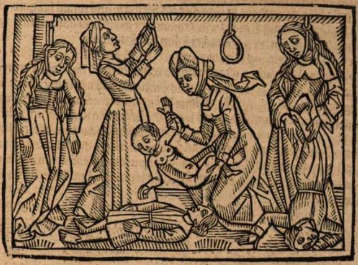
This engraving depicts the wives of the Cimbrians (a northern tribe) killing their children and hanging themselves. After their husbands were defeated in war against the Romans, the wives pleaded to their enemies for mercy and to let them become vestal virgins. When the Romans denied their request, they decided to kill their own children and hang themselves to save their virtue and to not die at the hands of their enemies. Some women in the image are depicted with the nooses around their necks, and one woman is depicted killing her child before killing herself.
A jester dressed in a checkered suit with a large ruff, holding his hat in his hand, bows deeply to a man in military uniform. A window, through which the heads of two soldiers can be seen, forms the letter O from “Our”.
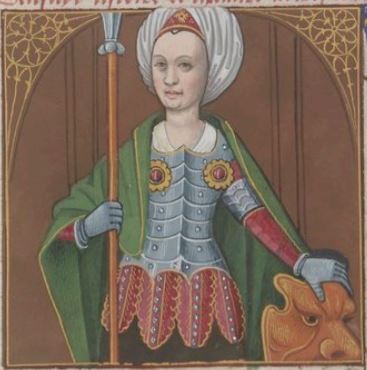
This illumination depicts a portrait of Thamyris, the queen of Scythia. She was renowned for her nobility and capabilities of ruling a nomadic tribe. She is illustrated wearing armour in the image as she was very strategic in war. Boccaccio explains that King Cyrus of Asia Minor had invaded Scythia looking for glory, and when he had killed Thamyris’ son, she exacted her revenge by killing his entire army. When Thamyris found Cyrus’ dead body, she took his head for revenge.
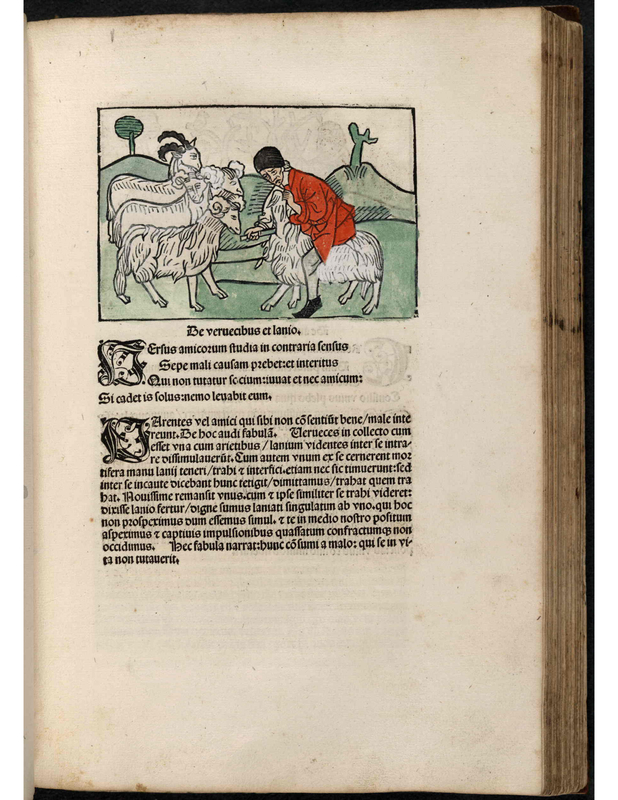
A man kills a sheep with a knife by cutting its throat, four other stand close by and watch. In the distance there two trees, one with leaves and one with no leaves.
Here Miss Ingram plays piano for the crowd at Thornfield. She was a talented pianist and asked Mr. Rochester to sing with her. Miss Ingram complains about his reluctance to perform. Mr. Rochester invited a party to Thornfield for several weeks, including Miss Ingram and her sister and mother, among other mutual friends.
Here we see a bust of Charles V. This image appears when Gulliver describes the language of the Houyhnhnms. Gulliver describes the language as something similar to Dutch or German but is more delicate or expressive. Charles V allegedly said that he spoke to his horse in German, insulting the language. Charles V was the Holy Roman Emperor between 1519-1556. He was also Archduke of Austria, King of Germany, Archduke of Austria, King of Italy, Lord of the Netherlands, and King of Spain. The same image appears in the 1843 Krabbe edition.
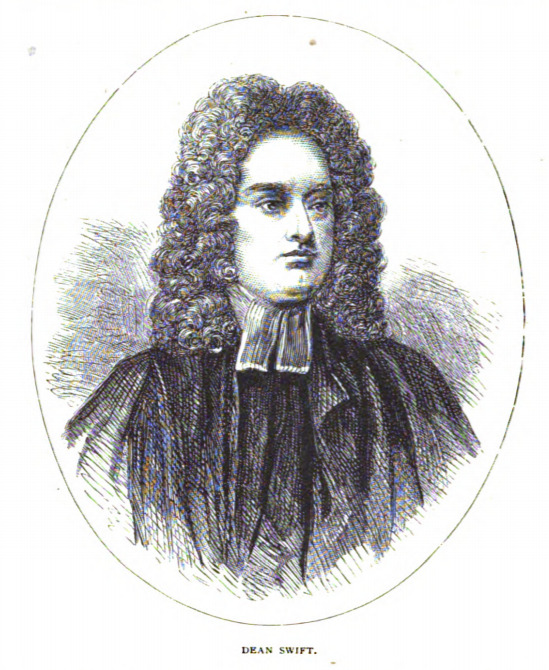
Here we see a portrait of Jonathan Swift. Swift worked as the dean of St Patrick’s Cathedral in Dublin and is shown here in his clerical attire. This image appears as part of the biography of Jonathan Swift.
On the left side of this illustration, we see a male figure and a female figure off by themselves, the latter of which is wearing a robe. These two figures likely denotes the scene in which Calisto and Melibea meet in Melibea’s garden. To the right, we see a female figure wearing a robe and a veil. She is interacting with a group of four male figures. This scene has no apparent relation to the events portrayed in Act XIX.[This illustration is identical to those found in Acts I (folio 9r), VII (folio 52v), IX (folio 67r), XI (folio 80r), XII (folio 83v), XIV (folio 96v), and XVI (folio 106v).]

![[Miss Briggs Meets Lady Jane]](https://collections.cemvc.ca/files/large/de34f5592b56a3c7c90a25037703e7b1d8ccb0b4.jpg)
![[Joseph Putting on his Coat]](https://collections.cemvc.ca/files/large/68c93a0aff02e6c86dd3cf8e2607c44962d9e3e7.jpg)

![Vita et Fabulae [A man prays in front of a man resting against a tree while a naked woman at the center observes]](https://collections.cemvc.ca/files/large/31f6881ec4d6a9cb607342fdf393f8b5f050471d.jpg)
![[Vanity Fair Volume I. Chapter XVIII Inhabited Initial, O]](https://collections.cemvc.ca/files/large/f0fdd5e185625d82f753a41e39049627c0bd94cd.jpg)


![[bust of Charles V]](https://collections.cemvc.ca/files/large/18affd103827c97a3a8d5f2fe11d1f2f63c7b1d6.jpg)

![[Act XIX]](https://collections.cemvc.ca/files/large/74050820b0b8b07efc3e822b680fd5624ba5026f.jpg)