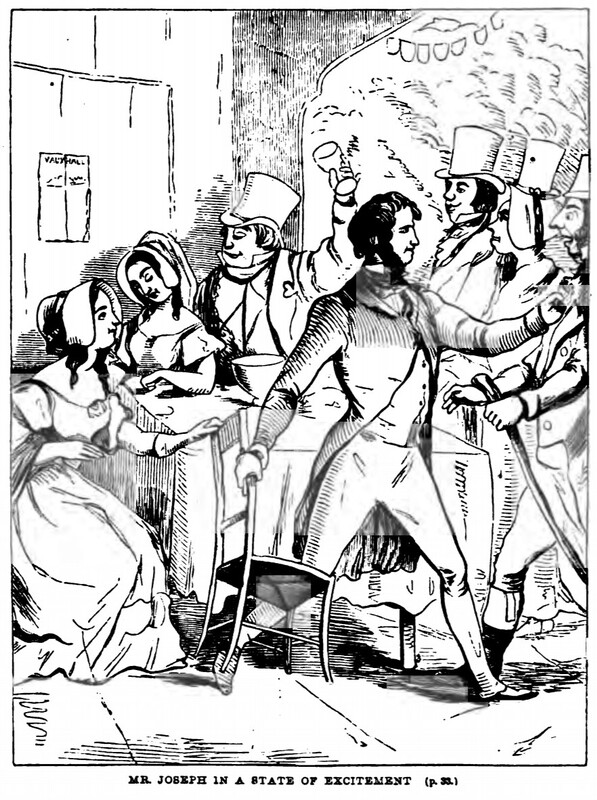
In the center of the image is Joseph Sedley, waving his cup around and singing. On the table before him is the bowl of alcohol of which he has drunk all by himself. Amelia Sedley and Rebecca Sharp are seated at the table to the left of the image, with Rebecca gazing down at Amelia. To the right is George Osborne, holding onto his chair and facing a crowd of onlookers, the nearest of which he is blocking from coming closer. Below the illustration is printed its title and location in the story, MR. JOSEPH IN A STATE OF EXCITEMENT (p. 33).
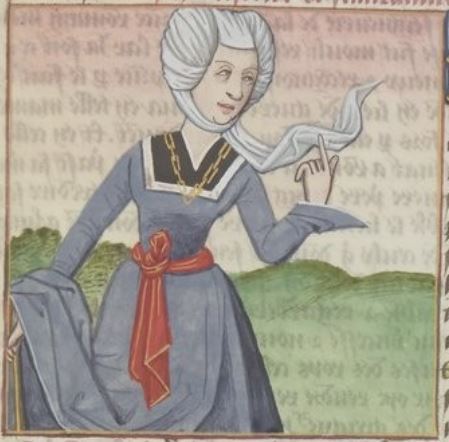
This image depicts Cornificia, sister of the poet Cornificius, sitting down while writing on parchment with a quill. Boccaccio explains that Cornificia was incredibly skilled at writing Heliconian verses and wrote many epigrams which made her renown. She is praised for putting aside womanly concerns and duties and becoming skilled in an art that so few women were able to do.
A man with long hair is laying on the ground with his back arched against something. A cloth is resting on him, exposing his stomach and legs. Beside him is a large tree and some flowers.
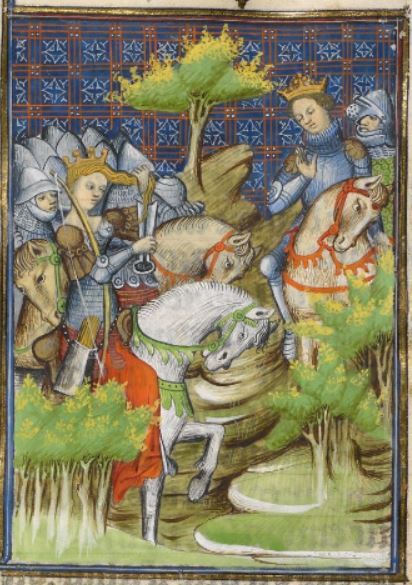
This illumination depicts Hypsicratea, the wife of King Mithridates VI of Pontus, riding horseback on the left side of the image. Mithridates is depicted on the right side of the image, also riding a horse. There are many soldiers depicted behind Hypsicratea. Boccaccio explains that Hypsicratea is praiseworthy as she bravely risked her life as she regularly followed her husband on his military expeditions, which is why she is illustrated riding horseback with soldiers surrounding her in this image. She is illustrated with long blond hair to be differentiated from the male soldiers.
This illumination depicts Soaemias, a woman from Emesa and the mother of Emperor Elagabalus. Despite being a prostitute who was known to have slept with many men, Soaemias was risen to a much higher respect by being the emperor’s mother and she was called Augusta. She was treated like royalty, which is shocking treatment for a woman who was prostitute.
Here we see Lilliputian guards at the harbour of Lilliput. They wear full armor and look through telescopes across the water. Several guards hold spears, ready to defend in case of attack. This image appears at the end of the fifth chapter.
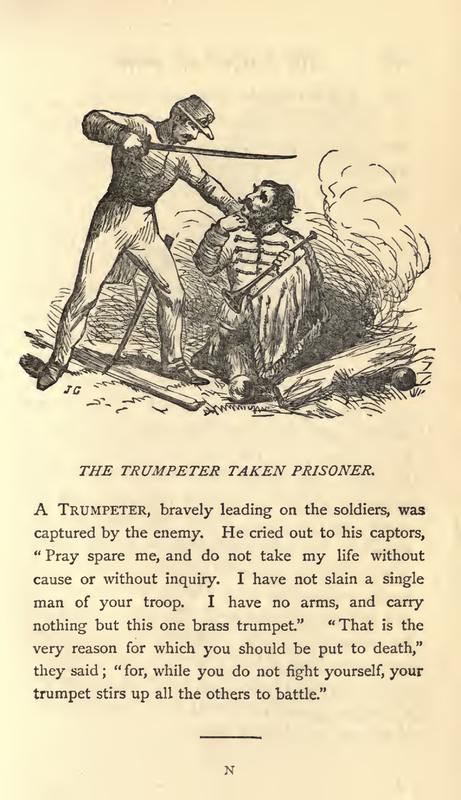
There are two man in this picture. One man was holding the other man and sword. The other man who was holding trumpet, didn’t do anything and let the sword man hold him
Mr. Chopper, Mr. John Osborne’s clerk, has dressed in his best suit and frilled shirt to meet his client. He is putting on his gloves and has an umbrella tucked under one arm. Beside him, his wife is smiling with her arms folded, and one of his daughters looks up at him eagerly with her hands behind her back. Another one of his children can be seen peeking around the corner.
A group of Tupinambá men return by canoe to their village. They have four male captives who are tied together with rope around their thighs and wrists. Presumably the scenes of cannibalism depict the fate of the captives. To the right a man kneels on the ground with both arms outstretched while two other men stand behind him: one with a club raised above his head poised to swing and the other with an arrow nocked and aimed at the kneeling man. Behind them a human torso lays on the ground, having had its limbs and head removed. In the background (center) and to the left there are two fires with wooden frames set over them; human limbs have been set on the frames to roast over the fire.
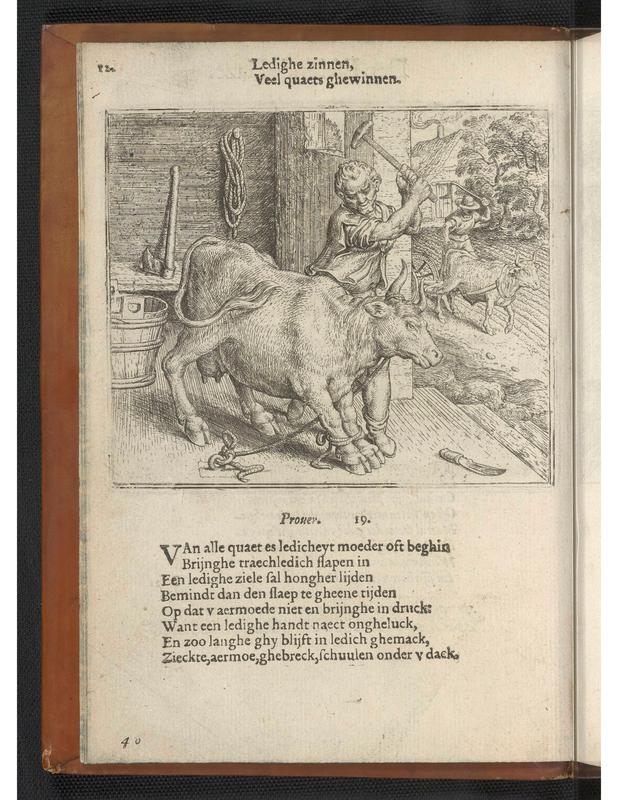
Two men and two bulls on a farm. In a barn, the first man swings a mallet over his head as a tied-up bull braces itself. A knife lies at the foot of the bull and an axe rests against the wall of the barn. The second man, to the back right of the image, raises a stick over his head as another bull pulls a cart.
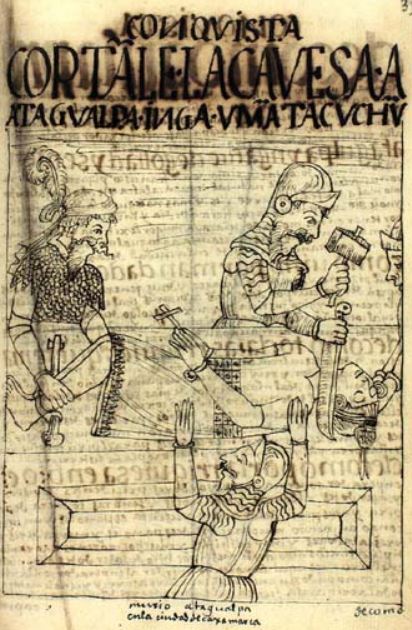
This chapter focuses on discussing the arrival of Spaniards and the Spanish conquest of Peru. This image depicts the conquistadors decapitating the emperor of the Inca Empire, Atawalpa Inca. The conquistadors had the emperor imprisoned and then stole all the gold and silver they could take. Don Francisco Pizarro, a leading conquistador in the Peruvian conquest, ordered that the Inca Emperor be beheaded. There are three unidentified soldiers illustrated in the image aiding in the beheading of the Inca, with a fourth person slightly visible on the far-right side of the image. There is one soldier holding the feet of the Inca down, and another holding the torso down. The soldier decapitating the Inca is using a sword and hammer. The caption at the bottom of the image reads, murio atagualpa, en la cuidad de caxamarca [Atawalpa died in the city of Cajamarca]
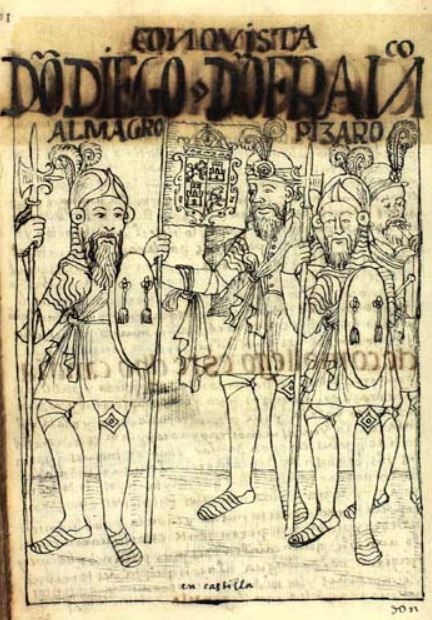
This chapter focuses on discussing the arrival of Spaniards and the Spanish conquest of Peru. This image depicts conquistador Don Diego Almagro on the left side of the image and conquistador Don Francisco Pizarro on the right side of the image with two soldiers standing behind him. They are all depicted in full armor and one of the soldiers is depicted holding the flag of Castile. The author explains that these soldiers were eager to voyage to the Indies in the hopes of finding the abundance of gold and silver. The caption at the bottom of the image reads en Castilla [in Castile] to identify the location.
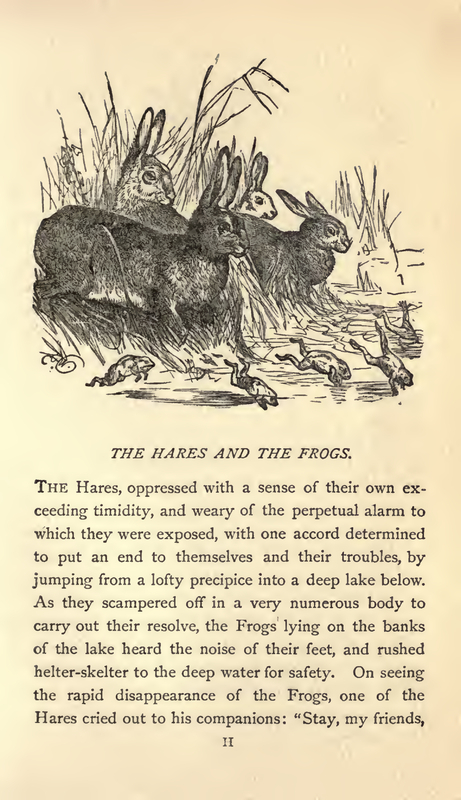
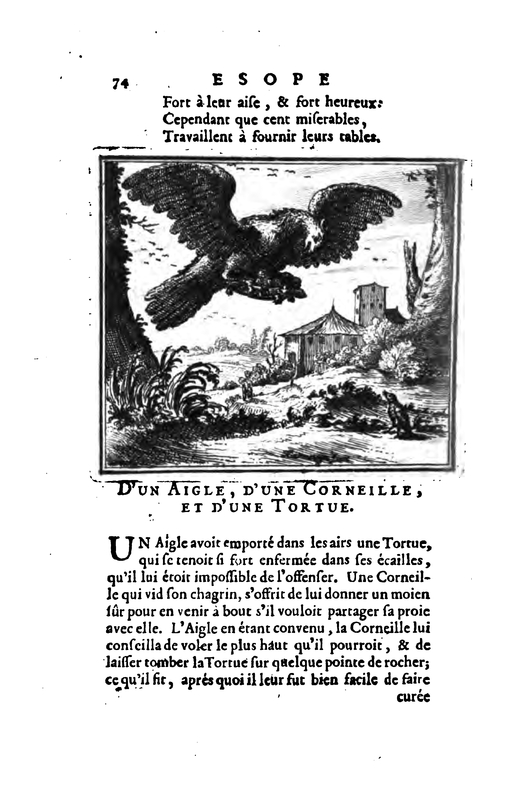
The image depicts an eagle in flight carrying a tortoise. There is a crow on the ground who advises the eagle to drop the tortoise from a great height to break the shell to get to the meat. In the background there is a building, trees, and a flock of birds.
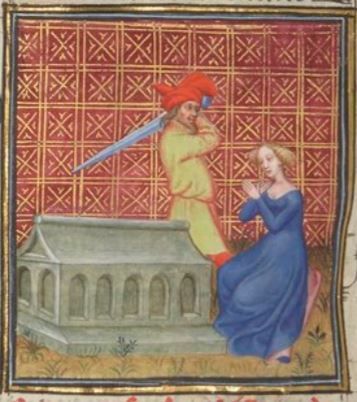
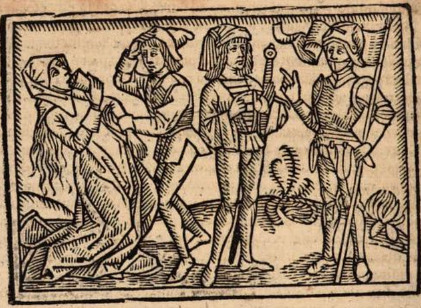
This illumination depicts Polyxena, the daughter of king Priam of Troy, getting executed in front of Achilles’ tomb. Polyxena is illustrated kneeling with her hands crossed while looking down to the ground as she accepts her fate. The man executing Polyxena is Neoptolemus, the son of Achilles. Polyxena had lured Achilles into the temple of Apollo, where Paris shot and killed Achilles with his arrow. Neoptolemus is the person executing her as she is the one who is partly responsible for killing his father. Boccaccio explains that he wrote on Polyxena due to her fearlessness before her execution.
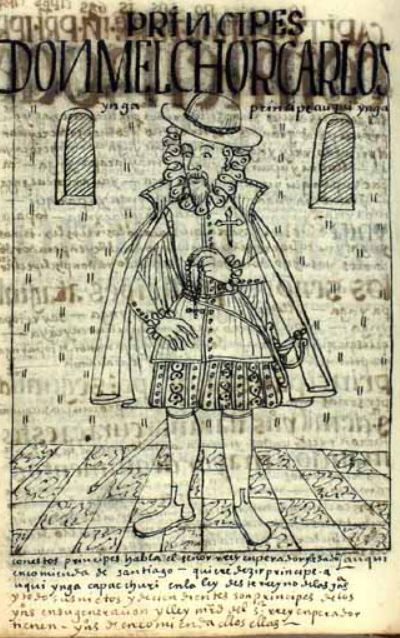
This image is illustrated in a chapter that discusses the descendants of the Inca and Andean nobles under Spanish colonial rule in Peru and their importance to a revived Andean society. This image depicts a standing portrait of Don Carlos Inca, a descendent of Huayna Capac, an Inca ruler. He is dressed in Spanish clothing as opposed to indigenous traditional garb. The large caption at the bottom of the image reads, con estos principes habla el senor rrey enperador y le da don, encomienda de Santiago - quiere dezir principe auqui ynga, capac churi en la lay deste rreyno de las yndias. Y todos sus nietos y deciendientes son principes de los yndios en su generacion y lley merced del senor rrey enperador, tienen yndios de encomienda ellos ellas [with the prince, the king speaks to him and gifts him the commission of Santiago. It means that he is prince, son of the powerful in the law of this kingdom of the Indies. All of his grandsons and descendants are princes of the Indians in his generation and they are at the mercy of the king. He has entrusted the Indians.]
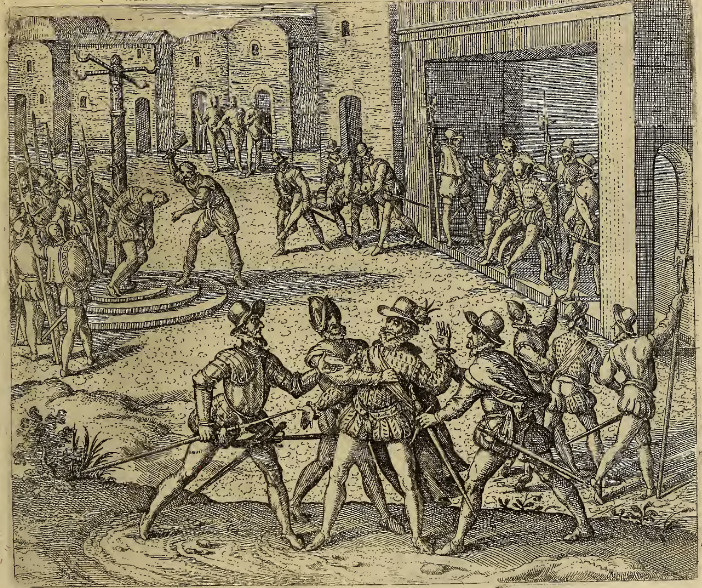
This storied image shows the imprisonment and execution of Diego de Almagro in Cuzco, at the hands of Spaniards loyal to Francisco Pizarro. In the foreground, Diego de Almagro is seized by three Spanish soldiers. He is escorted towards a building used as a prison on the right. Inside the prison, de Almagro is strangled using a rope tied to a wooden pole while three Spanish soldiers watch. His body is then carried to the left into the public square, where he is tied to a post and beheaded with a hatchet in front of an audience. Three Inca men watch the proceedings from the background. This image is identical to one found on page 14 (137) of Frankfurt, 1596.
Masinissa, the king of Numidia, is depicted on the right side of the engraving speaking with a man named Laelius. Laelius is depicted pointing at Masinissa as he reproaches him for marrying a captive of the Romans. Not able to disobey Laelius, Masinissa ordered a servant to give Sophonisba, his wife, a cup of diluted poison. Sophonisba is depicted on the left side of the engraving willingly drinking the poison. The servant in front of Sophonisba looks astonished at how willingly she drank the poison.
Gulliver leaves Balnibarbi and arrives at the port of Maldonada on Balnibarbi hoping to take a ship to Luggnagg, then to Japan. He hired a guide and two mules to show him from Lagado to Maldonada and carry his baggage, seen in this image where Gulliver pays a man for his services and the use of his mules. The same image appears in the 1839 Krabbe edition.
This illustration depicts the Minyans (companions to Jason of the Argonauts) being saved from their prison cells through the help of their wives. The Minyans were condemned to death due to their negligence of lower-class citizens. While visiting their husbands in prison, the women swapped clothing with the men to take their places. The men left the prison dressed as women and were saved, while their wives accepted their husband’s fates for them. This illustration depicts the women changing into their husband’s clothes and their husband’s putting on the women’s clothing.
This illuminated depicts Athaliah, queen of Jerusalem, sitting on a throne while holding a scepter and touching the arm of a guard. The guard is looking at the queen and holding onto a lance with his left hand and the handle of his sword with his right. Boccaccio explains that Athaliah’s father was the king of Israel, and her husband was the king of Jerusalem. When her husband died, and her son (who succeeded his father) died, she seized power and slaughtered the descendants of David to avoid anyone taking her power and throne. This image depicts Athaliah giving orders to her guard to slaughter her relatives.


![[The Belly and the Members]](https://collections.cemvc.ca/files/large/b4617c9749b3c95b325cb4706d474ae754d9277c.jpg)
![[Guards at the Harbour of Lilliput]](https://collections.cemvc.ca/files/large/6e3eb5367f3be185b8dfc4a5a441fcde9c7d6f1b.jpg)
![[Mr. Chopper in His Best Suit]](https://collections.cemvc.ca/files/large/85f36a4133679c89857d85c20454ed8cdd4e8255.jpg)
![[The Tupinambá return to their village with prisoners]](https://collections.cemvc.ca/files/large/5c19a2e89a57ae3b95131d2089e27bb244a153d5.jpg)
![[A guide and two mules to show Gulliver Maldonada]](https://collections.cemvc.ca/files/large/9934e4f5dcdbf883dcc358a533e87a91bcf029e8.jpg)
![[The Wives of the Minyans Save Their Husbands from Execution]](https://collections.cemvc.ca/files/large/cc0a6cb3ac382677790250a12676324e86cce652.jpg)