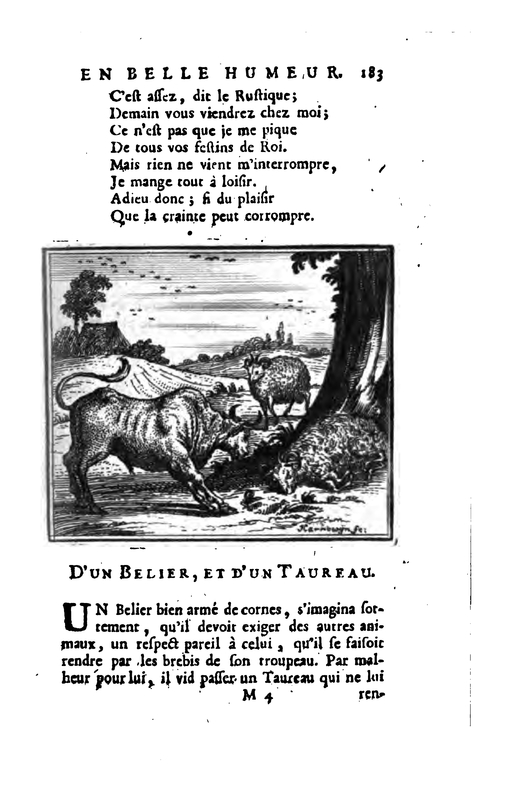
A ram is laying on the ground at the base of a large tree while a bull is standing next to the ram looking down upon it with its tail raised in the air. Behind the tree is another ram watching.
After the death of Calisto, Melibea plunges into sadness and despondency. Lucrecia hurries to Pleberio’s bedchamber to inform him of his daughter’s illness, and Pleberio rushes to her aid. She explains to him that she is afflicted by a pain in her heart that has no cure, and he asks her to join him for some fresh air. Once outside, she asks him to bring her some musical instruments, and he leaves to fulfill her request. She and Lucrecia climb to the top of her house’s tower, but she tells Lucrecia that the height is making her uncomfortable. As Lucrecia enters the staircase, Melibea slams the door and locks herself in the tower alone. From atop the tower she reveals to Pleberio (who is on the ground below) her passionate love for Calisto, and she proceeds to take her own life by jumping. The left side of the illustration depicts Melibea and Lucrecia. Melibea is likely the figure seated on the ornate and draped bed, while Lucrecia is approaching the door with her finger pointed toward Pleberio. Each of the them is wearing a robe and a veil. The right side of the image depicts Pleberio, wearing a hat and a cloak of sorts, as he opens the door for Lucrecia. Meanwhile, Alisa sits on another ornate and draped bed, displaying an air of sadness at the thought that Melibea is unwell. The entire image is identical to the one found on page 231 of the text.
A group of Indigenous Tupinambá people is shown on an island. One person lays in a hammock, another fishes with a small basket, and others lounge on the ground or stand in a group. All are nude, at least one carries a bow and arrows while another carries what may be an oar. A bearded man lays on his back on the ground in front of several of the Indigenous people, with his hands pressed together in front of his chest as if in prayer. Five canoes are anchored along the lower right edge of the island. On the top right side of the island fish are laid out on a rack over a fire and a pot sits on the ground.
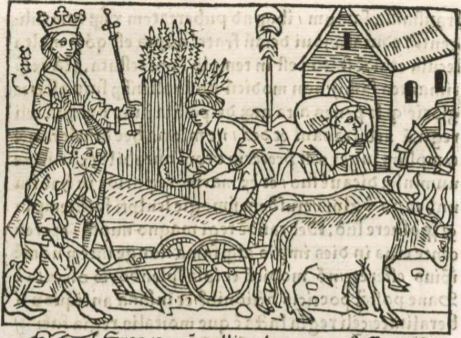
Ceres is illustrated on the left-hand side of the engraving wearing a crown and holding a scepter. We know this is Ceres as her name is engraved horizontally adjacent to her body. We also know this is Ceres as she is the goddess of harvest, which is what this engraving depicts. Boccaccio explains that after discovering agriculture, Ceres had tamed oxen and trained them to yoke. She also discovered planting seeds and then taught men how to harvest them once they matured. There is one man plowing the fields with the oxen, and another in the background husking grain. There is another man with a bag of flour over his head, as Ceres also taught men how to turn flour into an edible fare. Ceres wears the crown and scepter to signify her importance linked to agriculture and harvest.
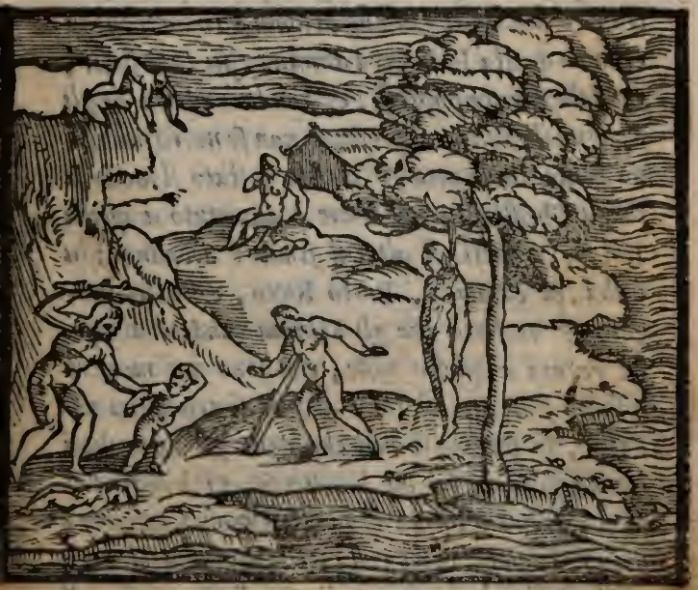
A group of Indigenous people on the island of Hispaniola (today Haiti and the Dominican Republic) commit suicide using various methods, to avoid serving the Christian Spaniards who colonized the island. One individual has hung themself by the neck from a tree; another leans into a spear that has been planted point-up into the ground; a mother uses a club to beat her two children to death; another person jumps from a cliff. There is another mother with her deceased child in the background, and behind them is a single dwelling.
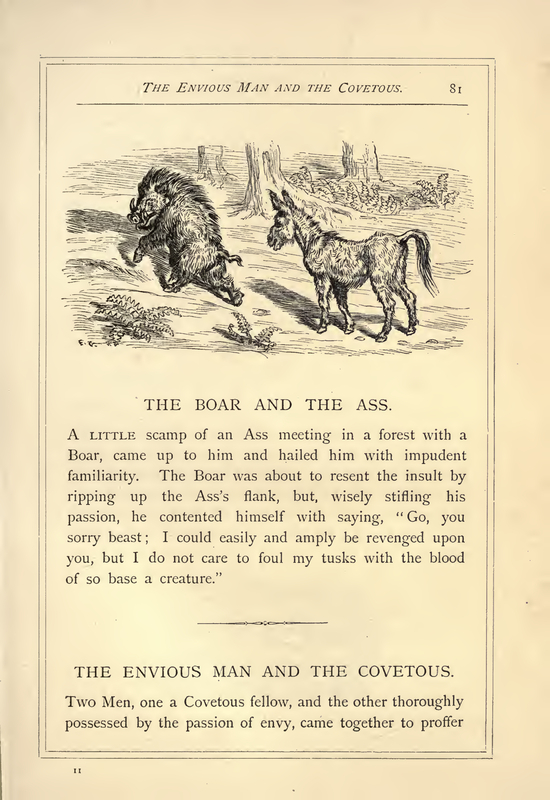
On the left side, a boar is running away with its head slightly turned back to see behind itself. On the right, an ass stands still and looks at the fleeing boar.
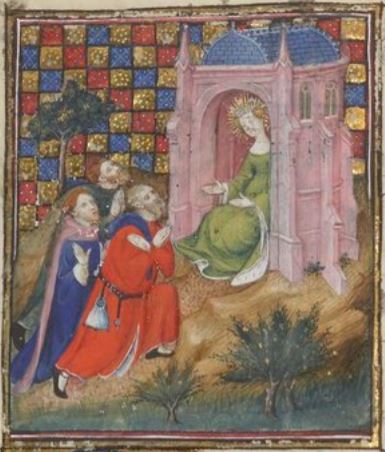
This illumination depicts a statue of the goddess Opis, who was also known as Ops, or Rhea in Greek Mythology. She is illustrated wearing a blue dress and sitting down with her hands pointing outwards as she wears a crown. The statue is situated inside of a temple. There are three citizens approaching the statue and looking up to it with an appearance of desperation. The man wearing red has his arms crossed over his chest as he is most likely praying to the goddess. Boccaccio explains that this statue was brought to Rome during the Second Punic War so the people could perform sacrifices and rituals for the goddess in exchange for help in the war.
This image depicts Soaemias, a Greek woman, sitting in the middle of a meeting of the Roman senate with her son, Elagabalus, as Roman emperor. She is wearing a crown to symbolize her status as the emperor’s mother. Elagabalus is possibly the figure wearing blue as he appears to be the most regally dressed, although there is no crown or other signifier to identify him as emperor. Elagabalus would not have become emperor without his mother’s help, so he granted her the ability to have authority and did nothing without her consent. This image is highly significant as she was the first woman to have a seat among the Roman senate and discuss her opinions and views on what must be done.
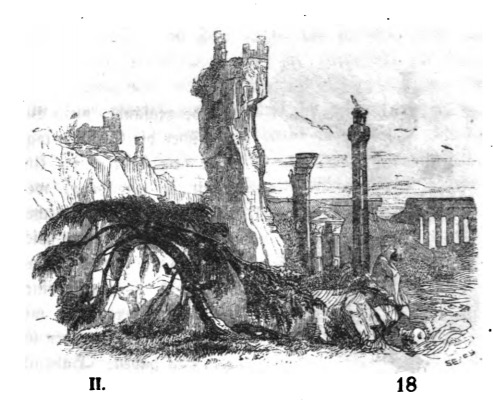
Here we see the ruins of an ancient city. There are partial columns and sections of porticoes. The architecture suggests that this was a Roman city, possibly Pompeii. There is a large tower in the centre of the image, with a tree that is curving back towards the ground creating an archway in the foreground. Archaeology and the excavations of Pompeii and Herculaneum were well underway when this edition of Gulliver’s Travels was published in 1839, and images of the ruins were being sent all over the world. This image comes at the end of the tenth chapter, in which Gulliver learns about the immortals on Luggnag. The same image appears in the 1843 Krabbe edition.
In this image Doña Urraca is leading her soldiers from the fortified wall of her castle. She is wearing a dark long flowing dress. There are soldiers next to her and they are all wearing armour and helmets. Two of them are carrying spears. On the tower next to these men there are more soldiers. Behind the tower with the soldiers there is another larger tower visible. Below the fortified wall there are more soldiers on horses carrying spears, those are the ones Doña Urraca is ordering. In the background there are mountains and a river.
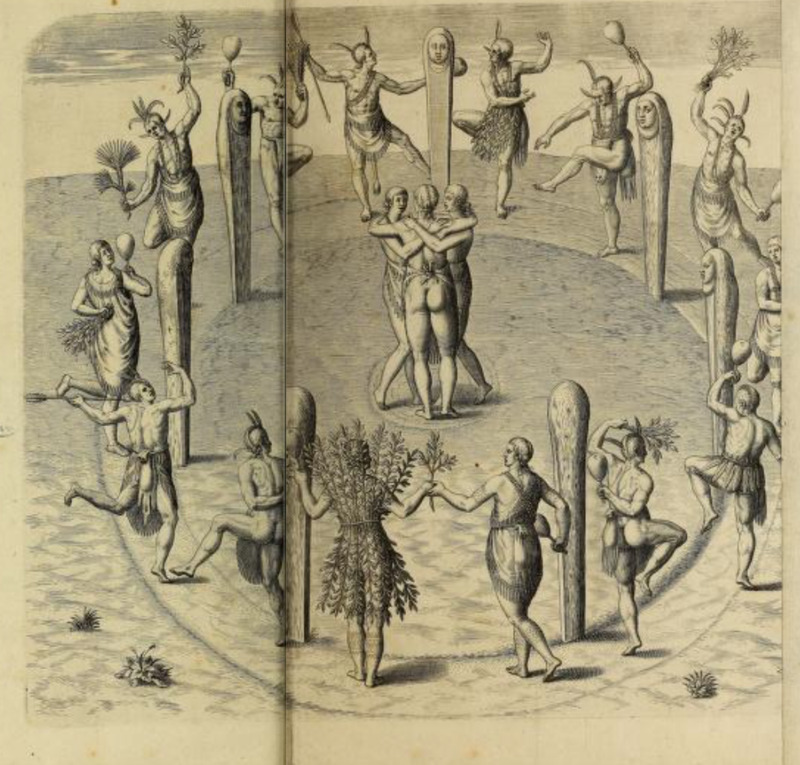
A group of Indigenous people are shown engaging in a dance. Three individuals embrace, and others dance in a circle around them. Some hold branches and other plants and objects in their hands. The circle is partially formed by wooden posts stuck into the ground. These posts have faces carved into the top of them, facing into the center of the dance circle.
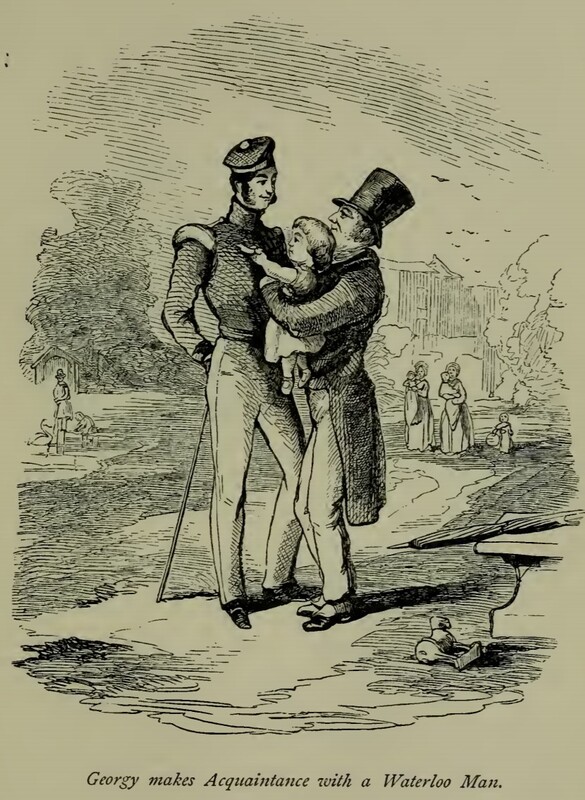
On a walk in the park, Corporal Clink, carrying a thin walking stick, is talking to John Sedley, in a top hat and coat. Georgy Osborne, held in the arms of his grandfather, has reached out to grab the Corporal’s medal. An umbrella is laying on the bench next to them, with a toy horse on the ground beneath it. In the background to the right are two women, each carrying a baby, and a child carrying a basket; to the left are a man and child reaching out towards a bird. Below the illustration is printed in cursive its title, Georgy makes Acquaintance with a Waterloo Man.
A group of Indigenous people are in the process of burying the body of a deceased man. The body has been bound with rope about the arms and wrists and has been placed into the grave in a kneeling position. Two men kneel on either side of the grave each gripping one of the deceased man’s arms and holding a basket over his head. Two different men shovel dirt into the grave, and a third stands at the head of the grave holding a rattle or ornament and wearing a feathered headdress. Three women, one with a child by her side, crouch around the grave with their hands over their faces in distress, and there are bows and a club on the ground near their feet, perhaps to be buried with the deceased. This image is identical to one found in Frankfurt, 1557.
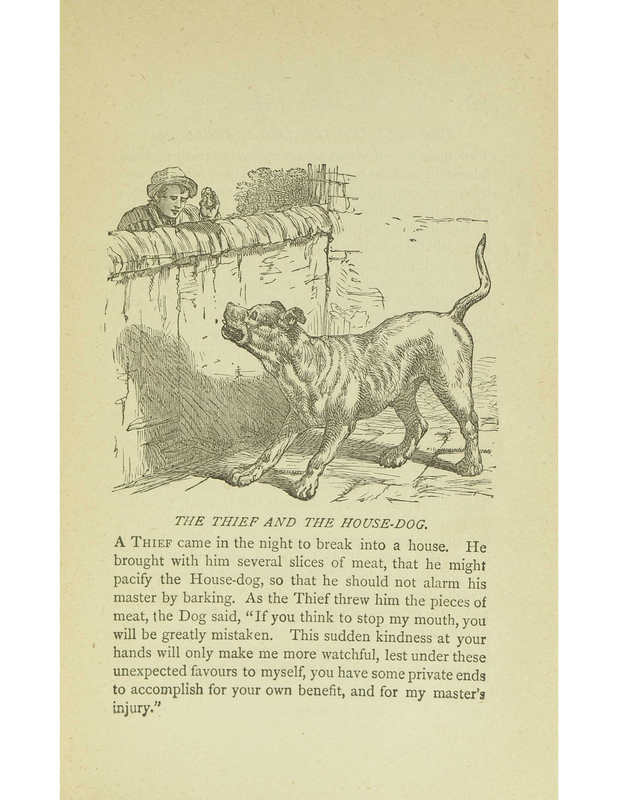
On the right-hand side of the image, a dog is standing in an attacking stance. It is looking over a stone wall, growling at an intruder. A man stands behind that stone wall, holding something his hand, a piece of meat to trick the dog. The man wears a hat, and the top of the stone wall reaches his shoulders.
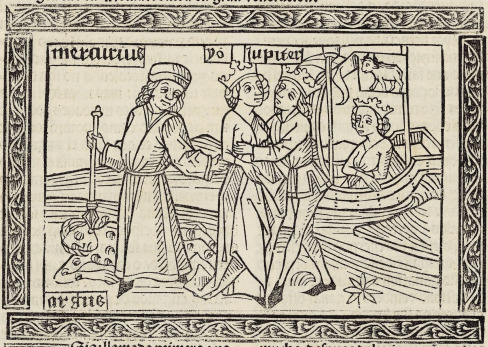
This engraving illustrates the story of Isis and Jupiter. Jupiter is depicted in the center of the engraving with his arms wrapped around Isis as he shows his affection for her. We know that these figures are Jupiter and Isis as the creator engraved their names directly above their heads. Isis’ name reads Yo, as she is also known by this title. Boccaccio explains that Jupiter had transformed her into a cow and gave her as a gift to Juno in order to hide his crime of raping her. Mercury had saved Isis as he killed Argus, Isis’ 100 eyed guardian. Mercury is on the leftt-hand side of the engraving holding a staff in his left hand, standing above the body of Argus after killing him. Mercury’s name is engraved beside his head, and Argus’ name is engraved just below his own arm. Isis is visible in the background of the engraving sitting on a ship, as she had sailed to Egypt after being transformed back into her human form. The sail on the ship has a heifer emblem to signify her transformation into a cow.
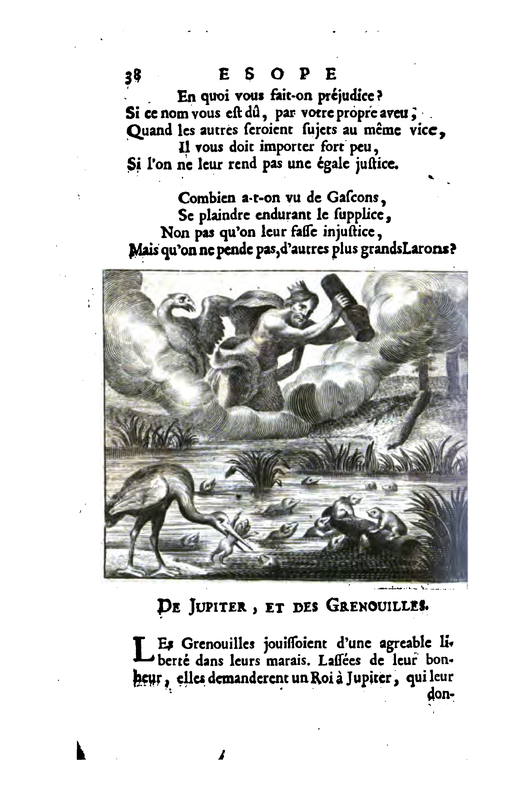
There is a bird resembling a crane eating a tadpole from a river. In the river there is school of tadpoles or frogs and some are sitting on a bark of a tree near the river. There are some water plants near the river. Behind them there is a greek god of Jupiter with a crown holding a cylindrical pole emerging from the clouds. An eagle is right behing the greek god Jupiter also behind the clouds.
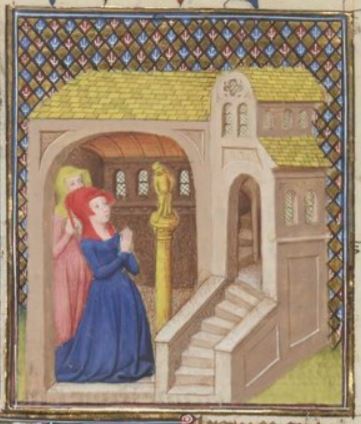
This illumination depicts a noble Roman woman named Verginia creating her own temple. Verginia was born into a noble family, and married a former consul named Lucius Volupinus. Because her husband became a member of the plebeian class when he was no longer a consul, Verginia was cast out of a temple consecrated to Patricia Pudicitia by noble women. Verginia is famous for having created her own temple for the plebeian women called the Plebeia Pudicitia. This illumination depicts Verginia kneeling with her hands in prayer as she prays in her temple.
Here we see the Empress and two of her maids looking out of a large palace window after the fire. The Empress is in the centre and can be distinguished from her maid and lady-in-waiting by her headpiece and clothing. The maid is on the left and the lady-in-waiting is on the right. Although the fire was in the Empress’s apartments, she chose not to return to those apartments after they had been refurbished given the manner in which Gulliver extinguished the fire (through urination). The same image appears in the 1839 Krabbe edition.
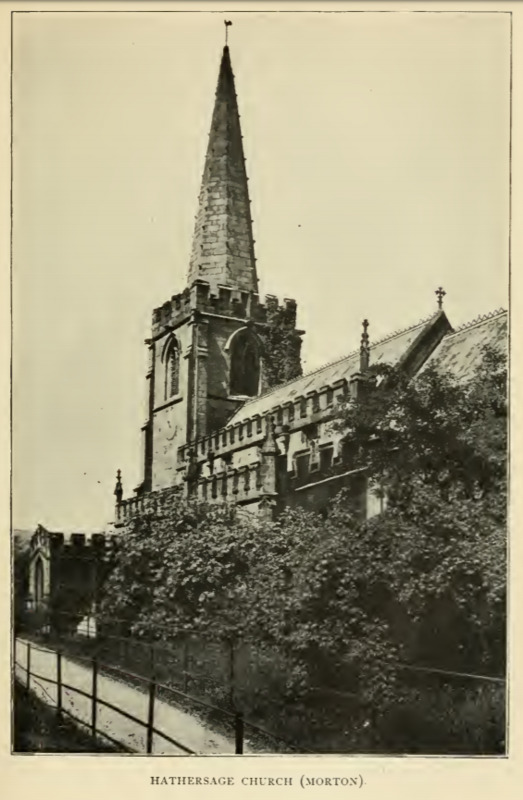
Here we see an image of the church in Hathersage, a village in Derbyshire. This church is supposedly that on which Morton Church – where Jane sought refuge after running away from Thornfield – was based. The same image appears in the 1899 Bigelow, Brown, and Co edition of Jane Eyre.
The engraving depicts a man guarding a jail, with three figures standing behind the bars of the jail and three figures leaving the jail covered in their garments. The three figures leaving the jail are Minyan men who had been sentenced to death for their crimes against their city. Boccaccio explains that the Minyans wives had gone into the jail and swapped clothing with their husbands and switched places. The men, in disguises, slipped past the guards unnoticed and into freedom, while their wives were executed in their place. Boccaccio explains that he chose to write on these women to demonstrate that there is no greater love than a wife’s love for her husband.
Here we see one of the Houyhnhnms preparing dinner. The Houyhnhnm stands on its back legs, holding a bowl of warm oats, boiled in milk, between its front legs. Gulliver kneels on a pile of hay, which is another element of their meal. The same image appears in the 1839 Krabbe edition.

![[Act XX] Komt kloppen voor syn kamer.](https://collections.cemvc.ca/files/large/4ee1dcbbaec89872a645825dca211e699e2ffb6d.jpg)
![[Tupinambá people relax, fish, and cook on an island]](https://collections.cemvc.ca/files/large/ee5173ee5837614fac5339a5e5eeadb2c46d161f.jpg)


![[Queen Urraca is commanding her armies]](https://collections.cemvc.ca/files/large/ef8aef5cd06c253462b19ec2414a1f0aa211e73e.jpg)

![[Funeral and burial customs of an Indigenous Brazilian group]](https://collections.cemvc.ca/files/large/2a34209a14ef2923c985e578e302481e72cd99cf.jpg)
![[A Storyteller]](https://collections.cemvc.ca/files/large/0afdf4ade3523084afee12fafe8cb926a46c6028.jpg)
![[The Lilliputian Empress and her attendants looks out the window after the fire]](https://collections.cemvc.ca/files/large/6f546a6fd9a4a9e969e6384748570ba969d30370.jpg)

![[A Houyhnhnm prepares dinner while Gulliver watches]](https://collections.cemvc.ca/files/large/a56655c569af16739148f7563b893f5ab51469d2.jpg)