Pauline, the maid, stands in the kitchen looking at her lover, Regulus Van Cutsum. He is sitting on the table, drinking a flagon of beer, and still dressed in the military uniform from the battle which he was ordered by his colonel to flee, though he tells the tale as though he were the only survivor.
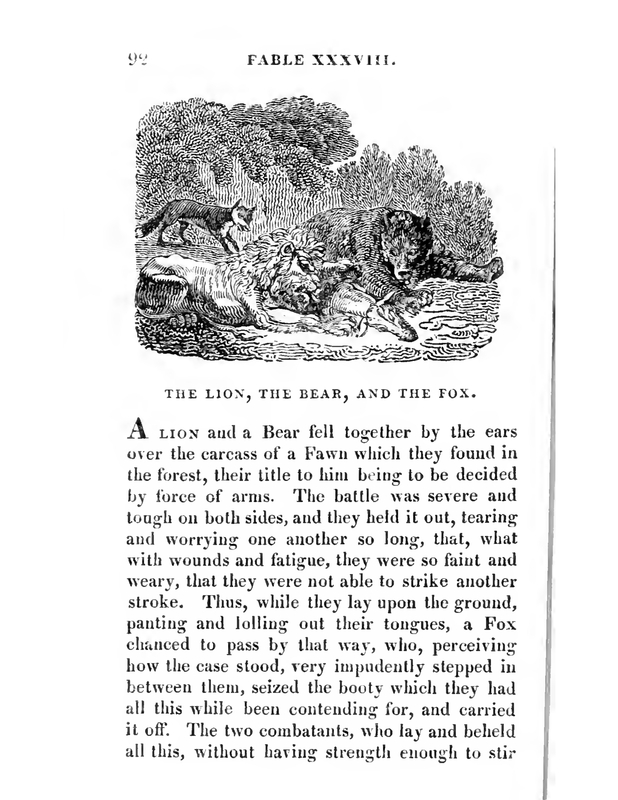
On the left there is a lion laying on the ground facing right. The lion is in the midst of eating a dead animal (likely a gazelle). On the other side of the dead animal is a bear looking at the animal and laying on the ground. Far behind these two animals is a fox on the left facing right looking at the dead animal. The rest of the background is covered in trees and bushes.
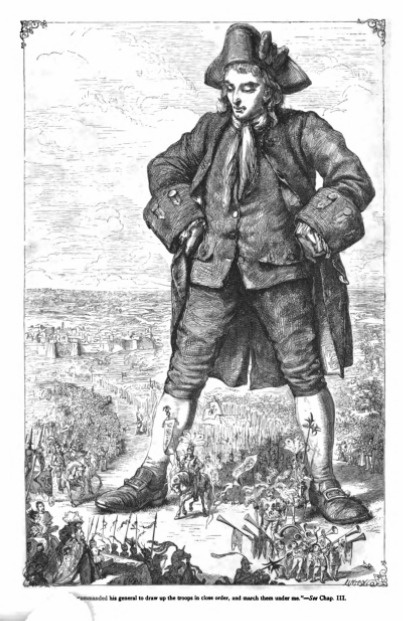
Here we see Gulliver standing as a triumphal arch for a Lilliputian military procession. The caption is a quote from the third chapter of Part One and is partially obscured. Gulliver stands with his hands on his hips and his legs wide as the Emperor of Lilliput leads the procession. Soldiers and cavalrymen march underneath Gulliver as a crowd looks on.
This image shows five characters: Calisto and Melibea sitting under a tree in the midground, Lucrecia in the background, and Sosia and Tristan in the foreground. Calisto, Melibea, and Lucrecia are within the walls of Melibea’s garden. Sosia and Tristan are standing guard outside the garden wall while Calisto and Melibea talk and hold hands. The moon in the upper left corner indicates that the scene is taking place at night. Lucrecia is standing in the background, waiting from a distance for Melibea to conclude her rendezvous with Calisto.
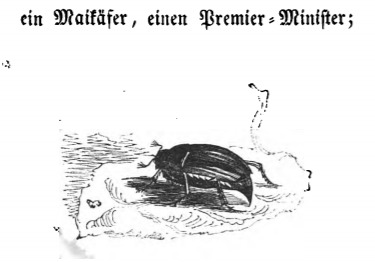
This image is of a beetle. A beetle was the code word for the Prime Minister. This image comes in a description of a conspiracy found by a professor from the Grand Academy on Balnibarbi. This idea is representing code word for terms in the conspiracy that Swift is satirizing. The professor advises that those named in the conspiracy papers be closely monitored at all times, naming specifically while they were using the bathroom, as this is when men were most thoughtful. This conspiracy is thought to be an allusion to the trial of Francis Atterbury, the bishop of Rochester for allegedly plotting with the Jacobites. Atterbury was charged with treason in 1722 and was exiled to France. The same image appears in the 1839 Krabbe edition.
After Calisto (the leftmost figure) is rejected by Melibea during his first encounter with her, he finds himself in a state of discontent and despondency. His servant Sempronio suggests that he should employ the aid of Celestina (the rightmost figure, wearing a robe and a veil), a matchmaker and brothel owner. Calisto sends Sempronio to fetch her (they can be seen arriving at Calisto’s house to the right of the image). While Sempronio is away, Calisto talks with his other servant Pármeno, who unsuccessfully tries to dissuade him from procuring Celestina’s services (to the left of the image). The entire image is identical to the one found on page 86 of the text.
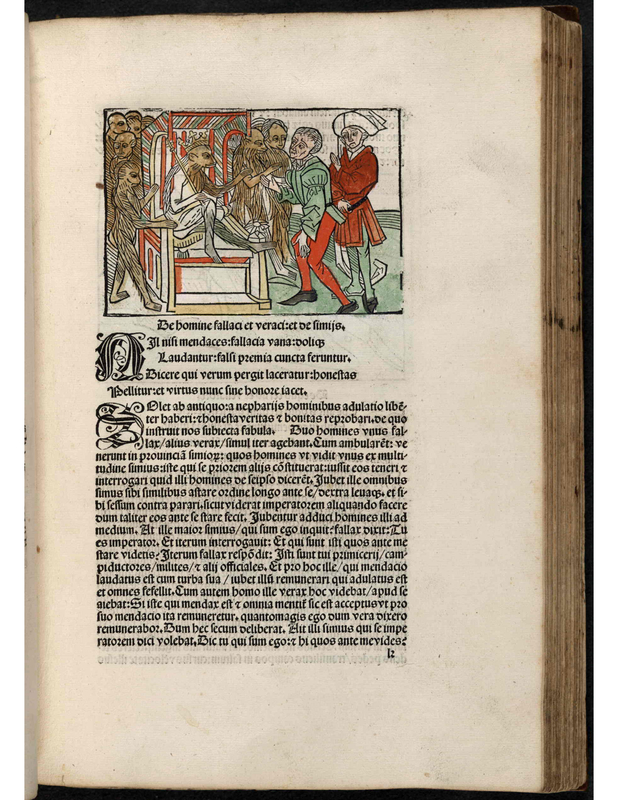
An animal-like humanoid sits on a throne and wears a crown while holding a staff, behind him are seven other similar animal-like humanoids however, they do not wear anything. Two men approach the throne and gesture towards the individual sitting on it.
Here Jane meets the palm reader in the library at Thornfield. The palm reader was actually Mr. Rochester in disguise, who wanted to speak to Jane, and Miss Ingram, privately and unrecognized. Jane eventually recognized Mr. Rochester after feeling that something was amiss.
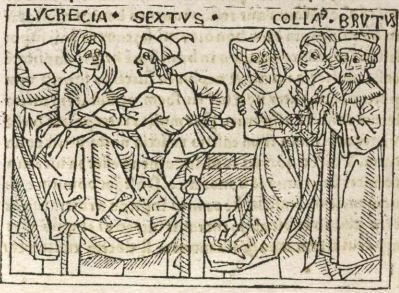
Lucretia is depicted on the left-hand side of the engraving, lying in bed as she is approached by Sextus, her husband’s relative. We know that these figures are Lucretia and Sextus as their names are engraved above their heads. Lucretia is depicted with her hands crossing her chest as Sextus is forcing himself upon her. He is illustrated with a sword in his hands as he is threatening to kill her if she screams for help. The right-hand side of the engraving illustrates Lucretia with her husband, Collantinus, and her husband’s relative, Brutus (their names are engraved at the top of the engraving). Lucretia told the men what Sextus had done to her in the night, and then plunged a knife into her own chest in shame.
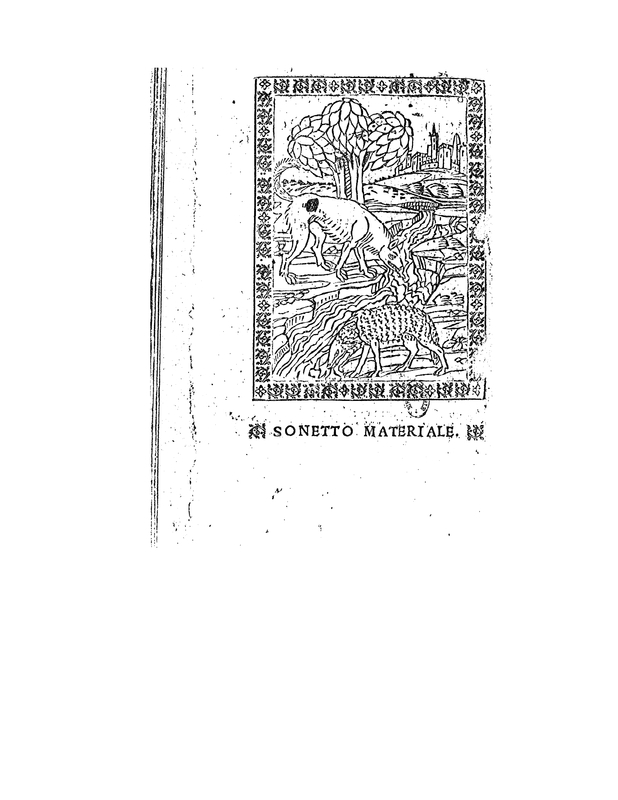
A wolf and a lamb are both drinking from the same river on opposite sides but quite close to one another. The lamb seems to be unaware or unconcerened about the wolf's prescence. The wolf is staring at the lamb.
Several large European sailing ships are shown off the coast of Rio de Janeiro. The Europeans fire cannons, guns, and bow and arrows at a group of Indigenous canoes. The Indigenous people fight back with bow and arrows from four canoes. There is a village on the coast comprised of two enclosures, both surrounded by fences. One consists of three long structures while the other has four.
A Tupinambá village is shown, comprised of five long structures arranged in a pentagram and surrounded by two fences, with skulls mounted on ling poles at the entrance. At the center of the village a captive man is about to be executed. He is restrained by two men, each holding one end of a rope that is tied around his waist. A third man stands behind the captive with a club raised above his head. The village is located near the coast. Women fetch water in pails and carry it into the village, and several canoes are pulled up along the shore. Men also hunt and bring firewood to the village.
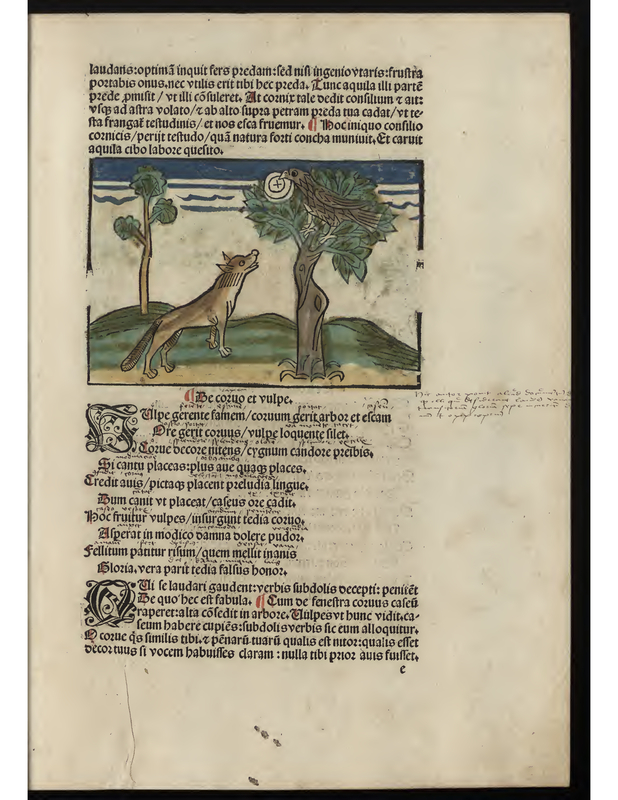
A fox stands on the left-hand-side of the image, looking up into a tree at a bird perched with a circular object in it’s beak. Another tree stands in the distance, behind the fox.
In the distance, a town is visible. A bee is flying in the sky, an ant is visible on the ground near the stump of rocks. A few clouds decorate the sky. Trees are in the hills far away.
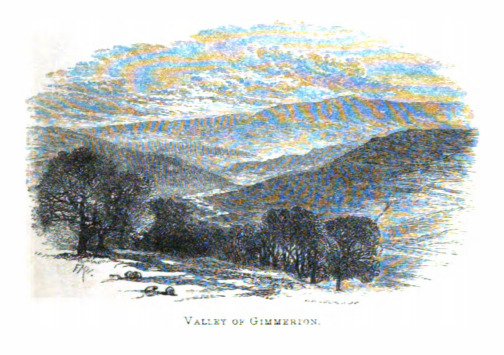
Here we see Gimmerton Valley. The image is shown looking down towards into the valley. Both Wuthering Heights and Thrushcross Grange are large estates outside the town of Gimmerton, for which the valley was named.
In this image we see Gulliver pulling Blefuscudian ships back to the port in Blefuscu. Gulliver threw ropes and hooked the ships. Gulliver then used the ropes to pull the ships back to their home port, resulting in damage to the ships. In the image we see Gulliver stepping out of the water onto land with his left arm stretched above his head. In his right hand he holds fifteen ropes attached to ships – not all of which are visible. On the right hand side several Blefuscudians are visible, looking onto the scene. The same image appears in the 1843 Krabbe edition.
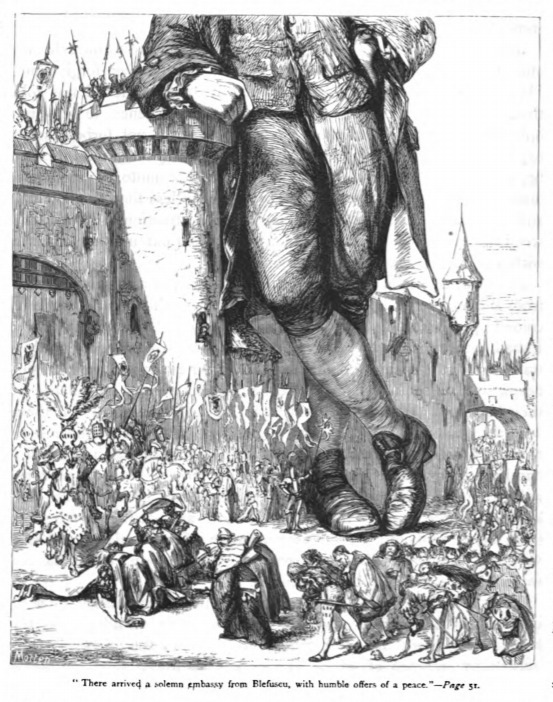
Following the defeat of Blefuscu in the war, Blefuscudian diplomats arrived on Lilliput to write a treaty for peace. The embassy is seen arriving with their heads down in the harbour of Lilliput. Gulliver stands, leaning against the lighthouse. A crowd of Lilliputians line the road holding banners with the Lilliputian crest on it.
This illustration depicts Julia, daughter of Julius Caesar, looking grieved after seeing the blood-stained cloak in front of her which is being held by a servant. The blood-stained cloak belongs to her husband, Pompey the Great. After seeing the blood on the cloak, Julia believed her husband must have been violently murdered. Pompey was sacrificing an animal, and when his clothes got stained by the animal's blood, a servant took his dirty clothes away to get new ones. The servant happened to pass by Julia while holding the cloak stained with animal blood. Before the servant can explain that it is not her husband’s blood, Julia falls to the ground and dies.
Here we see Miss Crawford giving Fanny a necklace on which to wear the cross William brought for her. William brought Fanny an amber cross from Sicily, and Fanny needed a gold chain to put it on. This scene mirrors one from Austen’s life, as Jane Austen’s brother, Charles, brought her an amber cross when he was serving in the navy in 1801. Austen records this in a letter to her sister, Cassandra, written on 27 May 1801. Charles also gave an amber cross to Cassandra. The chain was bought by Mr. Crawford, and he asked Miss Crawford to give it to Fanny, knowing she would not accept it from him. Fanny had gone to the parsonage to ask Miss Crawford her advice on what to wear to the ball. When she returned to Mansfield Park Edmund gave her a chain that he had bought for her. After hearing that Miss Crawford had already given her a chain, Edmund fell deeper in love with her. This scene occurs in chapter 26. The characters are shown in the traditional regency style. Fanny and Miss Crawford wear regency style dresses with empire waists. Miss Crawford puts the necklace on Fanny, who stands in front of the mirror. The regency period dated to the early nineteenth century (1811-1820) when George, Prince of Wales, later George IV (r. 1820-1830), reigned as regent for his mentally ill father, King George III (r. 1760-1820). The regency period is associated with the rise of neoclassicism in art and fashion.
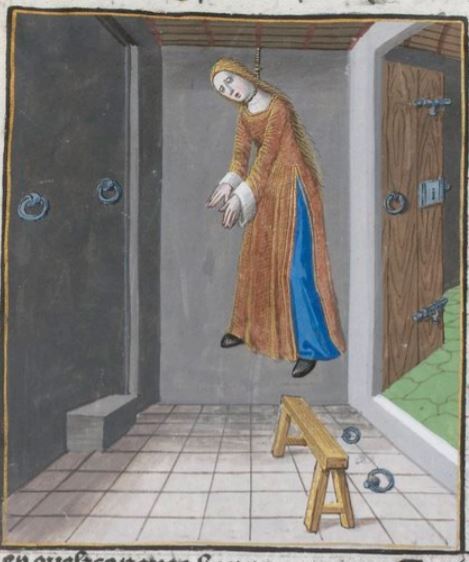
This illustration depicts the freedwoman, Epicharis, committing suicide by hanging. Epicharis had heard the details of the conspiracy to assassinate emperor Nero, and when she put her faith in the wrong person, they told emperor Nero that she was involved in the plan. They tortured her many times; however, she did not reveal the names of anyone involved in the conspiracy. Afraid that if she was tortured any further, she would reveal the names of the conspirators as her strength was depleting. To avoid this from happening, she hung herself in her prison cell.

![[Regulus and Pauline in the Kitchen]](https://collections.cemvc.ca/files/large/0845aa59290f5aaf0b6e38987e7defca35f9dea8.jpg)


![[The Argument - While Calisto and Melibea Talk, Sosia and Tristan Stand Guard and Lucrecia Waits at a Distance]](https://collections.cemvc.ca/files/large/e06f012840338f08d73f9c0c4167de74039145ea.jpg)
![[Act I – Calisto Waits with Pármeno While Sempronio Fetches Celestina]](https://collections.cemvc.ca/files/large/8dfe5442e11e219ed3036f586ab78ec173976776.jpg)

![[Europeans and Tupinambá people engage in a naval battle]](https://collections.cemvc.ca/files/large/63aed4a9707339bf1032b261d0200859b8f5fd75.jpg)
![[A captive is executed in the center of a Tupinambá village while other daily tasks are completed]](https://collections.cemvc.ca/files/large/f5de3059f3ecccc6715f178aa5fa465f465574c5.jpg)
![[A Town in the Distance, Insects and Hills]](https://collections.cemvc.ca/files/large/e09507e76f1cedf5d47b2cb6fb114c4c2fb0649a.jpg)
![[Gulliver pulling Blefuscudian ships back to Blefuscu]](https://collections.cemvc.ca/files/large/835a577d49395d834640a3d2c8922ca16d10ced0.jpg)