Martha Crawley sits in a chair at Matilda Crawley’s bedside, holding a cup and saucer and scowling. Miss Crawley, who is ill, can be faintly seen inside the canopy of her bed.
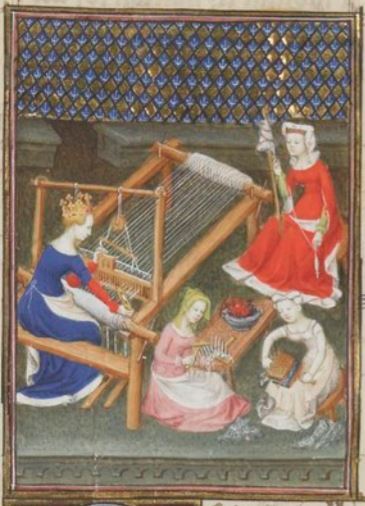
This illumination depicts Gaia Cyrilla, the wife of King Tarquinius Priscus, sitting on the left side of the image spinning wool. She is illustrated wearing a blue dress and a crown to signify her royal status. She is depicted spinning as she was renowned for being skilled in the art of weaving during her time. There are other women in the image who are also working with wool. Boccaccio believes Gaia Cyrilla to be praiseworthy as wool working was an admirable craft.
Here we see a satire of the political system in England. Gulliver spent several days explaining the political system in England to his master, who was shocked at the state of corruption. This image appears at the beginning of chapter five, and the letter T is in the top corner of the image, as the first word of the chapter is the.
The Houyhnhnms are a breed of horses. The Houyhnhnms created their own society and Gulliver believes them to be a superior society that is more virtuous than any other society Gulliver encountered. Gulliver’s first encounter with a Houyhnhnm was when it scared off a yahoo who was tormenting Gulliver. The Houyhnhnm was not violent. It looked startled at the sight of Gulliver but did not attack him. In the background of this image we see a group of yahoos running away. The same image appears in the 1839 Krabbe edition.
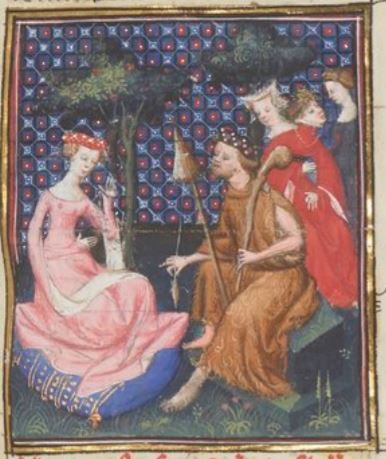
This illumination depicts the marriage of Iole and Hercules. Iole is illustrated wearing a pink dress on the right side of the image as she sits on a pillow. Boccaccio explains that Iole is not in love with Hercules because he killed her father after he did not give Hercules permission to marry Iole. In order to seek her revenge on her husband for the murder of her father, Iole allowed Hercules to fall madly in love with her. By doing this, Iole was able to convince Hercules to do whatever she asked. She stripped him of his pride by getting him to dress as a woman and spin wool. Hercules is illustrated wearing women’s clothing and spinning wool as he sits across from Iole.
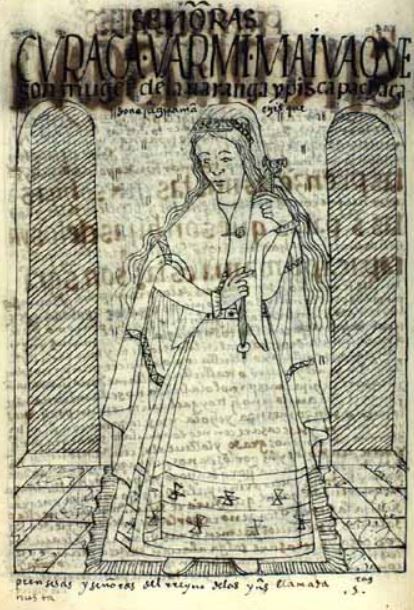
This image is illustrated in a chapter that discusses the descendants of the Inca and Andean nobles under Spanish colonial rule in Peru and their importance to a revived Andean society. After discussing powerful lords, the author discusses powerful women and wives to those lords. This image represents the women who were married to the kuraka [lords who oversaw one thousand native tributaries] and pisqa pachaka [lords who oversaw five hundred native tributaries]. The native woman is depicted wearing a long dress and holding a spindle in her right hand. There are words written above her head which identify her as, dona juana guaman chisque. The caption at the bottom of the image reads, prensesas y senoras del rreyno de las yndias llamada nusta [princesses and ladies of the kingdom of the Indies].
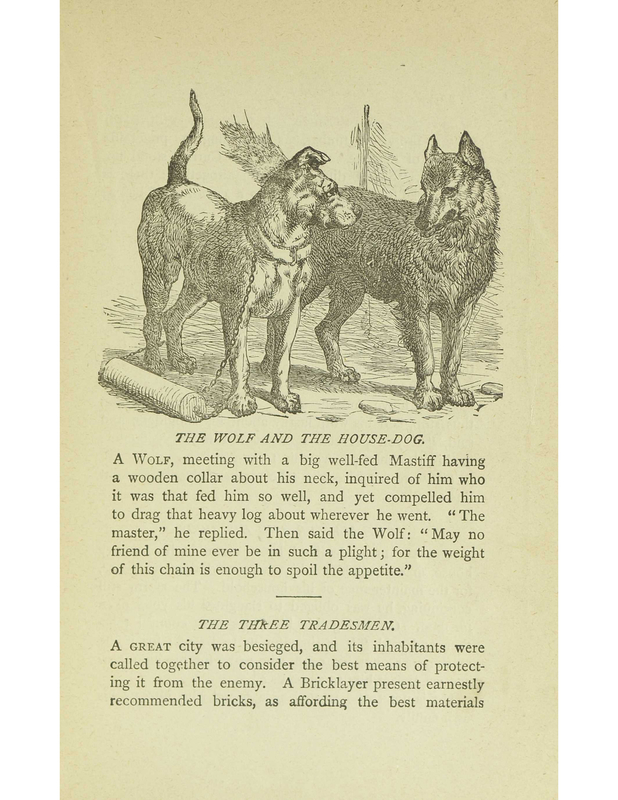
To the left, a dog stands with its tail straight-up. The dog wears a collar, and a chain is hooked to it. The chain is hooked to a circular weight so the dog cannot run off. The dog is looking to the right-hand side of the image where a long-snouted wolf stands next to it, looking in the dog’s direction. The dog has short fur, while the wolf has long, furry hairs.
After Melibea takes her own life, her father Pleberio (central figure) is immersed in despondency. He goes to his bedchamber and informs his wife, Alisa (rightmost figure), of the death of their daughter. Alisa does not utter a word in this act. Based on Pleberio’s implorations for Alisa to help him deal with his sorrow, and his questioning whether she has joined Melibea in the afterlife, we can presume that Alisa has fainted. In the background to the left, we see a female figure, presumably Lucrecia.[In the earlier 1520 Augsburg edition, this is the first illustration of Act XXI.]
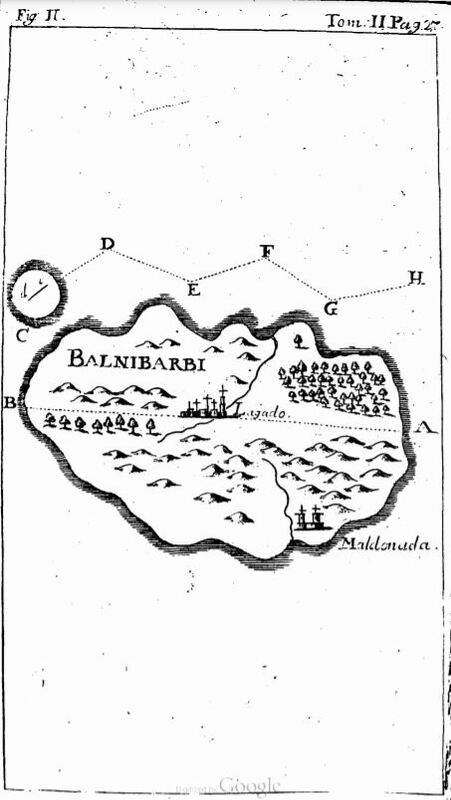
This image depicts the fictional island of Balnibarbi. There are regions of hills in the Southern, and North-West areas of the island. Forests are also shown in the North-East and Central regions. The city of Lagado is in the centre of the island. The town of Maldonada is in the South-East of the island. Above the island are letters, which depict the different ways in which the floating island of Laputa moves as it hovers over Balnibarbi. This image is the same as that in the 1727 German von Wiering edition.
In his conversations with past Kings and Queens on Glubbdubdrib, Gulliver learns of the corruption of the throne. he was told on several occasions of corruption of the court. He was even told that virtue only slowed business down, and corruption was the only way to keep the throne working. In this image we see a Queen sitting on a throne whose back is made of snakeskin, while a courtier kneels in front of her, offering his hand. In the background we see a baby wearing a crown and holding a sceptre. The same image appears in the 1839 Krabbe edition.
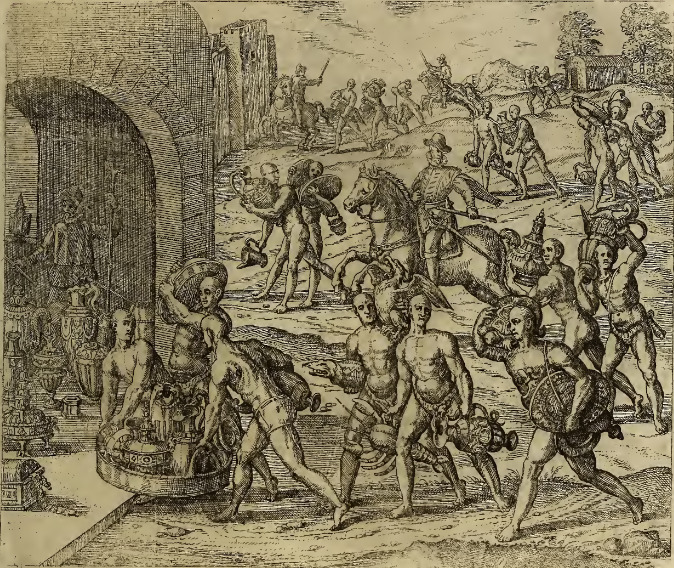
Inca Emperor Atahualpa (Atabalipa) agreed to pay the ransom amount demanded by Francisco Pizarro to secure his freedom. Inca men stream towards the walls of the city Cajamarca bearing gold and silver items, including plates, vases, chests of jewelry, carvings of mythical creatures, and other pieces they have gathered throughout Peru. The Inca people are supervised by several Spaniards on horseback wielding wooden clubs or truncheons.
In this illustration, we see a male figure walking or running toward a tower, where a female figure is standing in the doorway and another male figure is leaning on the windowsill. The figure approaching from the right has a sword mounted on his belt and is lifting his hat from his head, while the woman in the doorway is wearing a robe and a veil. This illustration bears little resemblance to the events contained within the thirteenth act. There are no towers and no female figures mentioned in this act. We might infer that the figure approaching the tower is Sosia coming to deliver the news that Sempronio and Pármeno have been executed, although this is a loose association considering the rest of the image. As far as I can tell, it is also not found in any of the earlier Antwerp editions. I suspect that the use of this illustration (in place of the more relevant 1580 Antwerp edition illustration) may be a consequence of the 1580 woodblock being misplaced or destroyed in the intervening 36 years.
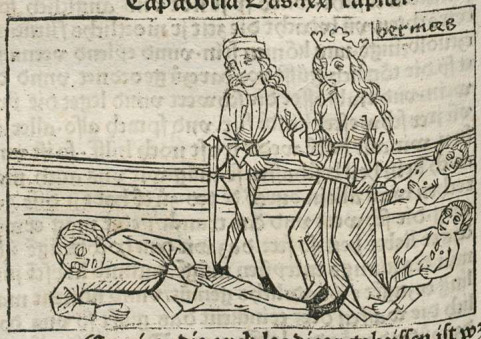
This engraving depicts Berenice, the queen of Cappadocia, stabbing a servant in his abdominal area to avenge her sons’ deaths. Berenice’s name, written as Bernices is engraved above her head to identify her. After her sons had died at the hand of her brother, Mithridates, Berenice sought vengeance against him. The slave that Berenice is stabbing in this engraving is Caenus, a man who was involved in the murder of her sons. Although she is depicted stabbing him with a sword in this engraving, Boccaccio explains in his story that she actually chased Caenus down in a chariot, and after hitting him in the head with a rock, she drove over his body with the chariot until he died. The dead figures in the engraving who are lying on the ground are assumed to be Berenice’s children.
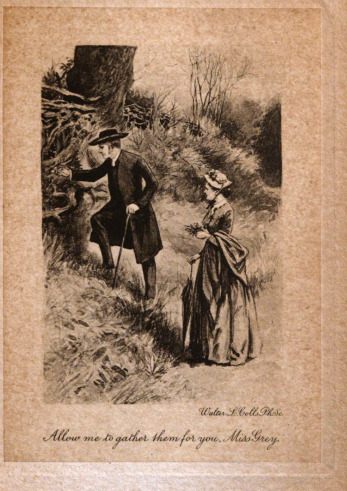
Here we see Agnes Grey and Mr. Weston. Agnes was looking for flowers that reminded her of her home, but they were out of her reach. Mr. Weston came up behind her, offering his assistance in reaching the flowers. Agnes worked as a governess for the Murray family, and Mr. Weston was the parson near the Murray manor. Agnes believed that Mr. Weston was in love with Rosalie, but he really loved her. Agnes and Mr. Weston eventually fell in love and got married.
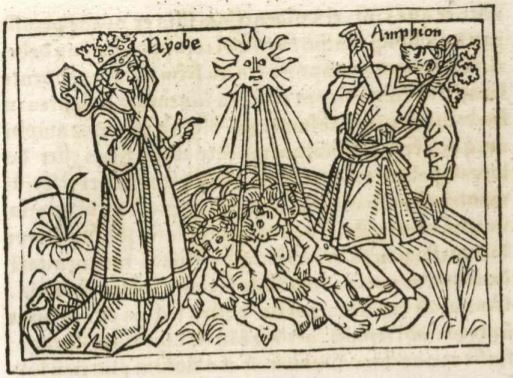
This engraving depicts Niobe, the daughter of King Tantalus of Phrygia, on the left-hand side of the engraving wearing a crown. We know that this is Niobe as the creator engraved her name beside her head to identify her. Niobe had become proud of the fact that she had more children than Latona, mother to Diana and Apollo. As punishment for her hubris against the goddess, all of Niobe’s children, as told by Boccaccio, had been killed by the plague. Her children are illustrated in the centre of the engraving, being killed by the rays of the sun which signify the plague. Grieved by the loss of all their children, Niobe’s husband, King Amphion of Thebes, killed himself with a knife. Amphion is depicted on the right-hand side of the engraving as he pierces his body with the knife. His name is engraved just above his head.
The left panel depicts Celestina standing outside. She is wearing a robe and a veil, with what appears to be a rosary hanging from her waist. To the right we see Calisto’s servant Sempronio standing outside while wearing a hat. He has a sword mounted on his belt, which is partially concealed by his coat.The entire image is identical to the one found on page 114. The left panel is identical to the panel found on the title page, and on pages 146, 208, and 225 of the text. The right panel is nearly identical to those found on pages 187 (where it is labeled ‘Sepronio’ [likely a printing error]), 263 (labeled ‘Calisto’), 271 (labeled ‘Calisto’), 326 (labeled ‘Tristan’), and 350 (labeled ‘Pleberio’).
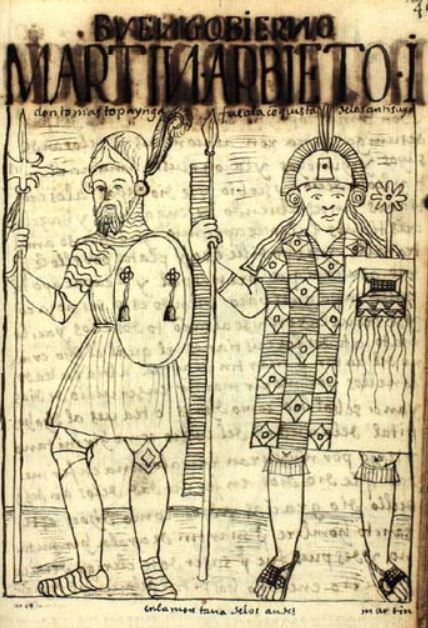
This image depicts a Spaniard dressed in a full suit of Castilian armour standing next to an Inca ruler who is wearing traditional clothing. They are both holding spears and shields as they prepare for battle. The Spaniard’s name is Martin Arbieto and the Inca’s name is Don Tomas Topa Inca. They joined forces to attempt to conquer the Antisuyu region of the Inca Empire in order to Christianize the indigenous people residing there. The caption at the bottom of the image reads, en la montana de los andes [in the Andes mountains].
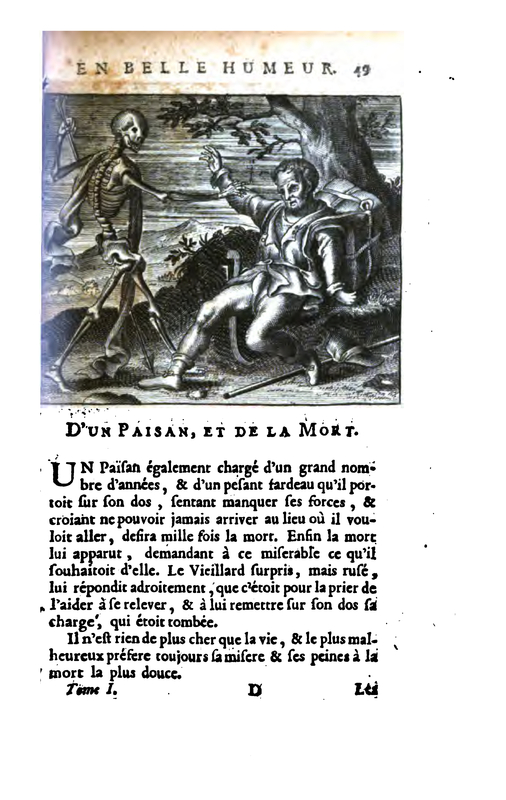
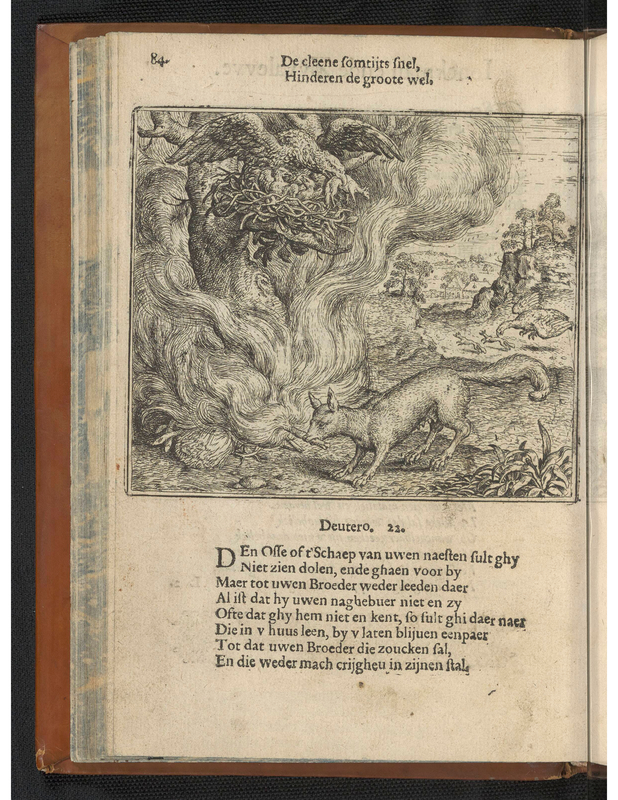
In the forefront, a fox brings a stick on fire to a tree with a vulture nest. In the nest, baby birds sit with a parent bird, who has a baby fox in its mouth. In the background, a vulture chases foxes.
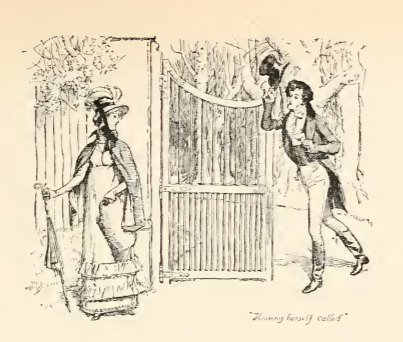
In this image Mr. Darcy calls on Elizabeth while she was out for a walk. The day after she rejected him, Mr. Darcy met her while she was out on a walk. He handed her a letter explaining her charges of his misconduct regarding Jane and Mr. Bingley’s relationship, and Mr. Wickham. He wrote that he knew Mr. Bingley loved Jane but he did not believe Jane reciprocated his love. He then suggested Mr. Bingley leave Netherfield to avoid getting hurt. Regarding Mr. Wickham, he writes that Mr. Wickham tried to swindle him out of his late father’s inheritance, and when that failed, he tried to marry Mr. Darcy’s sister, Georgiana, to gain access to her inheritance. This scene occurs in chapter 35. The characters are shown in the traditional regency style. Elizabeth wears the regency style dress with an empire waistline. She wears a cloak and bonnet and carries a parasol. Mr. Darcy wears a waistcoat and tailcoat with breeches. He raises his top hat and holds the letter in his hand. The regency period dated to the early nineteenth century (1811-1820) when George, Prince of Wales, later George IV (r. 1820-1830), reigned as regent for his mentally ill father, King George III (r. 1760-1820). The regency period is associated with the rise of neoclassicism in art and fashion.
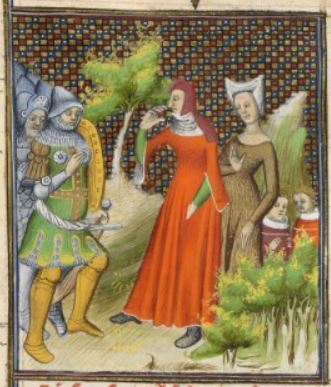
This illumination depicts the noble Roman matron Veturia speaking with her son, Coriolanus. Veturia was famous for saving Rome from what would have been a violent attack on the city. Her son had been exiled from Rome, and to exact his revenge, he planned an attack on the city with Volscian enemies. Veturia went and spoke to her son and convinced him to call off the attack. Veturia’s daughter-in-law and grandchildren are standing behind her. Coriolanus has his soldiers standing behind him on the left side of the image. According to Boccaccio, women began to gain more respect from men in Rome due to Vetruria’s actions.
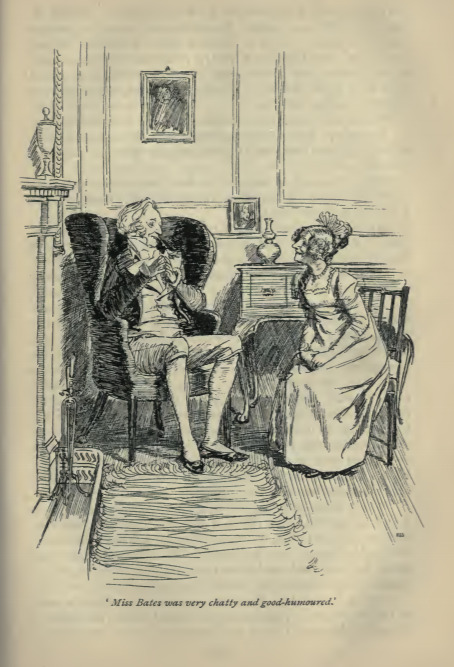
Here we see Mr. Woodhouse sitting with Miss Bates by the fire. They were both at a dinner party where Jane Fairfax played piano. Mr. Woodhouse was a hypochondriac and spent most of the evening sitting next to the fire, fearing catching a draft. Miss Bates kept him company, sitting and talking with him. This scene occurs in chapter 21. The characters are shown in the traditional regency style. Miss Bates wears a regency style dress with an empire waistline. Mr. Woodhouse wears a waistcoat and tailcoat with a cravat. The regency period dated to the early nineteenth century (1811-1820) when George, Prince of Wales, later George IV (r. 1820-1830), reigned as regent for his mentally ill father, King George III (r. 1760-1820). The regency period is associated with the rise of neoclassicism in art and fashion.
There are four birds. One bird is tied to the ground by its neck. The second bird is tied to the ground by its leg. The third bird is flying away. The fourth bird is being held by a man at its feet. The birds seem to be in distress
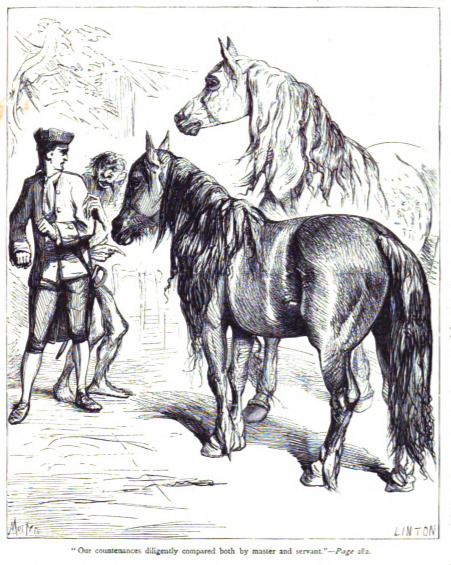
Here the Houyhnhnms compare Gulliver to the Yahoos. When his master first brought him home, his wife was shocked to find her husband bringing a Yahoo into the house. They then took Gulliver outside to compare him with the Yahoos the kept in the stable, chained up. They found Gulliver behaved very differently and wore different clothes, and allowed him to stay. This section serves as a commentary on the European’s views and prejudices of Native Americans.

![[Mrs. Bute at Miss Crawley’s Bedside]](https://collections.cemvc.ca/files/large/441fd0e4a4f9210e86e50ee06a4a243c1725faba.jpg)
![[A satire on the state of England]](https://collections.cemvc.ca/files/large/dffdb4ba27db37aa58add9d340a44f658022930d.jpg)
![[Gulliver encounters a Houyhnhnm]](https://collections.cemvc.ca/files/large/25dec5dfd9efce4c7d31622ff96508c016a7d9fb.jpg)
![[Act XXI (Second Illustration) – Pleberio Telling Alisa About the Death of Melibea while Lucrecia Stands at a Distance]](https://collections.cemvc.ca/files/large/2fa9032920c4ef13aed3e0e66da82f129d8a12ea.jpg)
![[A courtier kisses the hand of a queen]](https://collections.cemvc.ca/files/large/b400b7ba0bac7c1d9db72e7da652d21039d5aecc.jpg)
![[Act XIII] Calisto.](https://collections.cemvc.ca/files/large/0ef1ba6ca358c0d2ce5b8f4d76c71eaa48398237.jpg)
![[Act III – Celestina and Sempronio]](https://collections.cemvc.ca/files/large/64fbb2293d046d9ff151051e42c2081b84fa3562.jpg)
![[Birds Held Captive]](https://collections.cemvc.ca/files/large/a3064264a59aa9ba881f07a03500ad17322aff53.jpg)