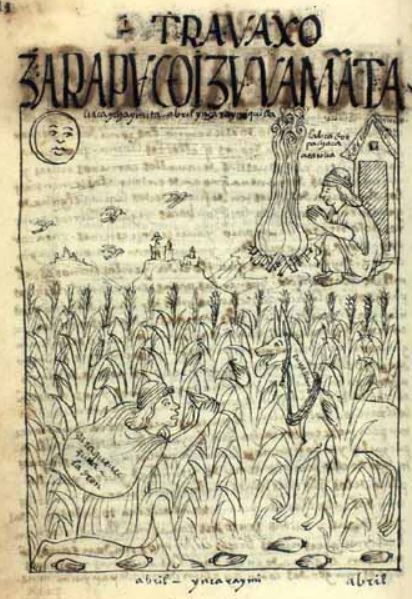
This image is reflected in the final chapter of Ayala’s chronicle where he provides a description of labours and festivals that occur in the rural areas of the Spanish colonial Andes during each month of the Inca calendar year. This image represents the month of April, which was a month dedicated to protecting growing corn fields from human and animal thieves. The moon in the top left corner demonstrates the image takes place at night. There is an indigenous man keeping watch over the corn fields in the top right corner. He is illustrated sitting in front of a small house and holding his hands up to a fire. The caption written beside his head reads, labrador, pachaca arariua [labourer, scarecrow]. At the foreground of the image, an indigenous man is depicted kneeling to keep himself hidden as he steals corn from the fields. The writing on his sack reads zara queuec zuua ladrón [thief who plucks corn]. There is a llama on the right side of the corn field taking corn with its mouth. There is writing on the llama’s neck which reads zuma llama [the thief’s llama]. There is a small city illustrated in the background of the image with birds flying over. The caption at the bottom of the image reads abril, ynca raymi [april, month of Inca feast].
In this image we see Gulliver walking along the main street of Mildendo – the capital city of Lilliput. This image is shown at the beginning of chapter four, in which Gulliver visits the city for the first time. Gulliver’s height is emphasized in this image, however the city itself resembles a European walled city during the eighteenth century. In the foreground we see a guard working at the gate, which also serves as a bridge for carriages. A horse drawn carriage is going across the top of the wall. Flags fly from both turrets of the walls. The street is lined with buildings, likely shops with apartments on the upper floors. Behind Gulliver, we see another arch. Gulliver walks down the middle of the street, with sidewalks on either side of the road. The same image appears in the 1839 Krabbe edition.
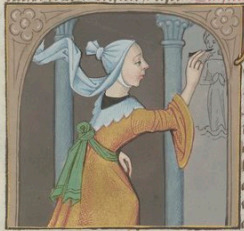
This illumination depicts a woman named Irene painting a portrait of a woman on a wall. Irene was a renowned, skillful painter during her time which Boccaccio believed to deserve praise as the arts were not a common practice of women. Boccaccio explains that Irene was the daughter of a man named Cratinus, who was also a painter (although much less renown).
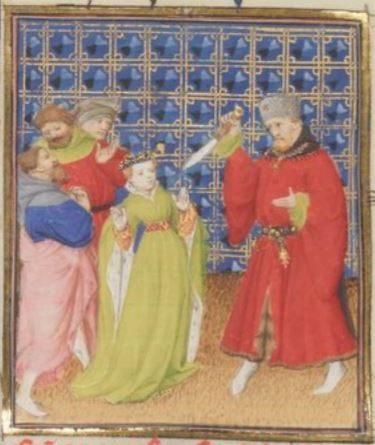
This illustration depicts Verginius, a plebeian man, stabbing his daughter Verginia in the chest with a knife. Boccaccio explains that a man named Appius Claudius had fallen in love with Verginia, and although she was betrothed to Lucius Icilius, he devised a plan to make her his own. Appius Claudius, a judge and a decemvir, ordered a decree that stated she would become a slave so that he could own her. To protect his daughter’s chastity, Verginius stabbed Verginia as death would be better than her honour being destroyed. The men illustrated behind Verginius are most likely Appius Claudius and Lucius Icilius, as they were present in Boccaccio’s telling of the story.
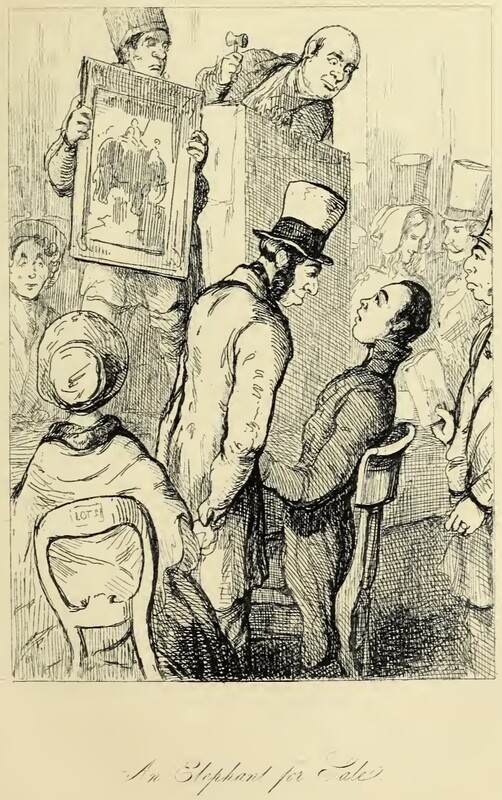
At the auction of the Sedley estate, Mr. Blowman holds up a portrait of Joseph Sedley riding an elephant to show the buyers. William Dobbin is seated directly in front of the painting, looking up with a startled expression at the bearded man looming over him. Mr. Hammerdown is peering down at the two men from the auction block, holding his mallet up. Among the figures in the background, on the right side of the picture, are Rawdon and Rebecca Crawley. Below the illustration is printed in cursive its title, An Elephant for Sale.
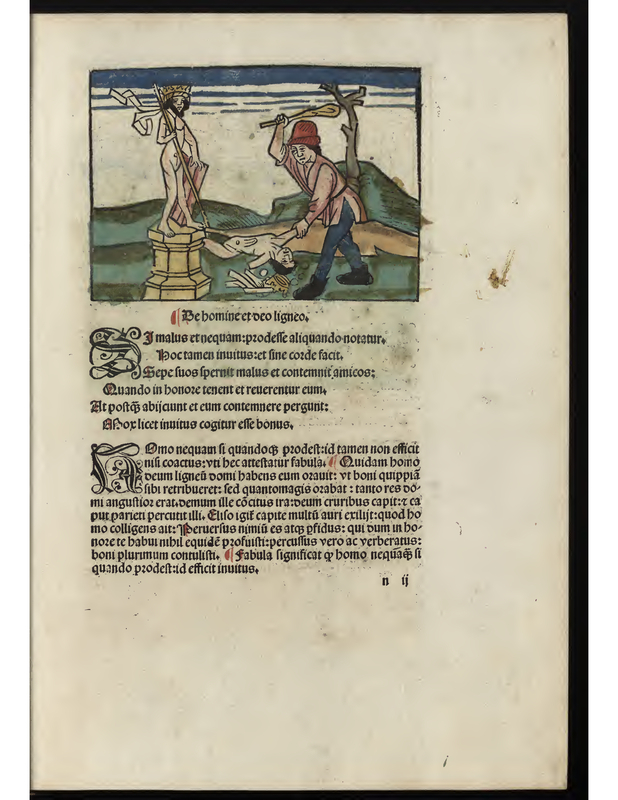
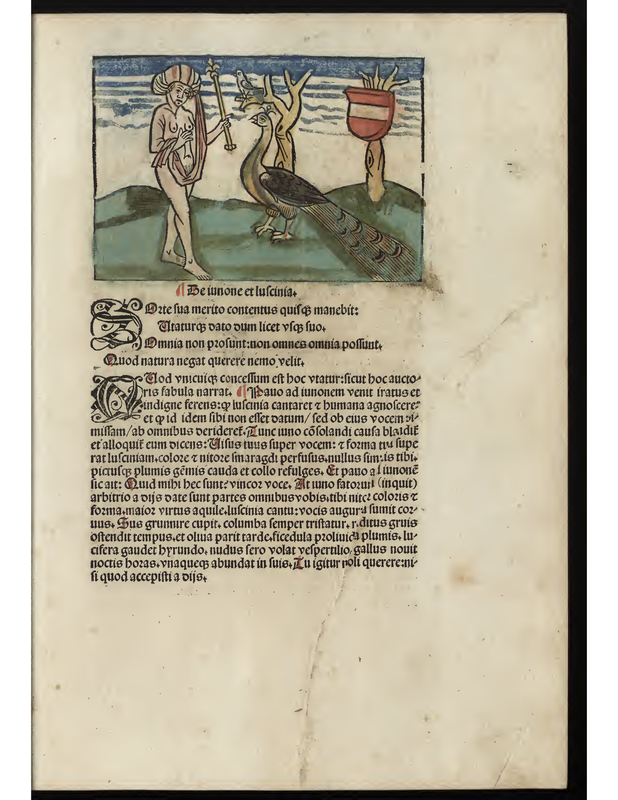
To the left of the image Juno is standing naked holding a golden rod and wearing a large hat. To the right of the image stands a large nightingale. There are two trees behind them, one holding a red and white bag on a branch.
Here we see Gulliver’s crew fleeing Brobdingnag after seeing a giant, leaving Gulliver stranded. In the foreground we see Gulliver’s back as he watches the rest of the crew rowing away back to the ship. Gulliver runs along the coast, but the crew does not return to get him. Also in the foreground, we see waves crashing against a large rock, which is the same size as Gulliver. Six crew members are rowing a small rowboat and waving their arms fleeing. We see the silhouette of a giant in the distance. The giant also appears to be in the water while the crew tries to avoid him. The same image appears in the 1839 Krabbe edition.
In this image Elizabeth judges the fairness of Mr. Darcy’s letter. The day after she rejected him, Mr. Darcy met her while she was out on a walk. He handed her a letter explaining her charges of his misconduct regarding Jane and Mr. Bingley’s relationship, and Mr. Wickham. He wrote that he knew Mr. Bingley loved Jane but he did not believe Jane reciprocated his love. He then suggested Mr. Bingley leave Netherfield to avoid getting hurt. Regarding Mr. Wickham, he writes that Mr. Wickham tried to swindle him out of his late father’s inheritance, and when that failed, he tried to marry Mr. Darcy’s sister, Georgiana, to gain access to her inheritance. In this image she holds the letter in one hand and the scales of justice in the other. In Roman mythology the symbol of Justice is represented as a woman holding a scale in one hand and a sword in the other. This scene occurs in chapter 36. The characters are shown in the traditional regency style. Elizabeth wears the regency style dress with an empire waistline. The regency period dated to the early nineteenth century (1811-1820) when George, Prince of Wales, later George IV (r. 1820-1830), reigned as regent for his mentally ill father, King George III (r. 1760-1820). The regency period is associated with the rise of neoclassicism in art and fashion.
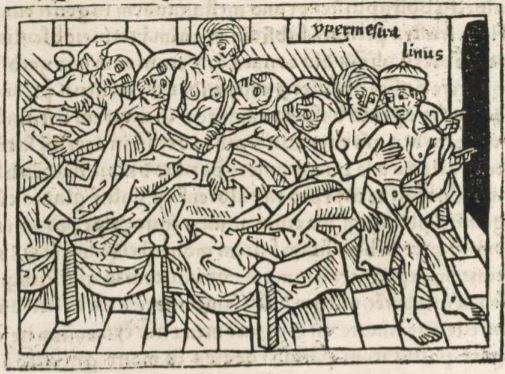
Hypermnestra and her husband, Linus, are illustrated on the edge of the bed on the right-hand side of the engraving. We know these figures are Hypermnestra and Linus as their names are engraved above their heads. Hypermnestra is depicted with her arm lovingly touching Linus’ chest, with her left hand pointing towards the door. As Boccaccio explains, a prophecy told Hypermnestra’s father that one of his nephews would kill him, so he married all his daughters to his nephews and instructed them to kill their new grooms to avoid this prophecy from happening. Hypermnestra, however, fell in love with Linus. She is depicted pointing at the door instructing him to leave to avoid her father and sisters from killing him. One of her sisters is depicted lying in the bed behind her, already having killed her husband, along with the other husbands that have been murdered.
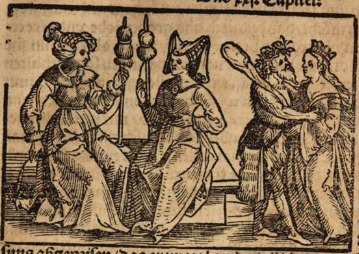
This engraving depicts the marriage between Iole, daughter of King Eurytus of Aetolia, and Hercules. The right side of the engraving illustrates Hercules embracing Iole with affection. Iole is not reciprocating the embrace. Boccaccio explains that Iole is not in love with Hercules because he killed her father after he did not give Hercules permission to marry Iole. In order to seek her revenge on her husband for the murder of her father, Iole allowed Hercules to fall madly in love with her. By doing this, Iole was able to convince Hercules to do whatever she asked. She stripped him of his pride by getting him to dress as a woman and spin wool, which is depicted on the left side of the engraving. As Hercules is unrecognizable in the women’s clothing and indistinguishable from Iole.
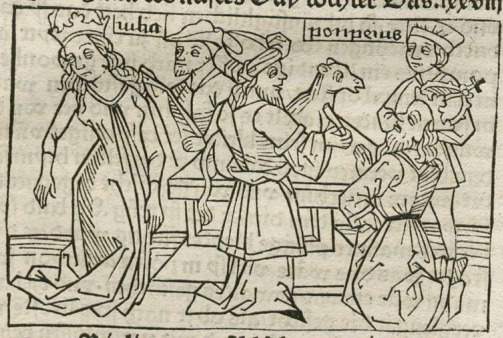
This engraving depicts two separate events. The right side of the engraving depicts Pompey the Great participating in a sacrifice of an animal. Pompey is depicted wearing a crown to signify his high status. The man to the left of Pompey is depicted cutting the neck of the animal that he is holding. There is blood splashing out from the animals wound, which stains Pompey’s clothing. Boccaccio explains that after Pompey’s garments became stained with the animal’s blood, a servant carried his stained clothes back home to get new ones. Julia, Pompey’s wife and the daughter of Julius Caesar, saw the blood-stained clothing of her husband and immediately thought that he had been murdered. Julia is depicted on the left side of the engraving after having just seen the clothing of her husband. She looks distraught and is depicted mid-fall to the ground. There is a servant beside her who is holding the blood-stained garments of her husband. Her name, written as Iulia, is engraved above her head to identify her. Similarly, Pompey’s name, written as Pompeius, is engraved above his head.
To the right side of the image, Amelia Sedley, wearing a white dress, has just come through the door to the drawing-room while singing. On the left side of the image is William Dobbin in his black military uniform, bowing his head to her.
Elicia (because veils indicate mourning dress, she is presumably the leftmost figure) walks to Areusa’s house to tell her about the deaths of Celestina, Sempronio, and Pármeno. As she approaches, Elicia hears Areusa (central figure) wailing within and infers that she must have already heard the bad news. She then hears another voice and realizes that Areusa is arguing with someone (Centurio, rightmost figure). In a fit of rage, Areusa forces Centurio out of her house. Once he leaves, Elicia enters and informs Areusa of the tragedy. They blame the deaths on Calisto’s love for Melibea and set their sights on revenge. They resolve to seek the aid of Centurio in murdering Calisto.
This illuminated image depicts a woman named Arachne hanging herself. Arachne is famous for having discovered the uses of woven cloth, and for being the first to think of making nets. There is a woven net depicted on the right side of the image. Arachne is also known for having challenged Minerva to a weaving competition. When Arachne lost the competition, she killed herself as a result.
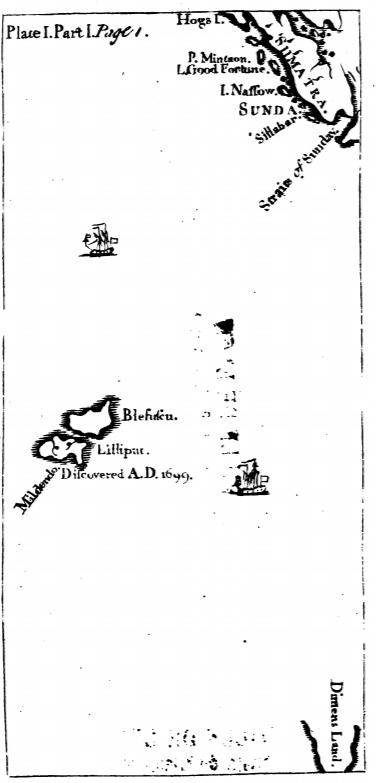
A map of depicting the fictional lands of Lilliput and Blefuscu that Gulliver visited in the first part of the story. Under the fictional lands is written Discovered, AD 1699. The map also depicts the lands of Sumatra and Dimen’s Land. Two ships – likely the man-of-war type ships which were popular in the eighteenth century and are mentioned in the text – are shown. The same map is featured in several other editions of the text, including those in other languages.
An ornately decorated title page. Two figures playing musical instruments appear atop the pedestals on either side of the illustration. The male figure on the left is playing the panpipes (or syrinx), and his horns and goat’s legs indicate that this is possibly a representation of the Greek deity Pan. The figure on the right is female and also has the legs of a goat, but it is difficult to ascertain her identity from this illustration alone. The entire image is nearly identical to the one found on the title page. The first difference can be seen in the top left corner, where the feathers and coat of arms have been replaced by an aged man with a stick of some sort. The second difference is found in the inscription, which reads: Gedruckt und vollendt in der kayserlichen stat Augspurg durch Sigismund Grymm Doctor/ unnd Marx Wirsung/ nach der geburt Christi M. D. XX. Am. xx. tag Decemb. This can be roughly translated as: [Printed and completed in the Imperial State (City) of Augsburg by Doctor Sigismund Grymm/ and Marx Wirsung/ MDXX after the birth of Christ on the XX day of December (December 20th, 1520).] The prefix ‘Doctor’, attached to the name of Sigismund Grymm, refers to his education and his previous role as a physician and pharmacist (his professions before he became a printer/publisher).
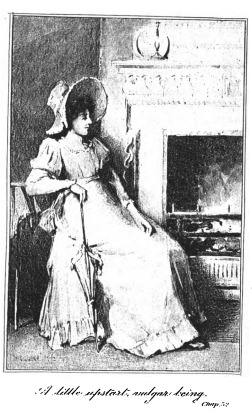
Here we see Mrs. Elton. Following Emma’s rejection of Mr. Elton, he went away, and he came back married to a woman named Augusta whom he met while on vacation. She was a tiresome woman, and Emma described her as vulgar and insufferable. In this image, Mrs. Elton sits in a chair, wearing her bonnet and holding a parasol, an umbrella used to provide shade from the sun. The scene in which Emma first meets and describes Mrs. Elton occurs in chapter 32 as noted underneath the title of this image. The characters are shown in the traditional regency style, with Mrs. Elton wears the regency style dress with an empire waist. Her hair is worn tied up, as was tradition for women after their coming out before the queen, signaling her entrance into society. Mrs. Elton wears a bonnet, a popular fashion of the day that was used to shade her face from the sun while outside on a walk – a common pastime of the era. The regency period dated to the early nineteenth century (1811-1820) when George, Prince of Wales, later George IV (r. 1820-1830), reigned as regent for his mentally ill father, King George III (r. 1760-1820). The Prince of Wales was a fan of Austen’s work, and she dedicates the novel to him. The regency period is associated with the rise of neoclassicism in art and fashion. The same image appears as between pages 30 and 31 for the Dent 1893, 1894, 1895, 1896, and 1897 editions of Emma.
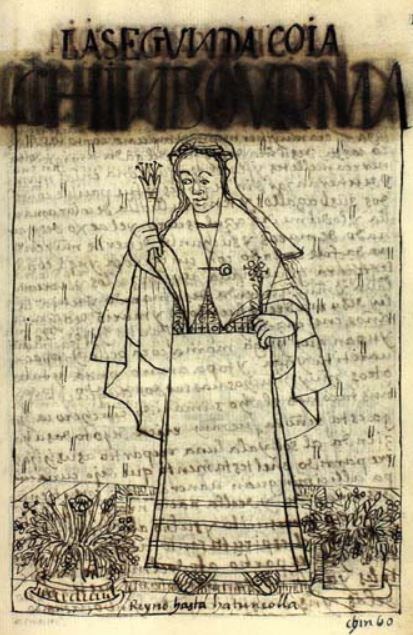
This illustration depicts Chinbo Urma, the second Coya [Queen] of the Inca Empire. She was married to her brother, Sinchi Roca. He author explains that this queen was known for being peaceful and having a garden and always holding flowers, which is why she is depicted holding a flower in her hands and surrounded by plants. The words Reynó hasta Hatun Colla which translates to Queen to Hatun Colla.
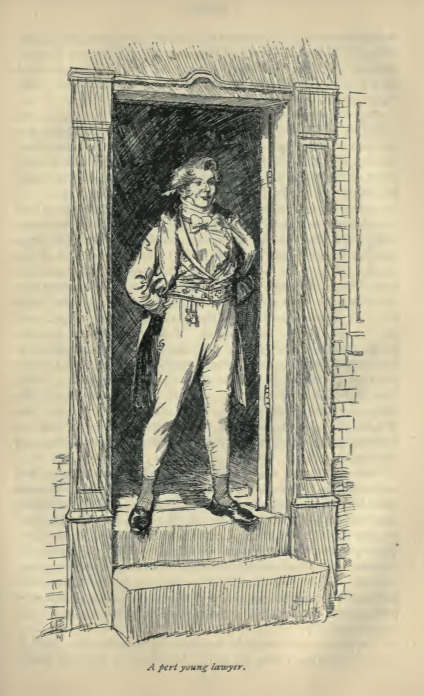
Here we see William Coxe. After Mr. Elton proposed to Emma, she laments her mistake in leading Harriet to believe he loved her. She thinks of all of the other people she to whom she could have introduced Harriet. She thinks of the lawyer William Coxe but she immediately rejects him as a potential suitor, claiming him to be too pert. This scene occurs in chapter 16. The characters are shown in the traditional regency style. William Coxe wears a waistcoat and tailcoat with a cravat. The regency period dated to the early nineteenth century (1811-1820) when George, Prince of Wales, later George IV (r. 1820-1830), reigned as regent for his mentally ill father, King George III (r. 1760-1820). The regency period is associated with the rise of neoclassicism in art and fashion.
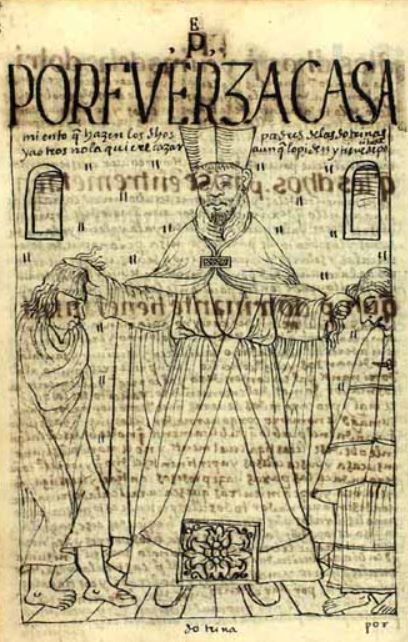
This image is illustrated in a chapter that discusses the Christian priests in the colonial government in Peru. A parish priest is depicted standing in the centre of the image dressed in his ecclesiastic clothing. He is illustrated forcefully pulling the hair of an indigenous man and an indigenous woman. The parish priest is forcing the two unmarried indigenous peoples to marry against their will. The author explains that the priests in colonial Peru would force marriages often.

![[Gulliver arrives at the city of Mildendo]](https://collections.cemvc.ca/files/large/0f65bc6bef9ce970232affe9f98b33428d89af23.jpg)
![[Gulliver’s crew flees Brobdingnag, leaving Gulliver stranded]](https://collections.cemvc.ca/files/large/5368a838282ac89e4f643c6e7341196b1c5f6675.jpg)
![[Elizabeth judges Mr. Darcy’s letter]](https://collections.cemvc.ca/files/large/ced4cbc0e48f7b8a71213d2d3d3cf7459a9d3182.jpg)
![[Dobbin Greets Amelia]](https://collections.cemvc.ca/files/large/02d997ed8db2220a9cbeebbe63b68dc7304e416f.jpg)
![[Act XV – Areusa and Elicia Standing Beside Centurio]](https://collections.cemvc.ca/files/large/b5813457581f1981b34781143747dbcac066d7f7.jpg)
![[Arachne of Colophon Committing Suicide by Hanging]](https://collections.cemvc.ca/files/large/9999421706444b1cc69676ea675fde036cad22bc.jpg)
![[Vanity Fair Vol. I Chapter XIV Inhabited Initial]](https://collections.cemvc.ca/files/large/2e38241b6efa89c1b3b1df214fadd17fd94c4a07.jpg)
![[Closing Page – Colophon]](https://collections.cemvc.ca/files/large/58250aa96f28e3c307994a31d3c81023cca0b8ea.jpg)