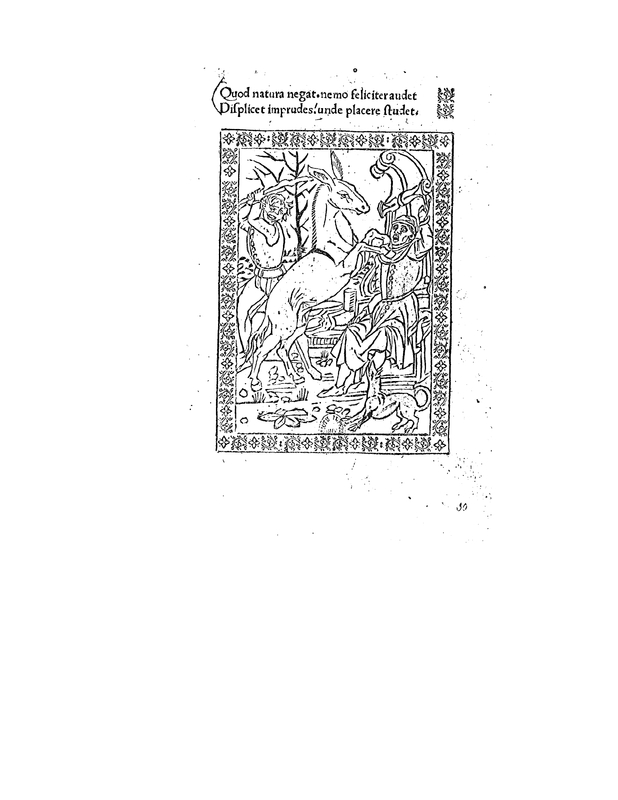
There is a man sitting on a large chair on the right of the image. There is a donkey who seems to be jumping onto the man who looks very distressed. Behind the donkey there is another man who is about to hit it with what appears to be a stick. Below the man on the chair, in the bottom right of the image, there is a dog who appears to be barking at the donkey.
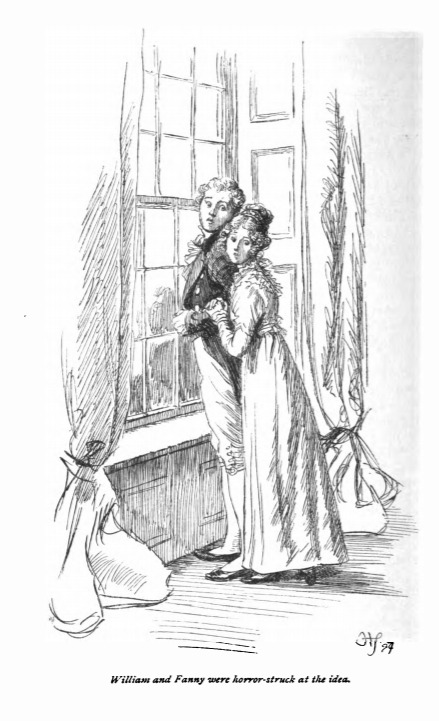
Here we see William and Fanny standing at a window in Mansfield Park, looking in horror. They were going to Portsmouth to visit their family, where William would get on board a ship as a lieutenant. They were going to travel post, but Sir Thomas said they would go in his carriage. Upon hearing this, Mrs. Norris thought she might travel with them to visit her sister, Mrs. Price, whom she had not seen in twenty years. William and Fanny did not want Mrs. Norris to travel with them because she was very tiresome. She ultimately decided not to go to Portsmouth, much to the relief of William and Fanny. This scene occurs in chapter 37. The characters are shown in the traditional regency style. Fanny wears a regency style dress with an empire waist. William wears a waistcoat and tailcoat with breeches. The regency period dated to the early nineteenth century (1811-1820) when George, Prince of Wales, later George IV (r. 1820-1830), reigned as regent for his mentally ill father, King George III (r. 1760-1820). The regency period is associated with the rise of neoclassicism in art and fashion.
After Lucrecia (left-central figure) tells Celestina (right-central figure) that Melibea (rightmost figure) has requested her presence, they both go to Melibea’s house. There, Melibea informs Celestina about the pain in her heart and asks what the cause might be. [The identity of the leftmost figure is uncertain, since Alisa does not enter the scene until after the next illustration. This may be intended to represent another of Melibea’s servants.]
Here we see battle plans for the war between Lilliput and Blefuscu. A compass is used to calculate the attack routes, with the farthest route being 1874 units. Surrounding the maps we see barrels and bottles representing the ammunition and other provisions which were necessary. In the foreground we see a meal prepared, possibly representing the meals the Emperor would eat while his citizens were away fighting – a commentary on the divisions within society. Gulliver’s hat is seen in the background, representing the Lilliputian’s secret weapon. The image comes at the end of the third chapter. The same image appears in the 1843 Krabbe edition.
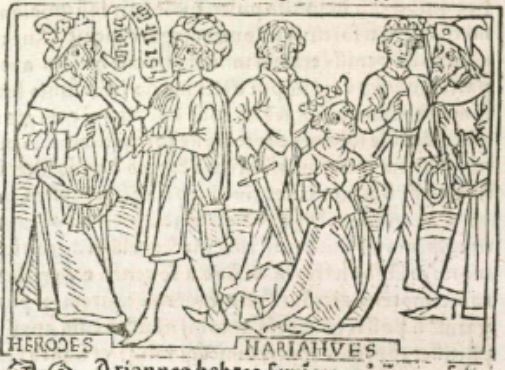
This engraving appears in the chapter that discusses Queen Mariamne of Judaea. Mariamne was the wife of King Herod the Great and she is renowned for her unparalleled beauty. Boccaccio explains that King Herod was so jealous and protective of Mariamne, that he did not want her to outlive him. He devised a plan for someone to murder Mariamne if he were to die before her, so that no one else could have her. The left side of the engraving depicts Herod, with his name spelled as Herodes at the bottom of the image, speaking with the man standing in front of him. This is presumably the person he confided with to arrange for Mariamne’s murder should he perish. The right side of the engraving depicts Mariamne kneeling before Herod as she embraces her execution. Rumours had spread that Mariamne was planning to give Herod poison in retaliation for finding out about his assassination plot against her. The executioner is standing behind Mariamne with a sword and the name Mariahves written below her feet. There is an additional unidentified figure standing in between Herod and the executioner.
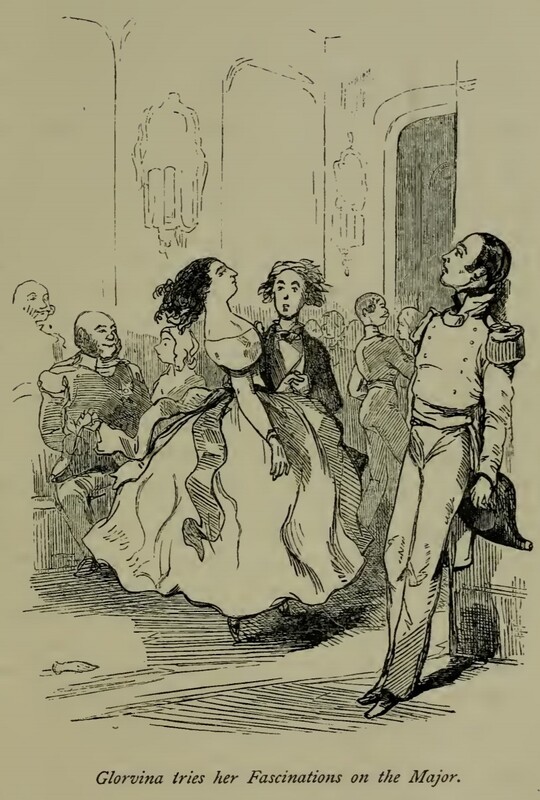
Miss Glorvina O’Dowd dances past Major William Dobbin, trying to get his attention. He is leaning against the wall, holding his hat in his hand, and paying no attention. In the background are assorted other officers and their ladies. Below the illustration is printed in cursive its title, Glorvina tries her Fascinations on the Major.
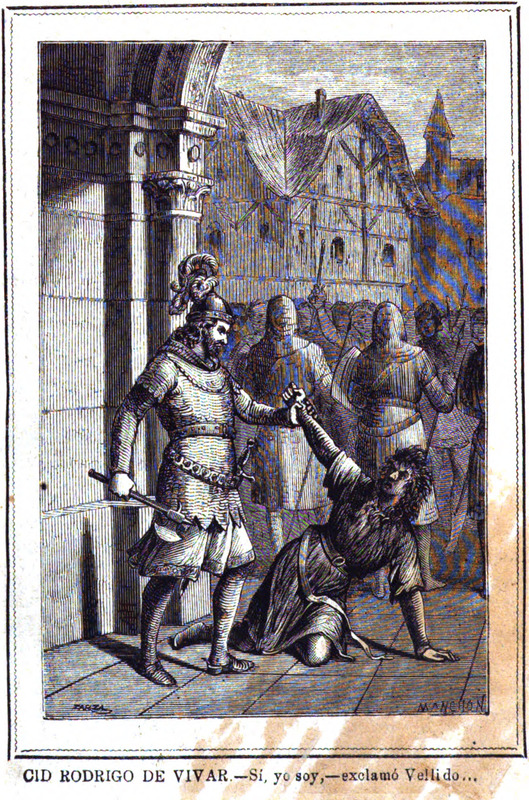
In this image the focus is on the two men, EL Cid and Vellido. El Cid is the bearded one wearing chainmail with a helmet with plumes on his head. On his waist the hilt of a sword is visible. He is using one of his hands to hold Vellido’s hand and the other is holding a small axe. Vellido is wearing armour as well and he has long thick hair. Behind these two men there are two soldiers wearing armour and carrying spears preventing the crowd from approaching. Behind the crowd there are a couple of wooden houses that are visible.
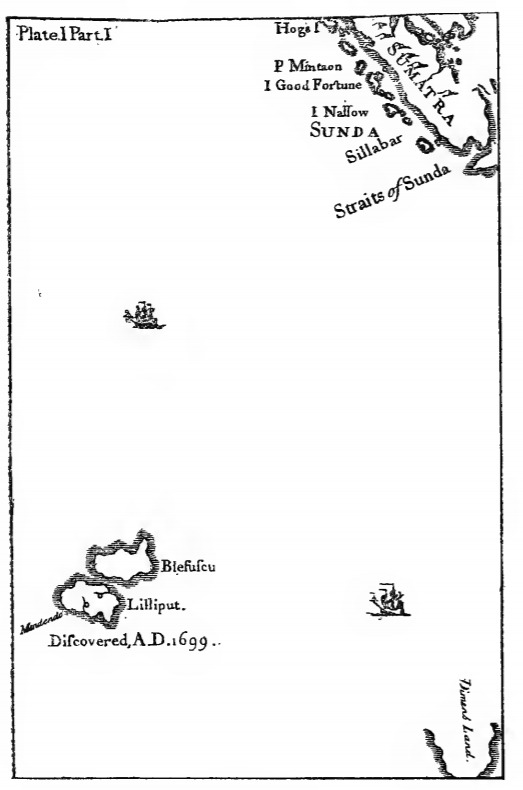
A map of depicting the fictional lands of Lilliput and Blefuscu that Gulliver visited in the first part of the story. Under the fictional lands is written Discovered, AD 1699. The map also depicts the lands of Sumatra and Diemen's Land. Two ships – likely the man-of-war type ships which were popular in the eighteenth century and are mentioned in the text – are shown. The same map is featured in several other editions of the text, including those in other languages.
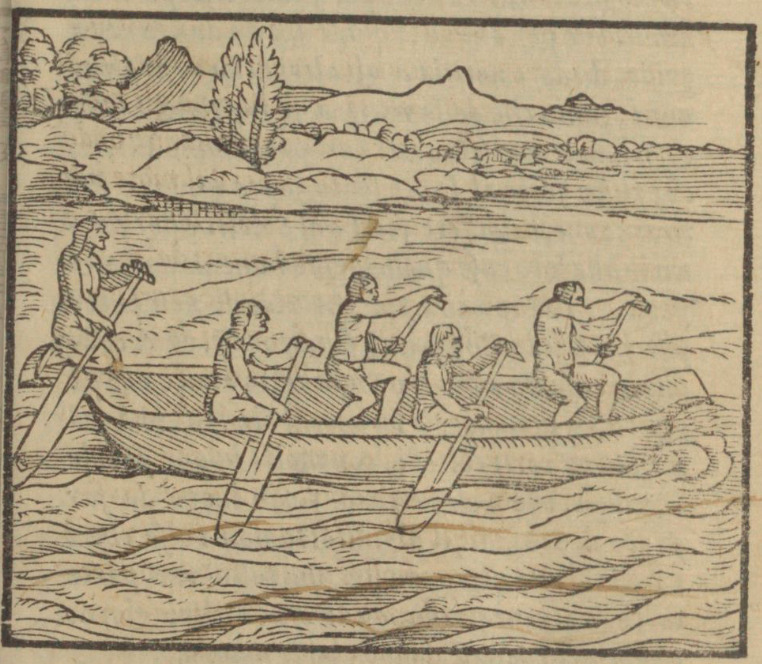
Five Indigenous people in a large dugout canoe paddle near the coast in what is likely either the Caribbean Sea of the Gulf of Paria. Two individuals paddle on the left and two on the right, while the person in the back sits elevated and guides the canoe. The hilly coastline is visible in the background. This image is identical to one found on page 5 of Venice, 1565.
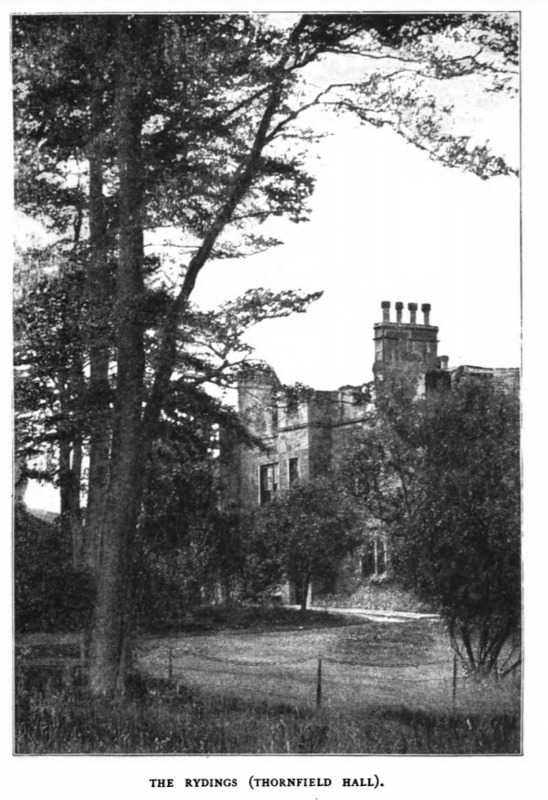
Here we see an image of the Rydings, a house in North Yorkshire. This house is supposedly that on which Thornfield Hall – the house where Jane lived under Mr. Rochester as a governess to Adele – was based. The same image appears in the 1899 Harper edition of Jane Eyre.
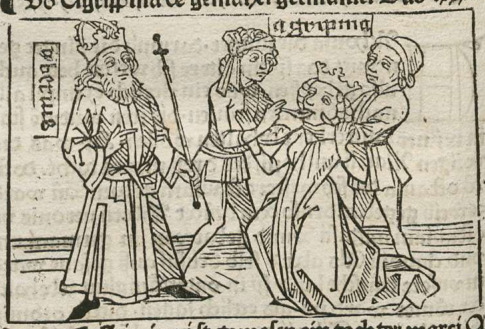
This engraving depicts Agrippina, the wife of Germanicus, being forced to eat food. Agrippina is depicted on the right side of the image on her knees as a man holds her head back while the other man is force feeding her with a spoon. The man on the left side of the image is Tiberius, the one who is ordering her to be fed. Tiberius is Germanicus’ father, and after he killed his own son, he sent his daughter-in-law Agrippina to prison. Agrippina decided to starve herself to death to avoid dying at Tiberius’ hands, however, Tiberius force fed her so that she would not die on her own. The creator engraved Agrippina’s name above her head, as well as Tiberius’ name, which is engraved beside his body.
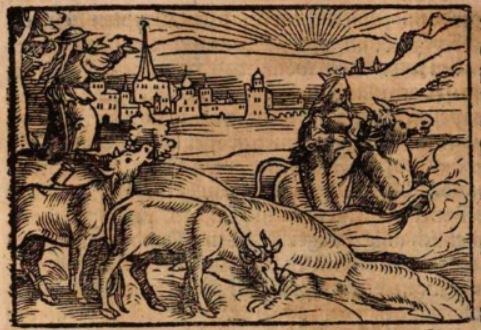
This engraving illustrates the beautiful Europa being kidnapped by Jupiter. Europa is depicted sitting on a bull as the bull swims across the ocean. The bull is Jupiter in disguise. Jupiter had fallen madly in love with Europa and disguised himself as a bull and joined her father’s herd of cows. The god Mercury, who is visible on the left side of the engraving, led the flock to the shores of Phoenicia while Europa followed him. These cows are illustrated in the bottom left corner of the image. Boccaccio explains that once the cows were on the shores, Jupiter took Europa on his back and swam to Crete with her. Europa is depicted with a crown on her head to symbolize her royal status as queen of Crete and daughter of the king of Phoenicia.
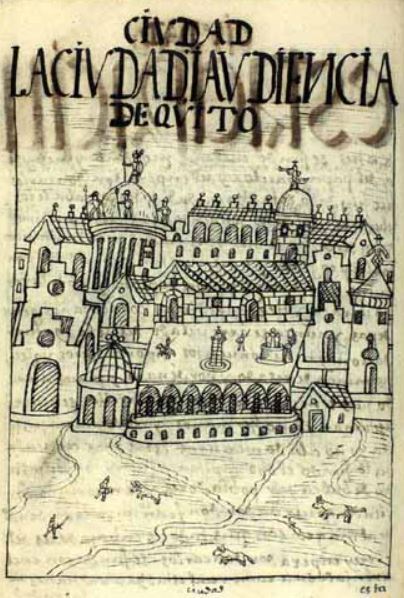
This image is depicted in the author’s chapter where he discusses cities, towns, villages, and provinces in colonial South America. This image depicts the city of Quito, Ecuador. The city is depicted as a cluster of buildings that form a square in the centre. There are two fountains illustrated in the centre of that square with soldiers walking around them and one person on a horse. There are two soldiers outside of the city walls and three dogs. The author explains that the city of Quito had a royal audience, and that the bishopric of Quito was founded by conquistador Francisco Pizarro. He also explained that bad Christians who had little charity lived in the city of Quito. The caption at the bottom of the image reads ciudad [city].
Here we see Gulliver after he was stranded in the Country of the Houyhnhnms. On his fourth voyage Gulliver was the captain of the ship, and his crew mutinied, leaving him abandoned on the beach. In this image we see Gulliver walking alone on the beach, with his ship sailing away. On a rock we see the letter J, which is the first letter of the chapter. The same image appears in the 1839 Krabbe edition.
In this image we see Gulliver speaking to four Lilliputian pages, who were assigned to Gulliver’s household by the Emperor. The pages stand on a box, looking up to Gulliver. The pages wear conical hats with plumes coming out of the top. The same image appears in both the 1839 and 1843 Krabbe editions.
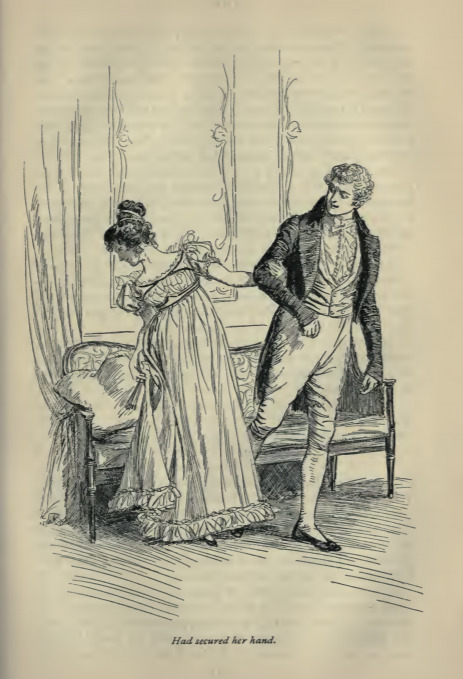
In this image Frank Churchill leads Emma to the dance floor after a dinner given by the Westons. Both Emma and Jane Fairfax had played piano, and after the concert portion of the evening Mrs. Weston sat down at the piano to play country dance songs. She began with a waltz, and Frank Churchill came over to Emma to lead her to the dance floor. This scene occurs in chapter 25. The characters are shown in the traditional regency style. Emma wears the regency style dress with an empire waist. She looks down at the sofa where she was sitting, putting her fan down. Frank Churchill wears a waistcoat and tailcoat, with a cravat and breeches. The regency period dated to the early nineteenth century (1811-1820) when George, Prince of Wales, later George IV (r. 1820-1830), reigned as regent for his mentally ill father, King George III (r. 1760-1820). The regency period is associated with the rise of neoclassicism in art and fashion.
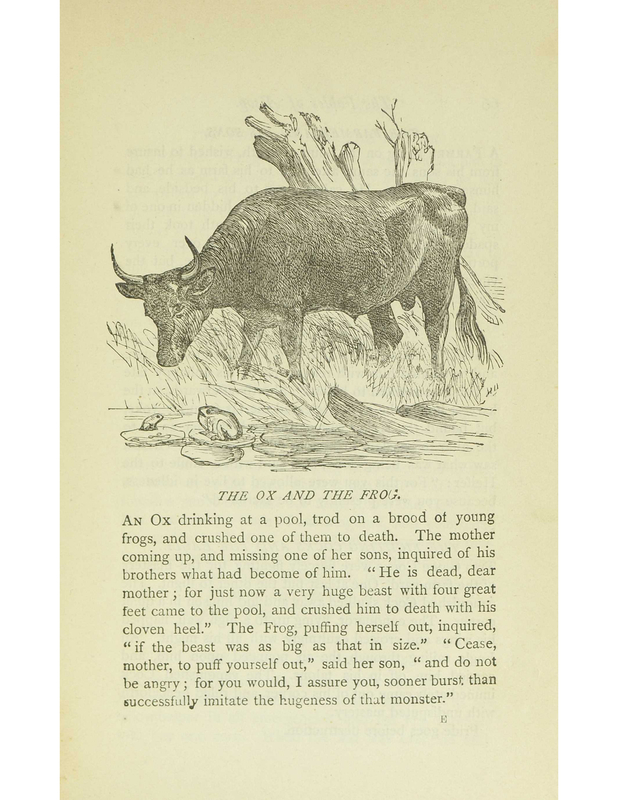
An ox is bent towards the ground where a small lake is there. In the lake, sitting on lily pads are two frogs. The one on the right looks like a large toad, while the other to the left looks like a small frog. The ox is in tall grass and there are tree trunks standing tall behind it.
An Indigenous group from Newfoundland (as identified by the author) prepare to go to war. The group marches in a procession with large drums made from animal skins stretched over a wooden frame and bones as drumsticks. One man is carried on the shoulders of several others and holds a ceremonial weapon or other object. Most members of the group are barefoot and wear tunics, several have capes tied around their necks, and others wear headdresses of feathers or leaves. This image is identical to one found in Frankfurt, 1557.
This image is illustrated in a chapter that discusses the descendants of the Inca and Andean nobles under Spanish colonial rule in Peru and their importance to a revived Andean society. This cicaque [native lord] is illustrated standing in the center of the image dressed in Spanish attire and holding a rosary in his right hand. The author explains that these officials were responsible for overseeing and caring for one thousand native tributaries on behalf of the Spanish king. The caption at the bottom of the image reads, tiene don y rreserbado por el enperador y ley deste rreyno curacas, caualleros particulares, deste rreyno, que no le a de faltar un yndio de mil tributarios y aci se dize de la uaranga en ellos sollo y en acauando lo dexa al mayor hijo [he has a gift reserved by the emperor and law of this kingdom, magistrates, private knights of this kingdom].
Two assistants of Mr. Moses, the sheriff’s-officer, watching the residence of Rawdon and Rebecca Crawley on Chancery Lane. They are wearing black coats and tall hats, carrying thin sticks, and scowling.
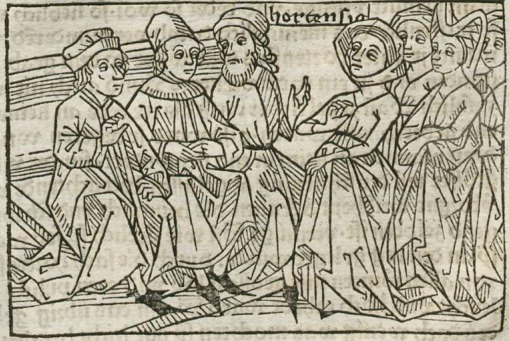
This engraving depicts Hortensia, the daughter of famous orator Quintus Hortensius, speaking in front of the triumvirs. Hortensia inherited the gift of oration from her father, and when the triumvirs raised taxes unbearably high, she spoke so eloquently to them that they revoked the taxes. The triumvirs have pleasantly surprised looks on their faces as they are impressed with Hortensia’s abilities. Hortensia appears to look confident as she speaks to them. There are other women standing behind her in support of her approaching the triumvirs.
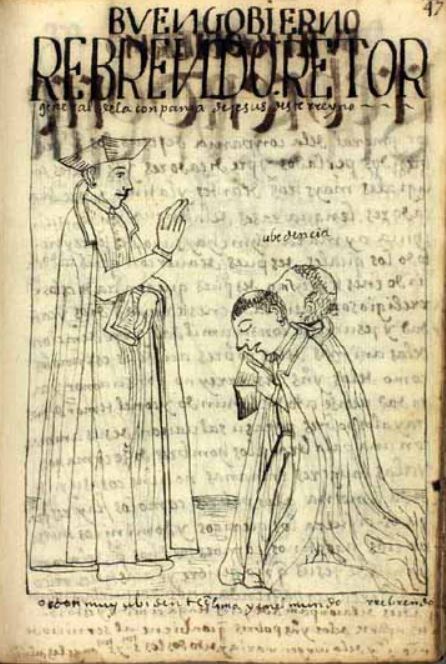
The author spends this section of this chapter discussing religious establishment in Peru and the church’s hierarchy. This image depicts the Rector General of the Society of Jesus standing on the left side of the image holding the Bible in his left hand and blessing the two priests kneeling in front of him. The two men are labelled as ubedencia [obedience]. The author explains that the Rector Generals were scholars and masters of the arts who would teach Latin and teach the indigenous languages of Peru, such as Quechua and Aymara. The caption at the bottom of the image describes the Society as, orden muy ubidente en Lima y en el mundo [a very obedient order in Lima and throughout the world].

![[Act X – Melibea, Celestina, and Lucrecia Talking as Alisa Approaches]](https://collections.cemvc.ca/files/large/00764c4637f5e691e019ea422b776a71a40c3e12.jpg)
![[Battle plans for the Lilliputan-Blefuscu war]](https://collections.cemvc.ca/files/large/ef6f6e98d7cf36afacc2e917cf56ec55d0e88847.jpg)

![[Gulliver is stranded on his fourth and final voyage]](https://collections.cemvc.ca/files/large/ea355d3fd7088b2b84c00eb5e7f66cfc5a5033b8.jpg)
![[Gulliver speaking with his pages, assigned to him by the Emperor]](https://collections.cemvc.ca/files/large/250c6bec34837ba5d2c760c5eb952866a099222b.jpg)

![[War procession of an Indigenous group from Newfoundland]](https://collections.cemvc.ca/files/large/0a158c9b63de1df80a45748bd6e3723803b20d5f.jpg)
![Caciqve de Mil In[di]os, Qvaranga Cvraca, Paitan Ano[lla] Lucana](https://collections.cemvc.ca/files/large/20afad54a1944ffb4908e3945493dee1d615a407.jpg)
![[Mr. Moses’s Aides-de-Camp]](https://collections.cemvc.ca/files/large/2190a3dc674768f184f3d1e71f89c9adf3d97911.jpg)