Five figures, four men in tall hats and a woman a dark coat, sit upon a public carriage travelling from London to Queen’s Crawley. At the right of the picture, in the box, are the coachman and Sir Pitt, holding a crop. Behind them are a young man from Cambridge, who has lent one of his coats to Rebecca Sharp, who sits between him and the final man. On the left of the picture is the front of the pile of luggage stacked on the carriage roof.
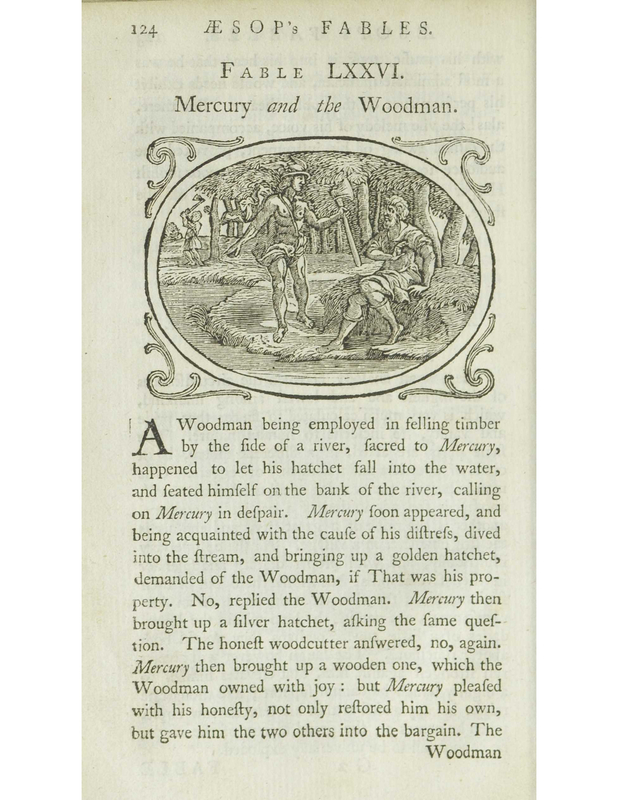
A man in only linens talks to another man who is sitting down on the grass and hands him an axe. Another person swinging an axe can be seen in the distance and they are all in a forest.
In this image we see a cabin boy from Gulliver’s ship first seeing Brobdingnag. He climbs one of two rope ladders up the mast. He waves down to others on the deck to signal his discovery to the others on the ship. The boy is barefoot and wears short pants and a loose shirt. Just below his feet we see the top of one of the sails. The same image appears in the 1839 Krabbe edition.
Two figures are climbing over a wall using a ladder placed next to a tree. The man, representing Captain Rawdon Crawley, is at the bottom of the ladder, holding the hand of the woman. She represents Rebecca Sharp, looking backwards as she climbs over the wall and onto the ladder. The ladder forms the letter H from How.
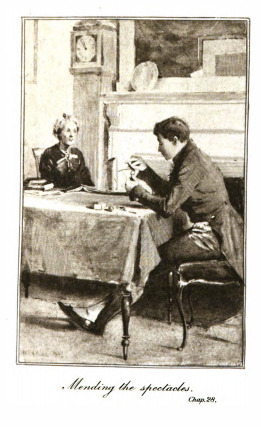
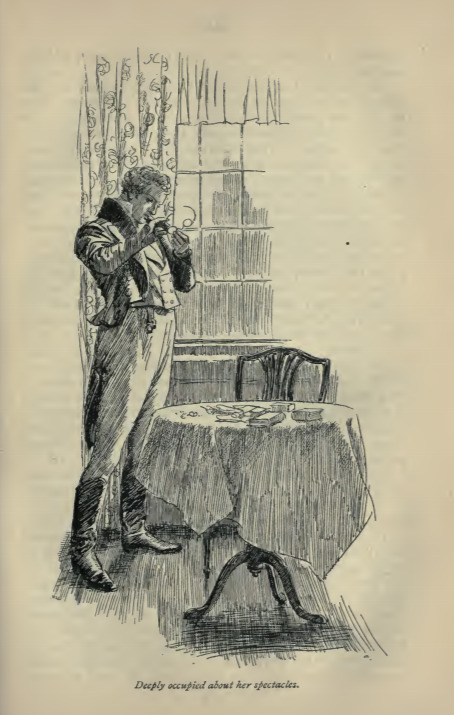
Here we see Mr. Frank Churchill fixing the screw on the elderly Mrs. Bates’ glasses. Mr. Frank Churchill was the son of Mr. Weston, a good friend of Emma Woodhouse. He went to live with his aunt and uncle in the north of England following the death of his mother when he was a child. He came to visit his father and his stepmother, who was Emma’s governess before she married Mr. Weston. During his visit to Highbury in February, Mr. Churchill flirted with Emma. It later came out that he was secretly engaged to Mrs. Bates’ granddaughter, Miss Fairfax. In this image, Mr. Frank Churchill sits at a table holding Mrs. Bates’ glasses in his hand and turning the screw to tighten them. Mrs. Bates sits at the table next to him. Emma walked in while he was doing this, coming to visit the Bates. This scene occurs in chapter 28 as noted underneath the title of this image. The characters are shown in the traditional regency style, with Mr. Elton wearing waistcoat, tailcoat, and knickers that stopped at the knee. Mrs. Bates wears the regency style dress with an empire waist. Their hair is worn tied up, as was tradition for women after their coming out before the queen, signaling her entrance into society. The regency period dated to the early nineteenth century (1811-1820) when George, Prince of Wales, later George IV (r. 1820-1830), reigned as regent for his mentally ill father, King George III (r. 1760-1820). The Prince of Wales was a fan of Austen’s work, and she dedicates the novel to him. The regency period is associated with the rise of neoclassicism in art and fashion. The same image appears as an insert between pages 236 and 237 for the Dent 1893, 1894, 1895, 1896, and 1897 editions of Emma.
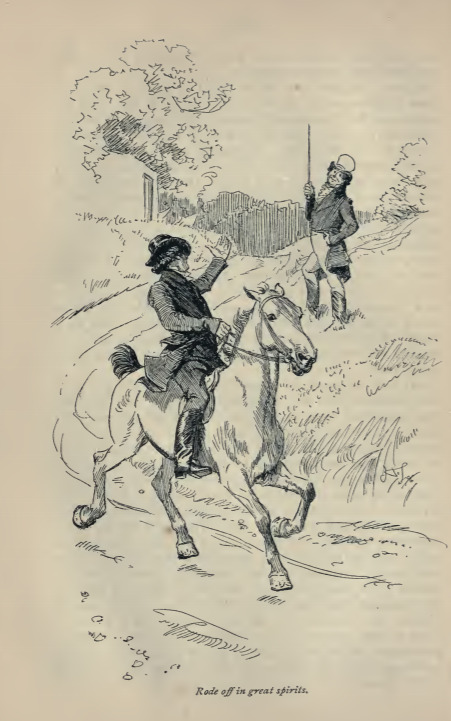
Here we see Mr. Elton on horseback. He was stopped by Mr. Nash, who asked him where he was going, to which Mr. Elton responded that he was on an errand for a lady, then rode off in high spirits. Mr. Elton came back several days later with an addition to Harriet’s book of riddles. This scene occurs in chapter 8. The characters are shown in the traditional regency style. Mr. Elton and Mr. Nash wear a waistcoat and tailcoat, with a cravat and top hat. Mr. Nash waves his walking stick as Mr. Elton rides away. The regency period dated to the early nineteenth century (1811-1820) when George, Prince of Wales, later George IV (r. 1820-1830), reigned as regent for his mentally ill father, King George III (r. 1760-1820). The regency period is associated with the rise of neoclassicism in art and fashion.
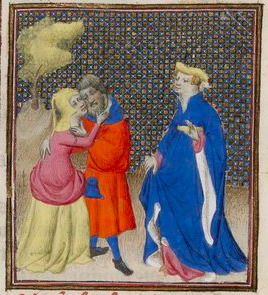
Throughout their marriage, Scipio Africanus cheated on his wife Tertia Aemilia with a young servant girl. Tertia Aemilia found out about his affair, but never spoke about it. She was so composed that even he did not know that his wife had found out. She knew that this news being public would be too unbecoming, so she kept it to herself. In the image, Scipio Africanus embraces the young servant, while Tertia Aemilia watches.
John Sedley, slightly stooped, holds a plate. George Osborne’s valet Trotter, surprised and slightly pleased, has just taken the glass of wine which Mr. Sedley offered him. He has just brought Amelia Osborne to visit her parents.
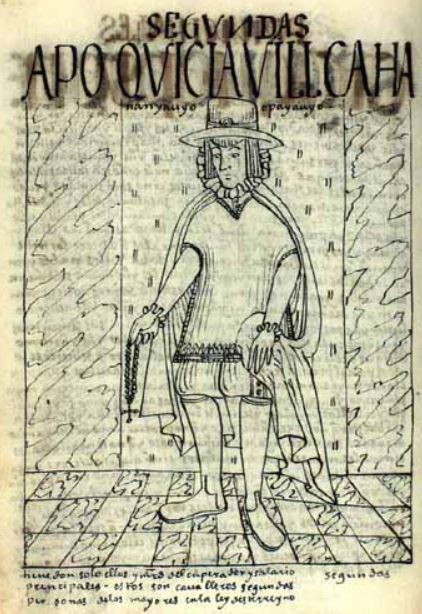
This image is illustrated in a chapter that discusses the descendants of the Inca and Andean nobles under Spanish colonial rule in Peru and their importance to a revived Andean society. This image depicts a portrait of a noble named Apo Quicia Uillca. He is dressed in Spanish attire and is illustrated holding a rosary in his right hand. The caption at the bottom of the image reads, tiene don solo ellos y merced del enperador y salario prencipales, estos son caualleros, segundas personas de los mayores en la ley deste rreyno [only they enjoy the gift of the emperor’s favours and salary, these are knights, second people of the greatest law in the kingdom].
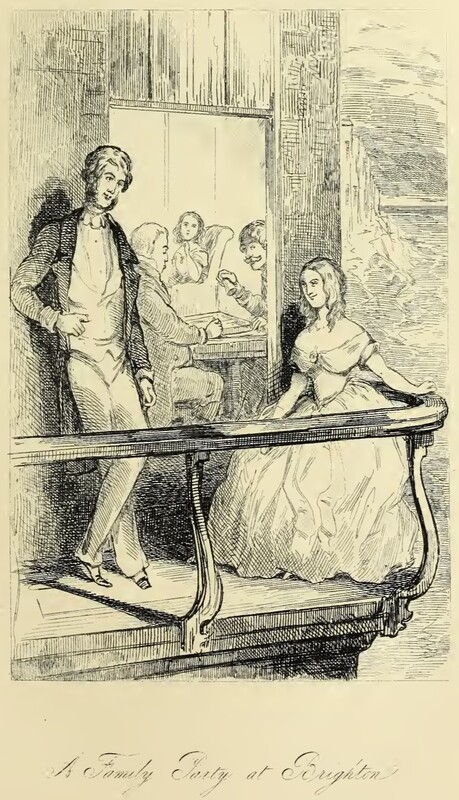
George Osborne and Rebecca Crawley are on the balcony of the inn at Brighton, looking at the ocean. He is leaning against the building, facing out, while she is seated by the railing, facing him. Through the doorway, Joseph Sedley and Rawdon Crawley can be seen inside at the table, playing backgammon. In the far background, Amelia Osborne is sitting alone in an armchair, looking forlornly at the others. Below the illustration is printed in cursive its title, A Family Party at Brighton.
In this image Frank Churchill fixes Mrs. Bates glasses. Frank Churchill and Emma went into town and Miss Bates came into the store and asked them to come in. Emma initially refused, needing to finish her errands. Frank Churchill went in, and when Emma arrived, he was fixing the elderly Mrs. Bates’ glasses. This scene occurs in chapter 27. The characters are shown in the traditional regency style. Emma wears the regency style dress with an empire waist. She looks down at the sofa where she was sitting, putting her fan down. Frank Churchill wears a waistcoat and tailcoat, with a cravat and breeches. The regency period dated to the early nineteenth century (1811-1820) when George, Prince of Wales, later George IV (r. 1820-1830), reigned as regent for his mentally ill father, King George III (r. 1760-1820). The regency period is associated with the rise of neoclassicism in art and fashion.
In this image we see Gulliver in his house in Lilliput. One of his pages in Lilliput is in his left pocket, into which Gulliver reaches. The other is sitting on Gulliver’s right knee writing on a tablet with a stylus, recording details about Gulliver’s life and where he comes from. The same image appears in both the 1839 and 1843 Krabbe editions.
A group of Indigenous Canadians (identified as such by the author) attacks the village of another group. The attackers arrive by canoe, bearing spears, bows and arrows, and torches. Some of them set fires along the shore and in the village. A few individuals on the right flee the fire by running and crawling away in an attempt to avoid the smoke. This image is identical to one found in Frankfurt, 1557.
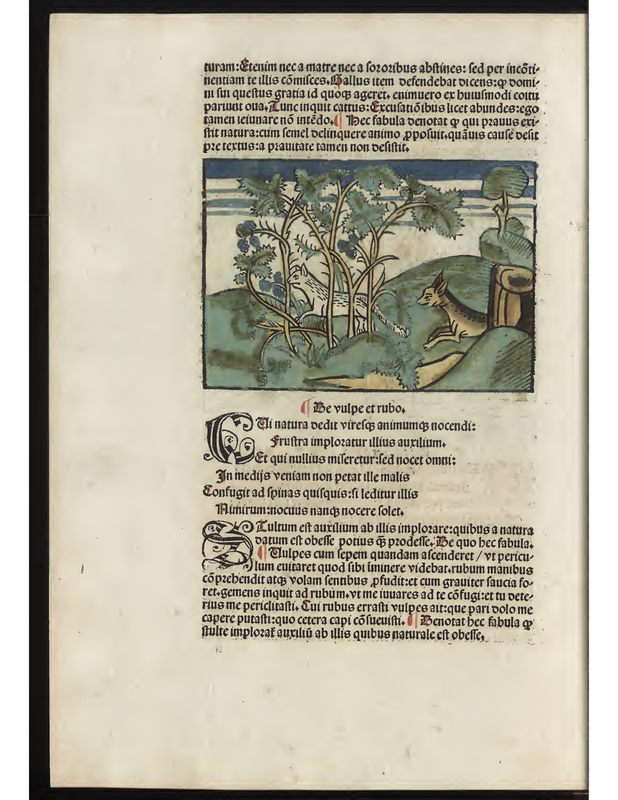
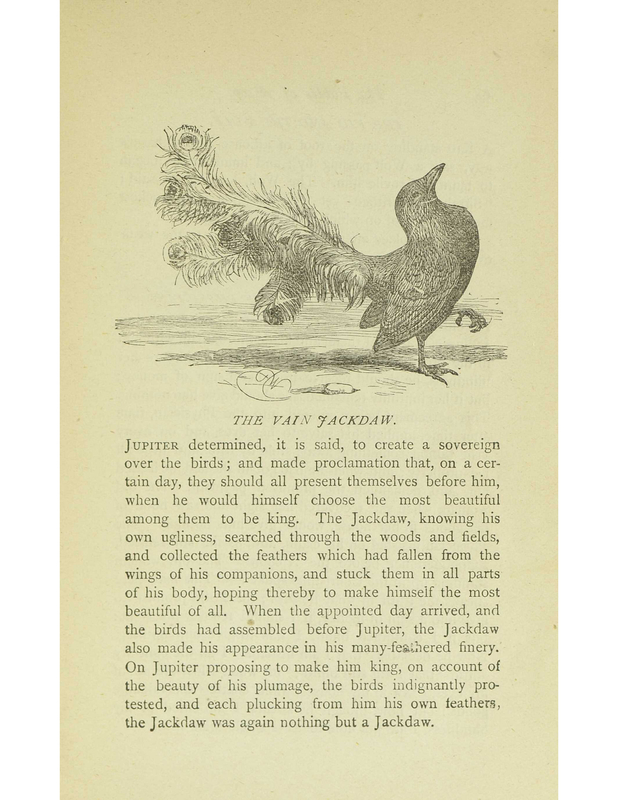
A jackdaw in strutting towards the right-hand side of the image, its beak raised high up in the air. It is standing on one foot, while it has the other lifted in the air, its claws curled inwards. The jackdaw has peacock feathers hanging on its tail.
Here we see Gulliver dining with the Governor of Glubbdubdrib, who was a necromancer. Over dinner Gulliver tells the Governor about his time on Balnibarbi. The dinner was served by ghosts, and Gulliver is visibly uncomfortable. Gulliver tells us that over time he became used to the sight of the ghosts. The ghosts are very skeletal and gaunt, and the Governor could make them disappear with a snap of his fingers. The Governor wears robes with a skull and an owl on the front, and a pointed cap. The same image appears in the 1839 Krabbe edition.
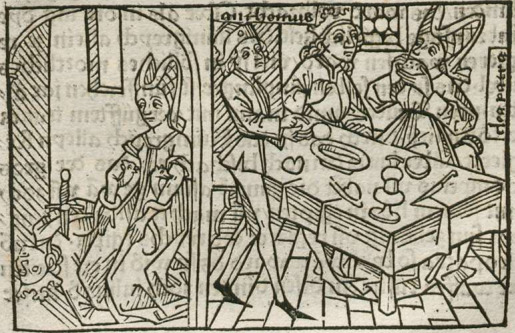
This engraving depicts two separate scenes. The right side of the engraving depicts queen Cleopatra of Egypt sitting at a dinner table, with her husband Antony beside her. Cleopatra had very expensive tastes and demanded a feast which would cost an outrageous amount of money. When Antony did not provide the entire feast Cleopatra demanded, she took out one of her pearl earrings and dissolved it in her drink and drank it to get the luxuriousness she desired. Cleopatra is depicted drinking the pearl in this image. The names Cleopatra and Antony (written as Antonius) are engraved beside their heads. There is a third figure in this scene, which is a man named Lucius Plautus who was called to be a judge of the feast. The left side of the engraving depicts the suicide of Antony. After realizing the forces of Octavian were on their way to destroy them, Antony plunged his sword into his chest, as depicted in the engraving. Cleopatra is depicted kneeling over his body before she kills herself as well.
A women is hugging and caring for a man laying down on a table. The women is wearing a long robe. A man is seen walking away from them carrying a sword.
In this image we see leaning on a table with his head in his hand looking alarmed. The image itself is slightly askew to show Gulliver’s concerns. This image comes after his sentence had been read by Lilliputian officials. Gulliver’s punishment was to be blinded by several sharp arrows. The same image appears in the 1839 Krabbe edition.

![[The Carriage to Queen’s Crawley]](https://collections.cemvc.ca/files/large/784640853d4cc0b027e4dd55bb809c6a9c67f441.jpg)
![[A crew member sees Brobdingnag]](https://collections.cemvc.ca/files/large/5e16ee9e937b0d343a90da94a6bf9dcba021409c.jpg)
![[Vanity Fair Vol. I Chapter XVI Historiated Initial]](https://collections.cemvc.ca/files/large/aec4fe8d97893bc8f55c8f2ad8c1684689cd8670.jpg)
![[Mr. Sedley and the Valet]](https://collections.cemvc.ca/files/large/e0b41ee97b1a5183e3519057fa7c552a3a05e112.jpg)
![[Gulliver with his attendants on Lilliput]](https://collections.cemvc.ca/files/large/952c5b40019a7d4ec1aa860124f46ed35985b094.jpg)
![[Conflict between Indigenous Canadian groups]](https://collections.cemvc.ca/files/large/bc0e33115f521de972d68163653e0572a0b8c026.jpg)
![[Gulliver eats dinner with the Governor of Glubbdubdrib]](https://collections.cemvc.ca/files/large/96f037c8e7db25477eac2a76e3010830838ee466.jpg)
![[George and Amelia at the Piano]](https://collections.cemvc.ca/files/large/5048ea9076d6ab2d5f216335172e16958025fb5e.jpg)
![[Man on table]](https://collections.cemvc.ca/files/large/db0d03ccccf031e0d90a4d38fa92b5a44a4c8497.jpg)
![[Gulliver hears his sentence from Lilliputian officials]](https://collections.cemvc.ca/files/large/65ea249ed7e12077f8362fcab6b357e1f709d31b.jpg)