The skin of a lion sits on a horse. A man is holding the horse steady. Other horses are running in the field away from them. The man has a stick-like weapon is his left hand.
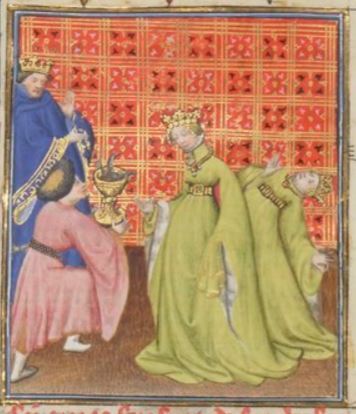
This illumination depicts Sophonisba, the queen of Numidia, about to drink a chalice full of poison. She is illustrated wearing a crown to demonstrate her royal status. Sophonisba is famous for her death, as she willingly drank a poison given to her by her husband to avoid dying at the hands of her Roman enemies. Sophonisba’s husband, Masinissa, is illustrated on the left side of the image wearing a blue robe and a crown as he stands beside the servant. Sophonisba is illustrated reaching towards the chalice. There is another depiction of Sophonisba as she falls to the ground after drinking the poison.
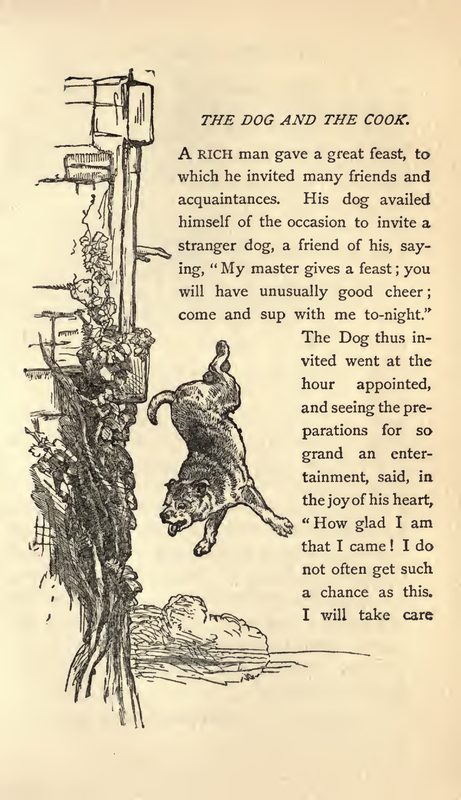
A hand is extending out from the window of a building with the palms facing down. The building is covered with flower vines, and there are bushes on the ground below. A dog is falling face first from the window to the ground.
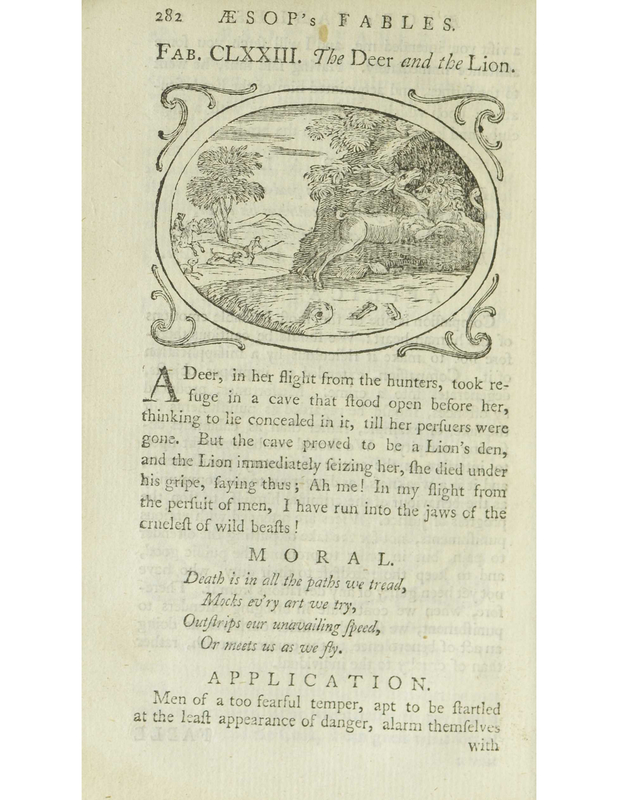
In a cave surrounded by bones and skulls, a lion attacks a deer. The lion is biting the deers neck and has their paws wrapped around the deer. In the background there is a group of hunters and dogs that are in pursuit of the deer.
Here we see Gulliver studying Lilliputian specimen under a microscope. Lilliputians are on stakes to be studied. Gulliver the writes his observations with a quill. This image appears at the beginning of chapter one. The letter M appears in large letters in the top right corner, as the first word of the chapter is my.
In the centre of the illustration, we see Celestina wearing a robe and a veil. There are two male figures to the left and one to the right. In Act V, Celestina and Sempronio talk to one another while travelling to Calisto’s house, and Calisto talks with Pármeno at home. It is not until Act VI that the four of them are in the same room. Thus, the scene depicted here has no relation to Act V.[This illustration is identical to those found in Acts IV (folio 32r), VI (folio 45r), VIII (folio 62r), X (folio 74r), XIII (folio 93v), XV (folio 102r), and XVII (folio 109r).]
Here we see the Lilliputian Emperor and Finance Minister discussing what to do about Gulliver, as it was very expensive to continue to feed and clothe him due to his size. The two ultimately came up with a plan to charge him with treason among other charges to force him to leave. The same image appears in both the 1839 and 1843 Krabbe editions.
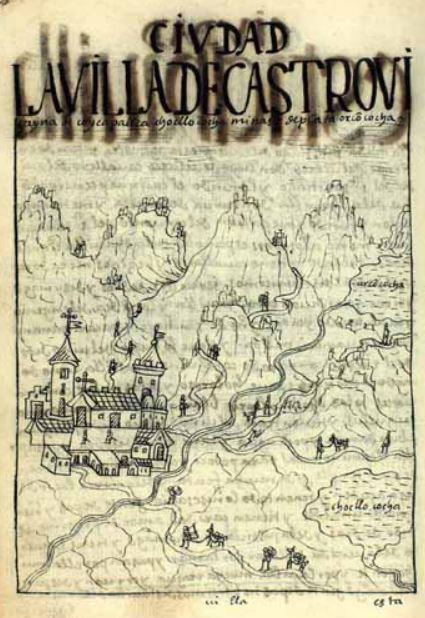
This image is depicted in the author’s chapter where he discusses cities, towns, villages, and provinces in colonial South America. This image depicts the town of Castrovirreyna in central Peru. The town is illustrated on the left side of the image and is arranged as a cluster of buildings which forms a square in the centre. There are many winding paths that lead into the city from the silver mines that surround the area. People are depicted walking towards and away from the city, some with llamas carrying their supplies. Lake Chochlococha is depicted in the bottom right corner of the image. The caption at the bottom of the image reads uilla [villa].
This engraving depicts Soaemias, a Greek woman, sitting in the middle of a meeting. This ia a meeting of the Roman senate with her son, Elagabalus, as Roman emperor. They are depicted sitting in a circle, with everyone looking at Elagabalus, who is illustrated wearing a crown and holding a scepter. Elagabalus would not have become emperor without his mother’s help, so he granted her the ability to have authority and did nothing without her consent. This image is highly significant as she was, as Boccaccio explains, the first woman to have a seat among the Roman senate and discuss her opinions and views on what must be done. The left side of the engraving depicts Soaemias kissing a man to represent her life as a prostitute before becoming mother to the emperor.
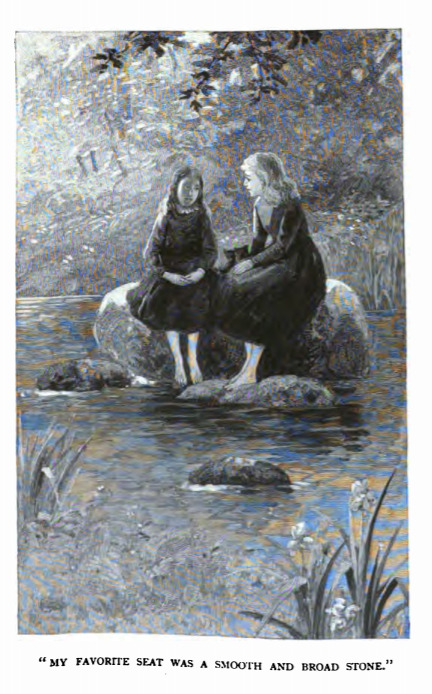
In the spring of her first year there was an outbreak of typhus. During this time the children who were healthy were allowed free reign. Jane spent most of her time reading outside, on a rock near the water. She sat there with one of her friends from the school. Helen Burns was not able to spend time with Jane because she was sick with consumption, which eventually killed her.
Two Spanish ships and one French (as determined by their flags) are shown, with the French firing cannons at the Spanish ship and vice versa. Several men are in the water, either deceased or having merely fallen, along with turtles and other sea creatures. There is a Tupinambá village on land near the shore, comprised of several long structures surrounded by two layers of tall fence. Several Tupinambá people rove along the shore carrying bows and arrows. In the background near the tree line of a forest, one individual hunts using a bow and arrows.
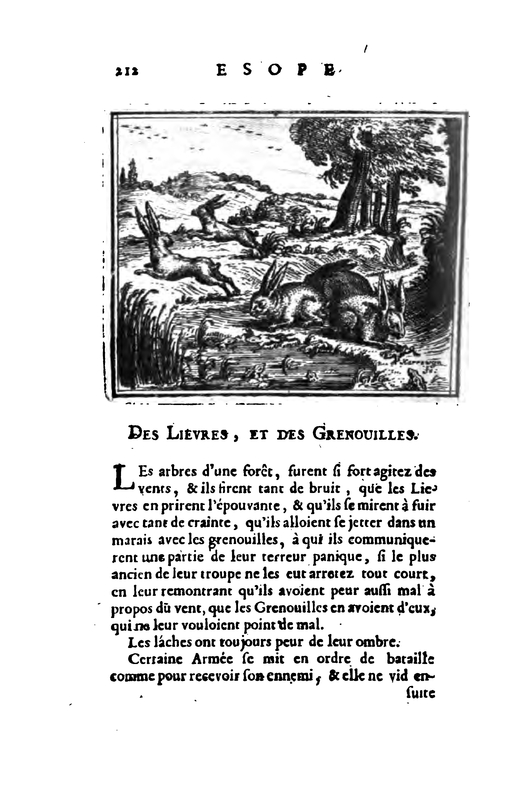
There are three hares on the right of the image, two of which are observing the frogs near them. The frogs nearby are jumping and swimming in a swamp. Two hares are leaping on grassy hills with trees in the background. The illustration has the signature of Harrewijn in the bottom right corner.
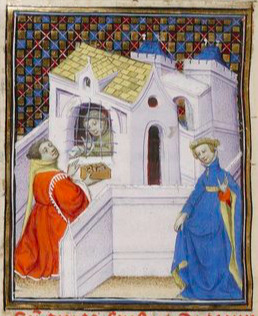
After being accused of not appreciating him enough, Roland has Camiola agree to marry him. She collects the money to pay for his release from prison. In the image, Camiola watches as the prison guard releases Roland. She is wearing a blue gown, while the guard wears red. Roland is behind bars in the prison looking out at the guard who frees him.
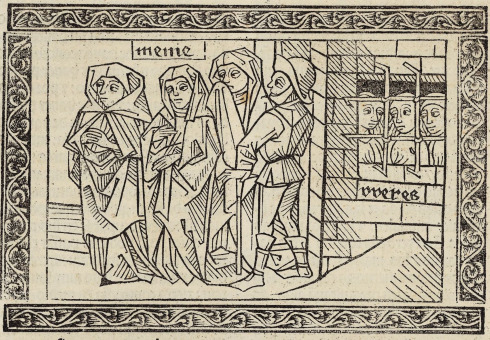
The engraving depicts a man guarding a jail, with three figures standing behind the bars of the jail and three figures leaving the jail wearing heavy garments. The three figures leaving the jail are Minyan men who had been sentenced to death for their crimes against their city. Boccaccio explains that the Minyans wives had gone into the jail and swapped clothing with their husbands and switched places with them. The men in disguises slipped past the guards unnoticed and into freedom, while their wives were executed in their place. Boccaccio explains that he chose to write on these women to demonstrate that there is no greater love than a wife’s love for her husband.
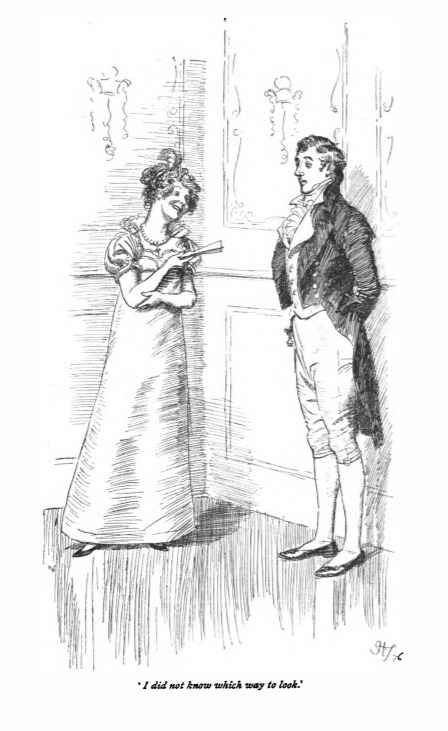
Here we see Tom Bertram, the eldest Bertram child, speaking with Miss Anderson, a debutante at a ball in London. After the dinner party at the Parsonage, Miss Crawford asked Edmund and Tom if Fanny were ‘out’ yet. Coming out was when a woman was presented, traditionally before the queen, signaling her entrance into society and serving as an indication that she was ready to be married. Young women would ‘come out’ at a debutante ball sometime between the ages of fifteen and eighteen. Tom tells Miss Crawford about Miss Anderson, a debutante who was rather awkward. She met Tom the year before she came out, and at a ball she cornered him, claiming him to be an acquaintance, and he was uncomfortable with the situation. This scene occurs in chapter 5. The characters are shown in the traditional regency style. Miss Anderson wears the regency style dress with an empire waist. Her dress has short sleeves as was traditional for women’s evening gowns. She holds a fan in her hand. Tom Bertram wears a waistcoat and tailcoat with breeches. The regency period dated to the early nineteenth century (1811-1820) when George, Prince of Wales, later George IV (r. 1820-1830), reigned as regent for his mentally ill father, King George III (r. 1760-1820). The regency period is associated with the rise of neoclassicism in art and fashion.
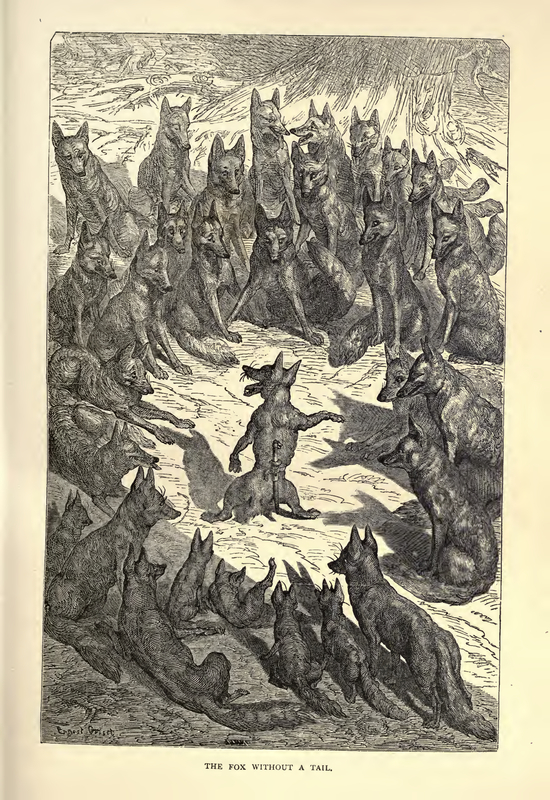
A fox is in the middle of a circle of other foxes. The circled fox has its mouth open and looking at the left while he is pointing with his right paw to the right. The fox has no tail and wears a sword in its scabbard in its place. The other fox circling him are ready to attack, while others are simply sitting down and looking at him.
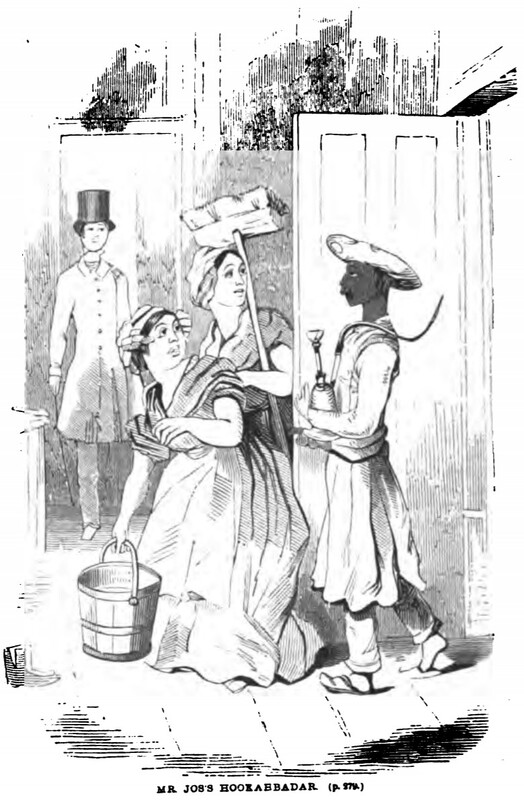
Loll Jewab, Joseph Sedley’s servant from India, carries his hookah into the inn, scaring the maids, one of whom is holding a bucket and the other a broom. The Boots stands next to an inside door, where he was going around picking up the patrons’ shoes. Below the illustration is printed its title and location in the story, MR. JOS’S HOOKAHBADAR. (p. 279.).
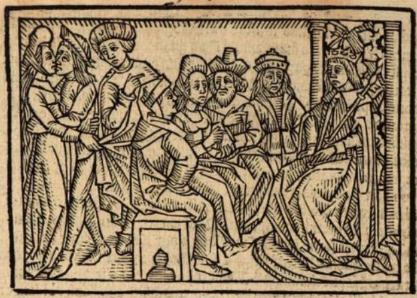
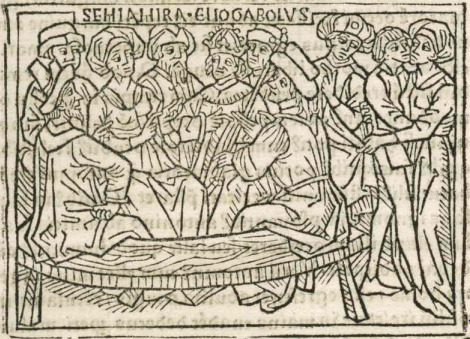
This engraving depicts Soaemias, a Greek woman, sitting in the middle of a meeting of the Roman senate with her son, Elagabalus, as Roman emperor. They are depicted sitting in a circle, with everyone looking at Elagabalus, who is illustrated wearing a crown and holding a scepter. The names Soaemias, written as Semiamira, and Elagabalus written as Eliogabolus, are engraved above their heads. Elagabalus would not have become emperor without his mother’s help, so he granted her the ability to have authority and did nothing without her consent. This image is highly significant as she was, as Boccaccio explains, the first woman to have a seat among the Roman senate and discuss her opinions and views on what must be done. The right side of the engraving depicts Soaemias kissing a man to represent her life as a prostitute before becoming mother to the emperor.
There is an illustration at the center of the page, above and below this illustration are bodies of text. In the illustration, a short man holding a small basket is talking to a man who is looking away from the short man. Whilst looking away this man is holding his robe up and seems to be excreting waste. A tree is in the background of this interaction.
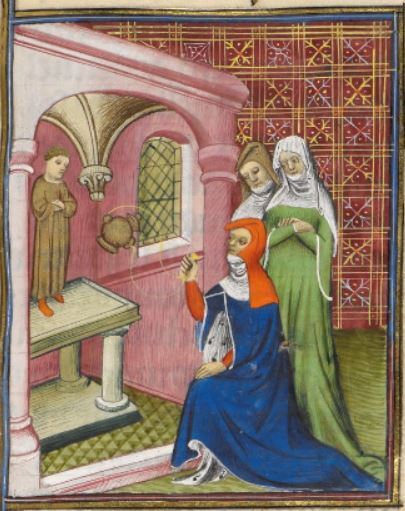
This illumination depicts a woman named Sulpicia kneeling in the centre of the image swinging a thurible at an altar. Sulpicia is renowned for having been a devoutly chaste woman. Boccaccio explains that Sulpicia was chosen out of one hundred women to consecrate a statue to Venus in the city of Rome. She was chosen for being considered the most chaste out of all the other women. The other chaste women are depicted standing behind Sulpicia.
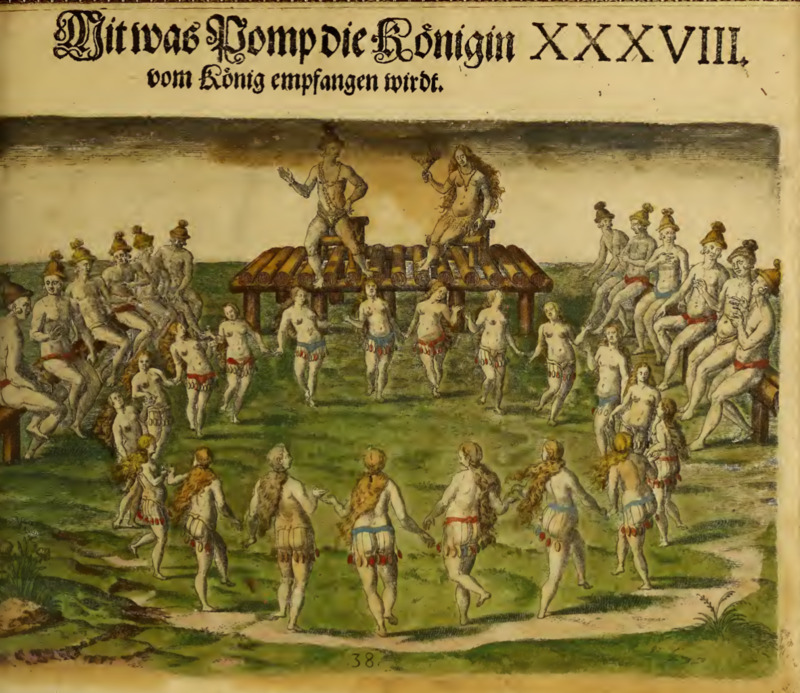
The king and queen sit on wooden chairs, elevated above the ground on a platform of logs. Groups of men sit on benches set perpendicular to the left and right sides of the platform. A group of women dance in a circle, inside the three-sided rectangle formed by the platform and benches. Some of the women hold hands as they dance. They wear ropes tied around their waists, from which discs hang. This illustration is identical to the one found on page 121 of Frankfurt 1591, but colored.

![[The Ass in the Lion's Skin]](https://collections.cemvc.ca/files/large/af30205610dc0d6d01ace8c12c5db76311ad073e.jpg)


![[Gulliver studies Lilliputian specimen]](https://collections.cemvc.ca/files/large/b57f0d344c576aa2a31311238609c4cb2118b535.jpg)
![[Act V – Celestina, Calisto, Sempronio, and Pármeno]](https://collections.cemvc.ca/files/large/6eb541e8498531a963deddb833f50ff52bc69791.jpg)

![[The Emperor of Lilliput and Finance Minister discuss what to do with Gulliver]](https://collections.cemvc.ca/files/large/43672328ad629bded128607879287d91ac2a1a50.jpg)
![[Three European ships engage in a naval battle near the coast, where there is a Tupinambá village]](https://collections.cemvc.ca/files/large/fce732bf50a740915cab8cb875b8584ab6f58afd.jpg)
![[Men and donkeys]](https://collections.cemvc.ca/files/large/2088bd81e7a6a5a8febdf93d73de7474ba6ea8ba.jpg)
![Vita et Fabulae [A man is looking away from another person conversing with him]](https://collections.cemvc.ca/files/large/3fd9c8da06158b9592295a61ba83bd19c41cb7db.jpg)