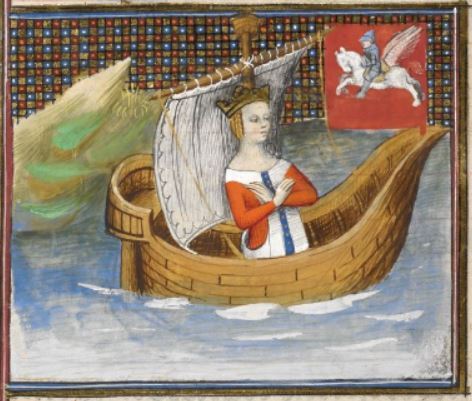
This illumination depicts Medusa sitting on a ship. She is depicted wearing a crown because she is the daughter of King Phorcys. There is a depiction of Perseus riding a Pegasus on the red emblem on the right side of the ship.
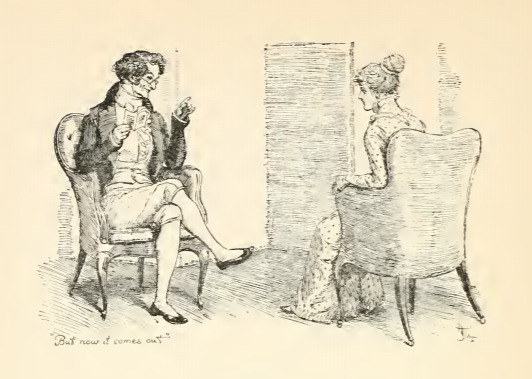
Here we see Lizzy reading letters from Jane. While Lizzy was visiting Charlotte and Mr. Collins the couple went to visit Lady de Bourgh at Rosings. Lizzy stayed behind to read over the letters that Jane had sent since her being in Kent. This scene occurs in chapter 34 as noted underneath the title of this image. The characters are shown in the traditional regency style. Lizzy wears the regency style dress with an empire waist. Her hair is worn tied up, as was tradition for women after their coming out before the queen, signaling her entrance into society. The regency period dated to the early nineteenth century (1811-1820) when George, Prince of Wales, later George IV (r. 1820-1830), reigned as regent for his mentally ill father, King George III (r. 1760-1820). The regency period is associated with the rise of neoclassicism in art and fashion.
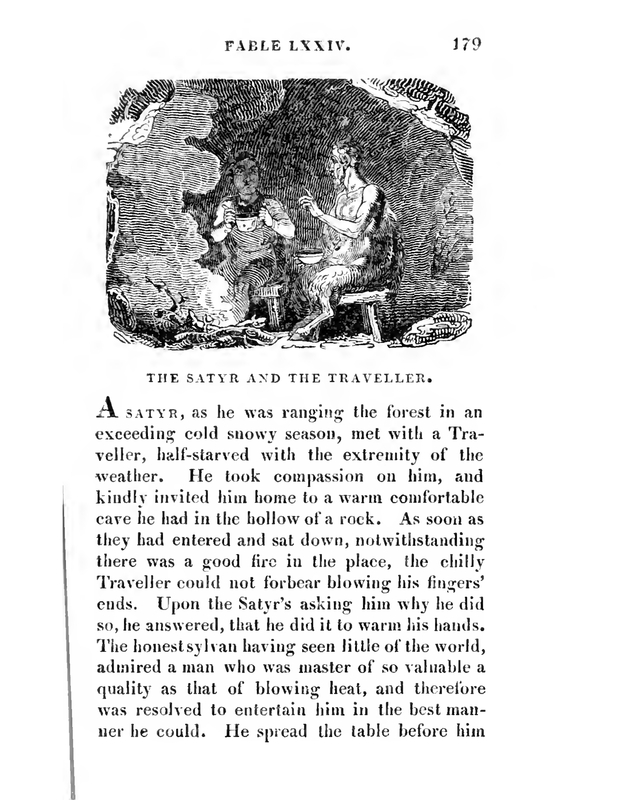
Two people are inside a warm comfortable cave. A Satyr and Traveller are sitting next to one another front of a fire. They are holding dishes containing warm spices. The fire is located towards the bottom left-hand side of the image. Throughout the entire image textures from the cave walls can be observed as well as other sticks/rocks on the ground.
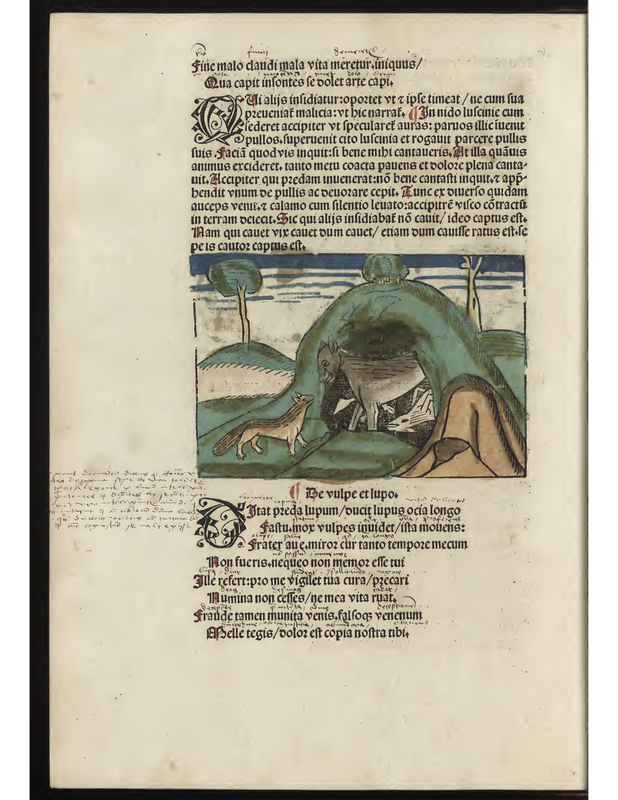
A wolf is peering down to a fox who is much smaller than them. The wolf is in their cave which is surrounded by trees and green grass. Inside of the wolfs cave there are carcasses of their prey.
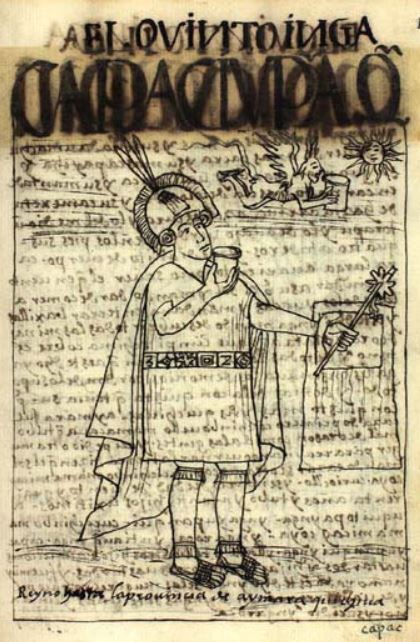
This illustration depicts the fifth king of the Inca Empire, Capac Yupanqui. He is depicted wearing a feathered visor on his head and holding a shield with his left hand. The author explains that this king discovered many mines of gold, silver and mercury, and told demons where these mines were. There is a flying creature in the sky above Capac Yupanqui which has wings, horns and a tail, which is assumed to be the demon that the king relayed information to as Capac Yupanqui is looking up at the creature and they are both holding cups. The words at the bottom of the image read, Reynó hasta la prouincia de Aymara, Quichiua which translates to King to the province of Aymara, Quechua. The Aymara were and are an indigenous nation in the Andes.
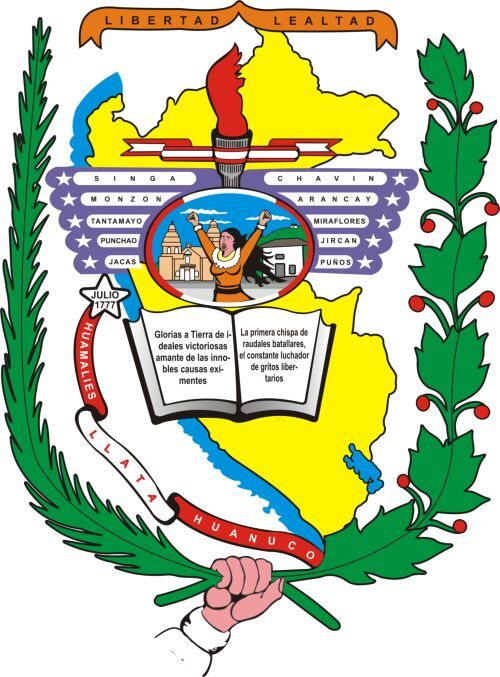
LIBERTAD LEALTAD SINGA CHAVIN MONZON ARANCAY TANTAMAYO MIRAFLORES PUNCHAO JIRCAN JACAS PUÑOS JULIO 1777 HUAMALIES LLATA HUANUCO Glorias a Tierra de ideales victoriosas amante de las innobles causas eximentes La primera chispa de raudales batallares, el constante luchador de gritos libertarios
The decision to include Celestina in this illustration is odd, seeing as neither she (nor any other female character) is included in the second act. However, the illustration likely represents the end of the first act, in which Calisto gives her 100 gold crowns (likely referring to the currency 'crown', or 'Krone' in German) as pre-payment for her services. We see that Calisto (central figure) is holding a small bag, and Celestina (leftmost figure) has something in her hands. Behind Calisto, we see another male figure (either Sempronio or Pármeno), who appears to be yawning.
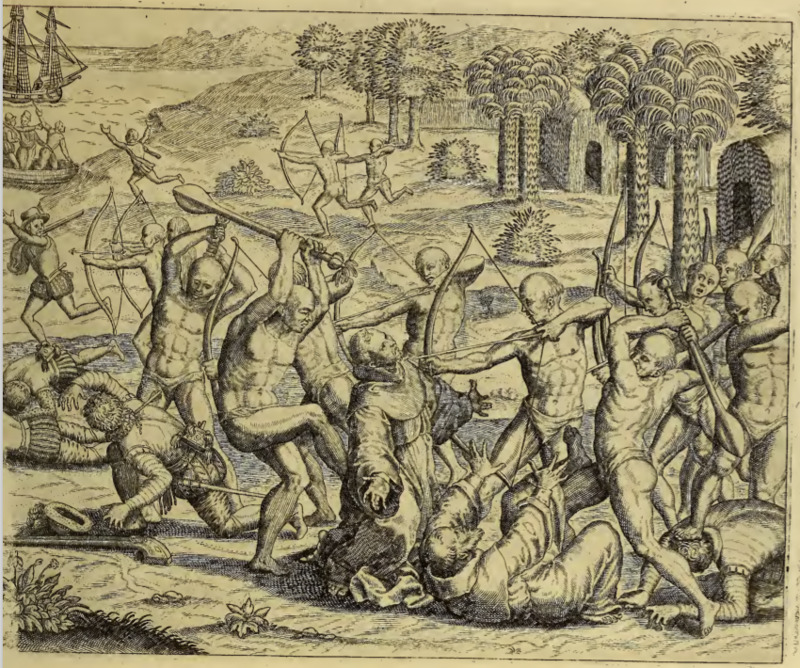
In Venezuela, a group of Indigenous people kill Spanish soldiers and monks. At the center of the group, two monks have been knocked to the ground. One lays on his back with his hands in the air to ward of blows from the club that an Indigenous man holds poised above him. The other monk is on his knees with his arms spread wide, and an Indigenous man is about to shoot an arrow into his throat while another holds a club over his head. In the background, Spanish soldiers flee the attack in a rowboat, while others who have not managed to escape are killed on shore, their muskets dropped to the ground. A European ship is anchored further along the coast. Several dwellings are visible among the trees on the right.
In this image Mr. Bennet reads a letter from Mr. Collins to Elizabeth. In this letter, Mr. Collins cautions Elizabeth not to go forward with an engagement with Mr. Darcy. Mr. Bennet found this letter humorous, believing Elizabeth and Mr. Darcy to hate each other. Elizabeth neither accepted nor denied that she still hated Mr. Darcy, allowing her father to continue reading. This scene occurs in chapter 57. The characters are shown in the traditional regency style. Elizabeth wears a regency dress with an empire waist. Mr. Bennet wears a waistcoat and tailcoat with a cravat. He has reading glasses and holds Mr. Collins’ letter. The regency period dated to the early nineteenth century (1811-1820) when George, Prince of Wales, later George IV (r. 1820-1830), reigned as regent for his mentally ill father, King George III (r. 1760-1820). The regency period is associated with the rise of neoclassicism in art and fashion.
An Indigenous man, a king by the name or title of Quoniambec, is shown from the chest up. He is shirtless, and wears a feathered headdress, earrings, an adornment on his chin, and a necklace made of shells strung together. He holds a decorative club with both hands, and gazes intently into the distance. This image is identical to one on page 924 of Paris, 1575 (l’Huillier).
Here we see Gulliver who has passed out at the feet of his master after hearing that he must leave the Country of the Houyhnhnms. The Council of the Houyhnhnms told his master that Gulliver either had to live with the yahoos or return to Europe but could not live with the Houyhnhnms any longer. Gulliver was shocked by this, and decided he had to leave rather than live with the yahoos. The same image appears in the 1843 Krabbe edition.
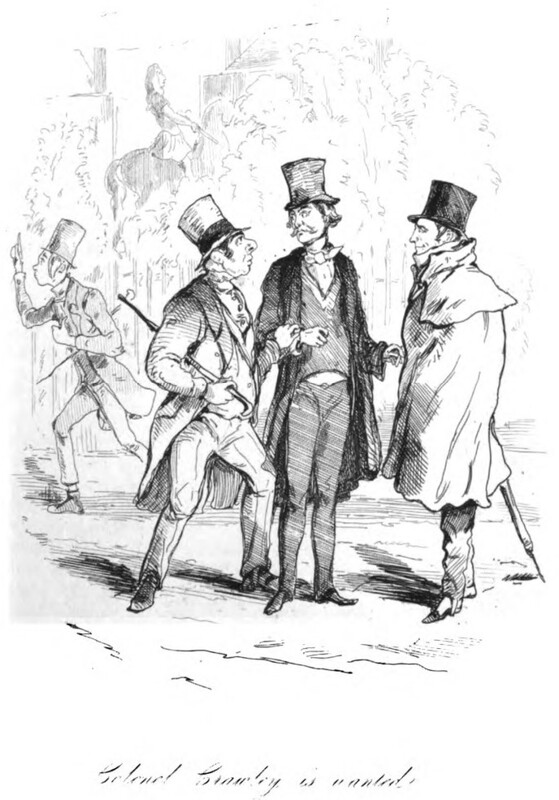
Rawdon Crawley stands with Mr. Moss and his assistant each holding one of his arms. They have come to collect his debt to Mr. Nathan. Behind them, Mr. Wenham, who has no money to lend him, is leaving with his hand raised and his cane tucked under his arm. In the background, amongst the trees is a statue of a horse and rider. Below the illustration is printed in cursive its title, Colonel Crawley is wanted.
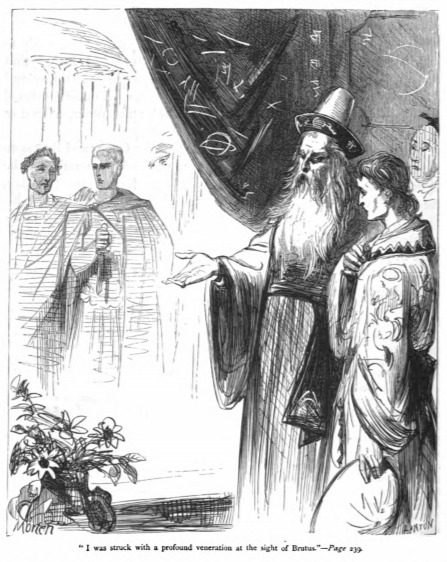
Gulliver learned soon after his arrival on Glubbdubdrib that the King of the island was a necromancer. The King offered to summon anyone for Gulliver to speak with. Some of the people Gulliver chose were Julius Caesar and his assassin, Brutus. Gulliver, like Swift, admired Brutus, as he represented overthrowing tyranny.
In this image we see Gulliver learning to read the language of the giants from Brobdingnag. We see Glumdalclitch’s hands, one holding the book, the other holding a pointer. On the page we see different letters, Glumdalclitch pointing to different ones. Gulliver is seated, holding on to one page. The same image appears in the 1839 Krabbe edition.
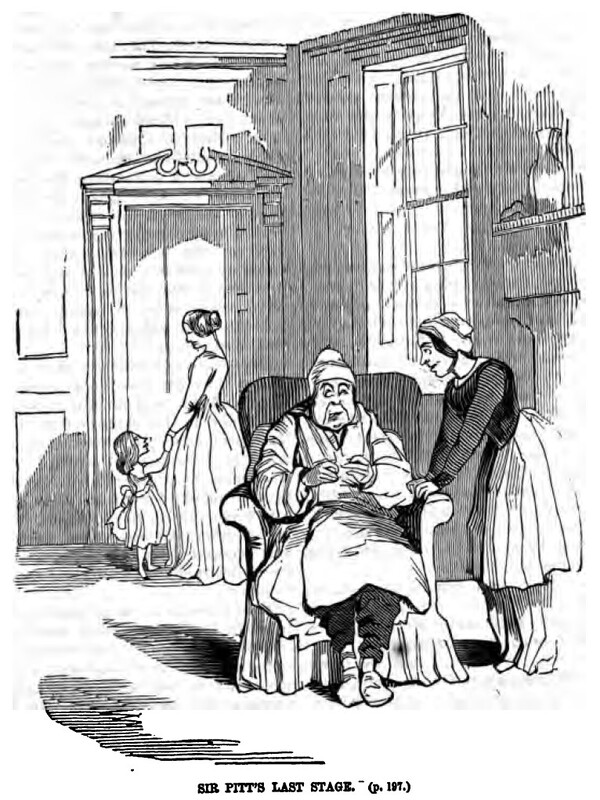
Sir Pitt Crawley, in a nightcap, sits in the chair in front of the fireplace in his apartments. Behind him, Lady Jane Crawley and her daughter, Matilda Crawley, are holding hands as they leave the room. Next to Sir Pitt, Miss Hester, his nurse, has turned his chair away from the fire. Below the illustration is printed its title and location in the story, SIR PITT’S LAST STAGE. (p. 197.).
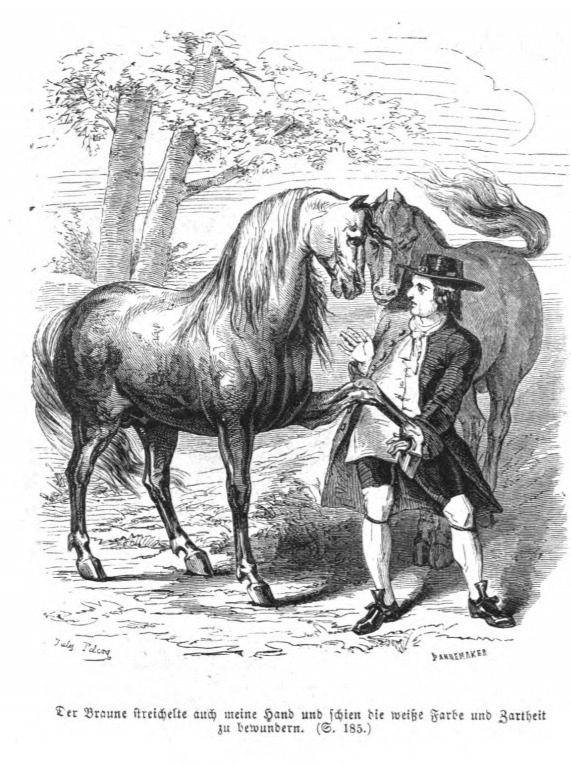
Here we see Gulliver first encountering the Houyhnhnms. One examines Gulliver’s hand, as it looked very different than the hands of the yahoos, the humans who lived in the Country of the Houyhnhnms. The Houyhnhnms scared away the yahoos who were tormenting Gulliver. The Houyhnhnms brought Gulliver home with them, and Gulliver lived with the Houyhnhnms for several years before returning to England.
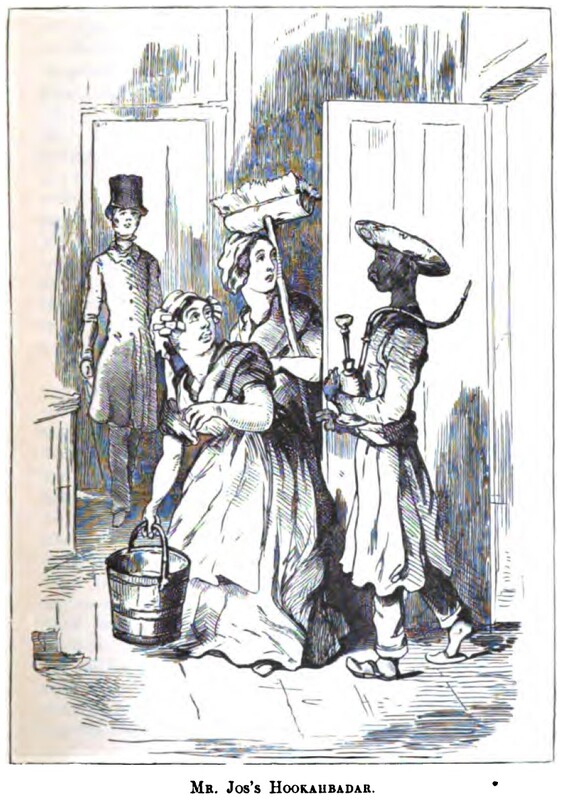
Loll Jewab, Joseph Sedley’s servant from India, carries his hookah into the inn, scaring the maids, one of whom is holding a bucket and the other a broom. The Boots stands next to an inside door, where he was going around picking up the patrons’ shoes. Below the illustration is printed its title, Mr. Jos’s Hookahbadar..
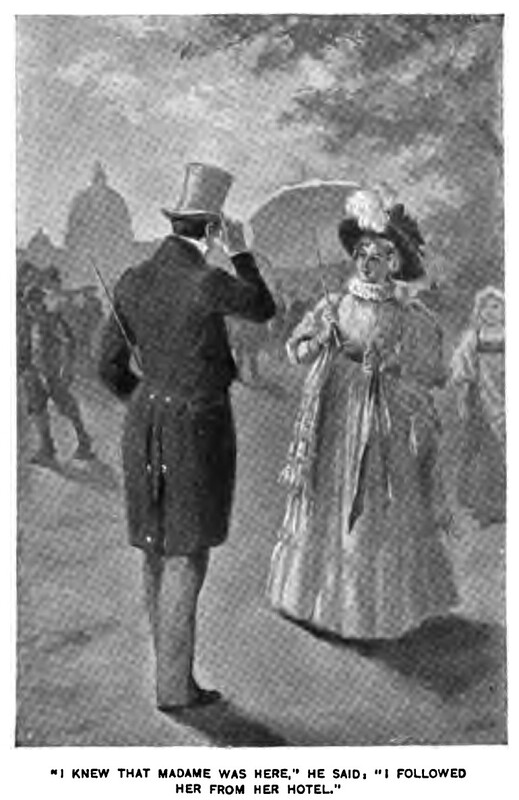
The image depicts a scene from page 300, in which Mr. Fische greets Rebecca Rawdon on the street to warn her to leave Rome. Rebecca is shown facing the reader, dressed in a fancy gown and hat and carrying a parasol. Mr. Fische is facing her, away from the reader, with his cane tucked under his arm and his other hand lifted to tip his hat in greeting. Many other figures are shown on the street in the background.
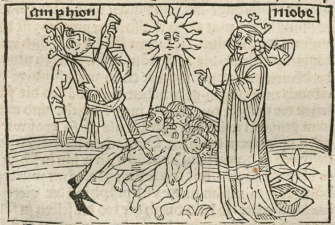
This engraving depicts Niobe, the daughter of King Tantalus of Phrygia, on the right side of the engraving wearing a crown. We know that this is Niobe as the creator engraved her name beside her head to identify her. Niobe had become proud of the fact that she had more children than Latona, mother to Diana and Apollo. As punishment for her hubris against the goddess, all of Niobe’s children, as told by Boccaccio, had been killed by the plague. Her children are illustrated dead in the centre of the engraving. Grieved by the loss of all their children, Niobe’s husband, King Amphion of Thebes, killed himself with a knife. Amphion is depicted on the left-hand side of the engraving as he pierces his body with the knife. His name is engraved just above his head.
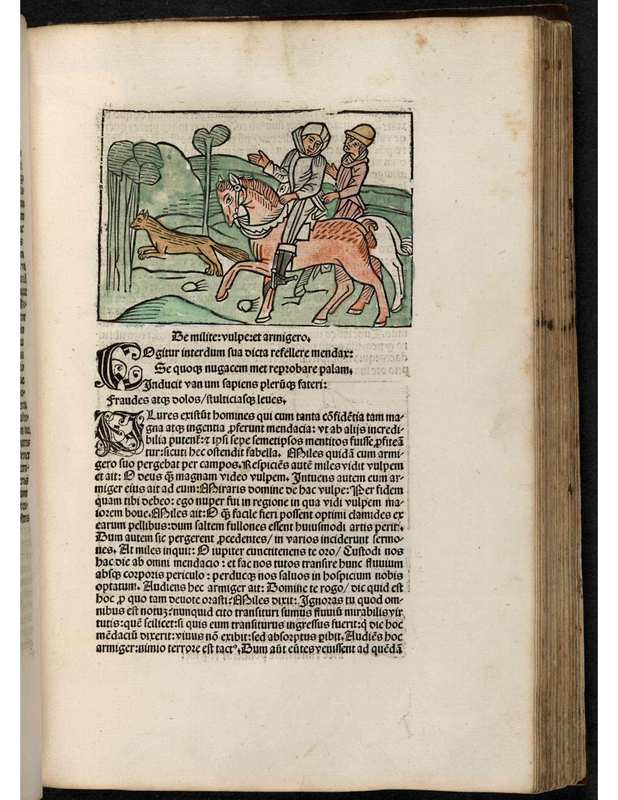
Two men ride horses, only one auburn horse is entirely visible. A man in grey attire is riding him, he appears to be in a discussion with the man in red riding a white horse. A fox runs ahead of the men. The landscape includes hills, trees, and the edge of water.
This image is illustrated in a chapter that discusses and criticizes the government and society in Spanish conquered Peru. This image depicts a crest that has the initials of Jesus and Mary which would have been on the doors of inns in Colonial Peru. The author explains that he suggested a motto should be written underneath these initials which would read, temed, cristianos, a dios y a la justicia y no tengays soberbia y no llameys a la justicia para que seays castigados [Christians, fear God and Justice, do not be proud, and do not call the justices, so that you will not be punished].
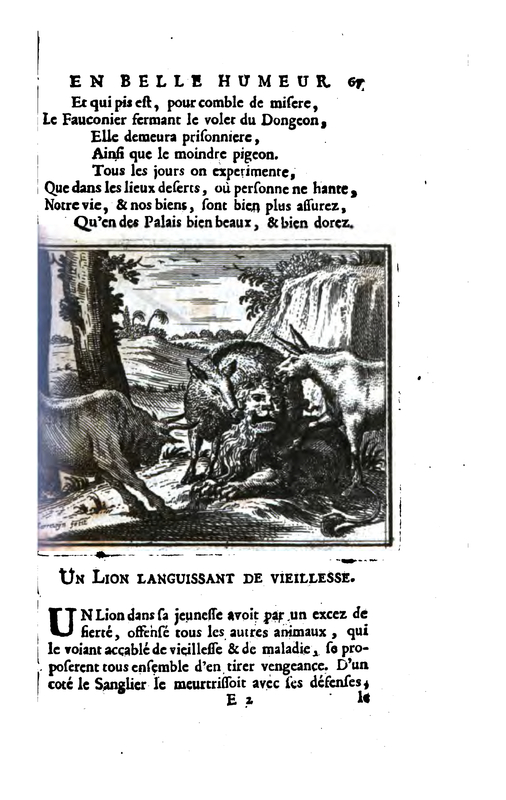
In the center of the image there is a lion sitting down in terro as a bull and a deer is tearing through is flesh. There is another bull looking at this situation and getting ready to attack the lion. Behind them is a mountain cliff, on top of which are various species of trees and vast empty land after.

![[Act II (First Illustration) – Calisto Paying Celestina While Another Figure (Either Sempronio or Pármeno) Yawns]](https://collections.cemvc.ca/files/large/cb25ed36fe5f93d5903643c34cac3b551f1f3a66.jpg)

![[Gulliver passes out after hearing he must leave the Country of the Houyhnhnms]](https://collections.cemvc.ca/files/large/7fb9583428ea2a084849b2cf04658403c2ebe4f4.jpg)
![[Gulliver learns to read the language of the Giants from Brobdingnag from Glumdalclitch]](https://collections.cemvc.ca/files/large/78a08febbe6c827fd6f89c90d6c26fcea33e2747.jpg)
![Iesvs, M[ari]a Hin[c]hen el Mvndo](https://collections.cemvc.ca/files/large/d09c6796375576dd8a2e37b0b6859d573737ad52.jpg)