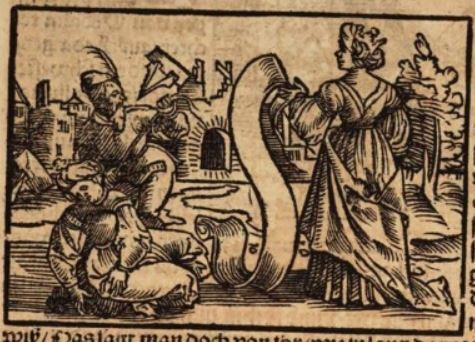
This engraving depicts Cassandra, the daughter of King Priam of Troy on the left side of the engraving being murdered. Clytemnestra is on the right side of the engraving ordering her servant to commit the murder. Boccaccio explains that Cassandra was brought to Mycenae after the Trojan War as King Agamemnon’s concubine. Agamemnon’s wife Clytemnestra did not approve of this and ordered Cassandra to be killed. Cassandra is depicted with a rope around her neck with the servant pulling on the rope. Clytemnestra is depicted with a pleased look on her face as she watches Cassandra die while holding an unrolled scroll of parchment. The fallen city of Troy is depicted in the background of the engraving.
Here we see a representation of evil for the Houyhnhnms, who have no word in their language for evil. When the Houyhnhnms want to describe something that is evil, they do so by explaining the poor qualities or ‘deformities’ of the yahoos, represented by this image. The same image appears in the 1843 Krabbe edition.
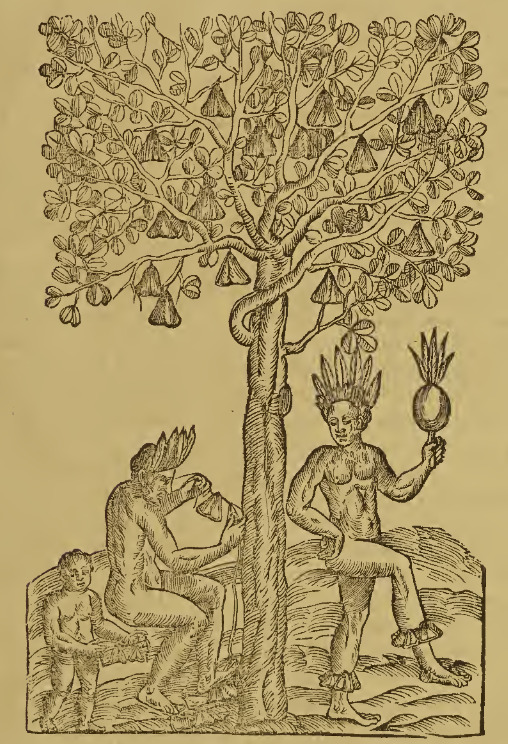
Two Indigenous men and a child stand around an ahouai tree (as named by the author, today known as thevetia ahouai). The man on the left threads the items harvested from the tree (dried fruit or nuts) onto a string to make a leg rattle, like those worn by the man on the right. The man on the right dances with one hand on his hip, wearing leg rattles and holding a maraca or religious item in the other hand. Both men wear feathered headdresses. This image is identical to one found on page 922 of Paris 1575 (Chaudière), and in Thevet’s Les Singularitez de la France Antarctique (page 66 verso of Paris 1557, page 66 verso of Paris 1558).
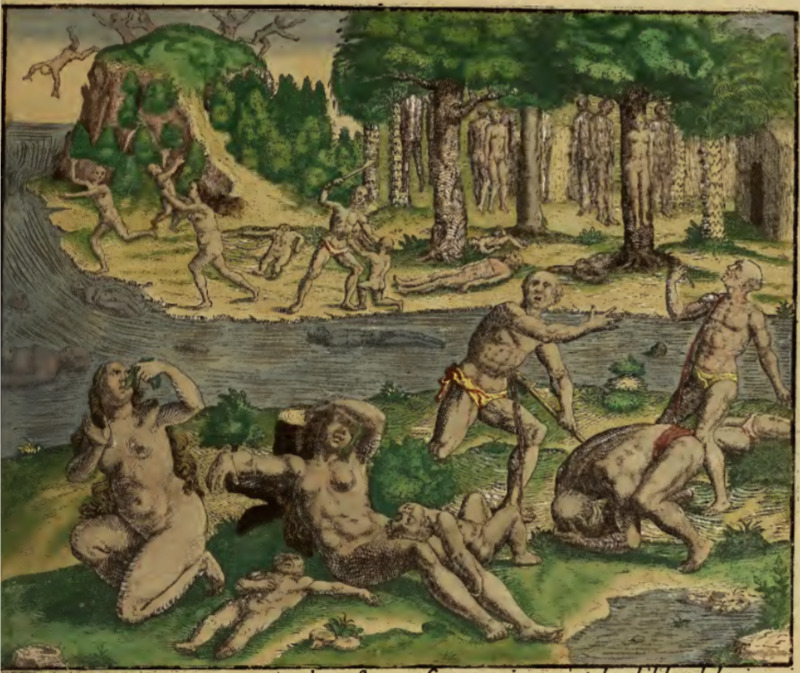
A group of Indigenous people commit suicide to escape the brutality of the Spanish colonists. Men and women hang themselves by the neck from trees, leap off a high cliff, stab themselves with spears and knives, drown themselves in the river, and ingest poison. Mothers and fathers also kill their children. This image is identical to one found on page 193 of Frankfurt, 1594, but colored.
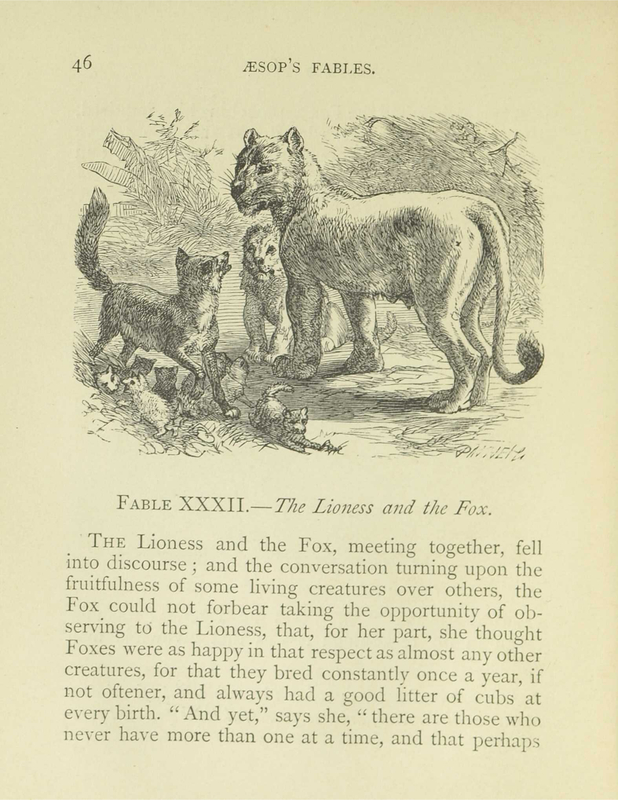
A mother lioness stands firmly on the right side of the image staring at the small fox on the left. Behind the lioness we can see a young cub peeking out that she is clearly protecting. Around the foxes’ feet appear to be seven pups frolicking around without a care as she also protects her young from the lions. They are surrounded by lot of foliage.
Here we see a group of Houyhnhnms carrying a deceased Houyhnhnm. They carry the body towards a cave that will serve as a tomb. This image appears when Gulliver explains the lifecycle of the Houyhnhnms and their burial rites. The same image appears in the 1839 Krabbe edition.
Here we see Gulliver dining with the Governor of Glubbbdubdrub, who was a necromancer. Over dinner Gulliver tells the Governor about his time on Balnibarbi. The dinner was served by ghosts, and Gulliver is visibly uncomfortable. Gulliver tells us that over time he became used to the sight of the ghosts. The ghosts are very skeletal and gaunt, and the Governor could make them disappear with a snap of his fingers. The Governor wears robes with a skull and an owl on the front, and a pointed cap. The same image appears in the 1843 Krabbe edition.
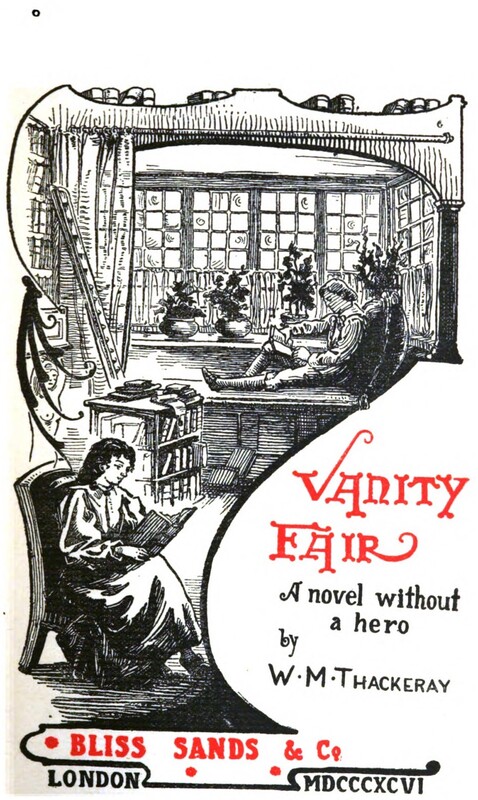
A woman is depicted reading in the foreground, seated in a cushioned chair. Behind her is a bookshelf, with three shelves full of books and more piled on top. Further behind the shelf is a ladder leaning against a much taller bookcase, and in the far background, a man is seated on a window seat or ledge, leaning against a very large cushion and reading as well. Four plants are shown between him and the windows. The picture is shaped similarly to a capital P, with the book’s title and author written next to the stem and the publishing company, location, and year written at the bottom.
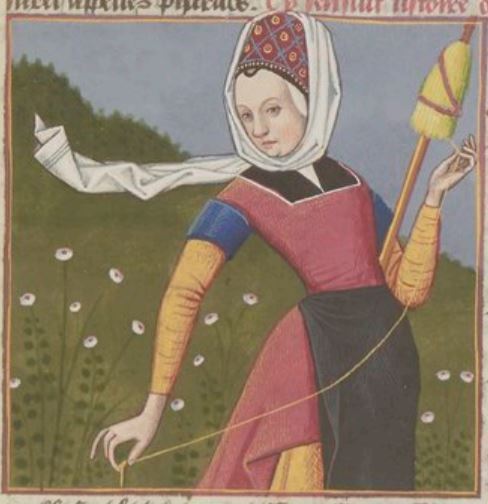
This illumination depicts a portrait of a Greek woman named Pamphile. She is illustrated holding a distaff in her left arm and spinning with her right hand. This is depicted as she is said to be the first person to have picked cotton from plants. After picking the cotton she had cleaned and combed it and began to spin the cotton into thread, as illustrated in the image.
The left panel depicts Calisto’s servant Sosia, who is wearing a hat and has a sword mounted on his belt. To the right, we see Calisto standing outside while wearing a hat. He also has a sword mounted on his belt, which is partially concealed by his coat. Both figures are placed outside.The left panel is identical to the one found on page 326, and nearly identical to those found on pages 60, 146, 173, and 187 (where it is labeled ‘Parmeno’), and page 299 (labeled ‘Pleberio’). The right panel is identical to the one found on page 271, and nearly identical to those found on pages 70 and 114 (where it is labeled 'Sempronio'), page 187 (labeled ‘Sepronio’ [likely a printing error]), page 326 (labeled ‘Tristan’), and page 350 (labeled ‘Pleberio’).
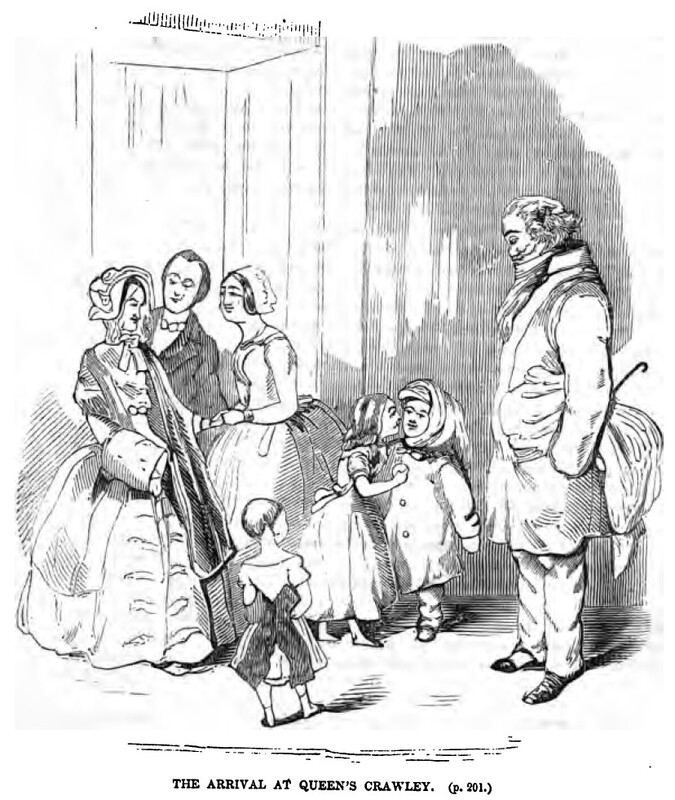
Matilda Crawley greets her cousin, the younger Rawdon Crawley, while her brother Pitt Binky hangs back and watches. To their side is Mr. Rawdon Crawley, watching his son. In the background, Sir Pitt and Lady Jane are greeting Rebecca Crawley, who has just arrived at Queen’s Crawley with her husband and son. Below the illustration is printed its title and location in the story, THE ARRIVAL AT QUEEN’S CRAWLEY. (p. 201.).
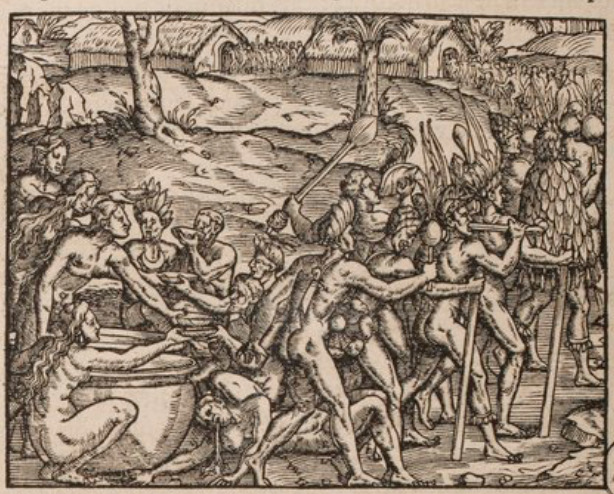
A large group of Indigenous Brazilian people take part in a long procession, possibly preceding or following a burial as part of a mourning practice. They first stop at a vat on the ground where they take a bowlful of the beverage inside. The group then proceeds towards their village and through several of the structures. Many members of the group wear feathered headdress, ornaments around their neck or waists, necklaces, and/or feathered capes. Many also carry bows, clubs, rattles, conch shells or other wind instruments, or pipes. This image is identical to one found on page 927 verso of Paris, 1575 (l’Huillier), and in Thevet’s Les Singularitez de la France Antarctique (page 83 of Paris, 1557 and page 83 of Paris, 1558).
An exhausted man lays on the deserted ground in the outdoors with nothing but a couple dead trees and dry ground in the background. The man is laying down shirtless and has nothing but a small pair of shorts on.
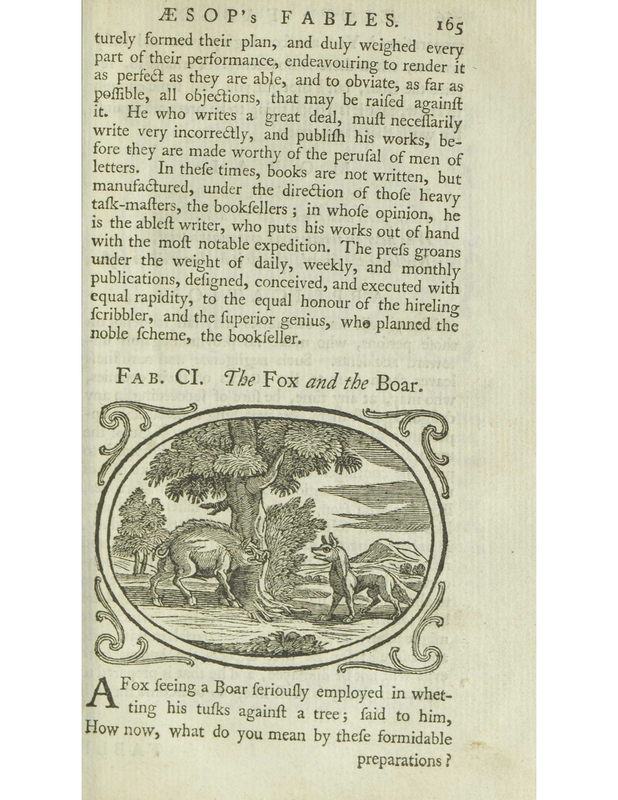
On the left side of the image, a boar sharpens its tusks against the trunk of a tree. On the right side of the image, there is a fox standing and watching the boar. Other trees and plants can be seen in the background, as well as a mountain.
Here we see a representation of evil for the Houyhnhnms, who have no word in their language for evil. When the Houyhnhnms want to describe something that is evil, they do so by explaining the poor qualities or ‘deformities’ of the yahoos, represented by this image. The same image appears in the 1839 Krabbe edition.
This image depicts the first encounter Calisto (figure to the left) has with Melibea (figure to the right). While practicing his falconry, Calisto follows his bird (top-left corner) into Melibea’s garden, where he first lays eyes upon her. He is struck by her beauty and instantly falls in love. In addition to these figures, there is a horse behind Melibea.
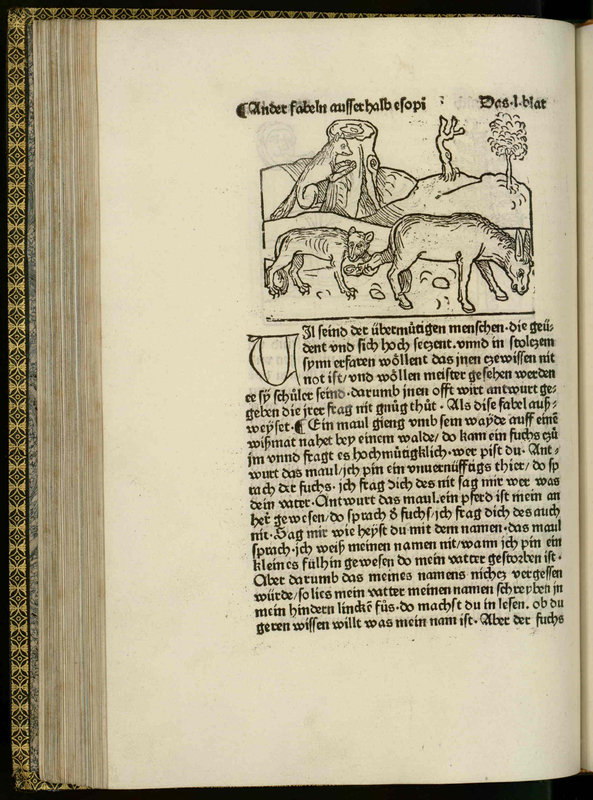
In the bottom half of the image, there is a hyena pulling the leg of a donkey. Behind them there are hills with tree trunks. Beside one the tree trunks there is a fox.
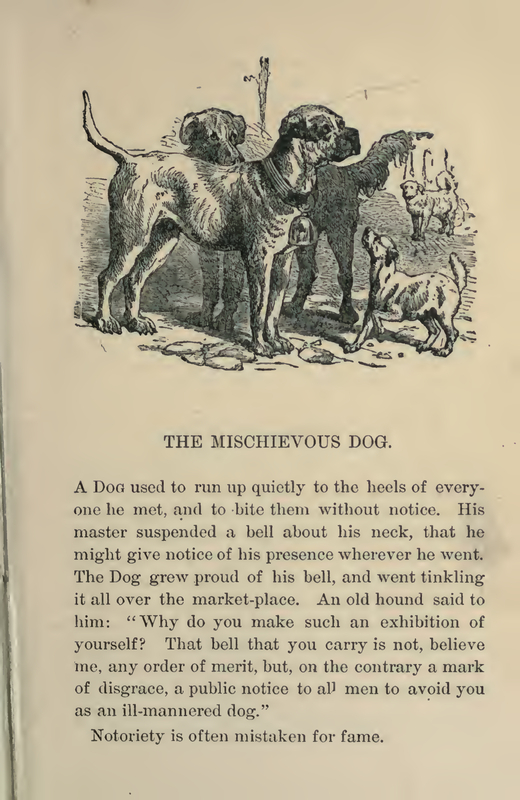
A dog (possibly a pitbull) stands tall in the forefront. The dog has a collar with a large bell hanging from it. Other dogs are around it, one around the same size as the pitbull, and two smaller dogs. One of the smaller dogs is in front of the pitbull, looking up at him. The other smaller dog is in the background, looking at the other dogs.
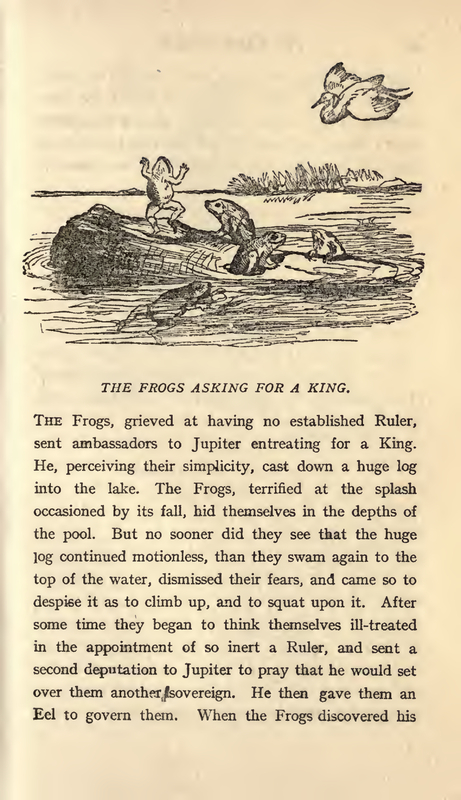
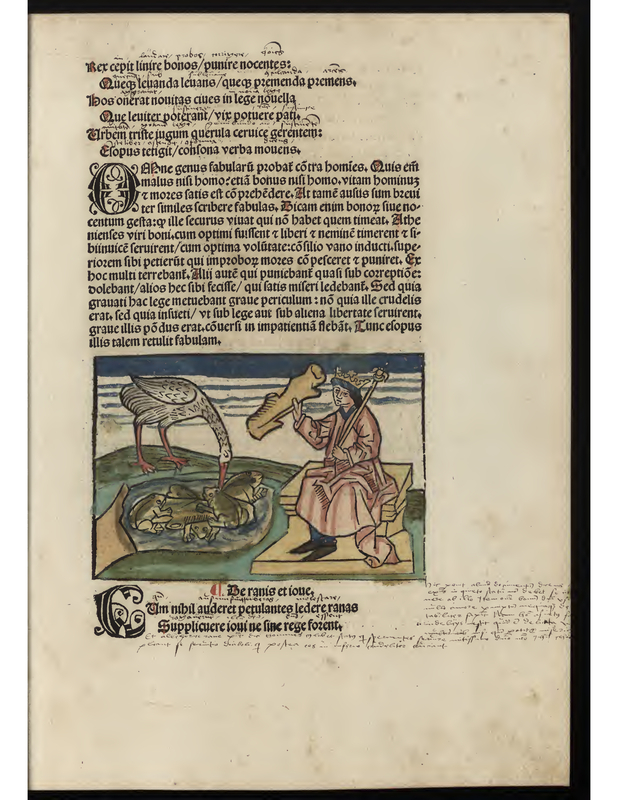
A person of nobility dawning a cloak and crown, sits on a rock next to a pond while holding a staff in their left hand and a piece of wood in their right. The pond is filled with frogs that surround a log while some type of waterfowl pokes at them with its bill.
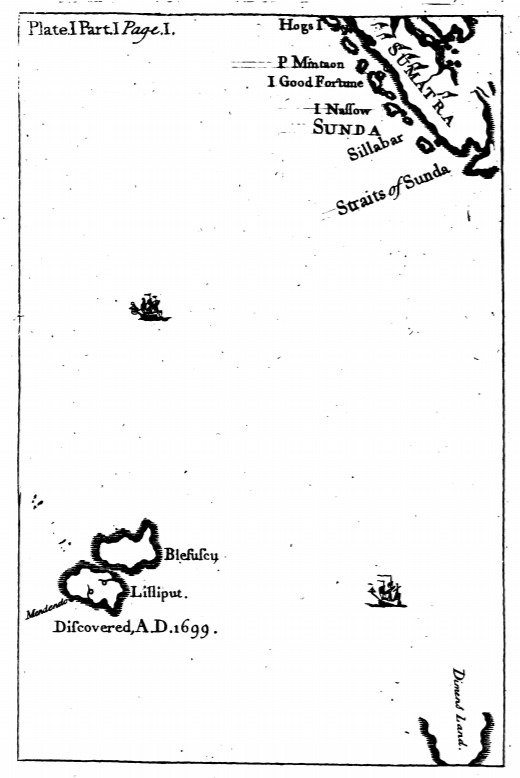
A map of depicting the fictional lands of Lilliput and Blefuscu that Gulliver visited in the first part of the story. Under the fictional lands is written Discovered, AD 1699. The map also depicts the lands of Sunda and Sumatra. Two ships – likely the man-of-war type ships which were popular in the eighteenth century and are mentioned in the text – are shown. The same map is featured in several other editions of the text, including those in other languages, such as German.

![[a representation of evil of the Houyhnhnms]](https://collections.cemvc.ca/files/large/7a994e68d024a33dbcc7f2dc69a5b9d3a3e113db.jpg)
![[a burial procession for the Houyhnhnms]](https://collections.cemvc.ca/files/large/25c4c33e560cbde44b7e43a4a5c4bf5964b9bac9.jpg)
![[Gulliver dines with the Governor of Glubbdubdrib]](https://collections.cemvc.ca/files/large/3cb08987c256aa92e69fc7d4f39ba34ad1aa1ff6.jpg)
![[Act XIII – Sosia and Calisto]](https://collections.cemvc.ca/files/large/ef346f7c7b4ad46e094cd32f55ea6e37af5df4ec.jpg)
![[The Lying Man]](https://collections.cemvc.ca/files/large/38f5b0349c2ea157170ee9f78230cc62f6fa9444.jpg)
![[a representation of evil of the Houyhnhnms]](https://collections.cemvc.ca/files/large/e1d4fd430bf7ef89a12625aae36d75c7286ec224.jpg)
![[Act I (First Illustration) – Calisto Encounters Melibea (Repeated)]](https://collections.cemvc.ca/files/large/83d55f210f2bae0b3829b5a88900c0bd3520cabf.jpg)