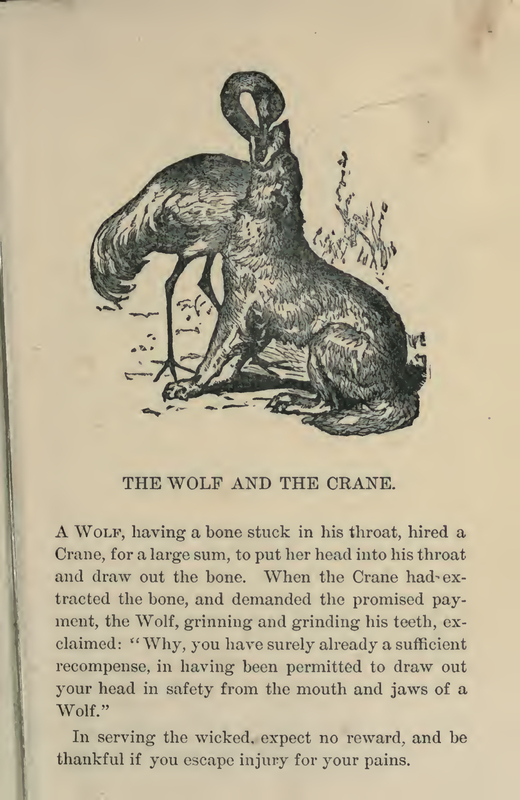
A wolf is sitting down to the right side of the image, its head bent backwards and its mouth wide open as the crane sticks its long beak inside the wolf’s throat.
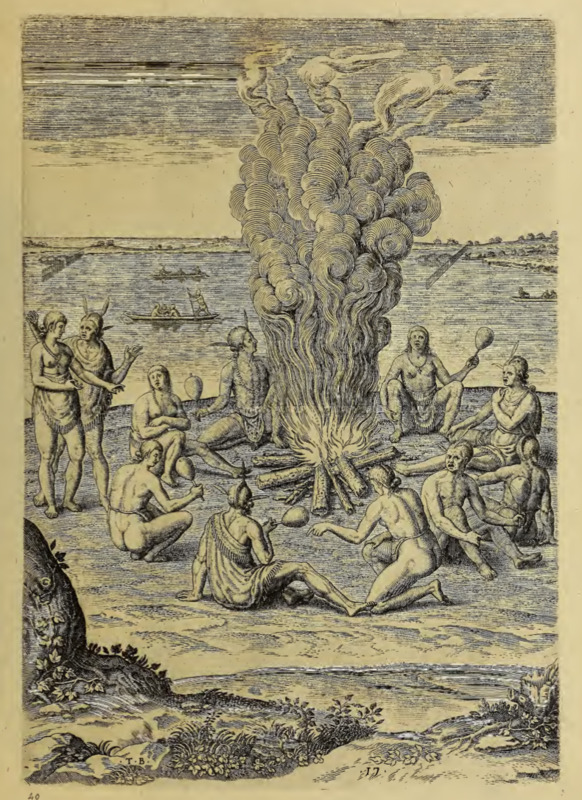
A group of Indigenous people sit on the ground around a bonfire on the bank of a river. Some of the individuals hold rattles. All wear fringed garments, either draped around their bodies and over their shoulders, over one shoulder, or tied around their waist. The men wear feathers in their hair, and at least one woman wears strands of beads. Behind the group, other individuals are seen in canoes on the river.
Here we see a skeleton firing a cannon. This image appears at the beginning of chapter seven, in which Gulliver explains the use of gunpowder to the King of Brobdingnag. Gulliver offers to teach the army of Brobdingnag to use gunpowder and cannons, but the King refuses, and is shocked at the violence of the invention and of the Europeans. The letter N is in the top right corner because the first word of the chapter is nothing.
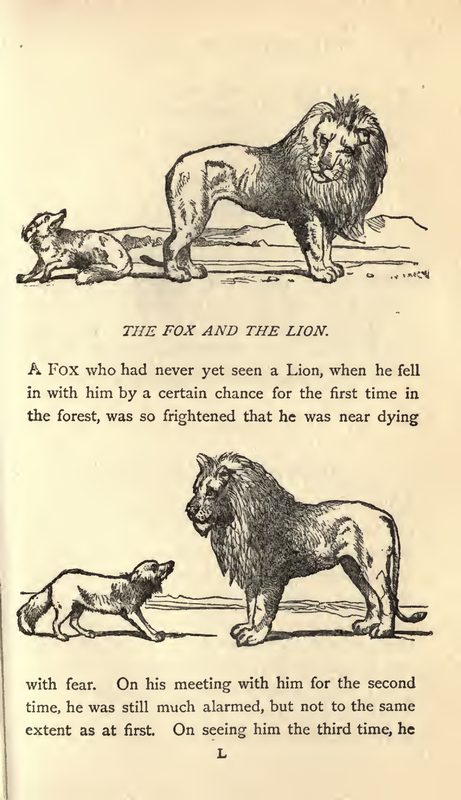
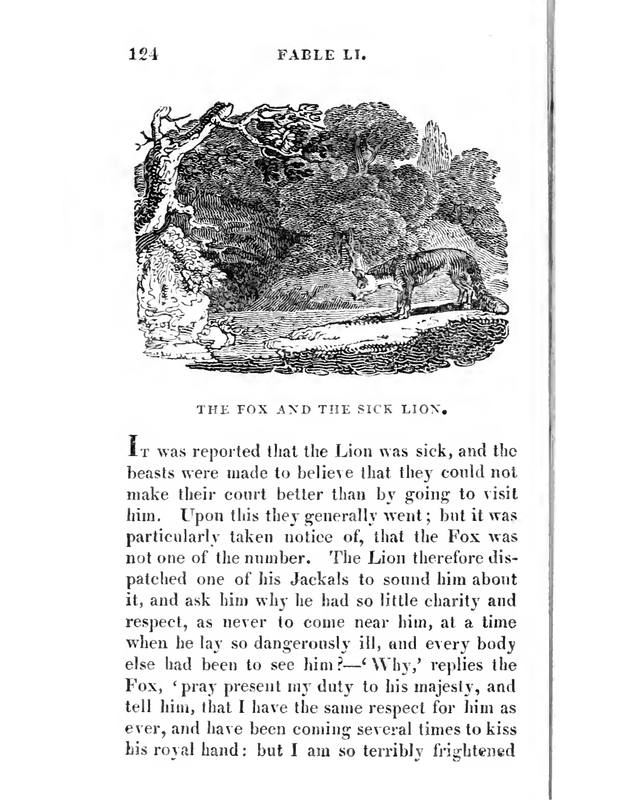
In first picture, the lion and the fox are in opposite direction but they turn back their head to see each other. The fox lied down . In second picture, the lion and the fox face to face each other and this time fox stand up
The image depicts the backside of a carriage, over the top of which the coachman’s hat can be seen. Sambo is standing on the base of the back of the carriage, holding on to two straps, as it drives away from Miss Pinkerton’s in a cloud of dust.
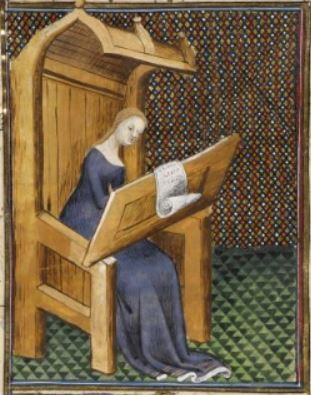
This illuminated image depicts a woman named Erythraea (also known as Eriphila) sitting down while writing a book. Erythraea was a famous sibyl and was known for predicting many major events in history. Boccaccio explains in his story of Erythraea that she predicted the fall of Troy, as well as the life and death of Jesus Christ.
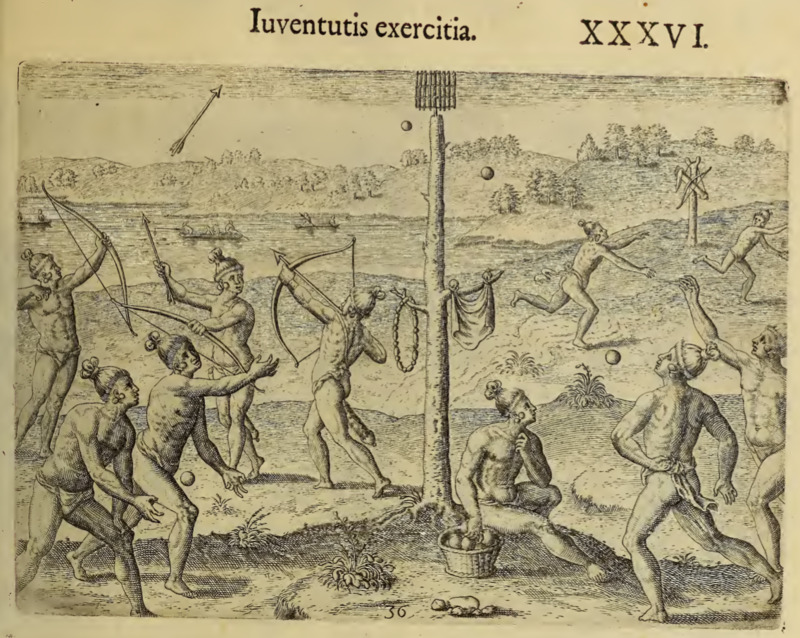
Several young Indigenous are gathered around a tree that has been mostly stripped of branches. A hoop hangs from one of the remaining branches and a rag hangs from the other, on either side of the tree about halfway up. Some of the youth are shooting bows and arrows, and others throw balls into the air.
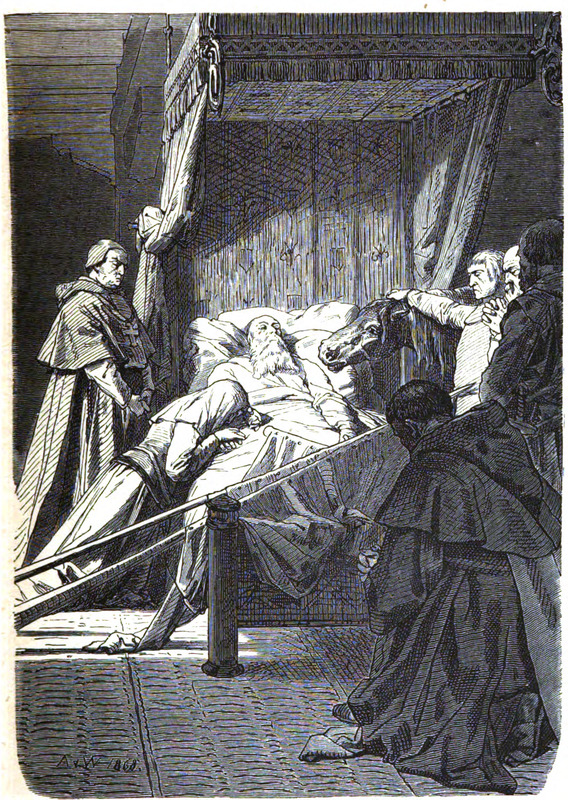
There are seven people in the room and El Cid’s horse Babieca. On the left of the room there is a religious man in his habit with a cross on hanging from his neck. On the floor with her head on the bed is Jimena. Jimena is wearing a dress with a veil to cover her head. On the right side of the image there are four men. The one most visible is kneeling down in prayer wearing his habit. The one next to Babieca is petting him. The one in the bed is El Cid. He is dying. He has a long white beard and he is bald. At the end of his bed there is a flag lying there. The top of the bed has curtains twisted together to prevent them from falling and shielding El Cid from his visitors.
Shortly after Gulliver set sail again his ship was overtaken by two Dutch pirate ships. The Dutch and the English were rivals, despite both being members of the Grand Alliance against the French. Gulliver first begs the Dutch captain for mercy, saying that since they were both Christians he and the crew should be spared, playing off of Dutch religious toleration. The Dutchman rejected this, however the Captain of the second ship intervened. The second captain was Japanese and spared Gulliver and his crew. Gulliver chided the Dutchman for having less mercy for a fellow Christian than did a Japanese man. The Dutchman then argued to the Japanese that Gulliver should be killed, but the Japanese captain refused to go back on his word. However, for Gulliver’s insolence, he was set adrift alone with only enough provisions for four days. In this image we see Gulliver pleading with the Japanese captain to spare him, while the rest of the crew bows on their knees, asking to be spared. The same image appears in the 1843 Krabbe edition.
This image depicts Camiola, the daughter of Lawrence of Torringo, paying a ransom to release Roland of Sicily from prison. She felt sympathy for Roland of Sicily who was left to rot in a jail after a battle, so she paid for his ransom in exchange for his hand in marriage. Camiola is depicted wearing a brown dress and a white head piece standing in front of Roland who is chained in a prison cell on the right side of the image. There is a man on the left side of the image delivering the ransom money on behalf of Camiola to the man dressed in green. Roland had agreed to marry Camiola, but when he was freed, he pretended as though he did not agree to marry her. She is famous for having proved herself in front of a judge and spoke out against her husband’s vile behaviour in rejecting her and his promise to her.
Amelia Osborne sits outside the railing of the garden opposite Mr. John Osborne’s house, watching the lights in the windows on an evening when her son has not visited her.
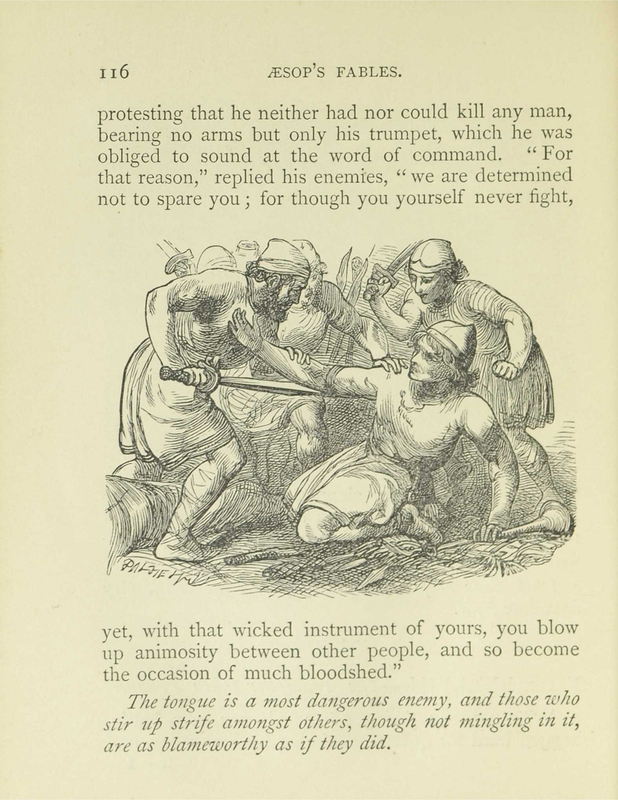
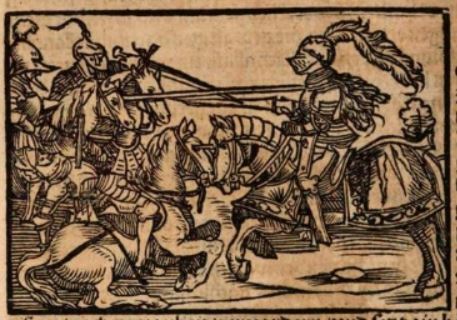
A man with a trumpet in his hand kneels on the ground on the right side of the page. His other hand is outstretched and being grasped at the forearm by a man with a sword to the left side of the page. The man on the left points the sword at the chest of the kneeling man. There is a battle in the foreground. To the far right, there is a soldier with his sword raised in the air.
Here we see Gulliver making himself new shoes after his worn out during his time on the Country of the Houyhnhnms. Gulliver made his shoes out of wood and leather. The leather was made of the skins of yahoos and dried in the sun, seen behind Gulliver. The same image appears in the 1843 Krabbe edition.
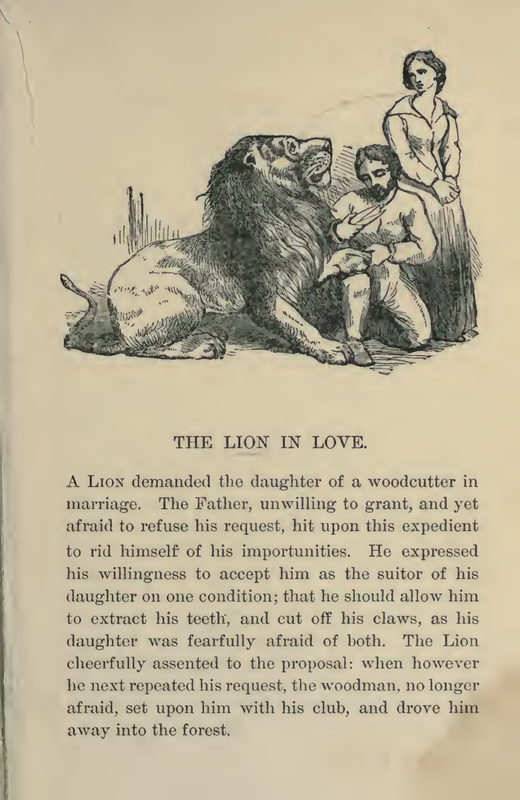
A lion is sitting down to the left side of the image. A man is kneeling down next to is holding clippers in his right hand as he holds one of the lion’s paws with the other. Behind the man, a woman stands looking at the lion. The lion looks at the woman as though it is in love.
Here we see three Laputan scholars attended by their Flappers. The Laputans were so deep in thought they could not speak. The Flapper was a servant who carried a blown bladder filled with peas or pebbles and was used to communicate. The Flapper attended the wealthy scholars and when they wanted to converse with one another, they would gently tap the bladder on the mouth of one person then on the ear of another. Because the scholars could get so wrapped up in what they were thinking about, they would stop what they were doing or seemingly stop seeing anything around them. The Flapper would then tap their eyes to help remind the scholars of what they were doing. Thus, the Flappers were there to help the scholars through their daily life. In this image we see three scholars in the front, lost in thought, with their Flappers behind them. On the far left, we can see the bladder used by the Flapper. The Laputans wear clothes and hats with astronomical and musical motifs. The Laputans’ faces were not symmetrical, with their heads tilting to one side, and one eye turning inwards and the other looking straight up. The same image appears in the 1843 Krabbe edition.
Here we see a tree that grows on the Country of the Houyhnhnms. These plants were used as stakes in fences and as other building materials. The same image appears in the 1839 Krabbe edition.
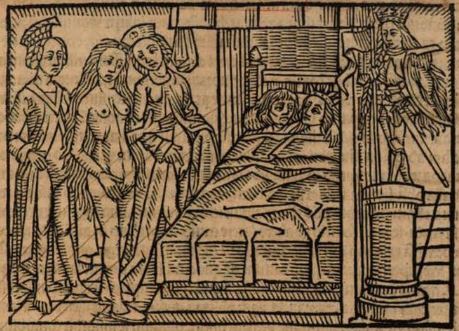
This engraving illustrates Queen Semiramis of the Assyrians lying in bed while having sexual relations with her son, Ninyas. There is a statue sitting on a platform on the right side of the engraving which appears to be a king. The statue is in fact Semiramis, who had a substantial military career and took part in many battles. The three women on the left side of the image represent the women who Semiramis feared. She was afraid that they would desire her son and take her away from him. Semiramis is said to have invented the chastity belt to avoid anyone having sexual relations with her son.
In this image the Bennet sisters walk back to Longbourn, accompanied by Mr. Wickham and another soldier. The sisters met them while in Meryton and Mr. Wickham said he would accompany them back home. Lizzy saw this as a good opportunity to introduce him to her parents. This scene occurs in chapter 21. The characters are shown in the traditional regency style. The Bennet sisters wear regency style dresses with empire waistlines and bonnets to protect their faces from the sun. Mr. Wickham and his fellow soldier wear the double-breasted soldiers’ uniform. The regency period dated to the early nineteenth century (1811-1820) when George, Prince of Wales, later George IV (r. 1820-1830), reigned as regent for his mentally ill father, King George III (r. 1760-1820). The regency period is associated with the rise of neoclassicism in art and fashion.
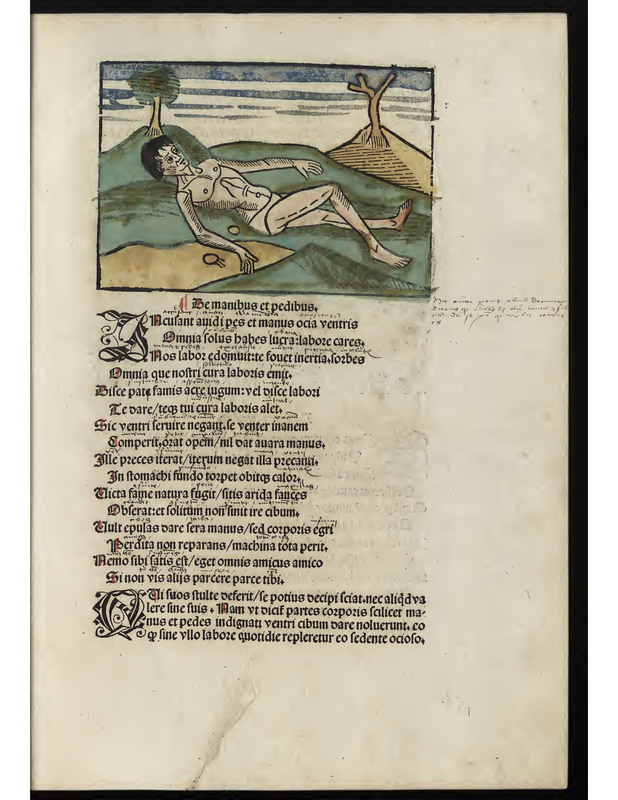
There is a person lying down on the ground completely naked. In the background there is a tree and hills. Nobody else is around, other than the naked person.
This engraving depicts Penthesilea, the queen of the Amazons, riding a horse into battle with her lance pointed towards her enemies. She is depicted with her long hair sticking out from her helmet to identify her as a woman. Penthesilea, as Boccaccio describes, was a great warrior. She wanted to secure a strong heir for the Amazons, so she sought out Hector of Troy to provide her with an heir. She fought in a battle against the Greeks to prove herself worthy of bearing Hectors child. The enemies she is fighting against in the image are the Greek soldiers in the Trojan War. There is one man whose chest is impaled as he is falling off his horse.
Two Tupinambá men are shown. One of the men stands in front of the other. He wears a feathered adornment at his back, attached to his body with a strap over one shoulder, ruffled adornments around both calves, and is otherwise nude. He bends down with one hand outstretched towards a monkey that sits on the ground beside him. The man standing behind him wears a feathered headdress and an adornment on his chin and is otherwise nude. He holds a rattle or an ornament in one hand, and stares at a parrot on a perch to his left.

![[A skeleton firing a cannon]](https://collections.cemvc.ca/files/large/3aa4dd81e64f5b6a37f7c9a72787d16e52abe29d.jpg)
![[Sambo Up Behind the Carriage]](https://collections.cemvc.ca/files/large/a4d8169cf7ba2205e7737f6a0c94579ae4d4c5f3.jpg)

![[Gulliver begs the captain of a Dutch pirate ship for mercy]](https://collections.cemvc.ca/files/large/58bad138da29938963f6d4fb906fdf6accc1b9c6.jpg)
![[Camiola Paying Roland of Sicily’s Ransom]](https://collections.cemvc.ca/files/large/9b37a12f5395b5abb02d010a9bfcfc0c58c3531d.jpg)
![[Amelia Seated by the Garden]](https://collections.cemvc.ca/files/large/9d37c1f19426a59b00edb3b0a00c7931dee25f36.jpg)
![[Gulliver makes himself new shoes]](https://collections.cemvc.ca/files/large/f38532877c63a17239cf8478c90cb3c3f549484d.jpg)
![[Three Laputan scholars accompanied by their Flappers]](https://collections.cemvc.ca/files/large/2eaddebb4f19535ee310643b077791796dd62044.jpg)
![[a plant from the Country of the Houyhnhnms]](https://collections.cemvc.ca/files/large/b84b91c37ca7385207816445d2ceeaaba9f61aec.jpg)


![[Two Tupinambá men with a parrot and a monkey]](https://collections.cemvc.ca/files/large/a9b2061a43a72bf25f803211371f4df2e3d6e04e.jpg)