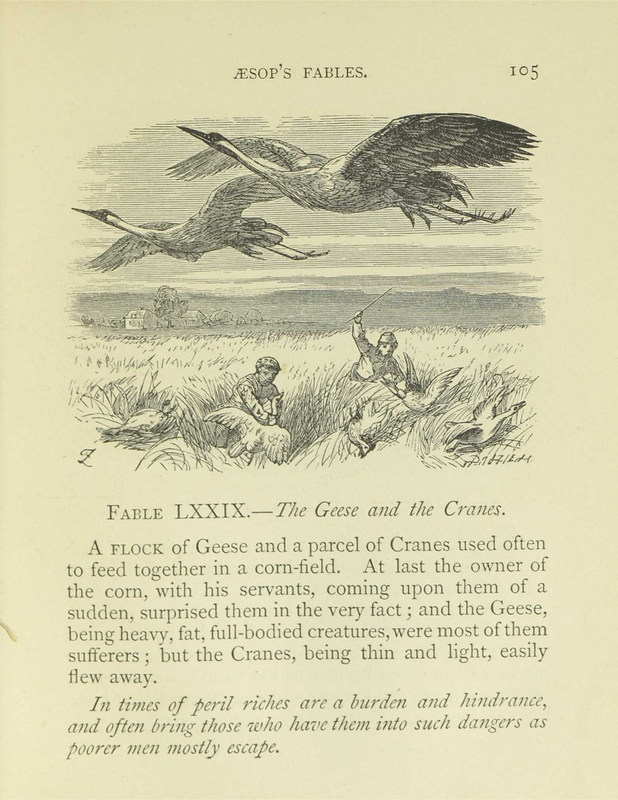
In a large open corn field, young boys run around catching geese. One holds a stick up about to hit a goose, the other gripping a goose firmly by its next. Other geese are seen lying dead or fleeing. Above the chaotic scene, two cranes fly gracefully across the image.
Here we see Gulliver swimming towards the shore after a storm hit and separated Gulliver from the rest of his crew. The ship is visible in the background, sinking. Gulliver swims towards land, and he arrives on Lilliput. The same image appears in both the 1839 and 1843 Krabbe editions.
Gulliver and Glumdalclitch travel with the King and Queen of Brobdingnag, during which time both Gulliver and Glumdalclitch became ill. Gulliver had a cold, however Glumdalclitch was so sick she could not leave her chambers. They stopped close to the water, and Gulliver asked to be taken to the ocean. Glumdalclitch reluctantly agrees, but cries when Gulliver prepares to leave, seen here. Gulliver is standing on the table, outside his travelling house, which had two straps on the back, seen in the image. The page who took Gulliver to the water stands behind Glumdalclitch. The same image appears in the 1843 Krabbe edition.
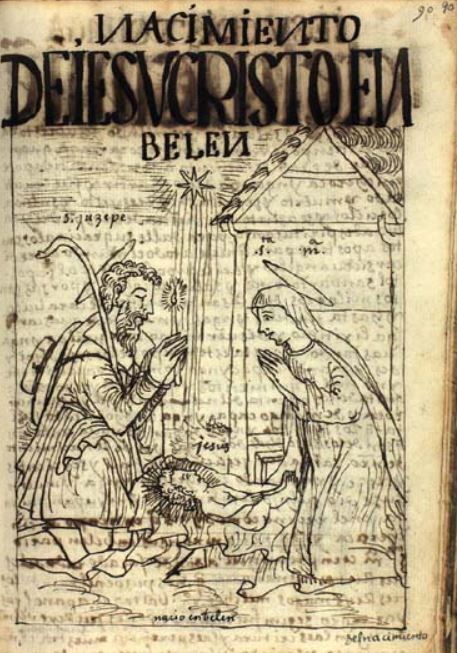
This image depicts a nativity scene of baby Jesus with his parents, Mary ad Joseph looking over him in prayer. The words san jusepe are written above Joseph's head to identify him, and the words santa maria are written above Mary's head to identify her. Jesus' name is written above him as well. The words nacio en belen is written at the bottom of the image, which translates to he was born in Bethlehem.
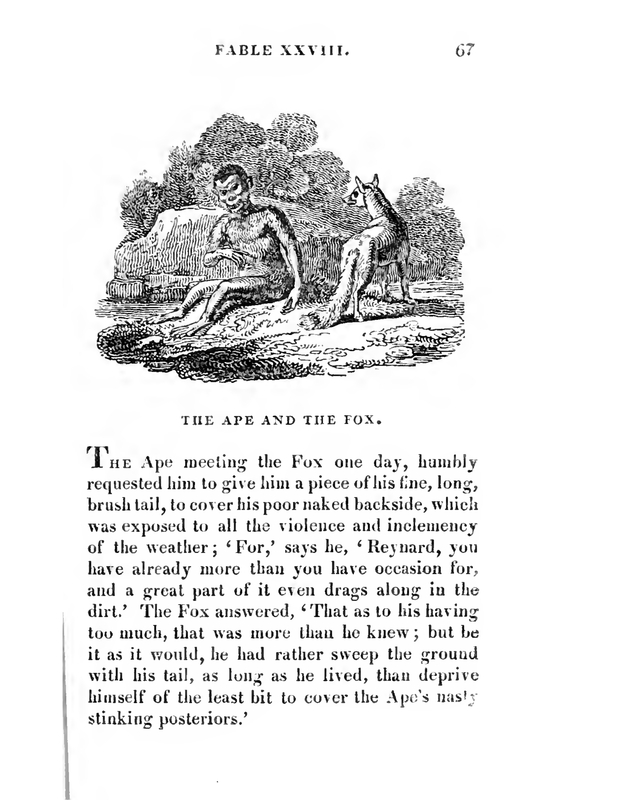
In the foreground is an ape sitting in front of a rock, to the left of a fox. The ape looks human like with a furry face with its right arm bent in front of its chest. The fox has its back to the viewer but its head is twisted left to look at the ape. Behind the rock are many bushes.
A group of Indigenous people are in the process of burying the body of a deceased man. The body has been bound with rope about the arms and wrists and has been placed into the grave in a kneeling position. Two men kneel on either side of the grave each gripping one of the deceased man’s arms and holding a basket over his head. Two different men shovel dirt into the grave, and a third stands at the head of the grave holding a rattle or ornament and wearing a feathered headdress. Three women, one with a child by her side, crouch around the grave with their hands over their faces in distress, and there are bows and a club on the ground near their feet, perhaps to be buried with the deceased. This image is identical to one found on page 926 of Paris, 1575 (l’Huillier), and in Thevet’s Les Singularitez de la France Antarctique (page 82 verso of Paris, 1557 and page 82 verso of Paris, 1558).
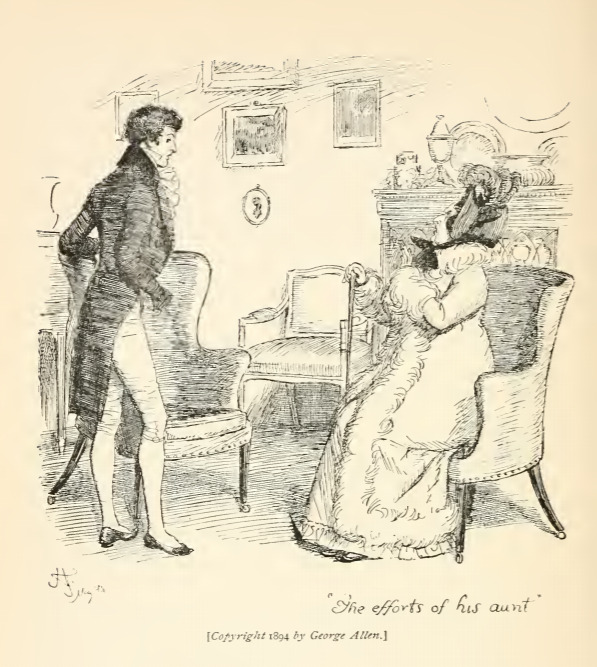
In this image Mr. Darcy speaks with his aunt, Lady Catherine de Bourgh. Lady Catherine tried to persuade Mr. Darcy not to propose to Elizabeth. Lady Catherine wanted Mr. Darcy to marry her daughter, Mr. Darcy’s cousin. Lady Catherine planned the marriage between Miss de Bourgh and Mr. Darcy since their infancy. Mr. Darcy refused this engagement, firm in his conviction that he was going to marry Elizabeth. This scene occurs in chapter 58. The characters are shown in the traditional regency style. Lady Catherine wears a regency dress with an empire waist. She wears an overcoat and bonnet and holds a walking stick. Mr. Darcy wears a waistcoat and tailcoat with a cravat. The regency period dated to the early nineteenth century (1811-1820) when George, Prince of Wales, later George IV (r. 1820-1830), reigned as regent for his mentally ill father, King George III (r. 1760-1820). The regency period is associated with the rise of neoclassicism in art and fashion.
During his time on the Country of the Houyhnhnms, Gulliver began to hate all humans, because he viewed the Houyhnhnms to be superior beings, while the yahoos were inferior. It got to the point where Gulliver began to hate his own reflection because he looked like the yahoos. This sentiment stuck with Gulliver even after he returned home to England, and he could never look at a human the same way. The same image appears in the 1843 Krabbe edition.
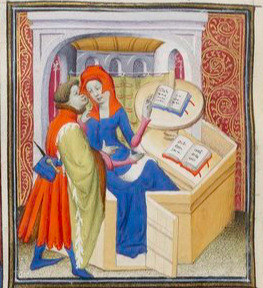
Leontium was known for bringing the very honorable subject of philosophy to the brothels and other lowly places. The subject was considered too honorable for unclean adulterers and prostitutes to learn, among other lower-class citizens. The image depicts Leontium studying at her desk, while being courted by a man.
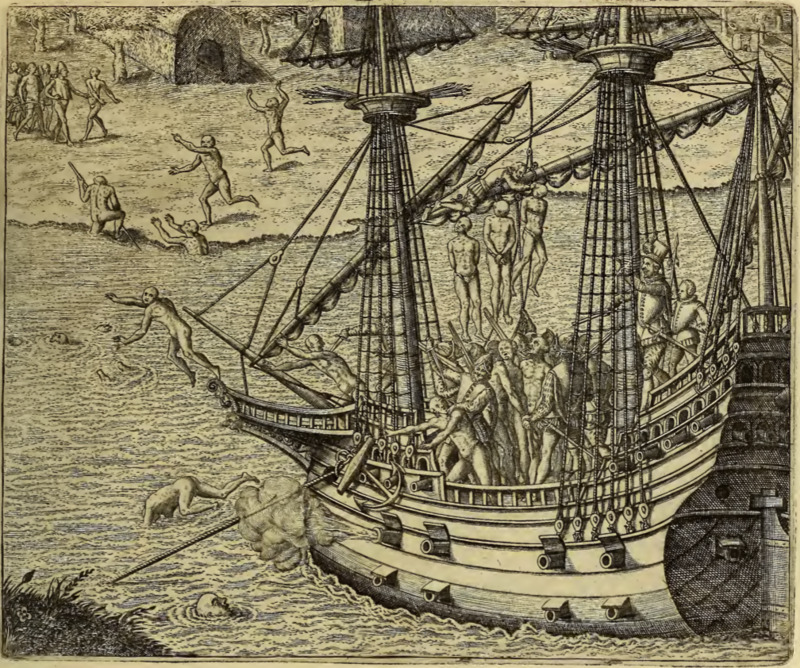
A large number of Indigenous people have been lured onto a Spanish ship by Diego d’Ocampo and his soldiers, in retaliation for an uprising against Spanish colonization in Venezuela. At least three Indigenous people have been hung from the mast of the ship. Several have escaped the ship by jumping overboard and swimming for shore, and some have reached the shore where they then flee the ship. The ship’s cannon is used to fire at those escaping. Two dwellings are visible near the shore.
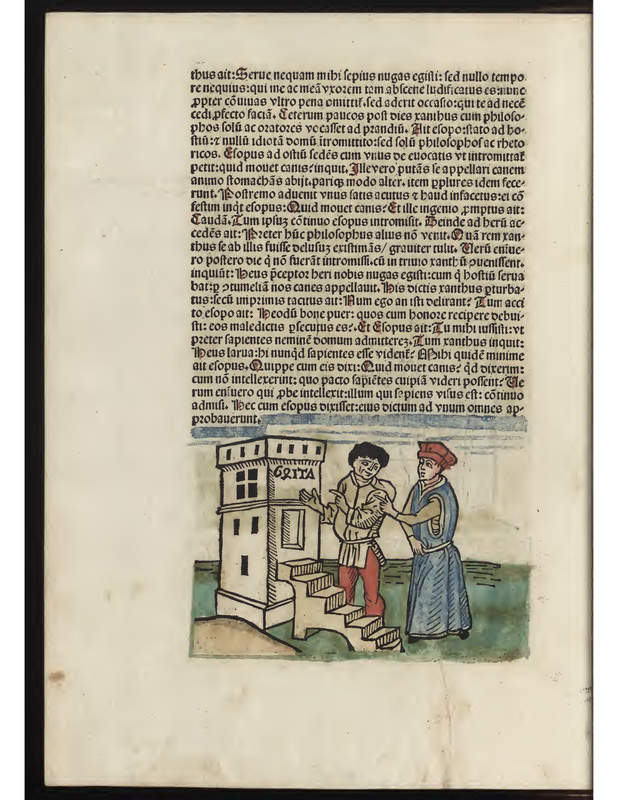
Sempronio (rightmost figure) is shown arriving at Celestina’s house to request her aid on behalf of Calisto, and he encounters Celestina (central figure) in the street. In this illustration, she is shown opening her door. Inside, we see Crito (leftmost figure) descending the staircase. Celestina and Elicia attempt to hide him from Sempronio.The entire illustration is identical to the one found on page 94 of the text: [Act V – Pármeno Opening the Door for Celestina and Sempronio].
The image depicts a scene from page 272 in Chapter XXVII, in which William Dobbin smokes while Amelia Osborne sketches the scenery on their tour of Germany. Amelia is shown seated on a folding stool, sketching in the book she holds on her lap. William Dobbin stands behind her with her shawl draped over his arm. He is holding his cane in one hand and his cigar in the other. In the background are three overlapping hills covered with shrubs and two flying birds.
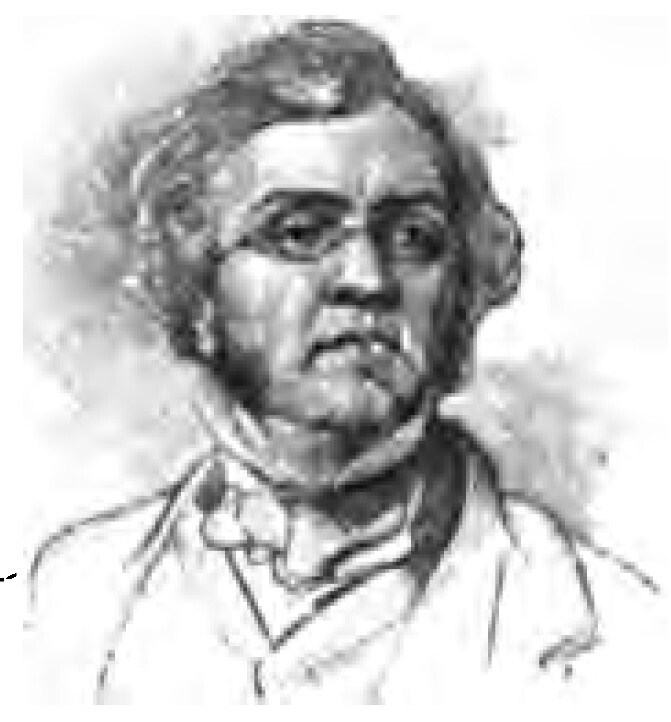
A portrait of the author, William Makepeace Thackeray. Though the book does not provide the source information, external research suggests that it is an incomplete oil painting done by Samuel Lawrence in 1864.
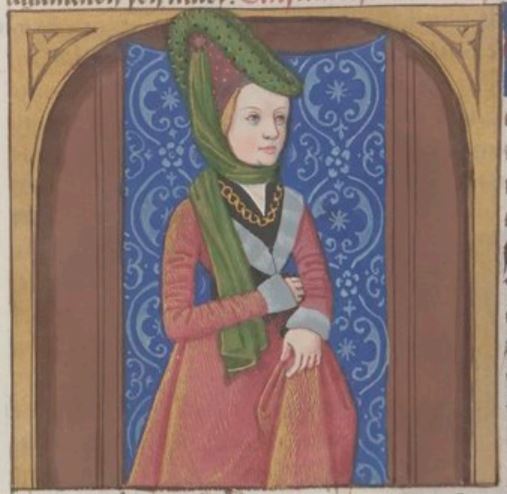
This illumination depicts a portrait of a woman named Clytaemnestra (or Clytemnestra), who was the queen of Mycenae and wife to king Agamemnon. Clytaemnestra had begun an affair with a man named Aegisthus while Agamemnon was in the Trojan War and had planned to take control of Mycenae together. They murdered Agamemnon as soon as he returned to Greece, Clytaemnestra and Aegisthus end up being murdered by her son, Orestes, to avenge his father.
This image is illustrated in a chapter that discusses and criticizes the government and society in Spanish conquered Peru. This image depicts a provincial judge on the right side of the image who had just finished hunting. A deputy magistrate is depicted standing behind him holding their kill from the hunt. The judge has dialogue written next to his head which reads, es para noca [that belongs to me]. The deputy responds with, caymi, cino [here you are, sir], The author criticizes these government officials by saying they only want their positions to take advantage of the indigenous peoples and to steal money.
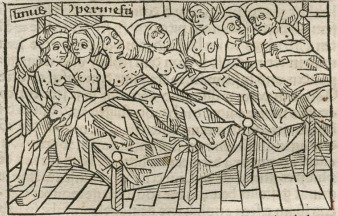
Hypermnestra and her husband, Linus, are illustrated on the edge of the bed on the left side of the engraving. We know these figures are Hypermnestra and Linus as their names are engraved above their heads. Hypermnestra is depicted with her arm lovingly touching Linus’ chest. As Boccaccio explains, a prophecy told Hypermnestra’s father that one of his nephews would kill him, so he married all his daughters to his nephews and instructed them to kill their new grooms to avoid this prophecy from happening. Hypermnestra, however, fell in love with her cousin Linus. Hypermnestra instructs him to leave to avoid her father and sisters from killing him. One of her sisters is depicted lying in the bed behind her, already having killed her husband, along with the other husbands that have been murdered.
A man in a turban and loose pants is lying down against a pillow, running his finger along the stem of a very long pipe. He has a platter with two jugs and a cup on it balanced on one foot. Another jug is on the ground next to his pillow, and in the top right corner of the image is the letter W from When.
Here we see two violins, a straight razor, a crown sitting on a pillow, and other hats. These items represent different ghosts that Gulliver met on Glubbdubdrib. Gulliver was introduced to various historical figures and learned about the conspiracy, tyranny, and scandal that took place throughout history.
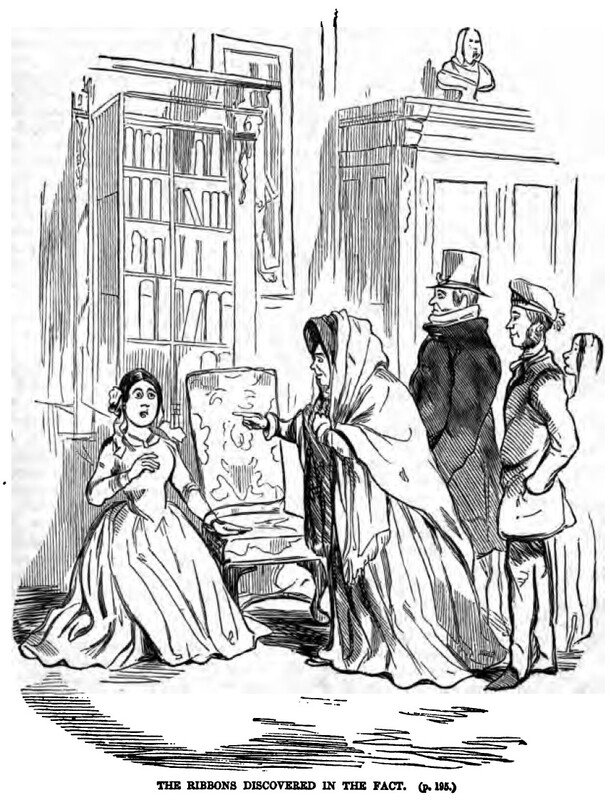
Miss Betsy Horrocks, with large ribbons in her hair, kneels in shock next to a chair in Sir Pitt Crawley’s study. Mrs. Martha Crawley, who has just caught Miss Horrocks trying a stolen set of keys on the locked drawers in the room, points an accusing finger at her. Behind her are Reverend Bute Crawley, her husband, and James Crawley, their son, who have both also witness the robbery. Below the illustration is printed its title and location in the story, THE RIBBONS DISCOVERED IN THE FACT. (p. 195.).
Here we see Gulliver next to a hazelnut on Brobdingnag. During one of Gulliver’s performances a young boy threw a hazelnut at and Gulliver and it only narrowly missed him. After this incident Glumdalclitch became Gulliver’s only caregiver. Gulliver leans back in surprise and the hazelnut is almost the size of Gulliver. The same image appears in the 1839 Krabbe edition.

![[Gulliver swims to shore after the shipwreck]](https://collections.cemvc.ca/files/large/db20e6ceec1fb3d9c3ff34de6703dca74d687861.jpg)
![[Glumdalclitch cries when Gulliver leaves with a page on Brobdingnag]](https://collections.cemvc.ca/files/large/4808d34afe46aff345362006f15a2db9b4486ba2.jpg)
![Ceremonies com[m]e ils enterrent les trespassez.](https://collections.cemvc.ca/files/large/5fb678d10c25996978f3641ae84919b8532dd531.jpg)
![[Gulliver shudders at his own reflection]](https://collections.cemvc.ca/files/large/1a3c6d8d5fc2836e14c637ff6bbc8013f675b14f.jpg)

![[Act I (Third Illustration) – Celestina and Sempronio Talking as Crito Descends the Staircase]](https://collections.cemvc.ca/files/large/d9f3d352628da7002346df81b96d3176e95f00fa.jpg)

![Capitvlo Primero de Escri[va]no, Tiniente, Ivezes](https://collections.cemvc.ca/files/large/d9821cda9629261479076bbe0582968d20a3314b.jpg)
![[Vanity Fair Volume II. Chapter XVII Inhabited Initial, W]](https://collections.cemvc.ca/files/large/531c347ef09034e28fe6aff6d4b7a0f63571ff49.jpg)
![[Violins, a straight razor, and a crown]](https://collections.cemvc.ca/files/large/dac2542f5cb9838a0627c22481fc9b5032ab7091.jpg)

![[Gulliver next to a giant hazelnut on Brobdingnag]](https://collections.cemvc.ca/files/large/e99aec685a05b1019aa1b8f16a1c63d9f6d24386.jpg)