This image is illustrated in a chapter that discusses and criticizes the government and society in Spanish conquered Peru. This image depicts a Spanish Corregidor [Magistrate] on the right side of the image dressed in traditional European attire. He is pulling on the hair of a tied up indigenous nobleman. The indigenous man is depicted naked and tied to a brick post. There is an African slave depicted on the left side of the image who is being ordered to whip the tied-up nobleman. The caption at the bottom of the image reads, probincias [Provinces].
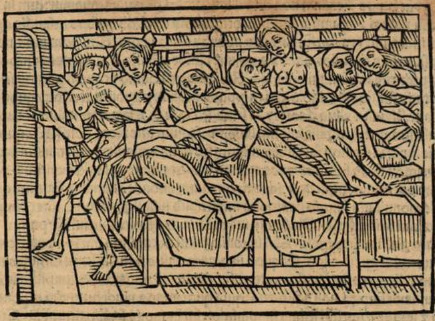
Hypermnestra and her husband Linus (also known as Lynceus) are illustrated on the edge of the bed on the left side of the engraving. Boccaccio explains that a prophecy told Hypermnestra’s father that one of his nephews would kill him. To avoid this from happening, he married all his daughters off to his nephews and instructed them to kill their new grooms. Hypermnestra, however, fell in love with her cousin Linus. Hypermnestra is pointing towards the door in the image as she instructs him to leave to avoid her father and sisters from killing him. Her sisters are depicted in the beds beside her and Linus, with one of them slitting the throat of her husband. She is considered praiseworthy for the devotion to her husband.
Here we see a yahoo eating a rat. Gulliver’s master explains that many yahoos live in huts near the Houyhnhnms’ house, but the rest live in fields, where they forage for herbs and berries and hunt for rats and mice. The same image appears in the 1839 Krabbe edition.
Here we see the Queen of Laputa with her two children. All three figures are wearing the traditional Laputan motifs of mathematical and musical figures. The King of Laputa and his two eldest sons are not permitted to leave the island for fear that something might happen with the trajectory of the island and it might come crashing down or remain in one place blocking the sun and causing disease. These occurrences would happen if the King wanted to punish a region on Balnibarbi (the land underneath Laputa). The Queen was only permitted to leave the island after she was past child-bearing years. The same image appears in the 1843 Krabbe edition.
Elicia (because veils indicate mourning dress, she is presumably the leftmost figure) walks to Areusa’s house to tell her about the deaths of Celestina, Sempronio, and Pármeno. As she approaches, Elicia hears Areusa (central figure) wailing within and infers that she must have already heard the bad news. She then hears another voice and realizes that Areusa is arguing with someone (Centurio, rightmost figure). In a fit of rage, Areusa forces Centurio out of her house. Once he leaves, Elicia enters and informs Areusa of the tragedy. They blame the deaths on Calisto’s love for Melibea and set their sights on revenge. They resolve to seek the aid of Centurio in murdering Calisto.
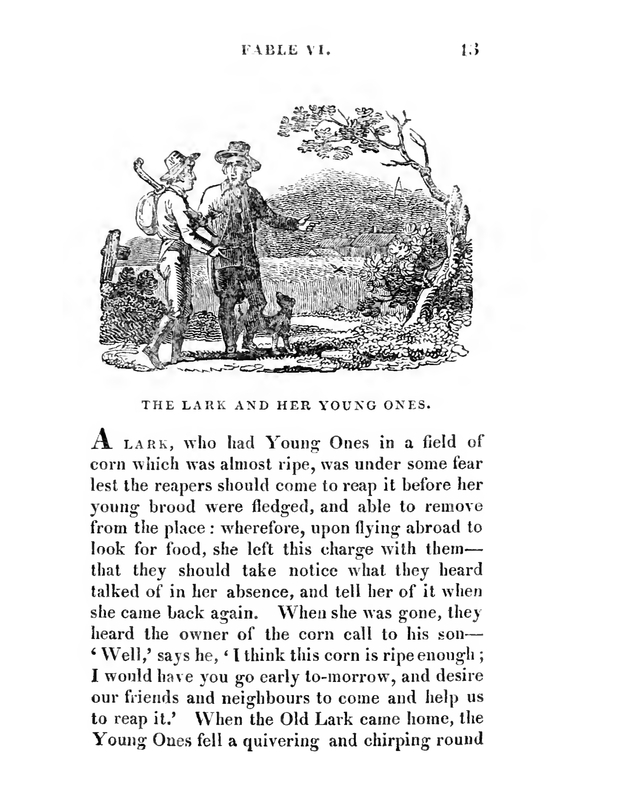
In front of a field of corn, the owner dicussed harvesting the field with his son accompanied by a cat. They situated on the left side of the illustration while the board view of the field was behind them. The ower.pointing at the field, instructed his son to reap the corn with their friends and families.
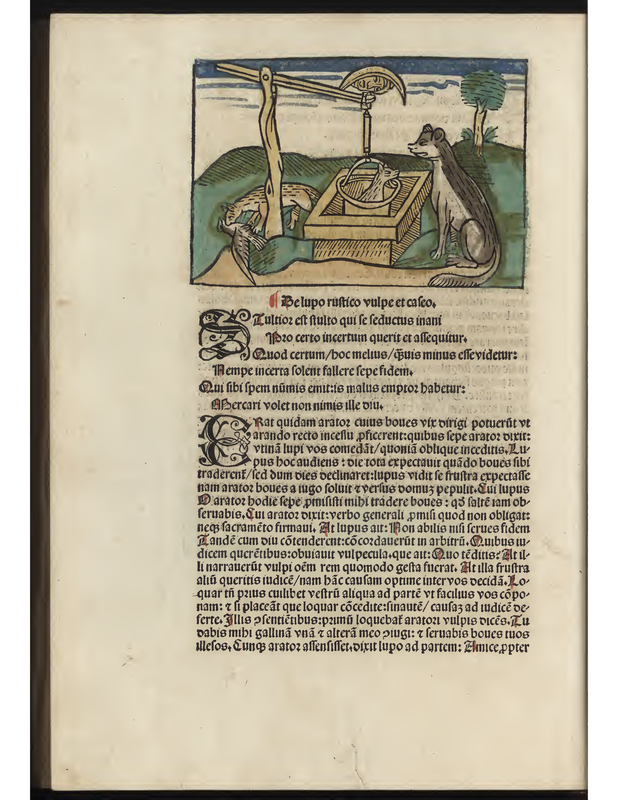
A fox sits in the bucket of a well while talking to a wolf. Beside the well another fox bites a third foxes neck. A farmer appears to be part of the well and watches the fox and wolf talking. There are hills and a tree in the background
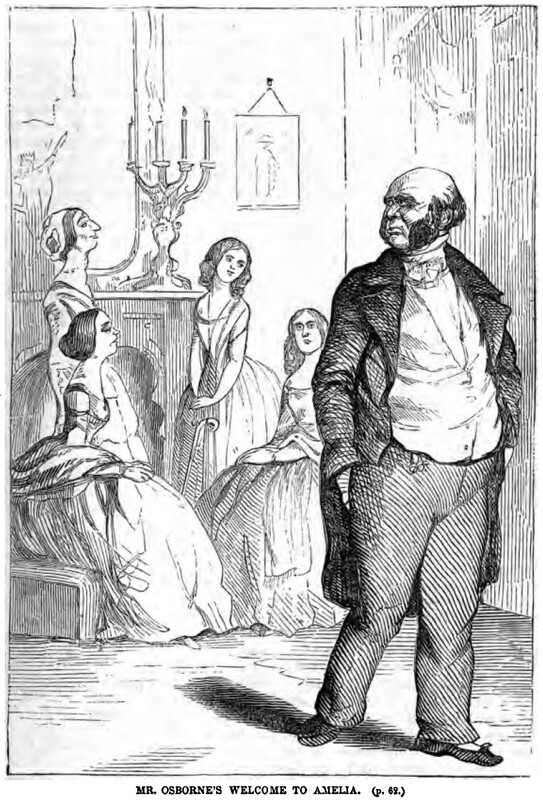
Jane and Maria Osborne are seated on two low chairs in front of the fireplace in their drawing-room. Upon the fireplace are a very large mirror, a statue of a warrior, and a candelabra; to the side of the mirror hangs a small portrait. Amelia Sedley is standing between the sisters, looking uncomfortable and holding her hands clasped together. Miss Wirt is standing opposite Amelia, looking haughty. In the foreground of the image is Mr. Osborne, mostly turned away from the others as he walks off with a scowl on his face. Below the illustration is printed its title and location in the story, MR. OSBORNE’S WELCOME TO AMELIA. (p. 62.).
In this image we see Gulliver watching a giant from Brobdingnag carrying a large fish over his shoulder. The image comes when Gulliver describes the countryside in Brobdingnag. Gulliver leans on a rock, relaxing. The giant is hunched over with a large fish thrown over its shoulder. We see the backs of Gulliver and the giant. Next to Gulliver is a large basket. The same image appears in the 1839 Krabbe edition.
Here we see an angel weeping. The angel cries over the immortals of Luggnagg, as they cannot die and continue to live even though many of them wish they could die and be put out of their misery. This is because their quality of life continues to decline as they age, and see their friends and family die.
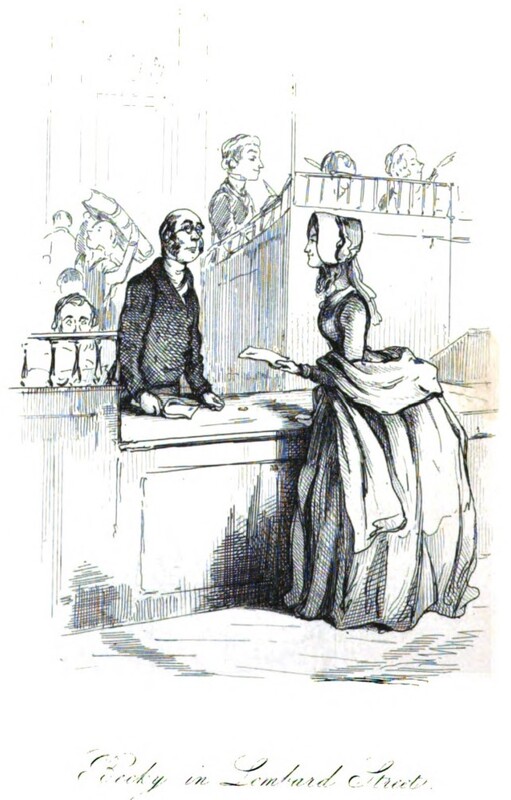
Rebecca Crawley stands at the desk of Messrs. Jones and Robinson’s bank. She is holding out a document which Lord Steyne sent to her, entitling her to a large sum of money from his account. On the other side of the desk is a bank official, holding a coin shovel. In the background are other employees of the bank, seated and standing, carrying quills and books. Below the illustration is printed in cursive its title, Becky in Lombard-Street.
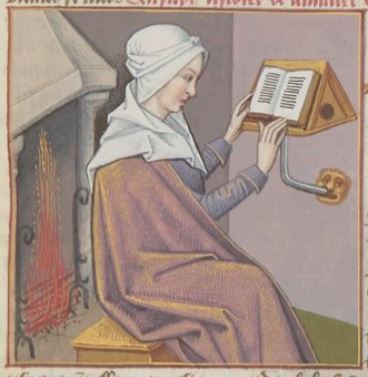
This illuminated image depicts the sibyl, Amalthea (also called Deiphobe), sitting down while looking at a book resting on a lectern. There is a burning fire behind Amalthea which symbolizes the fire that she used to burn the books that she meant to give to Tarquinius Priscus. Amalthea had nine books to give to the Roman king, however, when he denied her payment, she began burning three books at a time until he gave her the money. There were three books left when he paid her. These three books contained all of the future events that will happen to the Romans.
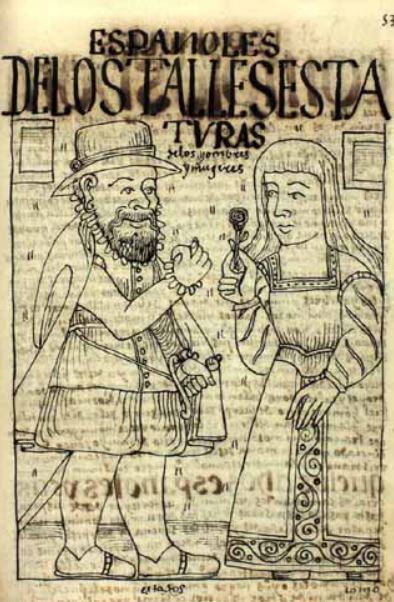
This image is illustrated in a chapter that discusses and criticizes the government and society in Spanish conquered Peru. This image depicts a man making an obscene gesture with his right hand and holding his sword hilt with his left. The woman on the right is holding a rose as she looks at the man. The author spends this part of the chapter describing the height and size of men and women and how their personalities are affected by their size. He describes overweight individuals to be lazy and lack judgement, while people with a good build and good face with large eyes are hard-working and charitable.
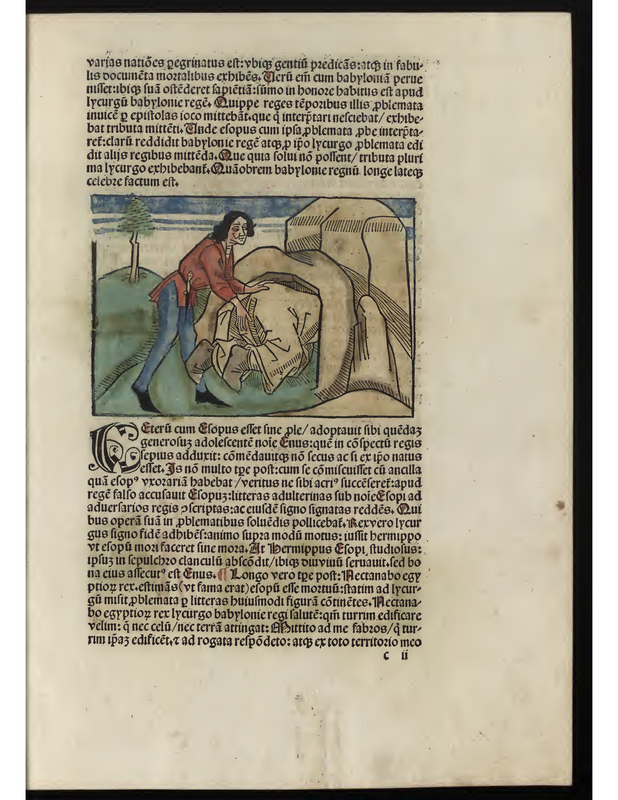
Aesop, a person that was held in high esteem at the Babylonian court because of his wisdom, is slandered by his adopted son and hidden by a disciple in a burial chamber.
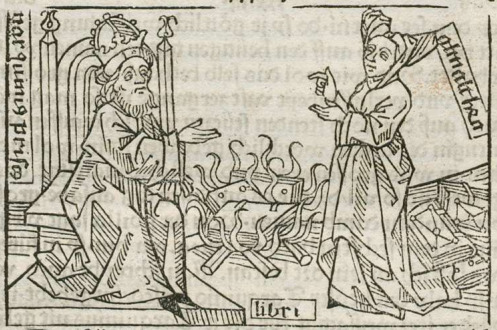
This engraving depicts the sibyl, Amalthea, burning 3 books in a fire in front of Tarquinius Priscus. We know that these figures are Amalthea and Tarquinius Priscus as their names are engraved beside their bodies. Amalthea, as explained by Boccaccio, brought 9 books for Tarquinius Priscus, and when he failed to pay her the full price for them, she burned 3 books at a time until he paid her in full. The word Libri is engraved below the fire, which translates to books in English. These books had the prophecies of Amalthea written in them.
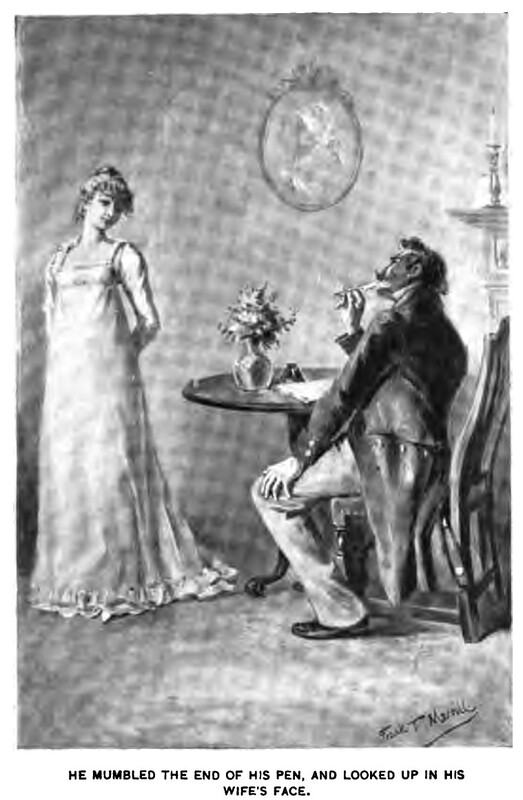
The image depicts a scene from page 243, in which Rebecca Crawley dictates a letter to her husband for him to write to Matilda Crawley, his aunt. Rawdon Crawley sits on a high-backed wooden chair, holding his pen to his mouth. Rebecca, dressed in a floor-length white gown, is standing with her hands behind her back and looking over her shoulder at him. On the table between them is a sheet of paper and a vase of flowers. A portrait hangs on the wall behind the table, next to the edge of a dresser or mantle on which a candle sits.
Here we see the eagle carrying away Gulliver’s house from Brobdingnag. In the image we see the eagle’s head with a rope attached to Gulliver’s head in his beak. Gulliver leans out the window, looking up at the eagle. We see the straps attached to Gulliver’s house which were worn like a backpack when he was travelling. This is the smaller of his two houses, as this was designed for travel. The same image appears in both the 1839 and 1843 Krabbe editions.
This image depicts a native official in Spanish colonial Peru. The man is a regidores [councillor] for a local village who would do accounting work. He is depicted holding a book in his left hand and a quipu in his right. Quipu’s were recording devices in the Inca Empire in which knots where tied along ropes to communicate numbers. The official is also depicted carrying a long staff in his right arm and wearing traditional clothing that has embroidery on the tunic. The caption at the bottom of the image reads, en este rreyno [in this kingdom].
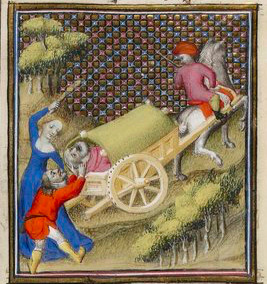
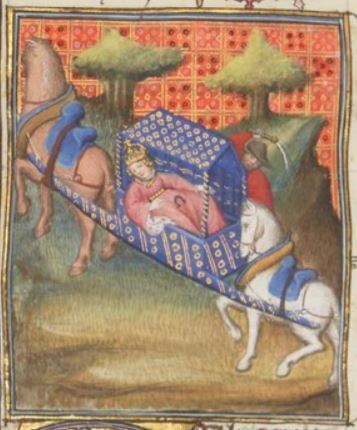
This illumination depicts Sabina Poppaea, the wife of Emperor Nero, lying dead in a chariot as she is carried to her funeral. Despite Roman traditions of cremation, Emperor Nero had a public burial for his wife and had her body placed in a sepulcher. Boccaccio explains that Emperor Nero had gotten angry and kicked Sabina in the stomach while she was pregnant, which was the cause of her untimely death. She is illustrated wearing a pink dress and a crown in this illustration.
Here we see the Tower of London from the Thames. There are several boats in the river, and the Tower of London is on top of a hill, with buildings in front of it. When comparing this image to others from the eighteenth century, this view of the Tower is recurring. This image comes at the end of the sixth chapter of Gulliver’s travels in Laputa, when he has decided he wanted to return home to England. The same image appears in the 1843 Krabbe edition.
While being charioted around in front of a crowd, Claudia’s father, who was deceased, was attacked by a group of plebeians. Seeing this in horror, Claudia rushed into the group of men and defended her father. Her love for him was too strong to see him in this position, so she defended him. Claudia is seen in the blue gown trying to defend her father, who in lying in the back of a chariot being attacked by a plebeian. The chariot driver is at the top right corner of the image, on horseback.

![Coreg[id]or Afrenta Al Alcalde Hordenario por dos Duebos que no le da Mitayo](https://collections.cemvc.ca/files/large/77c4ea7417a516db9e9e2820d79576bf9a24e346.jpg)
![[a yahoo eats a rat]](https://collections.cemvc.ca/files/large/f196bd6ee5a69f545f12bf272263247de5771cf7.jpg)
![[the Queen of Laputa with her children]](https://collections.cemvc.ca/files/large/a14e5f6bc52586d1e050fc11a0348ed5311e61b6.jpg)
![[Act XV – Areusa and Elicia Standing Beside Centurio]](https://collections.cemvc.ca/files/large/7c28694805818973e3fee97a284d58888731623c.jpg)

![[A giant carries a fish while Gulliver watches]](https://collections.cemvc.ca/files/large/0a3d3529060cd520a541ff00e858f7c3bfd31e42.jpg)
![[An angel weeping]](https://collections.cemvc.ca/files/large/e571dacd344786451fa2a1b7cd5eb65eb76d1003.jpg)
![[an eagle carries Gulliver’s house over the ocean]](https://collections.cemvc.ca/files/large/aceb4096722403fe5d5f84f97cfa8d8a6254a54f.jpg)
![Regidores: Tenga Libro Qvipo, Cv[en]ta, Surcococ](https://collections.cemvc.ca/files/large/78484f239fb7a507e938fbac7052537134af3056.jpg)

![[The Tower of London see from the Thames]](https://collections.cemvc.ca/files/large/bbcd68cab3295acaca57becdf1b0e4da07d7c1af.jpg)