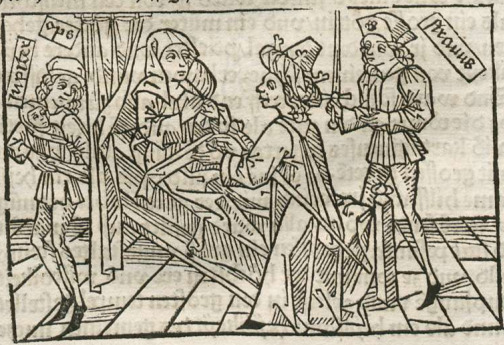
Ops, wife of the god Saturn, is depicted laying in a bed after just having given birth to her children: Jupiter, Neptune and Pluto. We know the woman lying in the bed is Ops as her name is engraved beside the curtains of the bed. Baby Jupiter is illustrated being carried away by a servant with his name engraved beside the person carrying him. Boccaccio’s story explains that Saturn and Ops’ brother, Titan, planned to kill the children to avoid them growing up and defeating them. Saturn is illustrated with his hands outstretched towards baby Jupiter. Titan is on the opposite side of Ops’ bed with a sword in his hand. His name is written as Titanus beside his head.
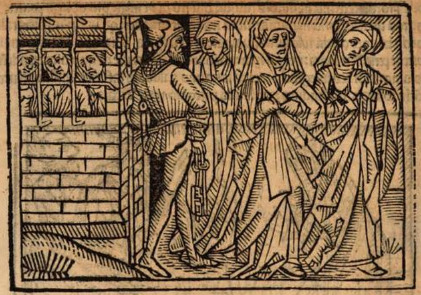
The engraving depicts a man guarding a jail, with three figures standing behind the bars of the jail and three figures leaving the jail wearing heavy garments. The three figures leaving the jail are Minyan men who had been sentenced to death for their crimes against their city. Boccaccio explains that the Minyans wives had gone into the jail and swapped clothing with their husbands and switched places with them. The men in disguises slipped past the guards unnoticed and into freedom, while their wives were executed in their place. Boccaccio explains that he chose to write on these women to demonstrate that there is no greater love than a wife’s love for her husband.
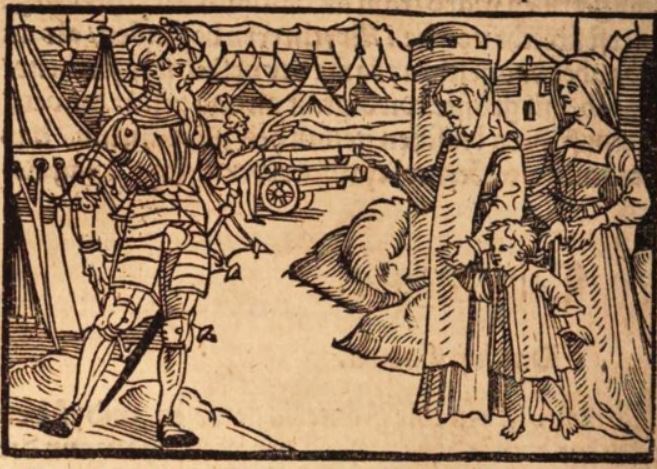
A noble Roman woman named Veturia is depicted on the right side of the engraving with her daughter-in law and grandchild beside her. She is illustrated pointing at the man on the left side of the engraving. This man is her son, Coriolanus. They are depicted standing in the middle of a war camp site, with tents and cannons surrounding them. Boccaccio explains that after Coriolanus had been exiled from Rome for neglecting the plebian class, he planned an attack on Rome. Veturia, with the help of her daughter-in-law (Volumnia) and grandchild, went to speak with Coriolanus at his camp and convinced him to not go through with the attack. Boccaccio explains that he decided to write on Veturia for her honour as a mother and a woman.
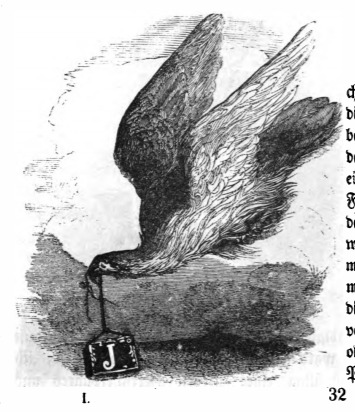
Here we see the eagle that carried Gulliver in his house away from Brobdingnag. The eagle picked up Gulliver’s house and carried it out over the ocean before dropping it. Gulliver was then rescued by a merchant’s ship. The image appears at the beginning of the eighth chapter, foreshadowing Gulliver’s escape from Brobdingnag. The same image appears in the 1839 Krabbe edition.
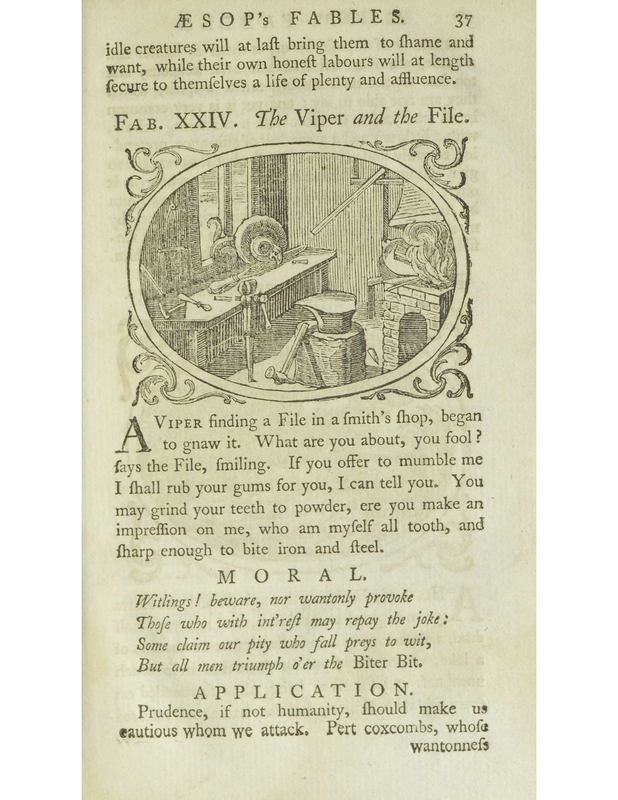
There is a viper in a smith’s shop. In the image, there are several images of tools displayed across the image. A lit forge to the right of the image, along with a anvil and hammer towards the center of the image. Along the left side of the image, is a workbench, where the viper and the file are. There also is a chisel and hammer on the bench. The viper has its mouth on the file. The viper is near the window in the image, which is near the bench, to the left of the image.
Gulliver explains the various medicines used in England to treat disease. Gulliver explains to the Houyhnhnms various aspects of English society, including disease and medicine. In this image we see a bowl with medicines and various vials with other pharmaceuticals. The same image appears in the 1839 Krabbe edition.
The author explains that all towns in Spanish colonial Peru should have a public clock so that the people can tell when it is time to worship God and keep track of working hours. The image depicts a large wood carved public clock. There is a person standing on the right side of the image ringing a bell. There is writing next to the bell which reads, doze ora, la una, descanse [pray at twelve o’clock, rest at one]. There is also writing below the numbers on the clock which reads, a de tener en todo el reyno ora [have clocks in the entire kingdom]. The caption at the bottom of the clock reads, cicuy pacha suc ora, suc yanocuy, samacuy, churi, 7 oramanta ciruinqui 5 ora, 12 oramanta 1 ora samanqui, 5 ora chici cama siruinqui [lunch time is one hour, one hour to cook, rest, from seven in the morning you will work for five hours, from twelve you will rest for one hour, from five to nine you will work].
Shortly after Celestina leaves Calisto, Calisto grows impatient and sends Sempronio to visit her house and hurry her along in her progress. When Sempronio departs, Pármeno tries to dissuade Calisto from procuring Celestina’s services. [A male figure is pictured on a horse, while another male figure helps him place his foot in the stirrup. While the figure on the horse is the same figure used to depict Calisto, we can infer from the narrative that it is likely meant to represent Sempronio. Because the figures for Calisto and Sempronio resemble one another, this is likely a simple oversight in printing/engraving. The second figure is likely another of Calisto’s servants.]
This image shows the Yahoos and a Houyhnhnm in the Country of the Houyhnhnms. In the foreground is Gulliver fighting a Yahoo – a native human of the Country of the Houyhnhnms that Gulliver comes to despise along with all other humans as he learns the virtues of the Houyhnhnms. The scene is Gulliver’s first encounter with the species who live on this island. Gulliver is attacked by a Yahoo, and a Houyhnhnm – a horse – comes to Gulliver’s rescue. The two humans are fighting in a river. The Yahoo attacking Gulliver is drawn quite differently than Gulliver. The Yahoo has pointed ears, unkempt hair, and a flatter face than Gulliver. A small Yahoo child is on the left, holding a bow and arrow, with small wings, referencing Cupid. This child is used to show readers the difference between the humans that Gulliver is used to in England, and those in the foreign land in which Gulliver finds himself. The yahoos serve as a reflection of the Europeans views towards Native Americans. The same image appears in the 1761 German edition.
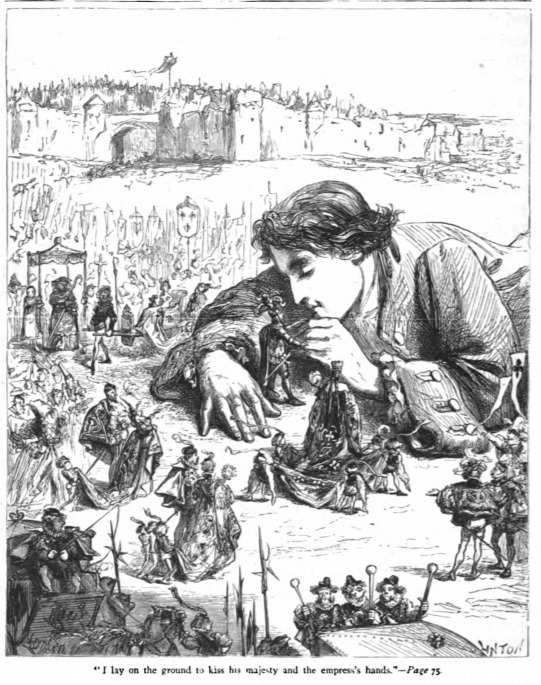
Following his charge with treason on Lilliput, Gulliver fled to Blefuscu. In this image we see his arrival on Blefuscu where he was welcomed by the Emperor and Empress of Blefuscu. A crowd gathered to meet Gulliver at the harbour.
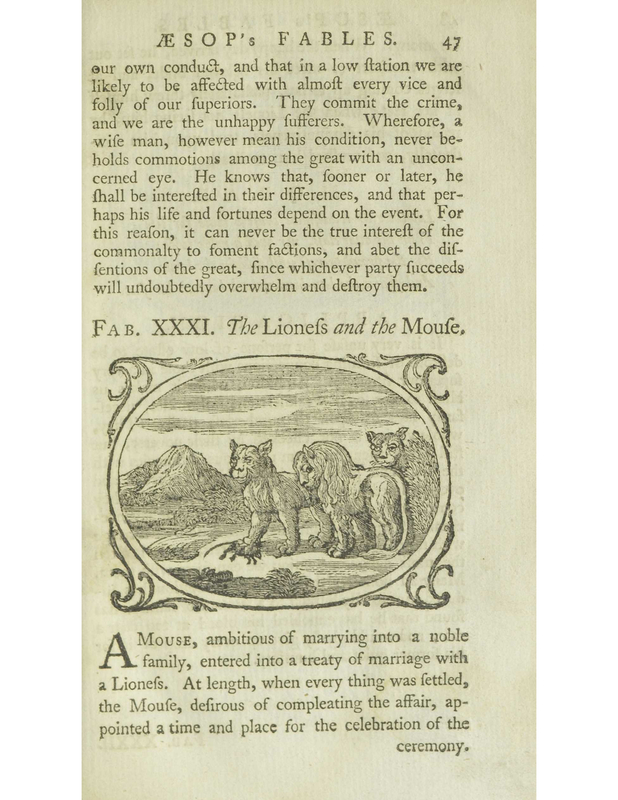
A lion and two lioness stand in the middle of what looks like a desert area, with a few shrubs and mountains in the area. One of the lionesses stands on a mouse, who is squished into the ground. The lion by her side stares at the mouse under her foot, while the other lioness stands behind in the bushes.
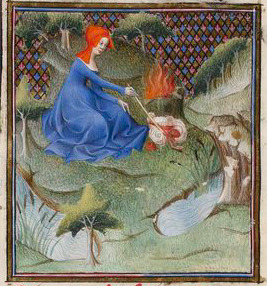
Manto is in the act of performing pyromancy, what she was known for. This is when she uses the way flames look and behave to predict the future – she was a soothsayer. After giving birth to a son, she moved to an island near Lake Garda – this is where the scene takes place.
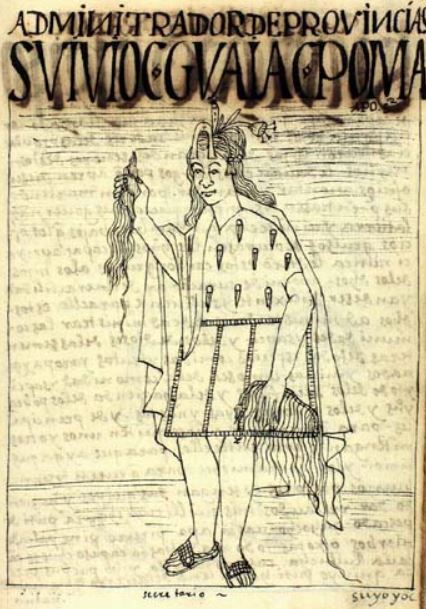
This chapter discusses the system of administrative officials in the Inca Empire. This image depicts a suyuyoc [provincial administrator] named Carua Poma, son of Capac Apo Guayac Poma. He is illustrated standing in the centre of the image holding two quipus [a device for recording information]. The author explains that these officials were sons of noble lineage and were chosen for this position to learn about accounting, administration, and governing. These officials were required to oversee communities and their fields and sacrifices and ensure everything was accounted for.
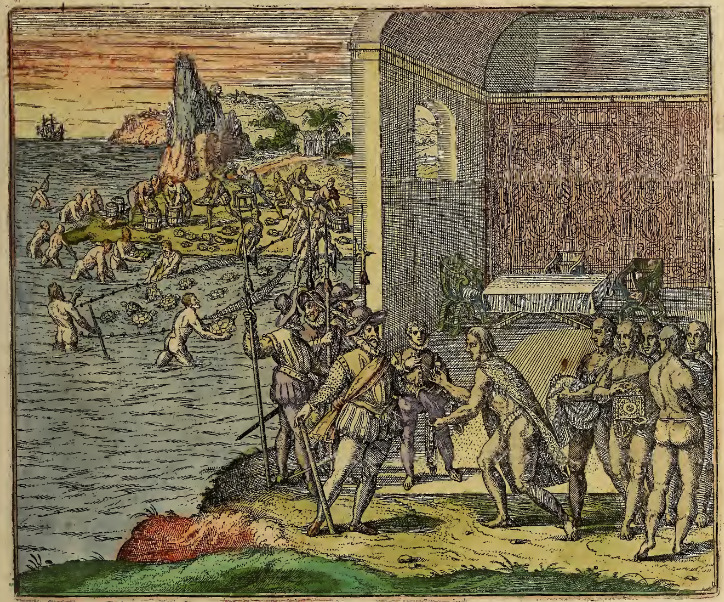
Several Indigenous people present gifts of gold to a group of Spaniards outside the entrance of a large structure that site on the riverbank. In the background, a group of Spaniards fish for turtles along the riverbank using a large net. Several other men stand on the shore, storing the caught turtles and turtle eggs in casks. In the distance, another Indigenous structure is visible. Farther away, at the mouth of the river, a European ship sails. This image is identical to one found on page 143 of Frankfurt, 1595, but colored.
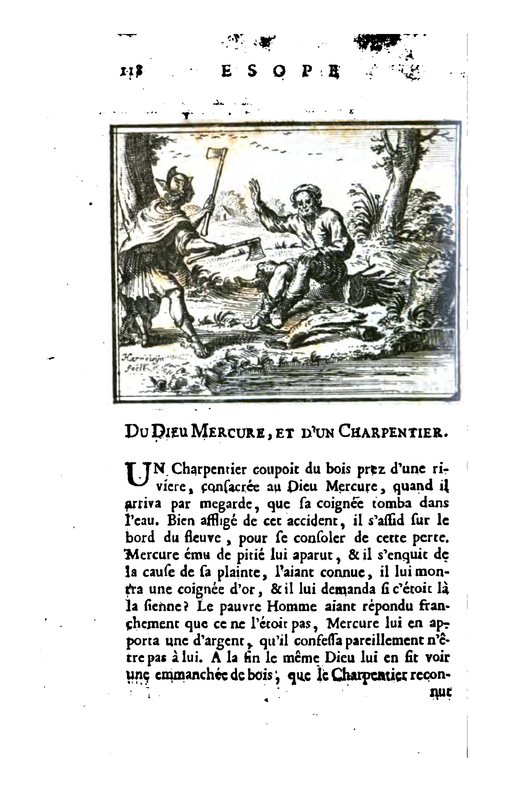
A carpenter cuts wood by a river, his axe fell from his hands into the water. The god Mercury appeared and asked what the trouble was. The carpenter told what had happened, and Mercury dived into the water. When he came up he held a golden axe. The carpenter was honest about the golden axe not being his. Mercury laid the golden axe on the bank and sprang back into the pool, this time he brought up an axe of silver. The carpenter again was honest about it not being his axe. Mercury dived down for a third time, coming up with the lost axe. The carpenter was very thankful for Mercury's help. Mercury was pleased with the carpenters honesty and rewarded him with all three axes.
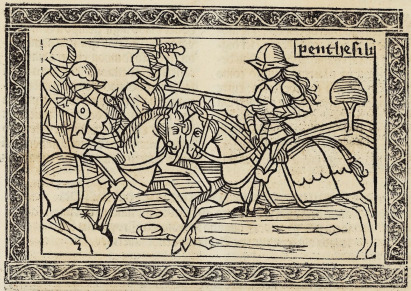
This engraving depicts Penthesilea, the queen of the Amazons, riding a horse into battle with her lance pointed towards her enemies. We know that this figure is Penthesilea as her name is engraved to beside her head. We also know that this is a woman as her long hair is sticking out from underneath her helmet. Penthesilea, as Boccaccio describes, was a great warrior. She wanted to secure a strong heir for the Amazons, so she sought out Hector of Troy to provide her with an heir. She fought in a battle against the Greeks to prove herself worthy of bearing Hectors child. The enemies she is fighting against in the image are the Greek soldiers in the Trojan War.
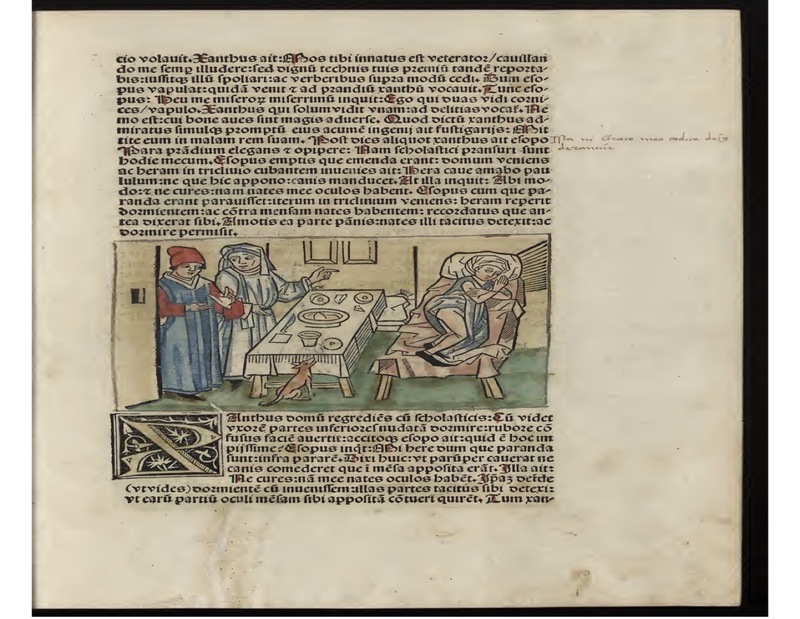
Three women are gathered in a bedroom. Inside the bedroom is a table with a bed to the left of it, which a sick woman lays on her side. The other two women who appear to be nurses, discuss her condition
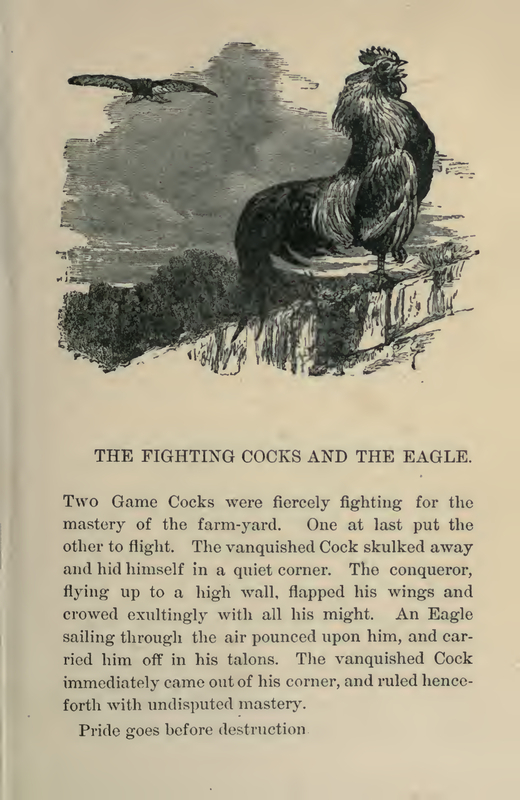
A cock stands on a brick wall to the right of the image. In the background in the upper left corner, an eagle is flying up high in the sky. Below the eagle, there are many trees stretching as far as the eye can see.
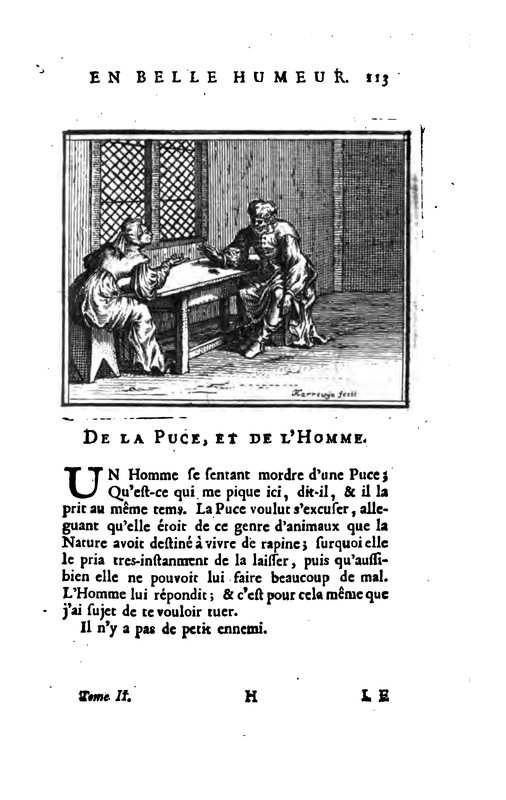
A Man feeling bitten by a Flea; What stings me here, he said, and took it at the same time. The Flea wanted to apologize, alleging that it was one of those animals that Nature had destined to live by robbery; whereupon it begged him very earnestly to leave it, since it could not do him much harm. The man replied; and for this very reason I have had the idea of wanting to kill you.
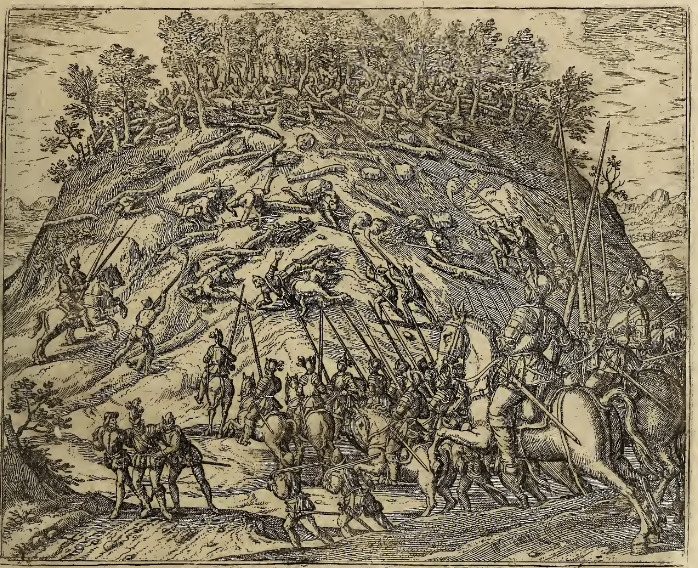
A conflict between Spanish soldiers and Indigenous people of Mexico takes place around a prominent hill. The Indigenous people are massed at the top of the hill and have fortified their position with a log fence. From there they roll rocks and logs down the hill to prevent the Spaniards from reaching them. Bodies of Spanish men and their horses litter the hillside. The Spanish soldiers gather at the base of the hill, some on foot and many on horseback armed with long spears. Some Spaniards attempt to climb the hill to reach the Indigenous defenders, firing muskets up towards them.

![[various medicines]](https://collections.cemvc.ca/files/large/24670dd73d3366a3b4157a50b707b8a546bd19cc.jpg)
![Relojo Q[ve] an de Tener I[ndi]os](https://collections.cemvc.ca/files/large/fe9710a34c1c31e3ddd62a077415d32b0e74e6e9.jpg)
![[Act II (Second Illustration) – Sempronio (?) Sitting on a Horse as He Prepares to Visit Celestina]](https://collections.cemvc.ca/files/large/2a3c51bd2505f9cd0afeb79af4bbd75bf0b983dc.jpg)
![[Gulliver arrives in the Country of the Houyhnhnms]](https://collections.cemvc.ca/files/large/e2ba05226c7e4eefba3934df4c7ef2eca050b14a.jpg)
![[Hunter Hunting Hunter]](https://collections.cemvc.ca/files/large/320e93b2395e2ecf1276226bdbfa673bdb80b2ce.jpg)

![[Vanity Fair Chapter LXVI Inhabited Initial]](https://collections.cemvc.ca/files/large/beb9e28aded5f9ea800ba7abb1138dadd4779db0.jpg)