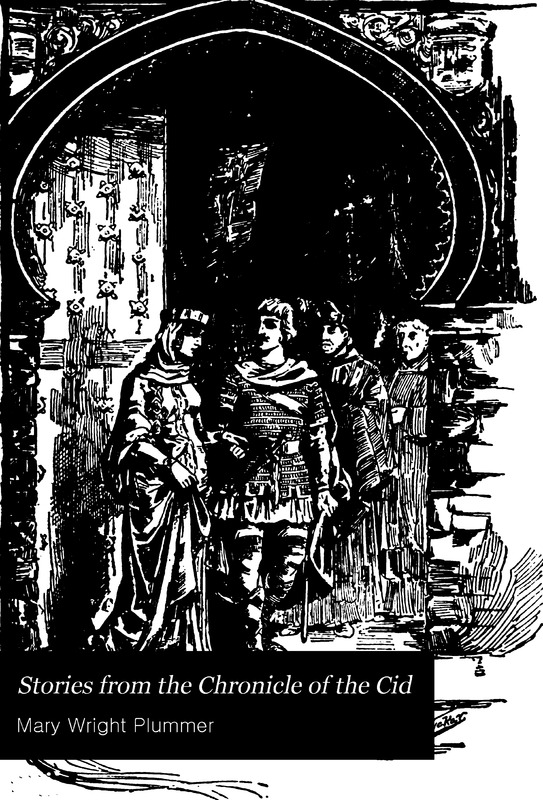
This image shows the marriage of Rodrigo and Ximena. It depicts the procession out of the church following the wedding with the two leading the way. They are followed by the bishop who presided over the service as well as several other clergymen, one of whom holds a processional cross while another holds a banner. This marriage was considered surprising, as Rodrigo had previously killed Ximena’s father in a duel, but in order to end the feud they married. The same image is shown again prior to the title page, sans the title text.
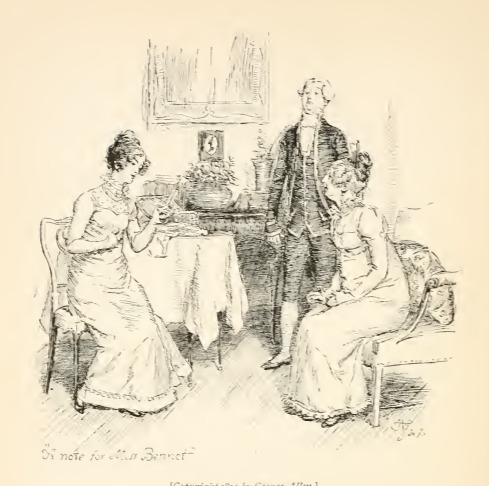
In this image a letter arrives at Longbourn from Caroline Bingley inviting her to visit Netherfield Park. Mrs. Bennet decides to send Jane on horseback, even though it will rain so that Jane will have to spend the night at Netherfield. This scene occurs in chapter 7. The characters are shown in the traditional regency style. The messenger wears a waistcoat and tailcoat. Jane and Mrs. Bingley wear regency style dresses with empire waistlines. The regency period dated to the early nineteenth century (1811-1820) when George, Prince of Wales, later George IV (r. 1820-1830), reigned as regent for his mentally ill father, King George III (r. 1760-1820). The regency period is associated with the rise of neoclassicism in art and fashion.
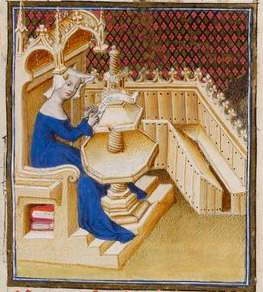
Erythraea or Eriphila the Sibyl is seen seated at her desk. The Sibyls were known for their telling of the future with great accuracy, and Erythraea was particularly skilled. Her ability to write about the future was so accurate that her foretelling was treated as Gospel. Some of her famous foretelling's included the destruction of Troy, as well as the Roman empire.
Upon hearing about the immortals on Luggnag, Gulliver rejoices at the possibility that each child has the possibility of being immortal. Gulliver’s celebration was short lived, after he noticed that no one at court was immortal. He then learned that the immortals continued to age but did not die, therefore their quality of life continued to decrease over time. The same image appears in the 1843 Krabbe edition.
Here Gulliver shows the captain of the ship some of the things that he brought from Brobdingnag. In his hand, Gulliver holds a ring worn on the pinky finger of the Queen of Brobdingnag. On the table are the comb made from the beard hair of the King of Brobdingnag, and stingers from the wasps on Brobdingnag. Gulliver tries to give the ring to the captain as thanks however the captain rejects him, asking instead for a tooth from one of Glumdalclitch’s servants. The same image appears in the 1843 Krabbe edition.
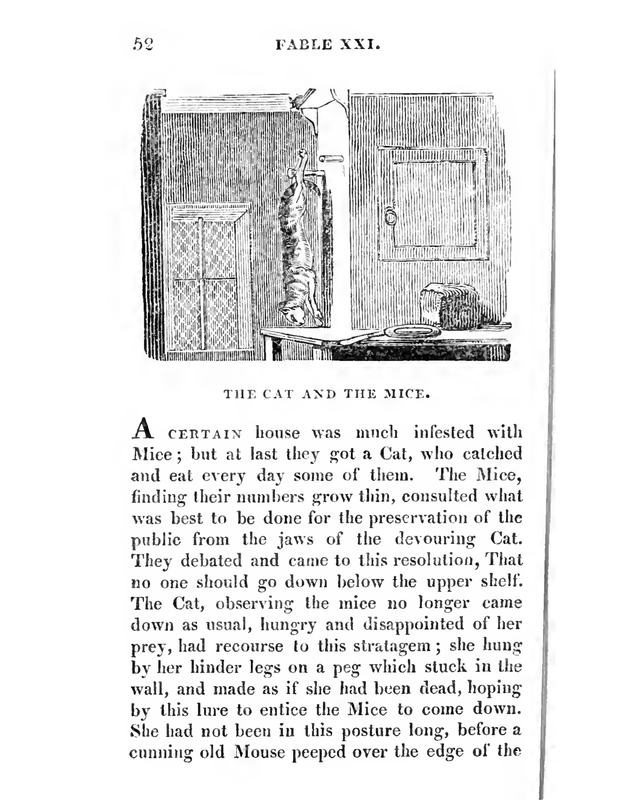
The background of the illustration was the interior of a house. On the left was a window with glazing bars and the right was a cabinet with hinged door and a hoop handle.A shelf with two level was in the center. A Mice was on the upper shelf, peeping down. A Cat was hung along the shelf by her hinder legs on a peg which stuck in the wall. Her head facing a table, which was extended from the bottom right to the center. To the right of the cat on the table, there were a butter knife, a plate and a lof of bread.
Gulliver’s master explained various aspects of the Yahoos that lived in the Country of the Houyhnhnms. He told Gulliver that the yahoos lived in filth, which Gulliver related to living like swine in Europe, shown here. The same image appears in the 1839 Krabbe edition.
This is a diagram showing how the floating island of Laputa moves over the mainland of Balnibarbi. The course of the island is shown from above, with each letter indicating different extremities that the island can move to. The lines also show the different dominions into which the island is divided. The same image appears in the 1843 Krabbe edition.
After the death of Calisto, Melibea is overcome with grief. Lucrecia goes to the bedchamber of Pleberio and informs him that Melibea is ill, and Pleberio rushes to her aid. Melibea explains that she has an illness of the heart, which she claims has no cure. Pleberio suggests they go outside to get some fresh air, and she agrees. Once outside, she asks him to fetch some musical instruments to alleviate her ailment. Pleberio departs, and Melibea asks Lucrecia to climb to the top of the house tower with her. At the top, she tells Lucrecia that the height is making her uneasy. When Lucrecia begins descending, Melibea slams the door and locks herself in. Pleberio rushes to the foot of the tower, and Melibea reveals everything. She then takes her own life by jumping.
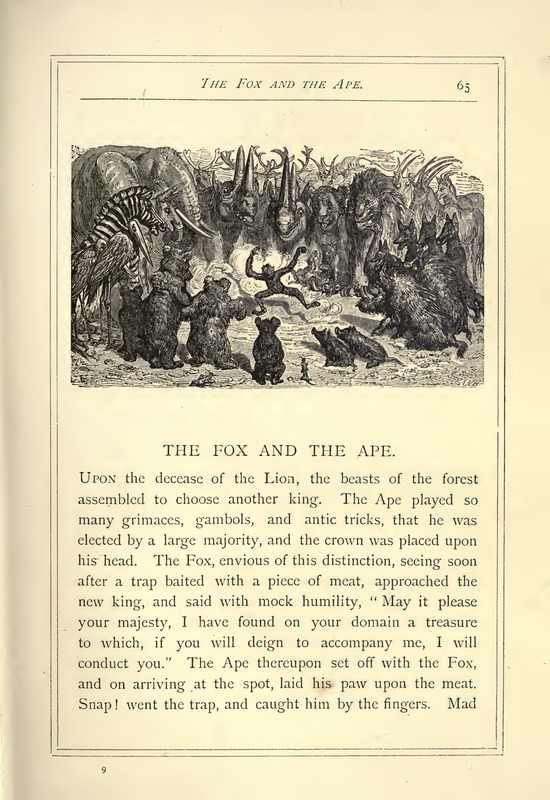
An ape is dancing and waving its long arms in the air in the center of an animal circles. Other animals, such as wolves, foxes, cranes, elephants, rhinos, gazelles, lions, bears, mice, stags and others are circling the dancing ape.
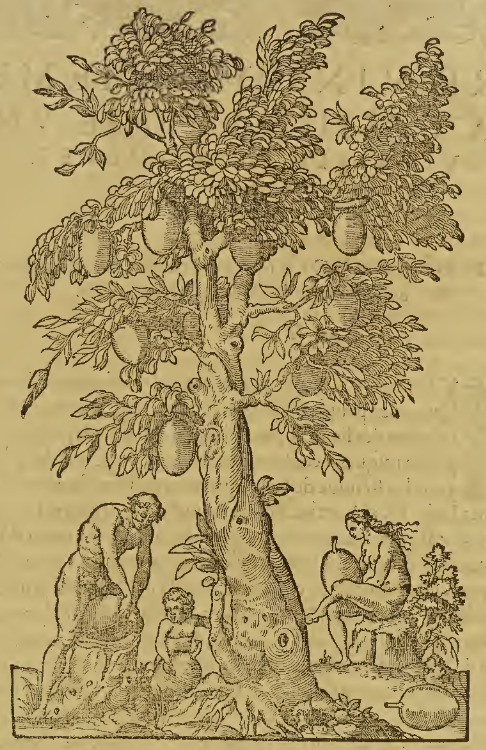
Three Indigenous Brazilians, a man, woman, and child, are shown under a tall tree with large fruit, possibly a calabash tree. The woman sits on a tree stump holding one of the fruits from the tree while the child stands nearby, also holding a large fruit. The man has placed one of the fruits on a nearby stump and stands bent over it. This image is identical to one found on page 953 of Paris, 1575 (Chaudière), and in Thevet’s Les Singularitez de la France Antarctique (page 105 of Paris, 1557 and page 105 of Paris, 1558).
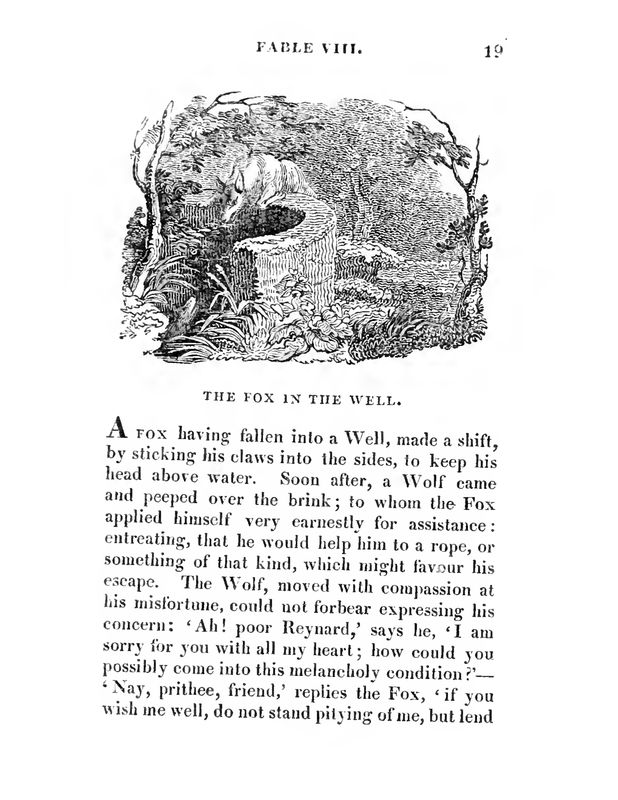
The main event took place at the bottom left of the illustration. The Fox fell into a Well, displayed vis drawing the cross-section of the Well. He kept his head above water by sticking his claws into the sides. The Fox arched his head and begged for help from the Wolf on the edge of the Well. The Wolf bent down just touching the water but expressed on sign of concern or help.
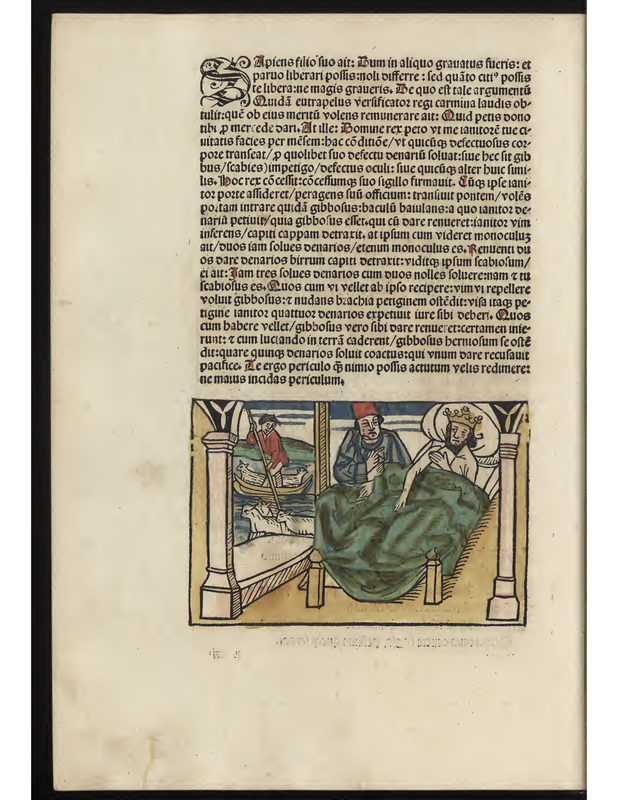
A man speaks to a king who is laying in his bed under a green blanket while a shepherd rowing a boat with two of his sheep is seen out the window. there also appears to be 3 more sheep on shore. There are big white columns inside of the kings bedroom.
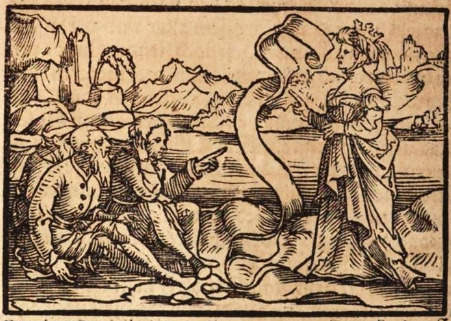
This engraving depicts Nicostrata, a woman who was a famous prophetess during her time, holding a scroll of parchment. She is pictured wearing a crown and wearing a long dress. Nicostrata had gone with her son Evander to Italy and he founded the city of Pallantium. Boccaccio explains that once Nicostrata realized that the inhabitants of this city were not well educated or literate, she decided to give them their own language with their own letters and symbols. This was the Latin language. Nicostrata taught the new letters and language to the people of Pallantium, which is what the engraving depicts. There are people sitting on the ground on the left side of the image who are listening intently to the prophetess, as she is holding the parchment and teaching them the language. There is a mountainous background and a city pictured on the right side of the image behind Nicostrata.
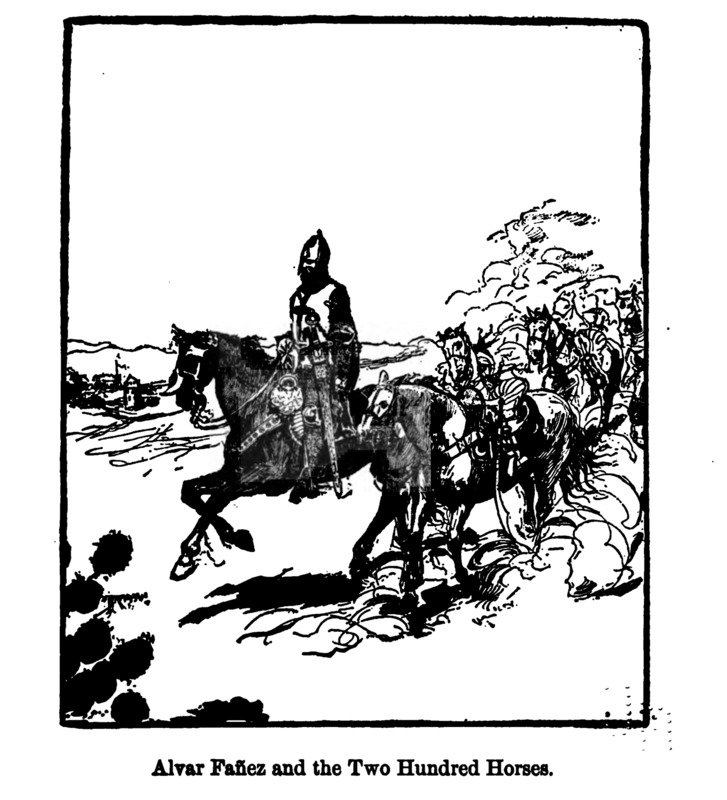
Alvar Fañez sets off for King Don Alfonso’s court, bringing along a portion of the spoils of war from the Cid’s successful defence of Valencia. Among these spoils are the two hundred horses named in the title. The spoils were sent as a gift to the king, and the extravagance and quantity of the spoils led to some jealousy from other nobles who thought the Cid was trying to show them up.
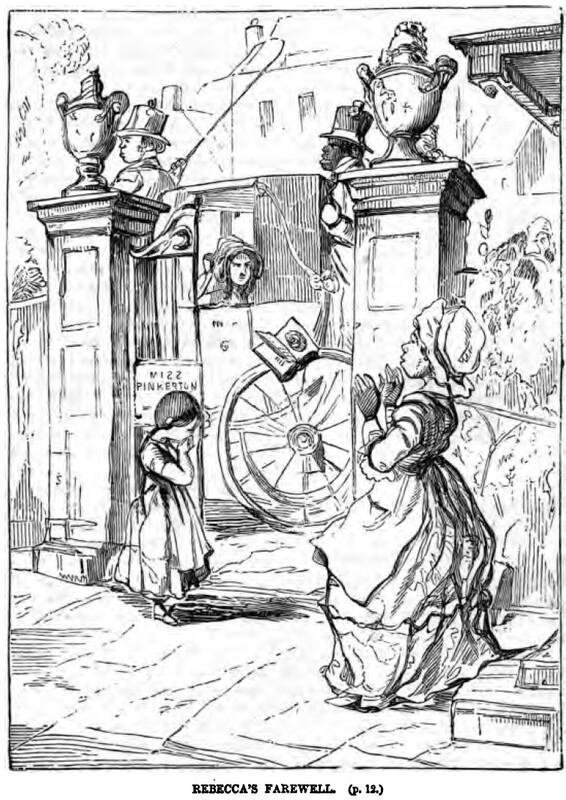
The image depicts two pillars topped with trophy cups, between which is an open gate with a plate reading Miss Pinkerton. The pillars frame a carriage with very large wheels, at the front of which sits the coachman, holding his whip, and at the back of which stands Sambo. Rebecca Sharp’s face can be seen from the window of the carriage as she flings a book at the surprised Miss Jemima, who stands on the right side of the image at the bottom of the stairs and had just given the book to her. Next to the left pillar is a young girl with long braids, likely Laura Martin, crying and covering her face with her hands. Below the illustration is printed its title and location in the story, REBECCA’S FAREWELL. (p. 12.).
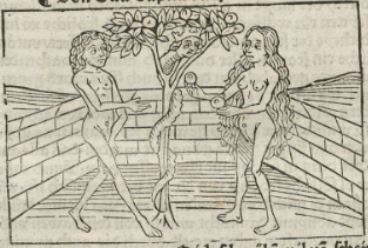
This engraving depicts Adam and Eve in the Garden of Eden. Eve is illustrated on the right side of the image taking an apple from the Tree of Good and Evil. The snake encouraging Eve to take the apple is depicted coiled around the tree. Boccaccio explains that he wrote on Eve as the first chapter in his book as she is the first mother of us all.
Here we see Gulliver attending to a concert given by the King of Brobdingnag. Gulliver stands at the window and holds his fingers in his ears because he found the music too loud. In the background we see a musician playing an oboe, with a trombone slide, a bass drum, and the bell of a trumpet visible behind him. The same image appears in both the 1839 and 1843 Krabbe editions.
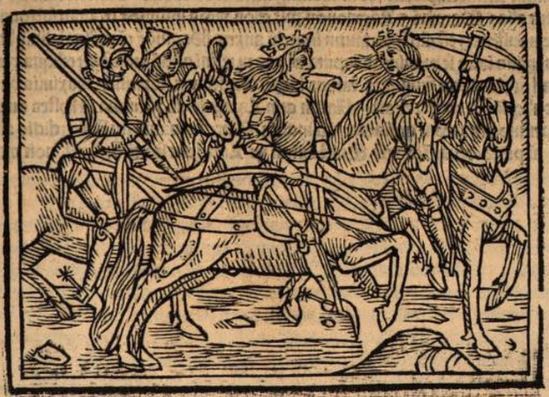
This engraving depicts the queens of the Amazons, Martesia (also known as Marpesia) and Lampedo. The Amazons, as described by Boccaccio, were a group of widows who decided to take up arms and fight to avenge their husbands’ deaths. They began dedicating their lives to training in riding horse-back, archery, and other military skills. The Amazons elected Lampedo and Martesia to be their queens. Lampedo is depicted with a bow and arrow in her right hand as she rides her horse. Martesia is illustrated looking back at Lampedo with a cross bow in her hand. They are illustrated wearing crowns to demonstrate their royal status. The women riding behind them are other Amazon women.
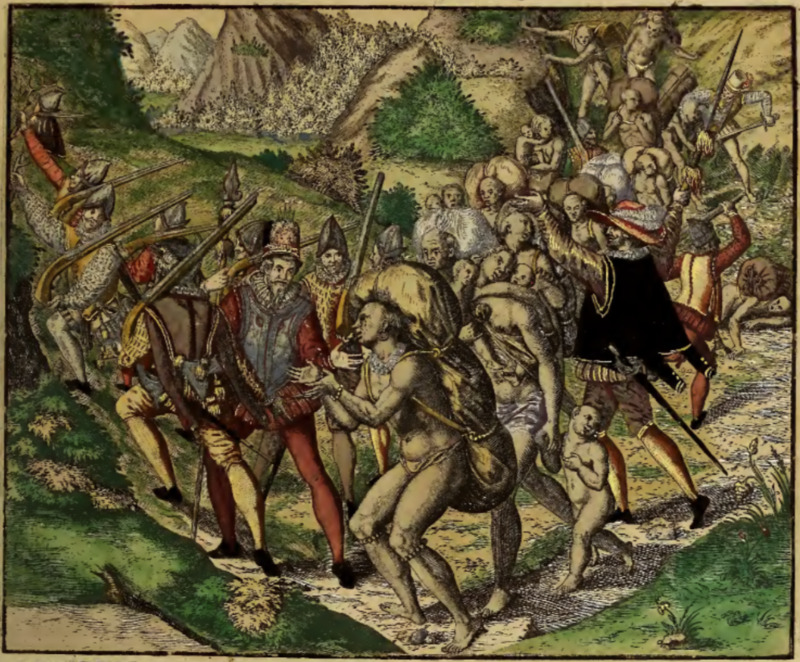
A group of Indigenous men, women and children have been captured by the Spanish and are forced to march to a new location. Many of the Indigenous men carry large bundles on their backs while the women carry the smallest children. The Indigenous people are surrounded by Spaniards carrying thin swords and muskets. Near the front of the group, an Indigenous man with strands of beads around his neck, wrists and knees converses pleadingly with a Spanish man walking near him. One Spaniard beats an Indigenous man who has fallen near the back of the group. This image is identical to one found on page 155 of Frankfurt, 1594, but colored.
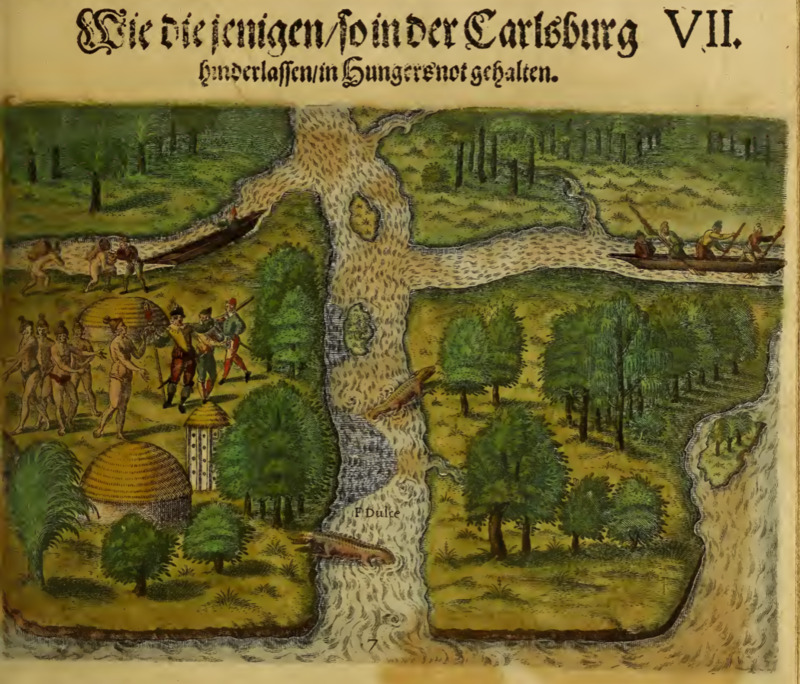
A network of rivers and canals is pictured. On the right side of the image four Indigenous people row a dugout canoe. On the bank of the river on the left side of the image there are several round structures, a group of Indigenous people on land, and another canoe in the water. Some of the individuals hold long spears, some carry large baskets on their backs. In the caption, Carlsburg refers to Charlesfort, the first French settlement in Florida in 1562. This illustration is identical to the one found on page 49 of Frankfurt 1591, but colored.

![[Gulliver celebrates the possibility of an immortal child born on Luggnag]](https://collections.cemvc.ca/files/large/0e86afa9cad9b72658f5747fce36a9c66f134f24.jpg)
![[Gulliver shows the Captain of the ship the things he brought from Brobdingnag]](https://collections.cemvc.ca/files/large/9b5c2ed54ec9e55fbe10b45db67ee9e2f3716ca3.jpg)
![[swine]](https://collections.cemvc.ca/files/large/0177b5309a4887f72e498a0ea4dc74728b07eda1.jpg)
![[Chart of the movement of Laputa over Balnibarbi]](https://collections.cemvc.ca/files/large/358cb5217c588d26f0b2349b3655e8ff6713c83c.jpg)
![[Act XX – Melibea Falling as Pleberio Watches in Agony]](https://collections.cemvc.ca/files/large/49740aec4daf0dba66d3d672d42a5fc230e87f42.jpg)
![[Gulliver listens to a concert on Brobdingnag]](https://collections.cemvc.ca/files/large/c614656cce6354142c04ae0f57cf8b39aa713ce7.jpg)