Two Indigenous people hunt large animals in Florida. The animals, which are likely bison, have long shaggy fur and curved horns. The two men wear garments made from the animals’ pelts, which protect them from cold (according to the text), and use a spear and a bow and arrow to hunt the animals. Thevet mentions in the text that ‘Buttol’ is the Indigenous peoples’ name for the animals. This image is identical to one found on page 1007 verso of Paris, 1575 (Chaudière).
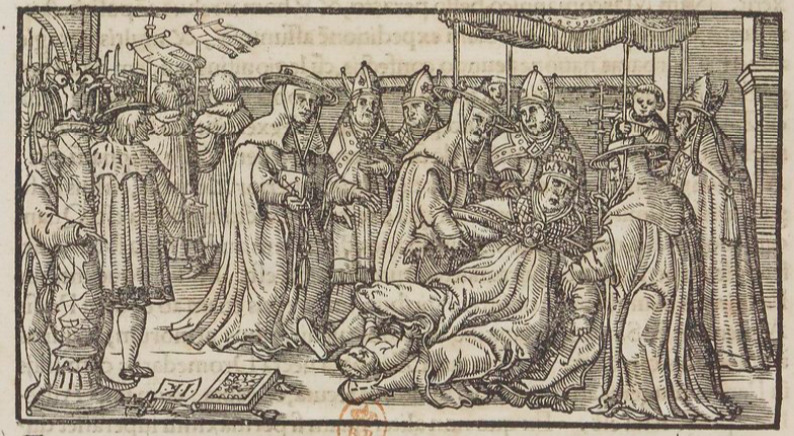
Pope Joan, disguised as a man named John, is picture in the streets giving birth to a child without a midwife. Joan had everyone except her lover fooled into thinking she was a man, but was unable to hide her pregnancy from the other men when she went into labor in the streets. She was in the sacred procession when she began giving birth, so the religious onlookers in the illustration surround her with confusion and anger. She tricked many men throughout her career, which was a disgrace – their faces reflect this.
Here we see native peoples of New Holland shooting arrows at Gulliver, who sails away. An arrow hit Gulliver on the inside of his knee. He paddled away, eventually turning into a sheltered creek where he treated the wound. The same image appears in the 1839 Krabbe edition.
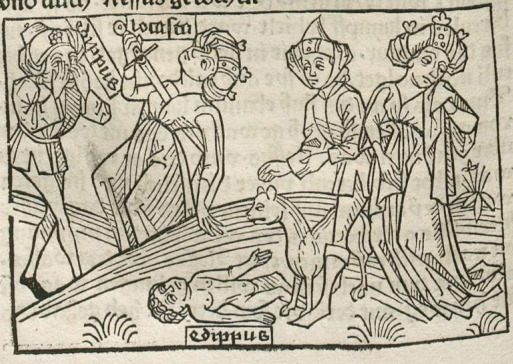
Queen Jocasta of Thebes is depicted on the right side of the engraving rubbing the tears away from her eyes with her dress. She is crying because her husband exposed their child into the wilderness due to a prophecy which foretold the baby would grow up to kill his father and marry his mother. Her child, Oedipus, is depicted lying on the ground after being exposed. There is a person approaching the baby as he takes him in and raises him as his own. Oedipus’ name is engraved beside his arm. Oedipus ends up fulfilling the prophecy by killing his father later in life, and marrying his mother, Jocasta. When Jocasta and Oedipus find out they are mother and son, Oedipus gouges out his eyes and Jocasta kills herself. This scene is depicted on the left side of the engraving with Jocasta and Oedipus’ names engraved above their heads to identify them.
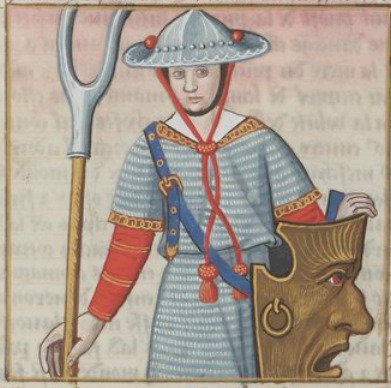
This illumination depicts a portrait of a woman named Triaria wearing armour and holding a shield in her left hand. Triaria is renowned for her military skills and devotion to her husband, Lucius Vitellius. She is depicted wearing armour in this image to demonstrate her fighting capabilities. Boccaccio explains that Triaria followed her husband into an enemy city and she fought violently and killed many citizens in order to magnify her husband’s glory.
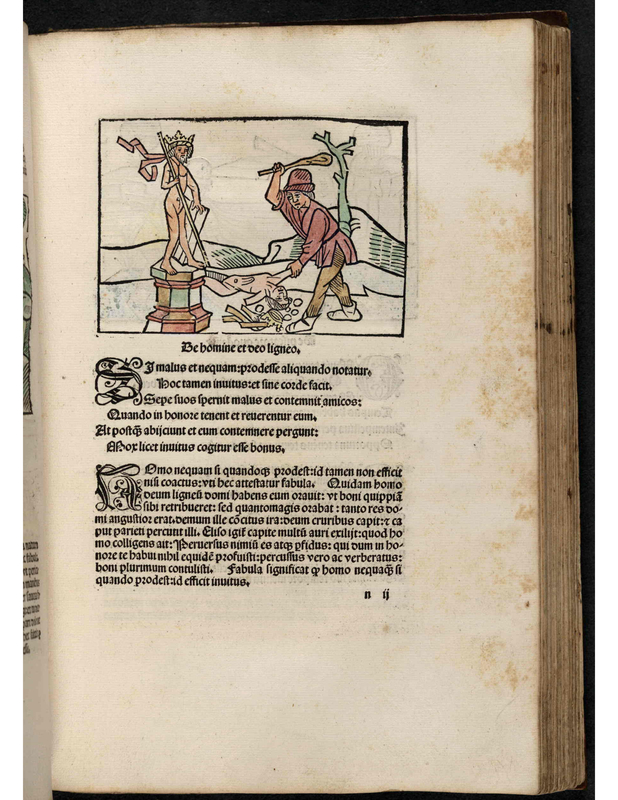
A man in a red tunic clubs a naked man, who has a crown that fell off her head and an arm is dismembered from the rest of the arm. Other man stands on a podium with a staff and a crown naked.
Here we see Gulliver riding on a horse after arriving in England. He waves people out of the way as he rides home. He writes that he felt as though he were on Lilliput because everything felt so small. Thus, he waves people out of the way, fearing he might trample people. Naturally, he received several strange looks from people walking along the road, which can be seen in the image. The same image appears in both the 1839 and 1843 Krabbe editions.
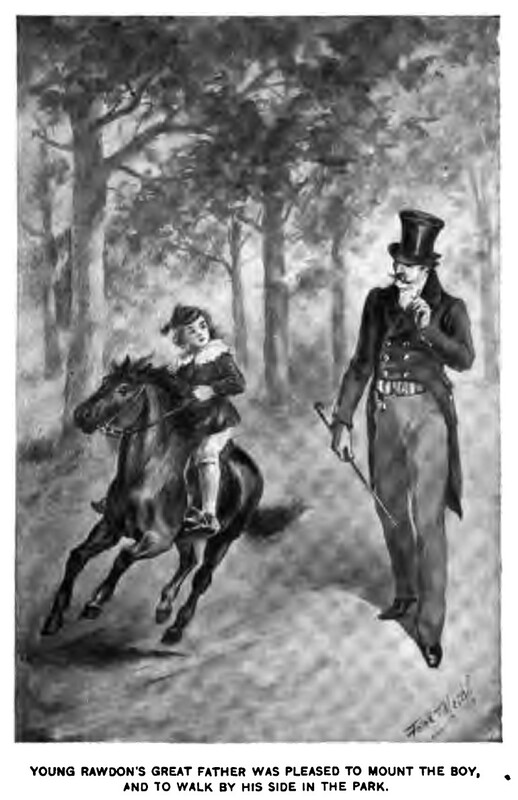
The image depicts a scene from page 22, where Rawdon Crawley takes his son to the Park. Young Rawdon is shown riding his pony, while his father, dressed in a top hat and tailcoat, walks at his side holding a cane. In the background many trees can be seen.
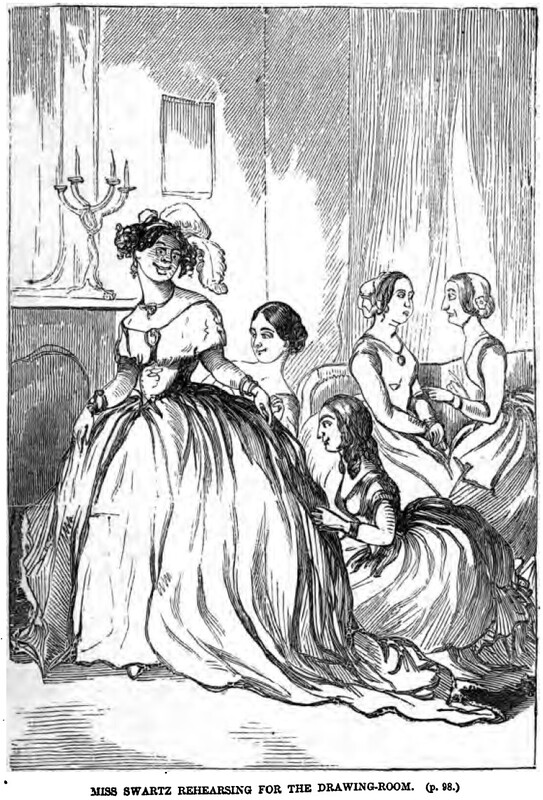
Miss Rhoda Swartz stands in front of Jane and Maria Osborne, dressed in a large gown with many pieces of jewelry and feathers in her hair. In the background, Miss Wirt and Miss Swartz’s chaperone Miss Haggistoun are seated on a sofa, talking to each other. Below the illustration is printed its title and location in the story, MISS SWARTZ REHEARSING FOR THE DRAWING-ROOM. (p. 98.).
The left panel depicts Melibea’s mother Alisa, who is shown wearing a veil and a robe. To the right, we see Melibea’s father Pleberio wearing a hat. He has a sword mounted on his belt, which is partially concealed by his coat. Both figures are placed outside.The left panel is nearly identical to those found on pages 12, 208 and 271 (where it is labeled ‘Melibea’), pages 173, 287, 306, and 317 (labeled ‘Areusa’), and page 84 (labeled ‘Lucrecia’). The right panel is nearly identical to those found on pages 70 and 114 (where it is labeled ‘Sempronio’), page 187 (labeled ‘Sepronio’ [likely a printing error]), pages 263 and 271 (labeled ‘Calisto’), and page 326 (labeled ‘Tristan’).
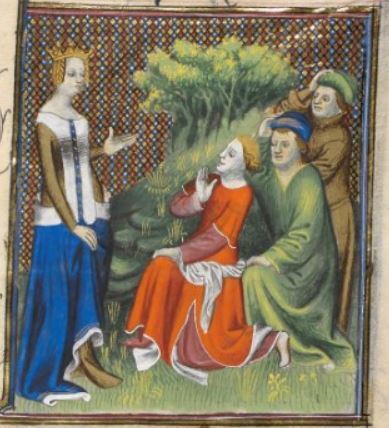
This illuminated image depicts Libya, the daughter of King Epaphus of Egypt, on the left side of the image. She is illustrated standing as she looks at the citizens who are kneeling in front of her. Boccaccio explains that Libya bore a child with her husband, Neptune, who grew up to be a tyrant of Upper Egypt. Their child’s name was Busiris. Libya was so renown during her time that the region in Africa which she ruled was named after her.
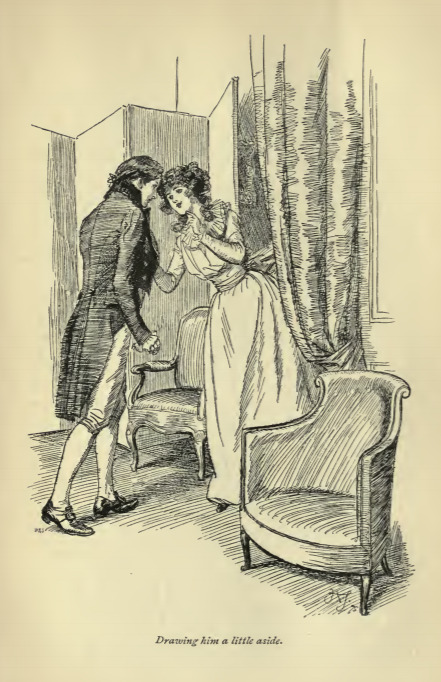
In this image Marianne draws Edward Ferrars aside while they were both at dinner at John Dashwood’s London home. She assures Edward that Lucy Steele would be leaving shortly, believing that Lucy had been monopolizing Edward’s attentions and denying Elinor any time with Edward. Marianne did not yet know that Lucy and Edward were engaged. This scene occurs in chapter 35. The characters are shown in the traditional regency style, as Marianne wears regency style dresses with an empire waistline. Edward wears a waistcoat and tailcoat with breeches. The regency period dated to the early nineteenth century (1811-1820) when George, Prince of Wales, later George IV (r. 1820-1830), reigned as regent for his mentally ill father, King George III (r. 1760-1820). The regency period is associated with the rise of neoclassicism in art and fashion.
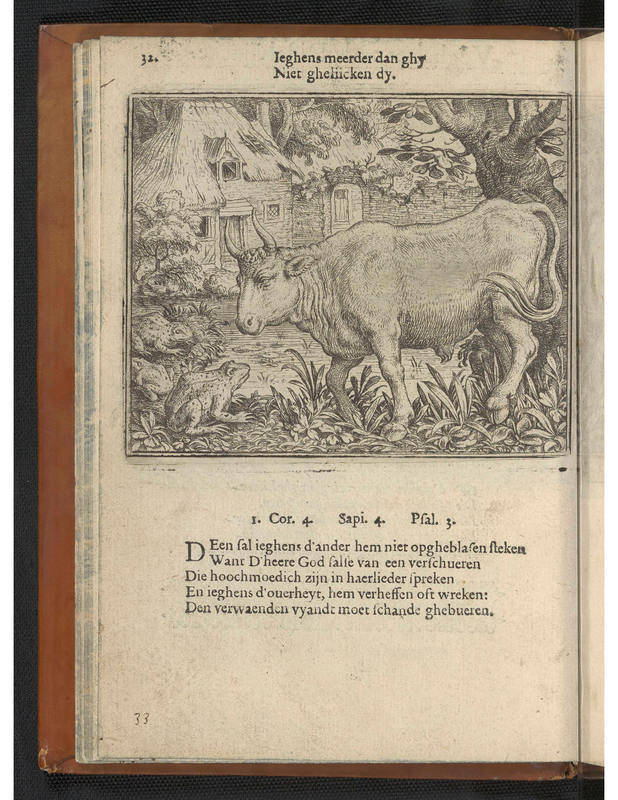
A bull and a frog stand in a forest. A cottage is in the background. The bull is on the right side of the image, it looks at the frog. The frog is on the left side of the image and looks up at the bull.
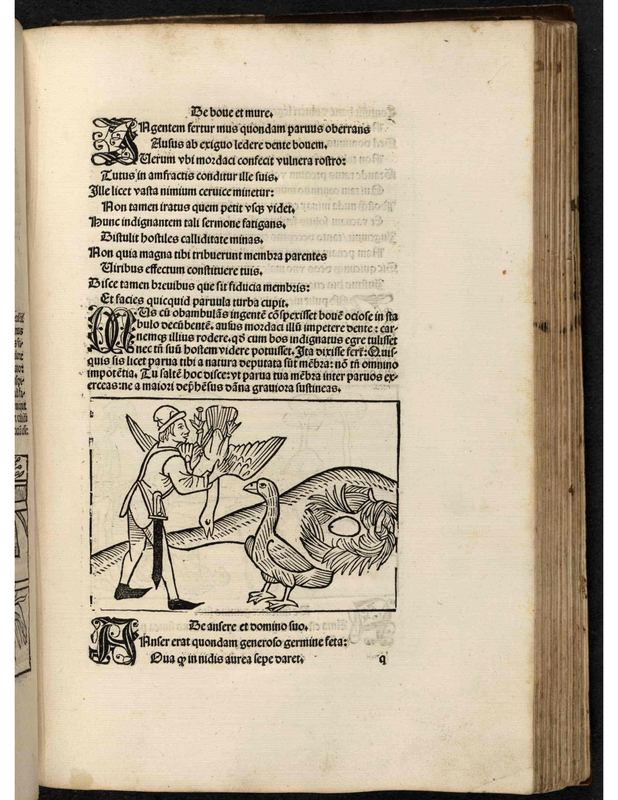
On the left side of the image, there is a hunter with a sword holding a bird upside down. On the right side of the image, there is a bird’s nest with an egg. In front of the nest, there is a mother bird guarding it
Celestina (upper figure) informs Melibea (lower figure) that she can only be cured if she reveals her love for Calisto, which causes Melibea to experience intense emotions and faint. Upon waking, she finally acknowledges her love for Calisto. Celestina tells her that she will be cured if she meets with Calisto at midnight, and Melibea agrees. As Celestina departs for home, she encounters Melibea’s mother Alisa, who asks her the purpose of her visit. Alisa asks Melibea the same question, and when the two answers differ, she warns Melibea to avoid Celestina.
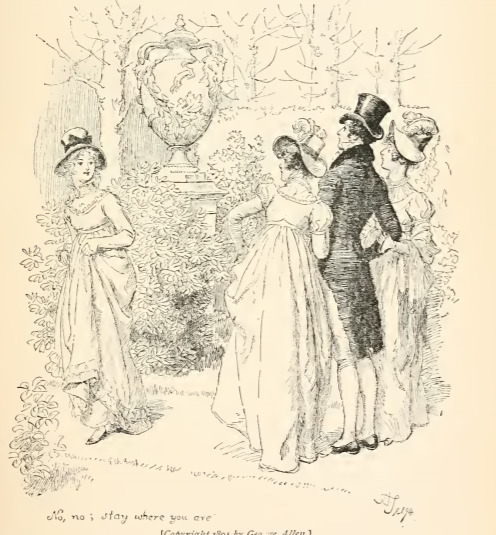
In this image Mr. Darcy, Caroline Bingley, and Mrs. Hurst are out for a walk together in the gardens of Netherfield. Coming upon Lizzy, Mr. Darcy suggests they move to a wider pathway, not knowing she was also out. Lizzy declines, telling them to continue as they were and she was happy to continue alone. This scene occurs in chapter 10. The characters are shown in the traditional regency style. Caroline Bingley, Mrs. Hurst, and Lizzy wear regency style dresses with empire waistlines. They wear bonnets to protect their faces from the sun. Mr. Darcy wears a waistcoat and tailcoat with a top hat. The regency period dated to the early nineteenth century (1811-1820) when George, Prince of Wales, later George IV (r. 1820-1830), reigned as regent for his mentally ill father, King George III (r. 1760-1820). The regency period is associated with the rise of neoclassicism in art and fashion.
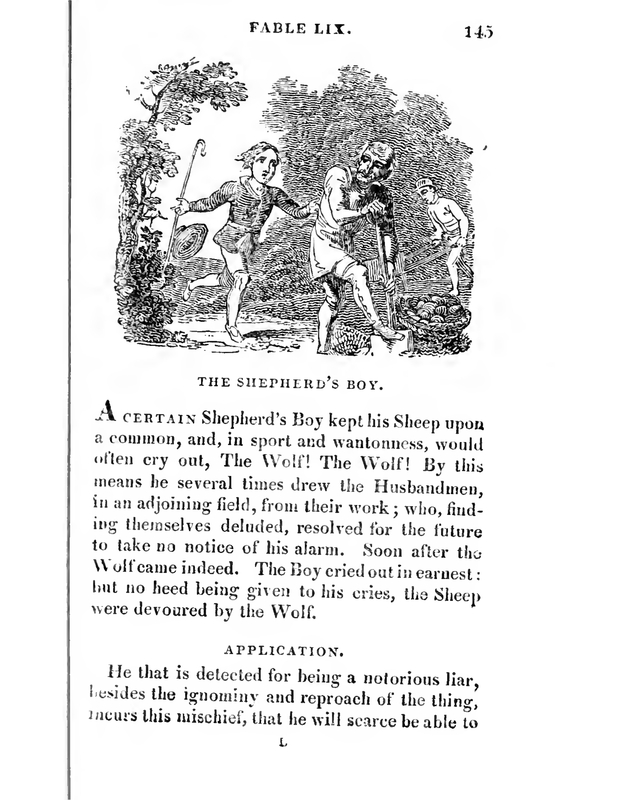
Two figures on the right-hand side of the image work in a field. The one in the background wears a brimmed hat and pushes a wheelbarrow. The one in the foreground holds what seems to be a shovel that they have pushed into the earth, they rest their right foot on the top of the blade. To the right of this figure, there is a basket of round crops which may be turnips. The figure looks at the boy on the left-hand side of the image. The boy holds a shepard's crook in his right hand, he reaches out towards the figure in the foreground. He has a concerned expression on his face, he appears to be running. His brimmed hat is falling behind him.
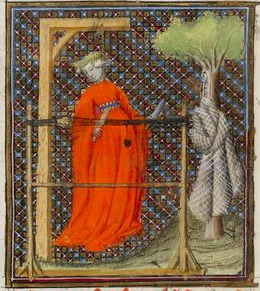
Arachne is pictured hanging herself in a noose after losing a weaving contest to Pallas Athena. She could not handle the defeat, so decided to end her life. In the background there is a tree with a net on it – nets are something she is known to have created. Arachne hanging from a rope is symbolic of the way spiders hang on thread.
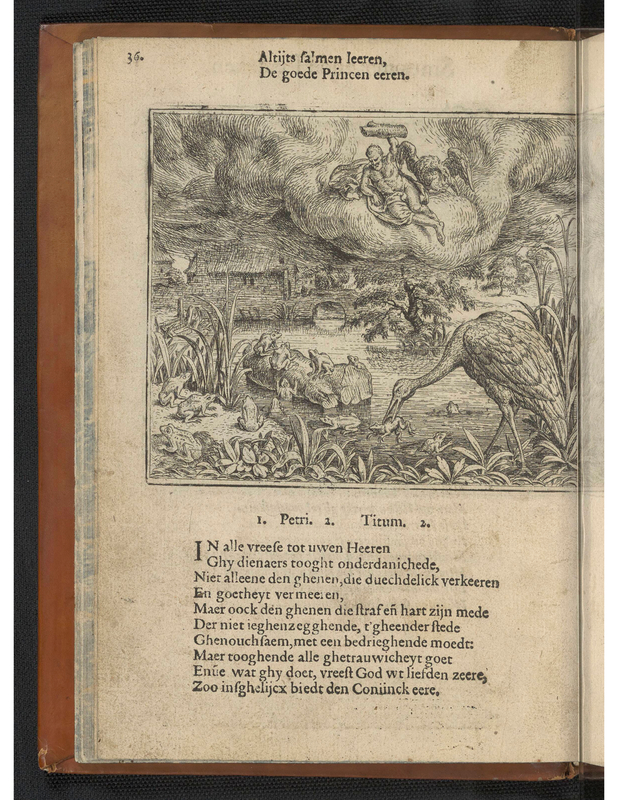
A log floats in a pond filled with frogs. A god looks down on the pond from the clouds. On the right side of the image a crane sits on the water’s edge eating one of the frogs. The frogs gather on the left side of the image away from the crane.
Lord Tapeworm, the Secretary of Legation, bows as he introduces himself to Amelia Osborne with what he believes is a charming smile. Next to Amelia is seated her brother Joseph. Georgy is standing behind his uncle, peering around at the Secretary with curiosity. Next to him, William Dobbin stands with his hands on his hips.
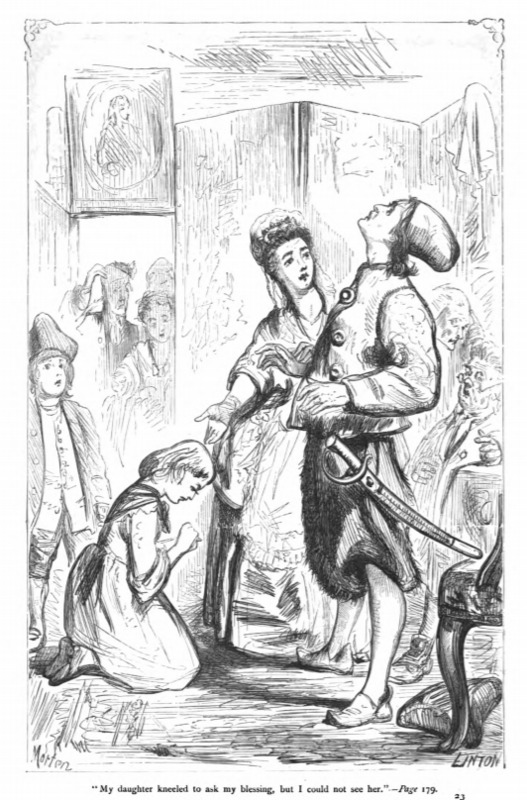
Gulliver had become so accustomed to always looking up to see the faces of the giants, once Gulliver had returned home from Brobdingnag, he had a difficult time adjusting to interacting with people his own size. Here we see Gulliver’s daughter kneeling before him to ask him something, however Gulliver could not see her because he was looking up.

![Buttol, beste cornue & mo[n]struese.](https://collections.cemvc.ca/files/large/99d5211ba1f82298e7c1169b3c00093cc2ecf755.jpg)

![[native peoples of New Holland shoot arrows at Gulliver]](https://collections.cemvc.ca/files/large/7b5c376b8ac6a082193d054c6713edd1b4fe7c99.jpg)
![[Gulliver arrives home in England]](https://collections.cemvc.ca/files/large/940017481d55a85328b65526d51916d35186dc91.jpg)
![[Act XXI – Alisa and Pleberio]](https://collections.cemvc.ca/files/large/c8f7f0b74f7dcec83530cb20b4a0c9c33f5e7642.jpg)
![[Act X (Second Illustration) – Melibea Collapses After Celestina Pressures Her to Reveal Her Love for Calisto]](https://collections.cemvc.ca/files/large/063b18e2c2e721e107caed6fb506d7ae96c1ad3d.jpg)
![[Lord Tapeworm Introduces Himself]](https://collections.cemvc.ca/files/large/08c4d7df4c218372de434b52fb27e5cdb0c05e54.jpg)