In this illustration we see Melibea lying dead on the ground after jumping from the tower of her house (the tower can be seen in the background, though the perspectival distance is off). The leftmost figure is Pleberio, who is wearing a hat and a cloak of sorts, with a sword mounted on his belt. One of the two women beside Melibea is Lucrecia, and we can assume that the other is meant to represent Alisa (even though she is not present when Melibea jumps). Both women are wearing a robe and a veil. The other male figures appear to be random onlookers who witnessed her fall.This illustration is odd, seeing as there is no scene that occurs outside after Melibea jumps. Instead, the entire 21st act consists of Pleberio going to his wife Alisa in their bedchamber and informing her of their daughter’s death.
Amelia Sedley is depicted holding a Black doll with curly hair, possibly representing Miss Rhoda Swartz, at which she gazes lovingly. Next to her, on the right side of the image, is the letter L from Love.
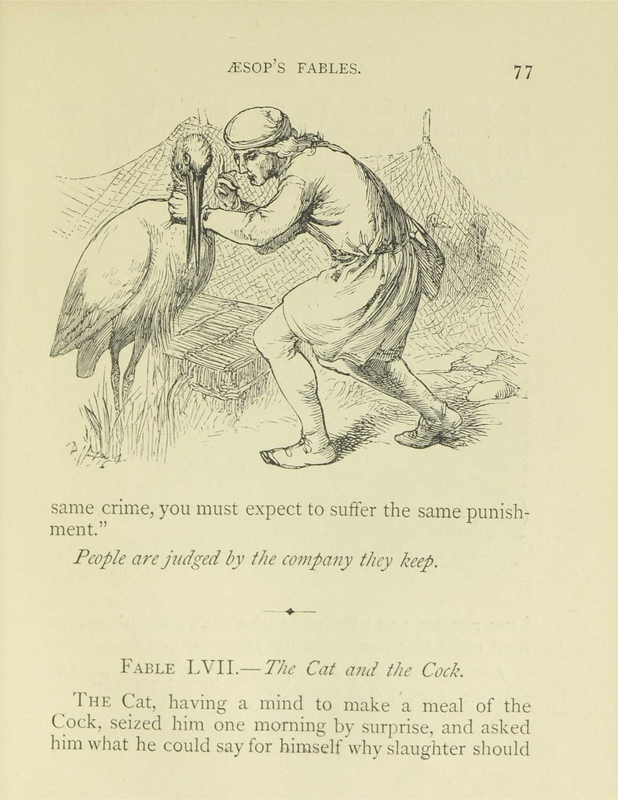
On the left a large stork stands still with its head facing towards the ground and beak open. On the right a man crouches holding the stork’s neck with his left hand and pointing his finger in the air with his right hand. In the foreground there is a little bit of foliage and reeds. Further in the background there is a wooden animal trap and a series of hanging nets where on the right of the image two more bird can be seen trapped within.
A thin man walks along a raised path. He has his cane and free hand out in front of him, and behind him is a small town in the distance. In the top right of the image is the letter W from We.
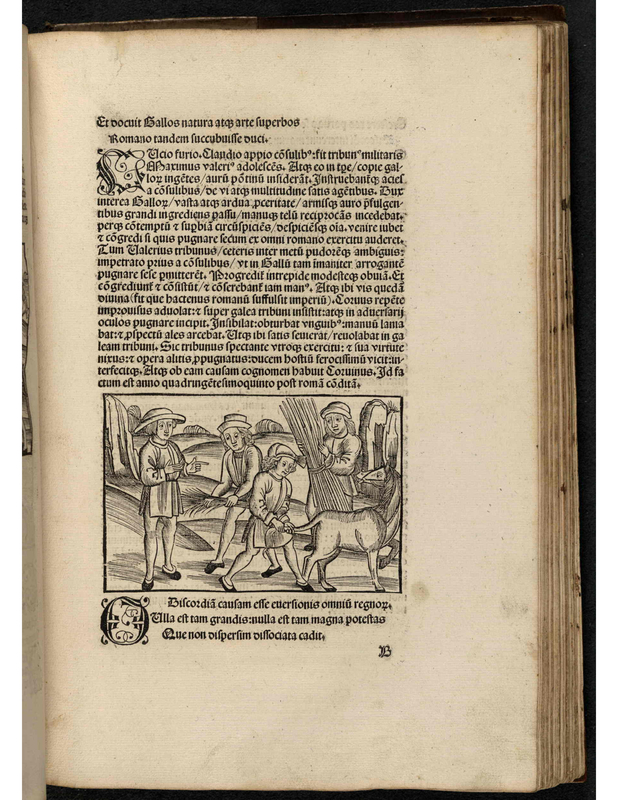
Four young men each wearing a hat are in a field. Two are carrying bundles of straw, another points toward the other three, and the final boy is pulling on the tail of a horse.
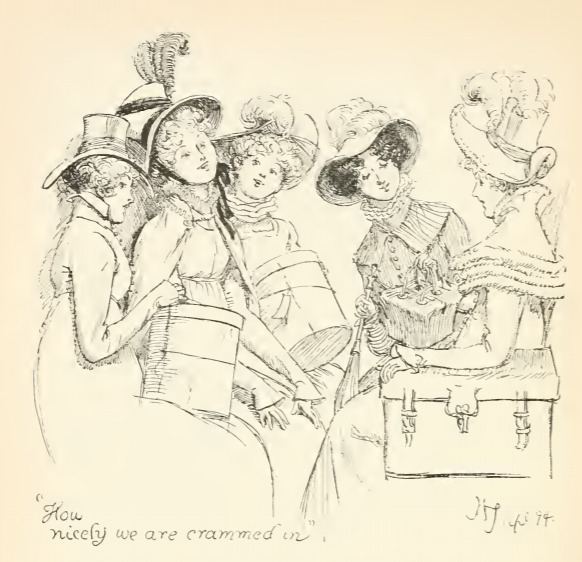
In this image Elizabeth, Jane, and Mrs. Gardiner were met by Kitty and Lydia in Mr. Bennet’s carriage. Elizabeth travelled from Rosings to London where she met with Jane. They then travelled home to Longbourn together. On their way they were met by Mr. Bennet’s carriage and the group finished their journey tightly packed into his carriage. This scene occurs in chapter 39. The characters are shown in the traditional regency style. They wear the regency style with dresses with empire waistlines and bonnets. Jane and Elizabeth hold hat boxes and Mrs. Gardiner holds a basket. The regency period dated to the early nineteenth century (1811-1820) when George, Prince of Wales, later George IV (r. 1820-1830), reigned as regent for his mentally ill father, King George III (r. 1760-1820). The regency period is associated with the rise of neoclassicism in art and fashion.
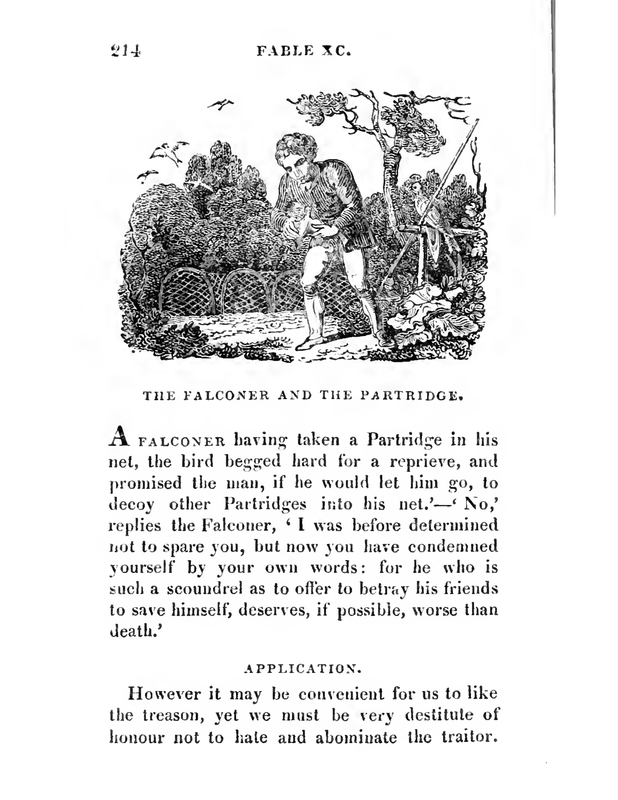
In the middle of the image there is a man standing, with a partridge in his hand. On the right side of the image there is a bird sitting on a branch, and various trees, plants, and bushes. On the left side of the image there are various nets, trees, and bushes. In the top left side of the image there are four birds flying.
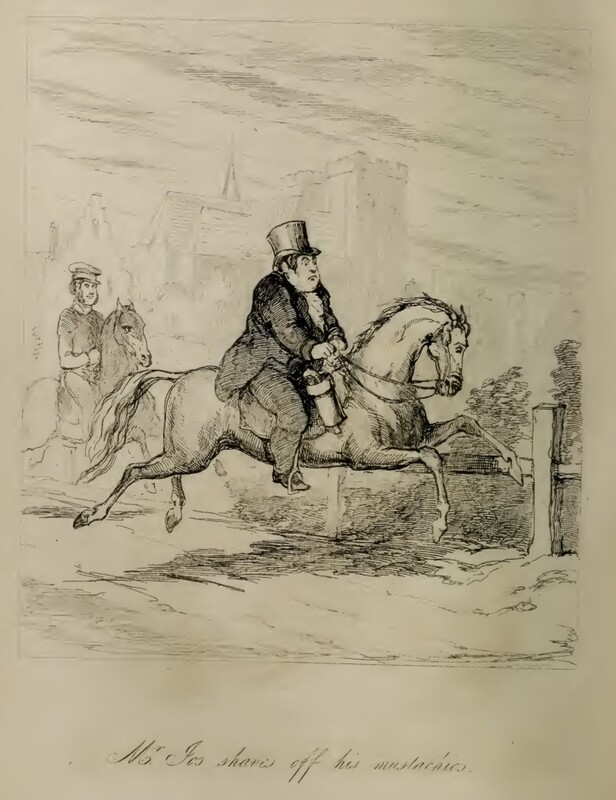
Joseph Sedley, freshly shaven, upon one of a pair of horses he has just purchased from Rebecca Crawley for an unreasonably large sum in order to flee from Brussels. Behind him is Isidor, his valet, on the other horse from the pair. Below the illustration is printed in cursive its title, Mr. Jos shaves off his mustachios.
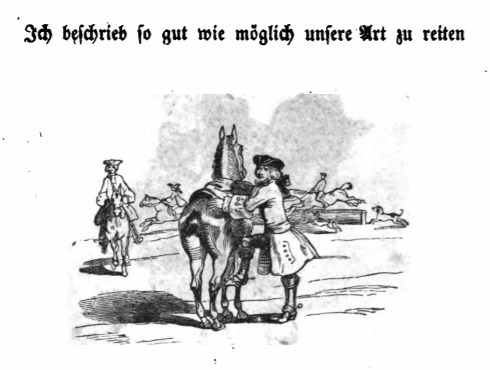
Here we see a horse wearing a saddle and its rider. The Houyhnhnms asks about the horses in Europe and how they live. Gulliver explains that humans or yahoos govern the country and care for the horses or Houyhnhnms, and how humans use their horses. The same image appears in the 1843 Krabbe edition.
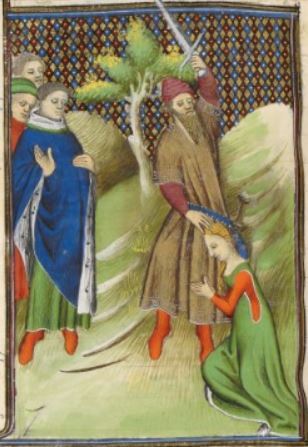
This illustration depicts Verginius, a plebeian man, swinging his sword in the air as he about to kill his daughter Verginia, who is sitting in front of him. To protect his daughter’s chastity, Verginius stabbed Verginia as death would be better than her honour being destroyed. The men illustrated behind Verginius are most likely Appius Claudius and Lucius Icilius, as they were present in Boccaccio’s telling of the story.
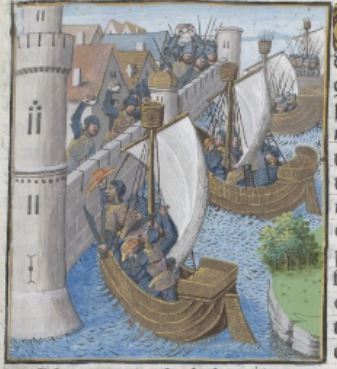
This image depicts ships approaching a large walled city with soldiers on both the wall and the ships. This image appears in the chapter regarding Triaria, the wife of Lucius Vitellius who was the brother of the Roman emperor Vitellius. When her husband Lucius went to war, Triaria devotedly followed him into battle. Triaria was armed with a sword and fought mercilessly, killing brutally and in great numbers.
There is an illustration at the top of the page, and below this illustration is a body of text. In the illustration, 5 men are carrying things and are travelling somewhere. 4 men each wearing hats in groups of 2 are carrying a stick with supplies tied to it. In front of these men is the fifth man who is also carrying supplies but in a container that seems to be handmade on his back.
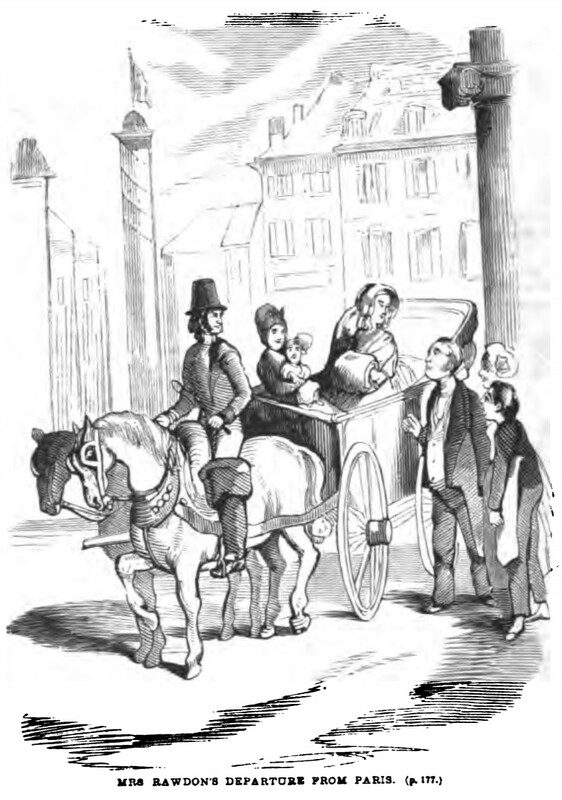
Rebecca Crawley sits grandly in a carriage, wearing a bonnet and muff and saying her farewells to a group of people standing beside the carriage. Opposite her sits Genevieve, the maid, holding little Rawdon. The carriage is pulled by a pair of horses, with the driver seated astride the larger of the two. In the background, the buildings of Paris and a tall tower topped with a flag can be seen. Below the illustration is printed its title and location in the story, MRS RAWDON’S DEPARTURE FROM PARIS. (p. 177.)
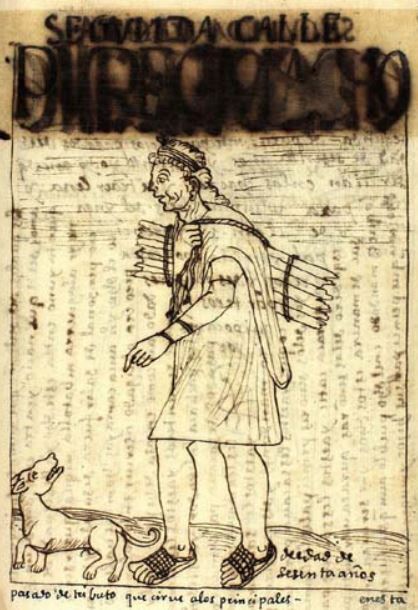
The author explains that there were ten paths for men to follow in the Inca Empire based on age division. This second path is called the puric macho [old man who walks], which was for people who are over the age of sixty and are exempt from military services. Their duties included working in fields and carrying straw and firewood. This image depicts an older man walking with a load of wood strapped over his back and a dog walking by his feet. The caption at the bottom of the image reads de edad de sesenta años pasado de tributo que cirue a los principales which translates to sixty years old, exempt from tribute one who serves the nobles.
A group of Tupinambá people are ceremonially executing a male captive. The man is restrained by a rope tied around his waist, with each end of the rope held by one of the Tupinambá. A Tupinambá man in front of the captive holds a decorative club above his head, poised to swing. Most of the men in the group wear necklaces and feathered headdresses and adornments tied around their waists, and some hold bows and shields. The women also wear necklaces. A fire burns in front of the captive man.
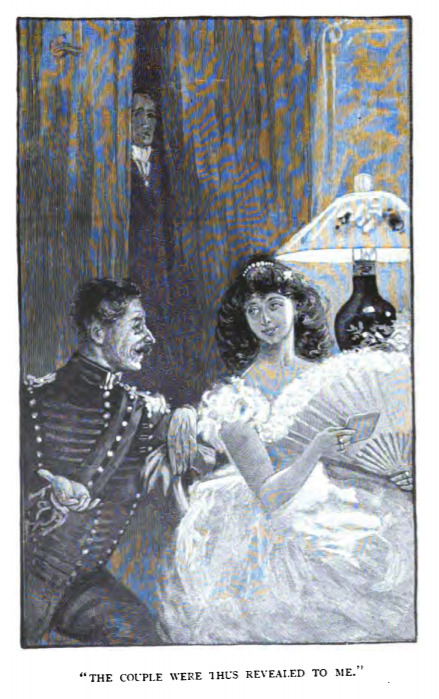
Here we see Celine Varens and her suitor while Mr. Rochester looks in from the balcony. Mlle. Varens was Mr. Rochester’s mistress and Mr. Rochester put her up in a hotel. He decided to surprise her at her hotel, however, she brought home a suitor from the military. He was outraged and kicked Celine out of the hotel and ended his relationship with her immediately.
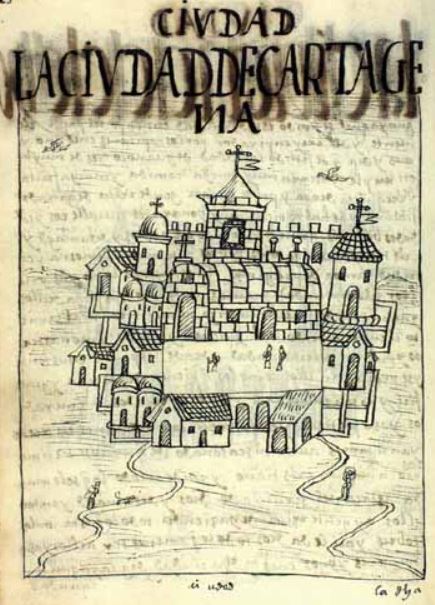
This image is depicted in the author’s chapter where he discusses cities, towns, villages, and provinces in colonial South America. This image depicts the city of Cartagena in Columbia. The city is arranged in a cluster of buildings which forms a square in the centre. There are two winding pathways outside of the city walls that lead into and out of the city. There is a person on each of the pathways walking towards the city, the person on the left is illustrated carrying supplies on their back and the person on the right is carrying supplies above their heads. The person on the left has a dog walking in front of them. There are three people illustrated standing in the town square. The author described this city to be wealthy in fruit and food with good, charitable Christians. The caption at the bottom of the image reads ciudad [city].
This engraving depicts two separate events. The left side of the engraving depicts Pompey the Great participating in a sacrifice of an animal. Pompey is depicted wearing a crown to signify his high status. The man to the right of Pompey is depicted cutting the neck of the animal that he is holding. There is blood splashing out from the animals wound, which stains Pompey’s clothing. Boccaccio explains that after Pompey’s garments became stained with the animal’s blood, a servant carried his stained clothes back home to get new ones. Julia, Pompey’s wife and the daughter of Julius Caesar, saw the blood-stained clothing of her husband and immediately thought that he had been murdered. Julia is depicted on the right side of the engraving after having just seen the clothing of her husband. She looks distraught and is depicted mid-fall to the ground. There is a servant beside her who is holding the blood-stained garments of her husband.
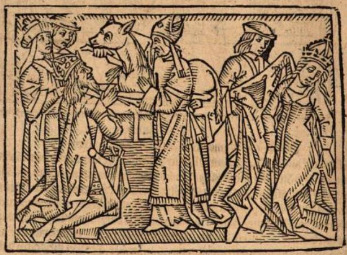
In the centre of the illustration, we see a female figure wearing a robe and a veil. There are two male figures to the left and one to the right. Because there are two female characters (Elicia and Areusa) and one male character (Centurio) in Act XV, we can say that this illustration does not relate to the events contained within the act.[This illustration is identical to those found in Acts IV (folio 32r), V (folio 42r), VI (folio 45r), VIII (folio 62r), X (folio 74r), XIII (folio 93v), and XVII (folio 109r).]
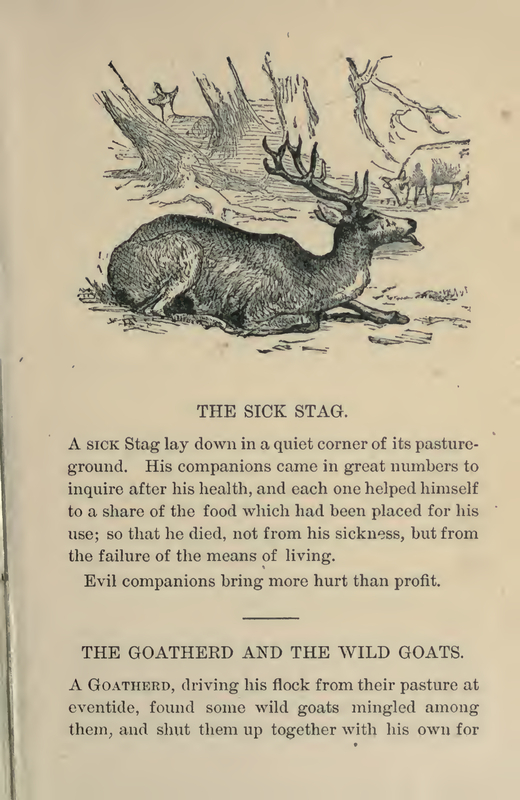
A stag lies on the ground, it’s head to the right of the image. The stag has its tongue sticking out, as though it is not feeling well. In the background, what seems to be a cow is eating from the ground.

![[Act XXI – Having Jumped to Her Death, Melibea is Surrounded by Pleberio, Lucrecia, and Many Other Concerned Onlookers]](https://collections.cemvc.ca/files/large/ccf48299e8da1bbce3bd92c474135026dedc4559.jpg)
![[Vanity Fair Volume I. Chapter XXI Historiated Initial, L]](https://collections.cemvc.ca/files/large/70ba90d4d47d073b4c2efb371156f33b5125d3c7.jpg)

![[Vanity Fair Volume I. Chapter XXX Inhabited Initial, W]](https://collections.cemvc.ca/files/large/586172d9c5d7967fd176b8d3858367ccfa003ffa.jpg)
![Vita et Fabulae [Five men are travelling with supplies]](https://collections.cemvc.ca/files/large/b2e1aeb4156b852e2b95518fdc4ca3b97f0554f8.jpg)

![[A captive man is executed by the Tupinambá]](https://collections.cemvc.ca/files/large/d8c31d7ba3a44ec876fa110ec9dc8dd3b545bf8d.jpg)
![[Act XV]](https://collections.cemvc.ca/files/large/c7ae654bf5d43ba9d6eb67532cc1dbe88e727499.jpg)