This image tells the story of a man’s death, dismemberment, and eventual cannibalization by the Tupinambá group. In the background of the image, the man lays in a hammock and is awoken by several Tupinambá people. On the left, the man kneels on the ground with two Tupinambá men at his sides holding each of his arms, while a third man standing in front of him holds a club above his head poised to fall. In the foreground, the man’s body is dismembered. Each of his limbs and his head have been removed, one arm lays on the ground and a child washes the head in a nearby pool of water. A bearded European man stands beside the men doing the dismembering and gestures towards them, perhaps in protest. In the center of the image, the man’s limbs lay on a wooden rack over a fire to grill while a woman watches.
Miss Rhoda Swartz, seated on the stool in front of the piano in the Osborne drawing-room, is turned towards the reader with an expression of joy on her face. She has just seen Amelia Sedley’s name on the sheet music she was using and is hoping for news of her friend.
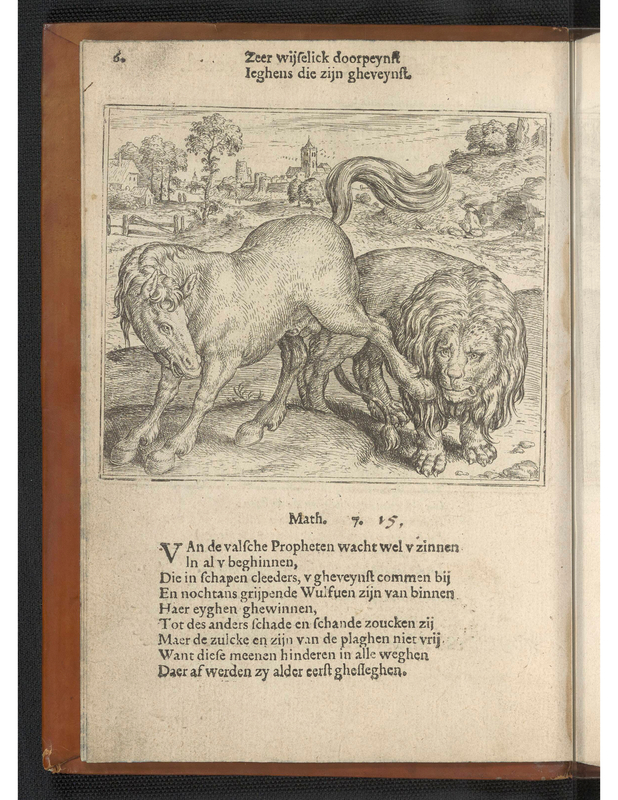
A horse and a lion in a field. The horse is kicking the lion with its left back hoof. The lion cowers. A castle is in the distance and a small house surrounded by trees lies just behind the horse and lion.
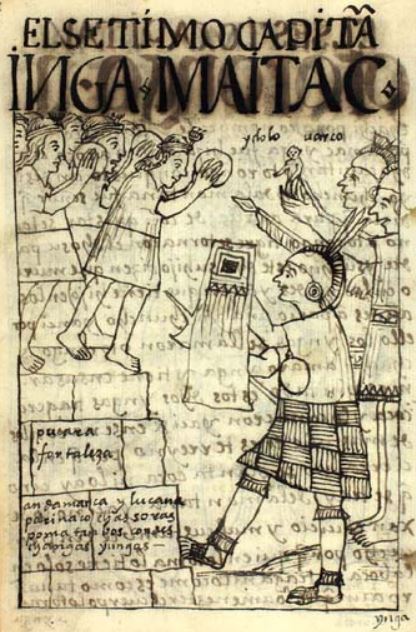
This illustration depicts the fourth captain, Maitac Inca. These captains were a level of Inca authority who helped lead the conquest of the Andes. This captain was the son of Yawar Waqaq, the seventh king of the Inca Empire. This captain is depicted on the right side of the image with his fellow Inca soldiers. They are illustrated fighting enemies that are on top of a fortress on the left side of the image. The name of the fortress, pucara fortaleza, is written on one of the stones to identify the fortress. The words Andamarca y Lucana, Parinacochas, Soras, Poma Tanbos, Condes, Changas, Yungas are also written on the stone which identifies the enemies. One of the soldiers on the right side of the image is holding a small figurine of an idol which is identified as ydolo uarco.
In this image we see a giant rat moving towards Gulliver and prepares to attack Gulliver. The rat is roughly the same size as Gulliver. Gulliver is seating, leaning against an intricately carved post with his sword in his hand preparing to defend himself. Gulliver ultimately ends up killing the rat after it attacked him. Fabric comes down on either side of the post, making the image look as though it were taking place on a stage. Gulliver’s hat is on the bottom left side of the image. The same image appears in both the 1839 and 1843 Krabbe editions.
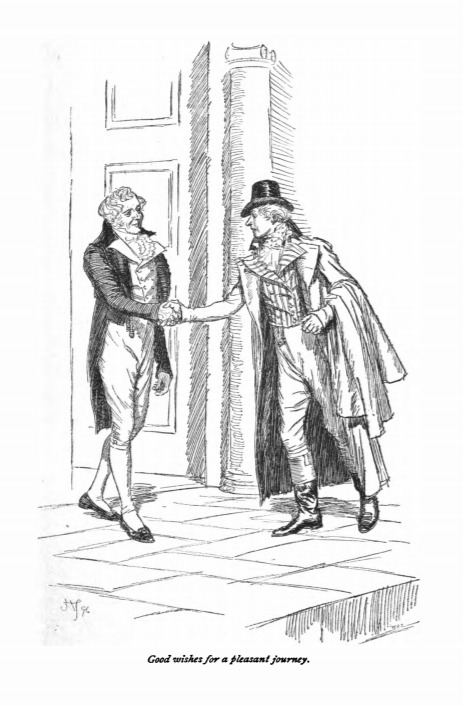
Here we see Edmund shakes Mr. Crawford’s hand, as he leaves Mansfield to go to London. Mr. Crawford had been flirting with both Maria and Julia Bertram, despite Maria’s engagement to Mr. Rushworth. Julia was glad to see him leave, because it had become clear that he preferred Maria, even though she was unavailable. This scene occurs in chapter 20. The characters are shown in the traditional regency style. Edmund and Mr. Crawford wear waistcoats and tailcoats, with breeches and cravats. Mr. Crawford also wears an overcoat and a top hat. The regency period dated to the early nineteenth century (1811-1820) when George, Prince of Wales, later George IV (r. 1820-1830), reigned as regent for his mentally ill father, King George III (r. 1760-1820). The regency period is associated with the rise of neoclassicism in art and fashion.
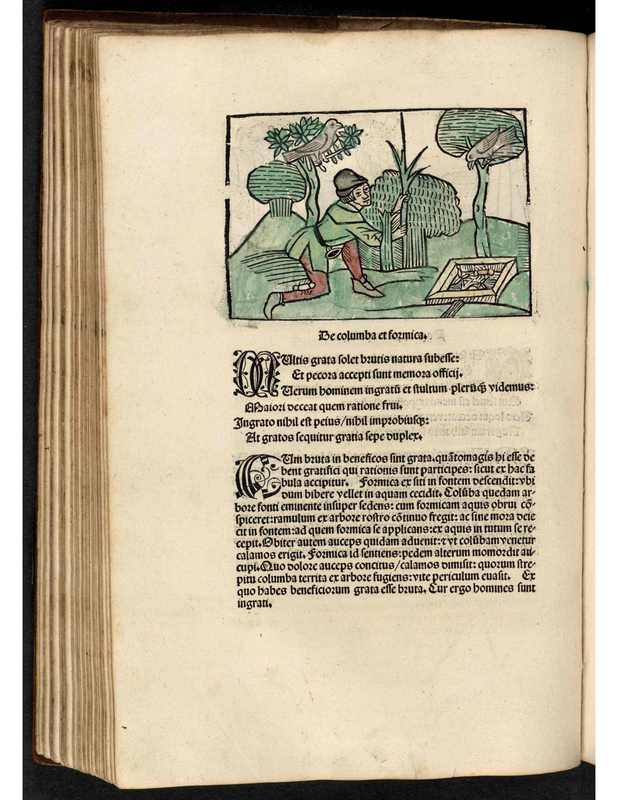
Two doves sit in separate trees, while a man in a green tunic and red bottoms. Below one of the trees there is a box in which the man places his harvest.
This illustration depicts Sempronia, a Roman woman, in the centre of the image with her arm in the air as she dances. There is a man depicted on the left side of the image in the background playing some form of instrument for Sempronia to dance to. There are men on the right side of the image watching Sempronia dance. She is wearing a crown to signify her status as her family is of nobility. Sempronia was known for her beauty, dancing and eloquent speeches.
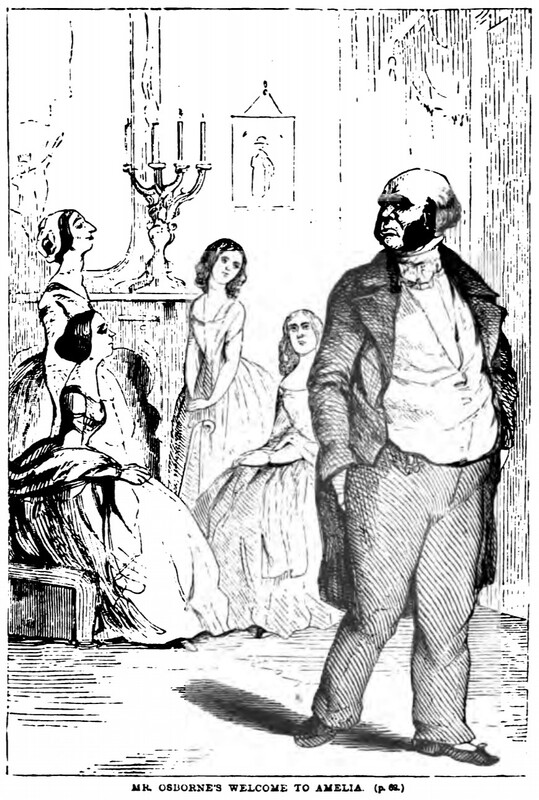
Jane and Maria Osborne are seated on two low chairs in front of the fireplace. Upon it are a very large mirror, a statue, and a candelabra; to the side of the mirror hangs a small portrait. Amelia Sedley is standing between the sisters, looking uncomfortable and holding her hands clasped together. Miss Wirt is standing opposite Amelia, looking haughty. In the foreground of the image is Mr. Osborne, mostly turned away from the others as he walks away with a scowl on his face. Below the illustration is printed its title and location in the story, MR. OSBORNE’S WELCOME TO AMELIA. (p. 62.).
A man, a woman and two children are in a small house. One child is hiding behind the woman and the other is kneeling on the ground. There is a snake sitting by a fire and looking at the woman. The man is holding a mattock directed at the snake while the woman has her hands up in a motion to stop the snake.
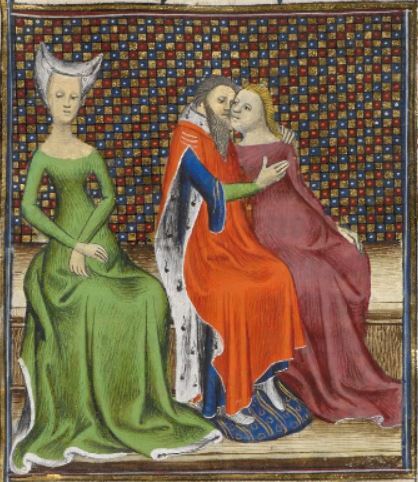
This illumination depicts Scipio Africanus, a Roman general, committing adultery with a young servant girl in the centre of the image. The woman on the left side of the image is his wife, Tertia Aemilia. She is depicted looking away after discovering her husband and his mistress as they commit adultery. Instead of confronting her husband about the affair, she devises a plan to get rid of the mistress. Tertia Aemilia married the young servant girl off to a freedman. She does this so that no one finds out about the affair so that it does not ruin her reputation. Boccaccio explains that he chose to write on Tertia Aemilia because the way she handled the affair and how she used her cunning was admirable.
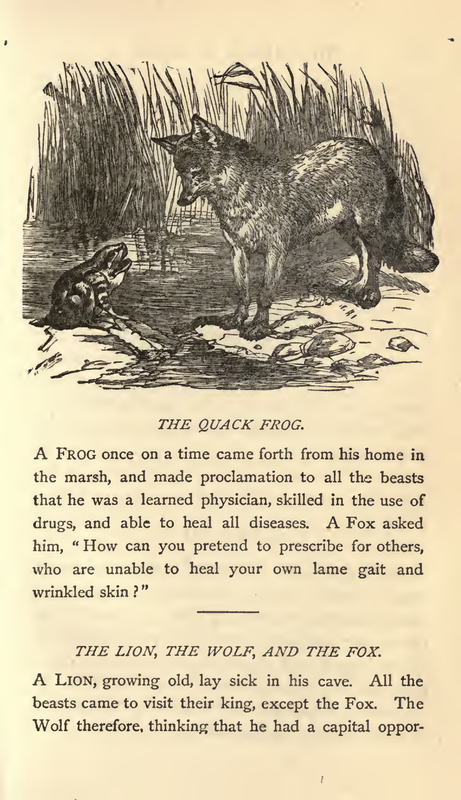
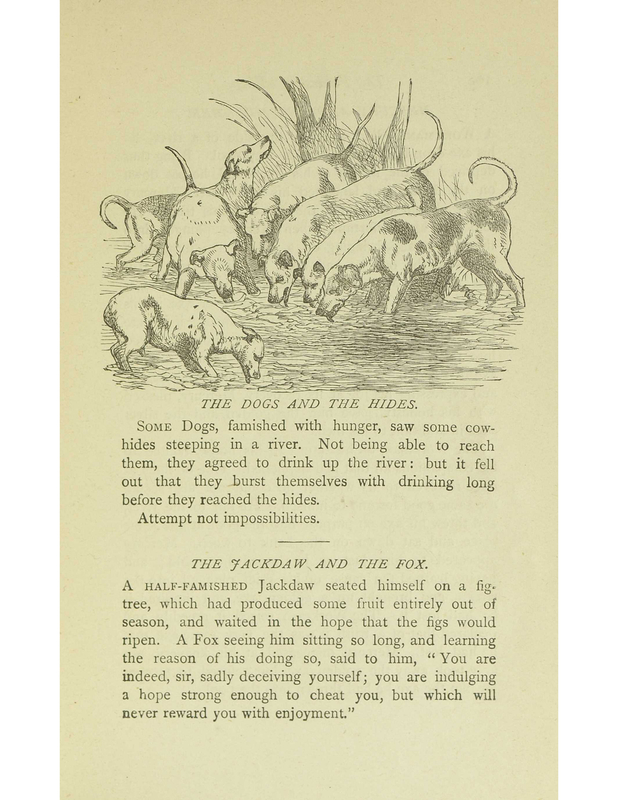
Seven dogs are crowded in a lake. Six of them are drinking water from the lake, while one of them in the very back is looking up at a tree behind the group.
Here we see Gulliver's introduction to the Houyhnhnms who took Gulliver in. The Gray horse who found Gulliver brought him to an authority of the Houyhnhnms. He introduced Gulliver to a mare with a colt and foal, sitting on mats woven out of straw. The same image appears in the 1843 Krabbe edition.
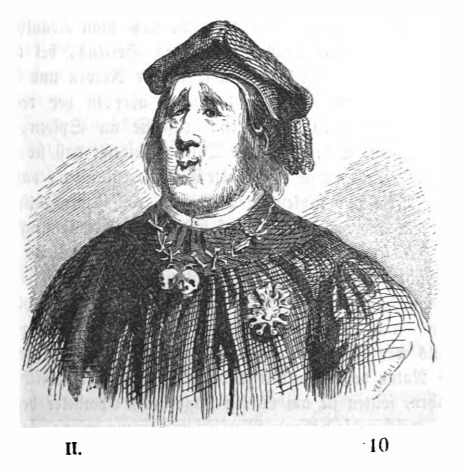
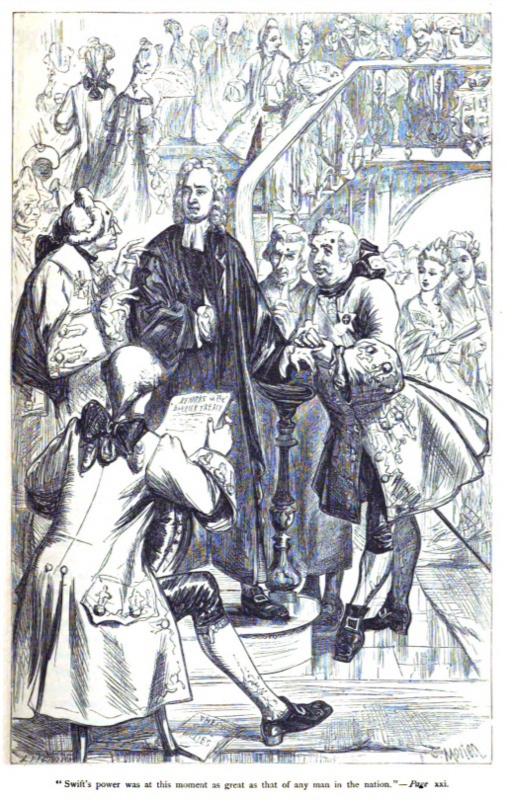
Here we see a lawyer surrounded by courtiers. Swift worked as a political writer and this image represents Swift’s work writing on current political events. The quote reflects Swift’s political power through writing on politics. Swift is represented seated in the front with his back to the audience, writing. Some of his writings are on the floor next to him. This image appears as part of the biography of Jonathan Swift.
Tupinambá women prepare an alcoholic beverage using manioc (cassava) roots. On the left they chew the roots and spit them into a large pot. They then boil the chewed roots in a large pot over the fire, then strain the liquid into pots to cool (right). Behing the women, men drink from bowls and one plays a small wind instrument. More men dance in the background, holding round objects with half-moon symbols on them, perhaps ratels or religious items. Most of the men wear feathered headdresses and adornments around their waists, and some also wear feathered capes and necklaces.
In this image, we see a large group of Lilliputian women sitting in a circle around Gulliver. The only part of Gulliver visible in the image are his feet. The women are dressed in the style of the eighteenth century, wearing large hoop skirts, corsets, and large sleeves. They wear long veils attached to the bottom of their heads. The image comes during Gulliver’s description of the Lilliputian women. The same image appears in the 1839 Krabbe edition.
At the political school at the Grand Academy on Balnibarbi a medical doctor was attempting to use his knowledge of disease to heal the political system. He monitored the politicians and after several sessions, he prescribed them medicine which would help them to alter their behaviour at the next meeting in order to make the government run more smoothly. The connection between the human body and the political body was an analogy was created during the Renaissance and lasted until the eighteenth century when Swift was writing. Swift satirizes this idea in this concept of a medical doctor working to reform the political system. The same image appears in the 1839 Krabbe edition.
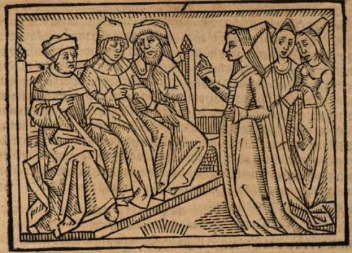
This engraving depicts Hortensia, the daughter of famous orator Quintus Hortensius, speaking in front of the triumvirs. Hortensia inherited the gift of oration from her father, and when the triumvirs raised taxes unbearably high, she spoke so eloquently to them that they revoked the taxes. The triumvirs have pleasantly surprised looks on their faces as they are impressed with Hortensia’s abilities. Hortensia appears to look confident as she speaks to them. There are other women standing behind her in support of her approaching the triumvirs.

![[A man is killed, dismembered, and cooked by the Tupinambá]](https://collections.cemvc.ca/files/large/c4e80b0143b970c746500cc48837b1e1e38abd5b.jpg)
![[Miss Swartz Sees Amelia’s Name]](https://collections.cemvc.ca/files/large/3772efc13bdfa3d6c2c5990f1bc0051ac61dad48.jpg)
![[a rat attacks Gulliver on Brobdingnag]](https://collections.cemvc.ca/files/large/1cdb5c9cffbb256b71b8eb2eba0f4fc9c5512b8f.jpg)
![[The Roman Woman Sempronia Dancing]](https://collections.cemvc.ca/files/large/2375a46551b24951b5c6a23cf5b477ea7d984bb7.jpg)
![[Men Digging]](https://collections.cemvc.ca/files/large/3071fbb9c6b7587d6535958f7636495f7a2cc8df.jpg)

![[The Countryman and the Snake]](https://collections.cemvc.ca/files/large/15473ea68c8c42199264a2a8389d7feb9edc4761.jpg)


![[Gulliver is introduced to the Houyhnhnms]](https://collections.cemvc.ca/files/large/c99d2a856326de6dfab664722f29de57f009d266.jpg)


![[The Tupinambá prepare a traditional beverage for a celebration]](https://collections.cemvc.ca/files/large/3fb041594fcf08c94a7ed116bbee497c0f0383d6.jpg)
![[Lilliputian women sitting in a circle around Gulliver]](https://collections.cemvc.ca/files/large/320cadb87a071aa0a3f04c02c72342c792ad18a8.jpg)