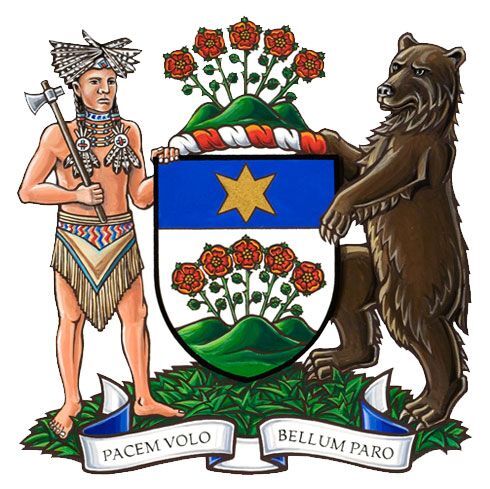
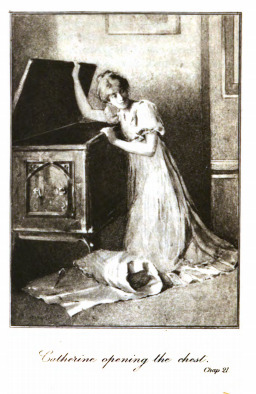
Here we see Catherine looking through a chest in her room at Northanger Abbey, Henry Tilney’s family home. Catherine came up with a story that the Abbey was haunted based on her reading of gothic novels. She saw the chest after dinner and felt compelled to see what was inside. After some struggling, she got the chest open and found several small drawers and papers inside. Catherine was excited, believing herself to be in her very own gothic novel. It was a stormy night, and a gust of wind blew out her candle, frightening her, and she jumped into bed. This scene occurs in chapter 21 as noted underneath the title of this image. The characters are shown in the traditional regency style, with Catherine wearing the regency style dress with an empire waist. Her hair is worn tied up, as was tradition for women after their “coming out” before the queen, signaling her entrance into society. The regency period dated to the early nineteenth century (1811-1820) when George, Prince of Wales, later George IV (r. 1820-1830), reigned as regent for his mentally ill father, King George III (r. 1760-1820). The regency period is associated with the rise of neoclassicism in art and fashion. The same image appears as an insert between pages 152 and 153 for the Dent 1893, 1894, 1895, 1896, and 1897 editions of Northanger Abbey.
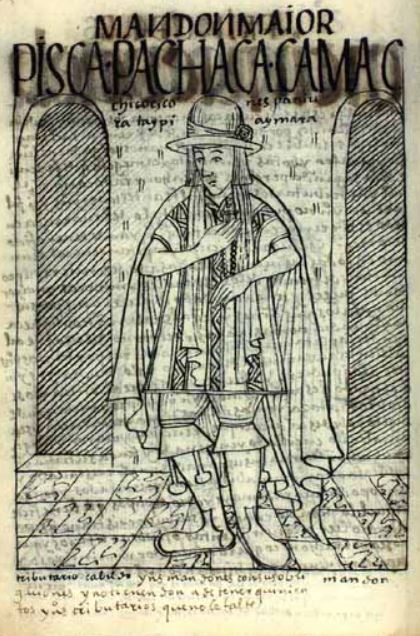
This image is illustrated in a chapter that discusses the descendants of the Inca and Andean nobles under Spanish colonial rule in Peru and their importance to a revived Andean society. This image depicts an official who is responsible for overseeing five hundred tributary Indians. He is illustrated standing in the centre of the image dressed in Spanish attire. The caption at the bottom of the image reads, “tributario cabildo, yndios mandones con sus obligaciones, y no tienen don, a de tener quinientos yndios tributarios que no le falte” [tributary council, Indian bosses with their obligations, they have no title and must have five hundred tributary Indians].
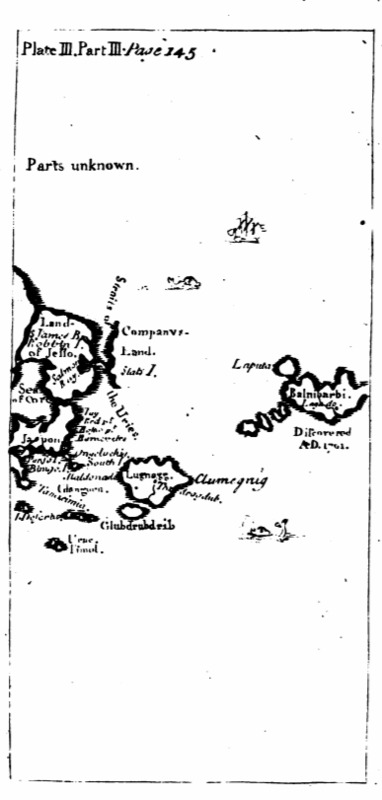
Here we see a map of the various countries Gulliver visited in the third part of the book. These include Laputa, Balnibarbi, Luggnagg, Glubbdubdrib, and Japan, among others. Underneath Balnibarbi we see “Discovered AD 1701”. We also see several ships drawn on the water.
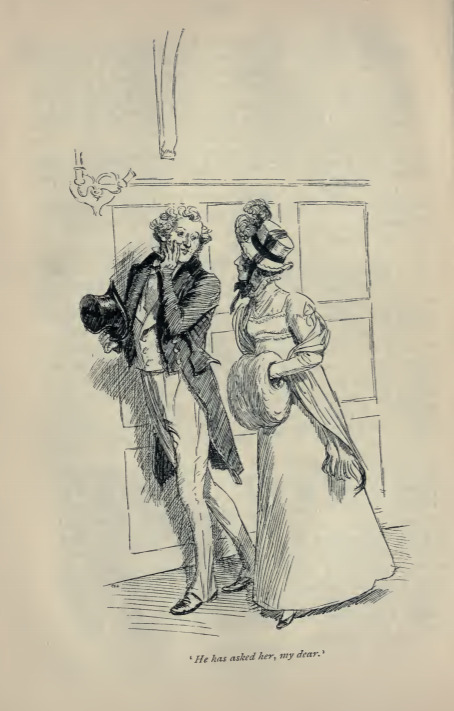
In this image Mr. Weston tells Mrs. Weston that Frank Churchill had secured Emma’s hand for the first two dances of the ball that they were planning. Mr. And Mrs. Weston wanted Emma and Frank Churchill to fall in love so that their families would be joined. This scene occurs in chapter 29. The characters are shown in the traditional regency style. Mrs. Weston wears the regency style dress with an empire waist. She has a bonnet and carries a muff. Mr. Weston wears a waistcoat and tailcoat, with a cravat and carries top hat. The regency period dated to the early nineteenth century (1811-1820) when George, Prince of Wales, later George IV (r. 1820-1830), reigned as regent for his mentally ill father, King George III (r. 1760-1820). The regency period is associated with the rise of neoclassicism in art and fashion.
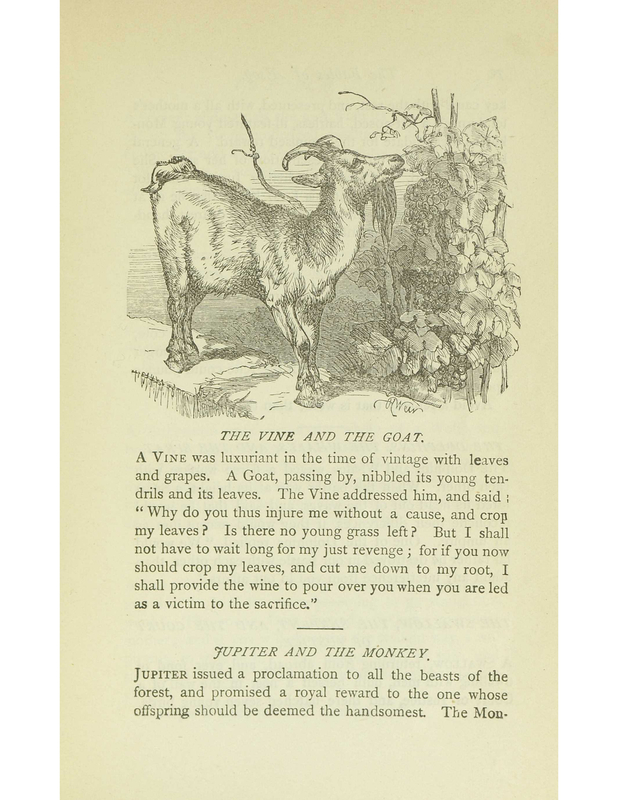
A small goat is standing on stone wall and is eating grapes off their vines. The vines are growing skywards on the right-hand side of the image and bare large grapes.
Two men have been captured by the Indigenous Brazilian warrior women, a group which the author calls ‘Amazons’. The men have been hung upside down by one ankle from a tree, and a fire has been lit beneath them. The women shoot arrows at the hanging men. This image is identical to one found in Frankfurt, 1557.
Here we see Gulliver and the Governor of Glubbdubdrib, who was a necromancer. After speaking with Alexander the Great, the Carthaginian General, Hannibal appeared. Hannibal assured Gulliver he did not have any vinegar with him when he crossed the Alps. The Roman historian Livy wrote that Hannibal softened the rock of the Alps by pouring vinegar over them and letting them soften in the sun, making their demolition much easier. The same image appears in the 1839 Krabbe edition.
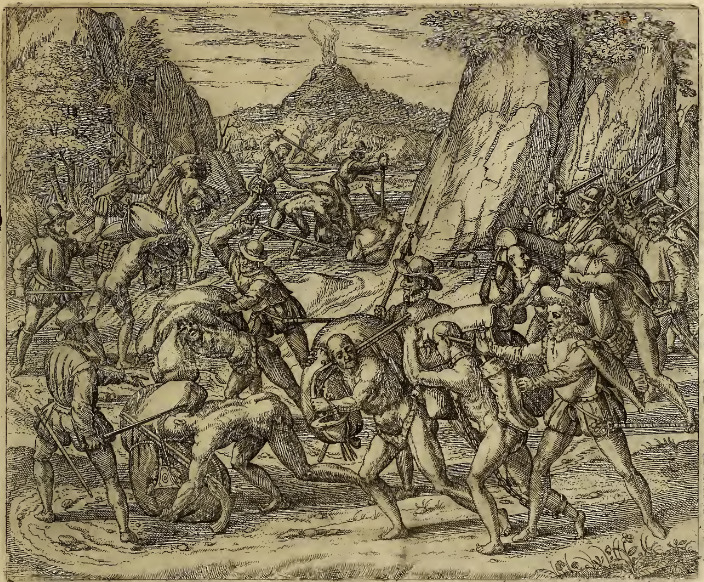
A group of Spaniards travel through Peru with several Indigenous men who have been forced to accompany the Spaniards to carry their packs. Every Indigenous man in the group carries at least one large pack, and sometimes multiple items. The Spaniards are merciless, beating or killing any Indigenous man who tires and slows or can no longer continue. They use wooden canes to beat the men, and in the background one Indigenous man who has fallen or been knocked to the ground is killed with a sword. In the distance, a volcano erupts.
Calisto goes to visit Melibea as promised, now accompanied by Sosia and Tristan instead of Sempronio and Pármeno. He ascends the high wall to Melibea’s garden while Sosia and Tristan stand guard (as seen in this image). He returns home after spending the night with Melibea, and laments how quickly the night had passed. To the left of the illustration, we see Calisto climbing a ladder to Melibea’s garden with a sword mounted on his belt. Sosia and Tristan stand behind him with swords and shields. To the right we see Melibea and Lucrecia looking out from a window. Both of them are wearing a robe and a veil. They seem to be making eye contract with Calisto, though perspective would make this impossible. The entire image is identical to those found on pages 178 and 255 of the text.
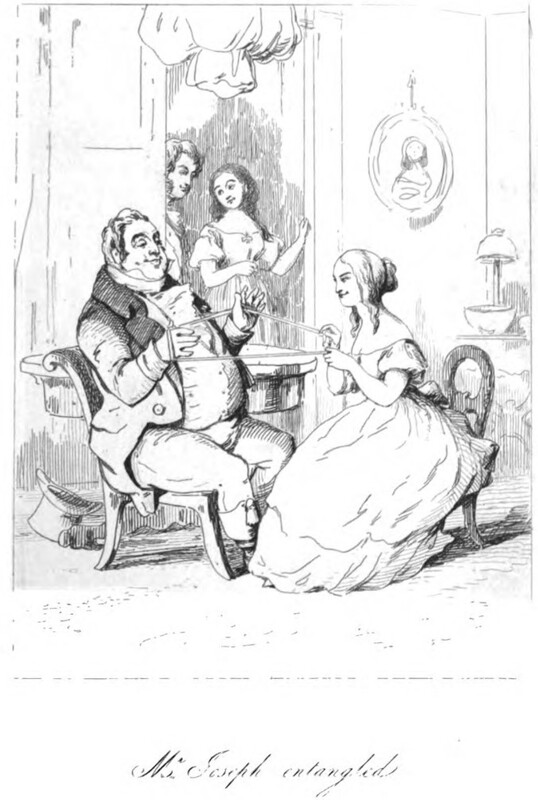
Joseph Sedley and Rebecca Sharp sit at two chairs in front of a round table; she holds both ends of a string of silk which is wound around his hands. Beneath the table is Joseph’s hat, and in the background, another table with a lamp and bowl and a portrait upon the wall. Amelia Sedley and George Osborne are entering through the doorway behind the round table at which the others sit. All four look pleased. Below the illustration is printed in cursive its title, “Mr. Joseph entangled”.
The author spends this section of this chapter discussing religious establishment in Peru and different orders within the Church’s hierarchy. This image depicts holy hermits within the kingdom of Spanish conquered Peru. The image depicts the holy hermit, John the Sinner, holding a staff in his right hand and a skull in his left. His hair and beard are long to demonstrate the fact that he is a hermit and wanders. There is another hermit in the image who is kneeling to John and holding his hands up in prayer to him. There is dialogue written above the kneeling man as he speaks to John which reads, “yupaychayque santo” [I respect you, holy man]. The author explains that hermits did not care about wealth or profit and only aim to seek out God and pray. The caption at the bottom of the image reads, “orden muy santos en lima, en el mundo” [a very holy order in Lima, and throughout the world].
In this image we see a group of five Lilliputian officials all of whom have a disapproving look on their faces. Their status is indicated by their different forms of headpieces. Behind them we see Gulliver facing the other way, walking away from them. This image comes after Gulliver has been charged with treason forcing him to leave Lilliput. The same image appears in the 1839 Krabbe edition.
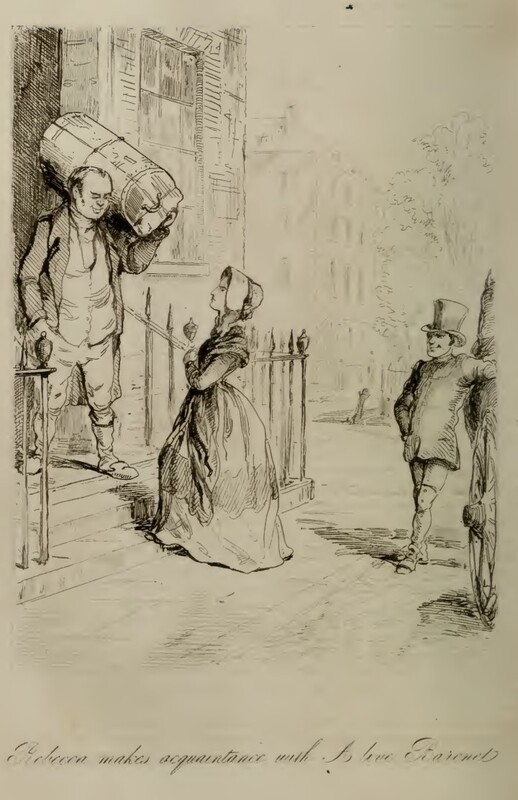
Rebecca Sharp stands in the center of the picture at the base of the staircase to Crawley mansion, scowling up at the man on the stairs. He is holding her trunk on her shoulder with his other hand in his pocket, and, though assumed by the others to be a porter, is Sir Pitt Crawley. To the right of the image, John, the Sedley’s groom, is leaning against his carriage with a smirk on his face. In the background the corner of the Crawley mansion and a neighboring house are lightly sketched. Below the illustration is printed in cursive its title, “Rebecca makes acquaintance with A live Baronet”.
Here we see Gulliver sitting on the leaves of a flower in Brobdingnag, where everything is giant compared to Gulliver. In the centre of the flower is the letter “A” because the first word of the chapter is “auch”. The same image appears in the 1839 Krabbe edition.
Mrs. Firkin and Miss Briggs stand outside the parlour door, listening in on the conversation between Sir Pitt Crawley and Rebecca Sharp. Mrs. Firkin has her eye to the keyhole while Miss Briggs is watching her with her hands clasped together. Both look worried.
When midnight approaches yet again, Calisto visits Melibea while Sosia and Tristan stand guard. As he and Melibea talk, he hears a scuffle in the street. Tristan informs him that it is just Thraso and his companions, and that Sosia has managed to scare them off. Regardless, Calisto climbs the high garden wall and, descending the outside ladder too quickly, falls to his death. To avoid exposing him to dishonour, Sosia and Tristan carry him away (as seen in this illustration). Meanwhile, Melibea laments the tragic loss of her lover.
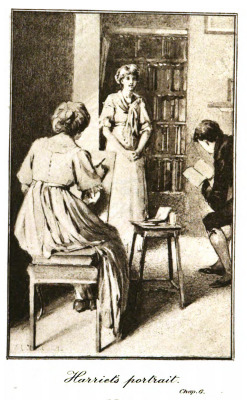
Here we see Emma drawing Harriet’s portrait. Mr. Elton sits to the side, reading out loud to entertain the women. Emma was being a matchmaker, trying to set up Harriet and Mr. Elton. He encouraged Emma to do Harriet’s portrait and was very flattering of the portrait and Harriet’s beauty. Emma took this as a sign of his romantic interest in Harriet, but in reality, he was interested in Emma. He offered to take the portrait to London to have it framed. With Emma’s encouragement, Harriet fell in love with Mr. Elton, but he proposed to Emma and she refused. This scene occurs in chapter 6 as noted underneath the title of this image. The characters are shown in the traditional regency style, with Mr. Elton wearing waistcoat, tailcoat, and knickers that stopped at the knee. Emma and Harriet wear the regency style dress with an empire waist. Their hair is worn tied up, as was tradition for women after their “coming out” before the queen, signaling her entrance into society. The regency period dated to the early nineteenth century (1811-1820) when George, Prince of Wales, later George IV (r. 1820-1830), reigned as regent for his mentally ill father, King George III (r. 1760-1820). The Prince of Wales was a fan of Austen’s work, and she dedicates the novel to him. The regency period is associated with the rise of neoclassicism in art and fashion. The same image appears as the frontispiece for the Dent 1893, 1894, 1895, 1896, and 1897 editions of Emma.
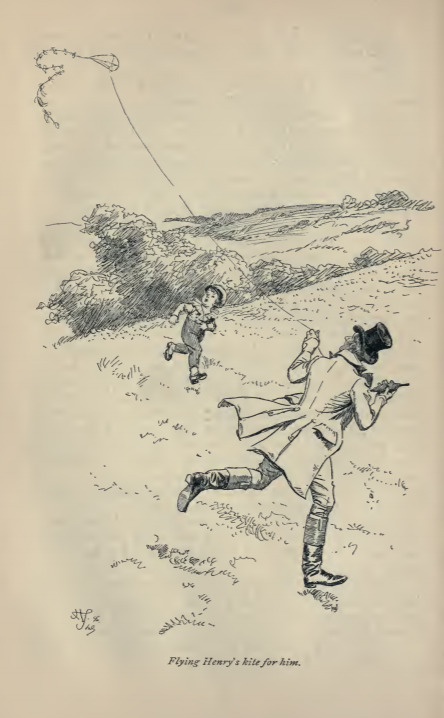
Here we see Mr. Weston playing with Emma’s nephew Henry, flying his kite for him on a very windy day. In this scene, Isabella and John Knightley discuss the Weston’s marriage. Mr. John Knightley spoke with little regard for Mr. Weston, but Isabella defended him, speaking highly of him, remembering when he helped her son Henry fly his kite on a windy day on a visit the previous Easter. This scene occurs in chapter 11. The characters are shown in the traditional regency style, with Mr. Weston wearing a waistcoat and tailcoat, with a cravat and top hat. The young boys wear short coats and breeches. The regency period dated to the early nineteenth century (1811-1820) when George, Prince of Wales, later George IV (r. 1820-1830), reigned as regent for his mentally ill father, King George III (r. 1760-1820). The regency period is associated with the rise of neoclassicism in art and fashion.

![[How the Indigenous Brazilian warrior women treat captives]](https://collections.cemvc.ca/files/large/0f63afed81741ef67ee7772b07526e6775fa3a59.jpg)
![[The Governor of Glubbdubdrib and Gulliver speak with Hannibal]](https://collections.cemvc.ca/files/large/6a8988af5fd6bb65bd21267e77bd4ec1496844ac.jpg)
![[Act XIV – Calisto, Guarded by Sosia and Tristán, Climbs Melibea’s Garden Wall While Melibea and Lucrecia Watch from a Window]](https://collections.cemvc.ca/files/large/251028f0d8f181159b76607e6e07e9e71ce85a48.jpg)
![S[an]to Hermitano Iv[an] Pecador y los Demas Santos Hermitanos deste Rreyno](https://collections.cemvc.ca/files/large/6b3a955de08becd254fd172bd3f147a2f115610f.jpg)
![[Lilliputian officials]](https://collections.cemvc.ca/files/large/bed40b500e5513245c1bcaac92722484c017541d.jpg)

![[Gulliver sits on the leaf of a flower on Brobdingnag]](https://collections.cemvc.ca/files/large/57ab2d52f3a969628264a05098e6134310b994c4.jpg)
![[Miss Firkin and Miss Briggs]](https://collections.cemvc.ca/files/large/e289cbf4c163469af2c403618443218f6c0dad00.jpg)
![[Act XIX – Sosia and Tristan Lifting Calisto After He Has Fallen to His Death]](https://collections.cemvc.ca/files/large/f4b7f10e6a92ad129712ad5da37c6709ac266b13.jpg)