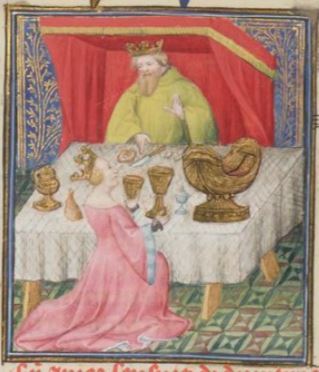
This illumination depicts a Dripetrua sitting at a dinner table with her father, King Mithridates of Pontus. They are both depicted wearing crowns. Boccaccio explains that Dripetrua was born with two sets of teeth and was incredibly hideous, however, she was also very devoted to her father, which deserved praise.
A small girl in a long dress, likely Rosalind or Violet Crawley, is seated on the floor. In front of her on a stool is a small card tower, three high, towards which she is reaching.
Here we see Mr. Rochester riding on horseback home to Thornfield late at night. His dog, Pilot, runs beside him. Thornfield is visible in the background. Jane was worried because Mr. Rochester was out so late, so she left the house to look for him. As she walked up the lane, Mr. Rochester arrived home, and pulled her up onto his horse with him.
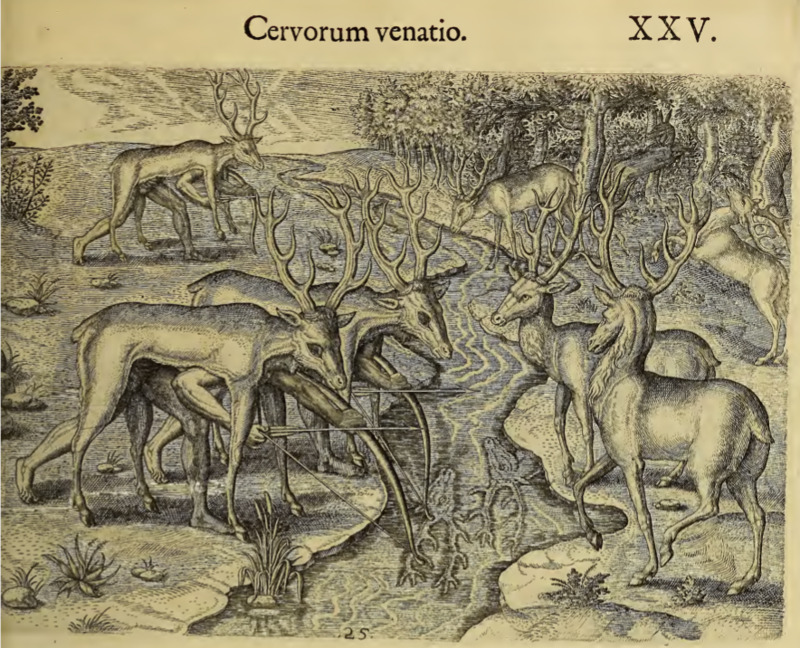
This image shows the Indigenous people’s method of hunting deer. Three individuals are hunting. They have taken the skin of deer previously killed and draped them over themselves as a disguise. They walk bent at the waist and hold bows and arrows in front of them. Across a small river, several deer stand watching the hunters.
A large European ship is anchored near the coast. Several Tupinambá people in a canoe float alongside the ship, with two European men in the canoe communicating with the men on the ship. There are two other canoes nearby, and two large sea creatures swim in the open water. A group of European men have used a rowboat to go ashore. The rowboat is tied to a stake along the shoreline and the men gather around a large bonfire.
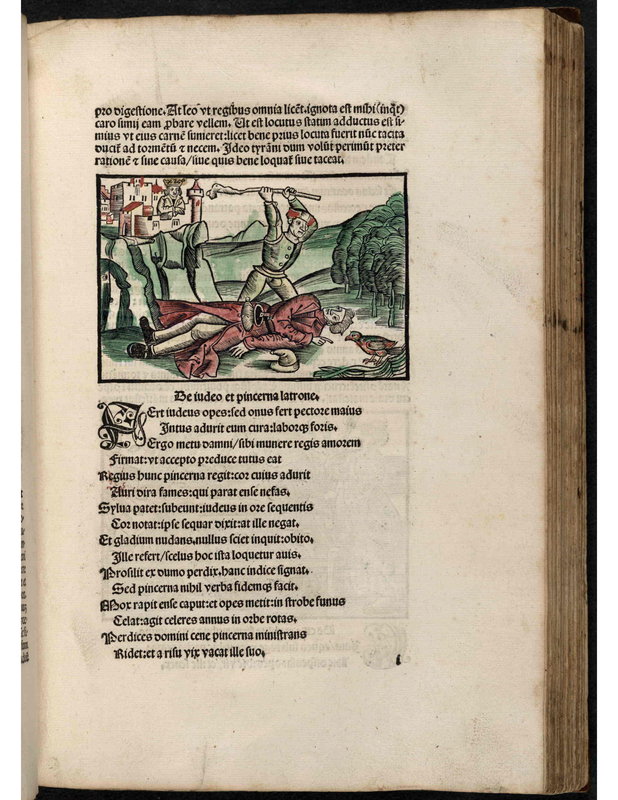
In between a forest and a town, a man lies on the ground and is beaten by another man standing over him, with a stick. The man on the gorund points to a bird who stands on the ground close to the man’s head. In the town, which is on top of a cliff, a man with a crown, presumably the king overlooks the altercation between the two men.
Joseph Sedley is asleep at the dinner table, leaning back in his chair. On the table in front of him are the remains of dinner, including his plate and cup and a decanter. He is framed in the letter O from “On”.
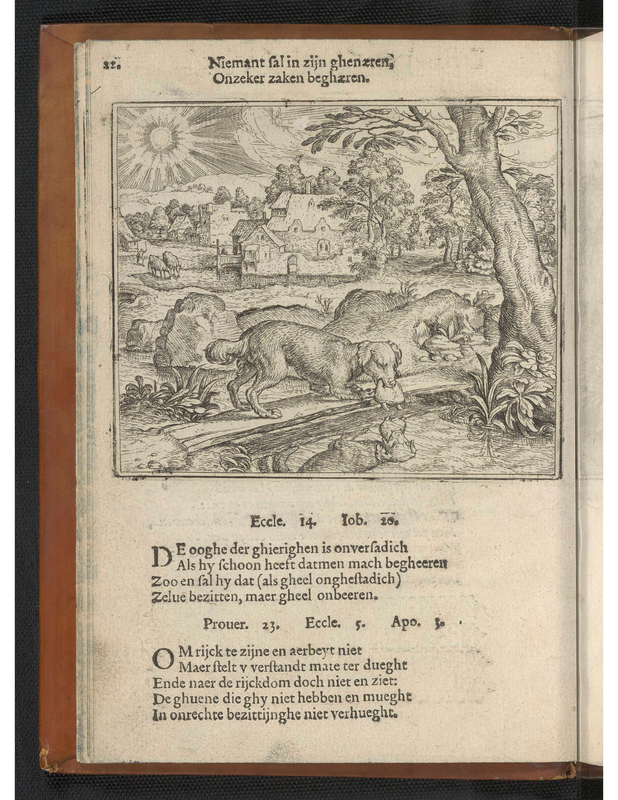
A dog with a piece of meat in its jaws stares at its reflection in a pond by a tree. In the background, two cows graze by a few houses surrounded by trees. The sun shines brightly in the top left corner of the image.
Here we see the silhouettes of several men and women from history that Gulliver spoke to with the help of the Governor of Glubbdubdrib’s necromancy skills. The silhouettes show men and women wearing different styles of clothing, indicating the eras in which they lived. Their clothes also indicate what they did when they were alive, for example, soldiers carry spears. The same image appears in the 1839 Krabbe edition.
Joseph Sedley is seated in a small, open, two-wheeled carriage pulled by a single horse. He holds the reins in his left hand with the whip raised high in his right as the buggy passes a post. At his side is seated another, unspecified, male figure in a tall hat. In the background can be seen the outside of some trees and two buildings. Too nervous to go see Becky Sharp in the drawing-room, he has decided to see a performance of Forty Thieves instead.
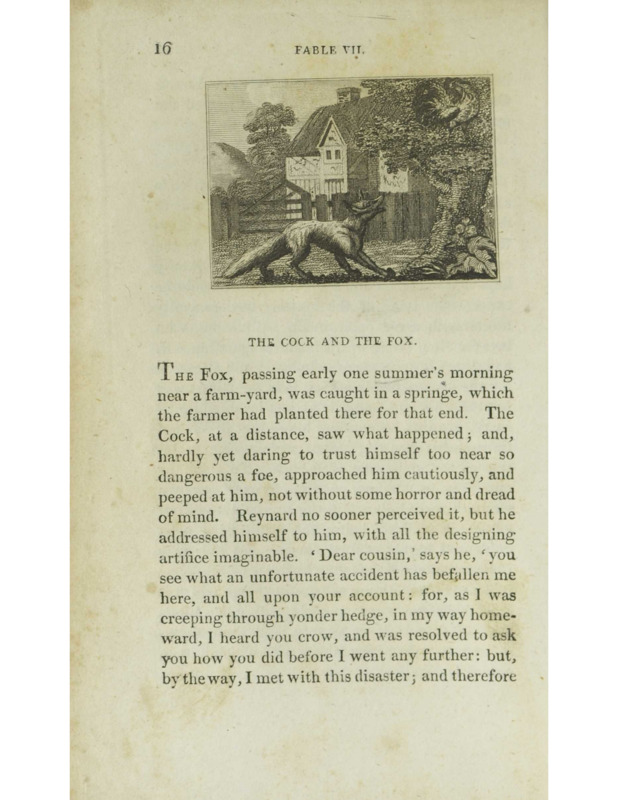
A group of animals are gathered around a water well. One of the animals has just been lifted from the well. The animals are in the middle of a conflict. A bird looks like it has been killed by a sort of dog from a bite to the neck.
In this image we see Gulliver sleeping outside the city in Blefuscu. Due to his size, there was nowhere for him to sleep in Blefuscu. Thus, Gulliver was forced to sleep outside, using his overcoat or coverlet as a blanket. In this image we see Gulliver’s size as compared to the buildings surrounding him. Gulliver leans on a large structure with his arms crossed, his head resting in his folded arms. The same image appears in the 1839 Krabbe edition.
Amelia Osborne sits in the chair in her bedroom from before she was married, looking melancholy. Behind her, Miss Flannigan, the maid, is leaning over the chair with one hand on her hip. On a smaller, wooden chair and the floor in front of Amelia there are scattered papers.
This image is illustrated in a chapter that discusses the descendants of the Inca and Andean nobles under Spanish colonial rule in Peru and their importance to a revived Andean society. This image depicts a standing portrait of a noble lord who is partially dressed in European attire and partially in traditional indigenous attire with his embroidered tunic. He is also holding a rosary in his right hand. This lord was responsible for overseeing one hundred Indian tributaries in the province of Andamarca. The caption at the bottom of the image reads, “tributario y cabildo, no tiene don que no le falte cien yndios tributarios” [tributary council, he who lacks one hundred indians does not have a title].
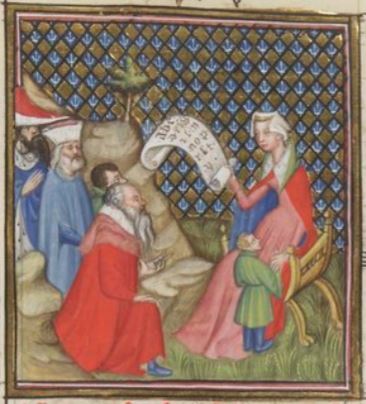
This image depicts Nicostrata, a woman who was a famous prophetess during her time, holding a scroll of parchment. She is illustrated sitting down on the right side of the image as a group of people are listening to her speak. She is teaching them a new language. Nicostrata had gone with her son Evander to Italy and he founded the city of Pallantium. Once Nicostrata realized that the inhabitants of this city were not well educated or literate, she decided to give them their own language with their own letters and symbols. This was the Latin language. Nicostrata taught the new letters and language to the people of Pallantium, which is what the illustration depicts.
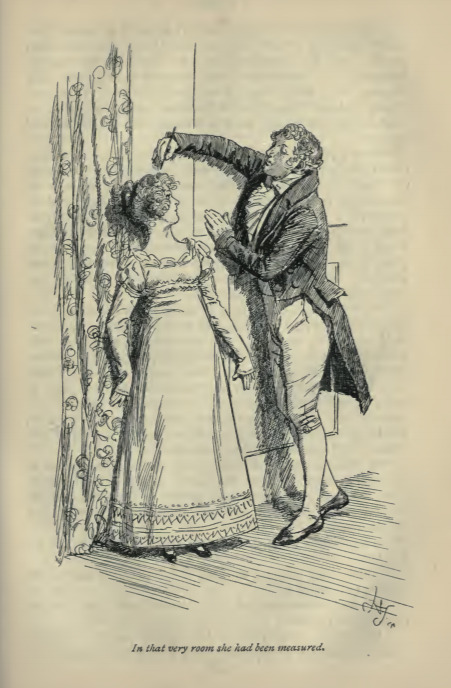
Here we see Mr. Martin measuring Harriet at his home where she spent several summers. Harriet remembers this after she encountered Mr. Martin and his sister, Elizabeth, when she was sheltering from the rain in a store when they came in. Harriet felt very awkward because it was the first time she had seen any of the Martins since she turned down Mr. Martin’s proposal. As soon as the rain let up Harriet ran to Harfield to tell Emma about this meeting. Harriet told Emma about this, feeling very overwhelmed with emotion. This scene occurs in chapter 21. The characters are shown in the traditional regency style. Harriet wears a regency style dress with an empire waistline. Mr. Martin wears a waistcoat and tailcoat with a cravat. The regency period dated to the early nineteenth century (1811-1820) when George, Prince of Wales, later George IV (r. 1820-1830), reigned as regent for his mentally ill father, King George III (r. 1760-1820). The regency period is associated with the rise of neoclassicism in art and fashion.
Here we see a circle of women of the Court of Lilliput around Gulliver. Gulliver’s feet are visible, as is the city skyline. This image appears when Gulliver describes Lilliputian women to his readers. The same image appears in both the 1839 and 1843 Krabbe editions.
This image is illustrated in a chapter that discusses the Christian priests in the colonial government in Peru. This image depicts a parish priest standing behind a native woman as he forces her to weave clothing. She is depicted wiping tears from her face. The parish priests in Spanish governed Peru would force and threaten the women to weave clothing which they would then sell and trade and then not pay them for their labours.
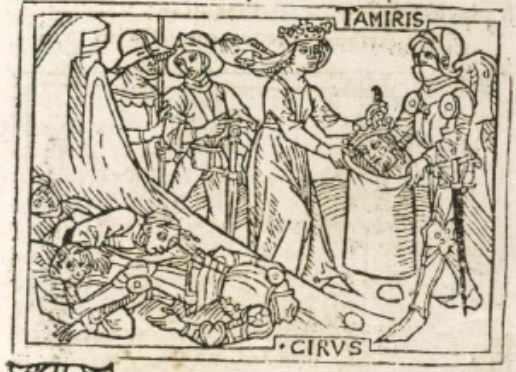
There are two women by the name of Thamyris that Boccaccio describes in his book. One was a fierce queen of Scythia who decapitated the head of her enemy. This engraving depicts Queen Thamyris of Scythia as she puts the decapitated head of her enemy into a bag. This engraving, however, is wrongly placed in the book as this engraving is meant to depict the other Thamyris. The Thamyris the engraving should have depicted was a painter from Greece (also known by the name Timarete). Thamyris was the daughter of a painter named Micon, and she grew up to be a renowned painter herself.
Sir Pitt Crawley kneels on the ground in his sister’s parlour, one hand extended towards Rebecca Sharp, who stands in front of him looking slightly startled. In the background are two life-sized portraits of women.
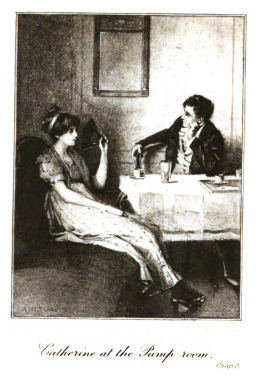
Here we see Catherine Morland and Henry Tilney sitting at a table in the pump room in Bath. The pump room is a building in the churchyard outside Bath Abbey and is adjacent to the Roman Baths for which the city is named. The Baths were natural hot springs and the upper class in England would often visit the baths on vacation, as they were said to promote good health. The bath house was a restaurant where visitors could drink the mineral-rich water from the hot springs. The building was designed by Beau Nash, the architect who designed much of the city, following the discovery of the Roman ruins in the early 1700s. This signaled the beginning of the popularity of Bath as a spa resort for the English upper class during the Georgian era. Jane Austen lived in Bath from 1801-1806 and set her novels Northanger Abbey and Persuasion in the city. In this image, Catherine and Henry sit together in the pump room, discussing the upcoming ball. This scene occurs in chapter 3 as noted underneath the title of this image. The characters are shown in the traditional regency style, with Henry Tilney wearing waistcoat and tailcoat. Catherine wears the regency style dress with an empire waist. Her hair is worn tied up, as was tradition for women after their “coming out” before the queen, signaling her entrance into society. She holds a fan in her hand. A fan was commonly used both to provide relief from the heat, but also as a means of signaling and conveying messages to others. The regency period dated to the early nineteenth century (1811-1820) when George, Prince of Wales, later George IV (r. 1820-1830), reigned as regent for his mentally ill father, King George III (r. 1760-1820). The regency period is associated with the rise of neoclassicism in art and fashion. The same image appears as the frontispiece for the Dent 1893, 1894, 1895, 1896, and 1897 editions of Northanger Abbey.

![[Card Tower]](https://collections.cemvc.ca/files/large/edf08df4a942c6ba9c31e93eb410f4cc813f32b0.jpg)

![[A European ship anchored near the coast with Tupinambá canoes nearby]](https://collections.cemvc.ca/files/large/2d2d9bea514586b972fea5698cb3b4509ea7b8bf.jpg)
![[Vanity Fair Chapter XXVI Historiated Initial]](https://collections.cemvc.ca/files/large/62480f79152c9892b73b71782b3e4e95bc1d73a0.jpg)
![[Silhouettes of men and women of history]](https://collections.cemvc.ca/files/large/35d5d10d870ba170caba20dbbc7e1ed09e15754e.jpg)
![[Joseph in his Buggy]](https://collections.cemvc.ca/files/large/588aa92b42d9cb025ea9f97d198acc7f1e709ab2.jpg)
![[Animals fight in water well]](https://collections.cemvc.ca/files/large/a73f9d8d66d55f2d5efe9faaa4121522a5555288.jpg)
![[Gulliver sleeps outside of Blefuscu]](https://collections.cemvc.ca/files/large/eeae98c29a7f53ccfb270fd9ca9eb3e2a14d8a6a.jpg)
![[Amelia’s Old Room]](https://collections.cemvc.ca/files/large/2eb17085fbc24c7d95114965f9634f3de5d02bf3.jpg)
![Mandoncillo de Cien In[di]os, Pachac Camachicoc Cacyamarca Andamarca Prouincia](https://collections.cemvc.ca/files/large/8be24980406c1191427a93949493d8df477b295b.jpg)
![[Gulliver speaks with women of the Lilliputian court]](https://collections.cemvc.ca/files/large/e3b0fe38d4be3571dd54a98bd7109f986cecf910.jpg)
![Q[ve] Haze Teger Ropa por Fuerza a las Yndias, Deciendo y Amenazando Questa Amanzibada y le da de Palos y no le Paga](https://collections.cemvc.ca/files/large/8d0505aa694b0b0db8774b98a19a1f2ac8d163a3.jpg)
![[Rebecca and Sir Pitt]](https://collections.cemvc.ca/files/large/a36e147d6b1ee81bc0423c1d6941aac80b6a10cf.jpg)