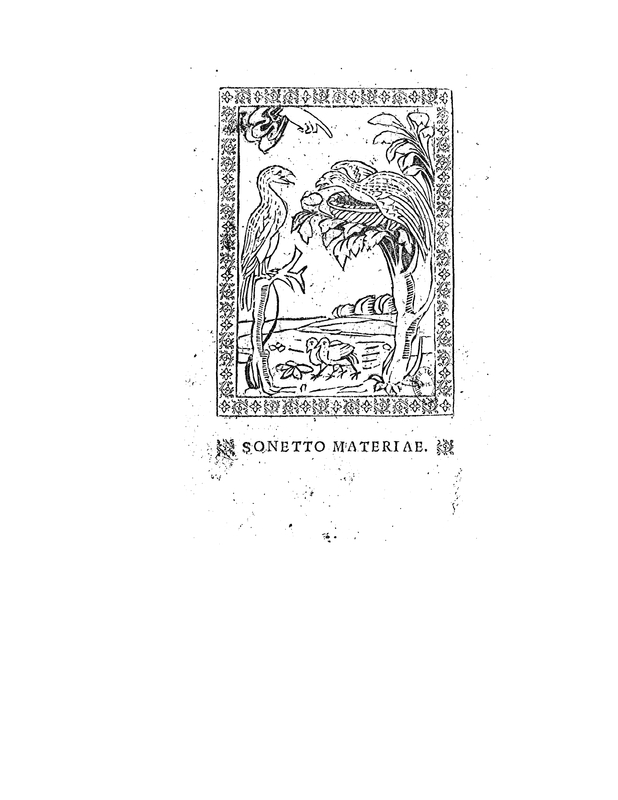
A mother bird has assumed an defensive posture in her nest which is sat atop of a tree on the right side of the image. The mother bird has an aggressive look, opposite the mother bird is another bird (kite) sat on a tree trunk they appear to be in dialogue. On the ground in the centre of the image there are two juvenile birds walking together. There is what appears to be a divine hand pointing at the mother bird from the sky, top left of the image.
Here we see Gulliver's introduction to the Houyhnhnms who took Gulliver in. The Gray horse who found Gulliver brought him to an authority of the Houyhnhnms. He introduced Gulliver to a mare with a colt and foal, sitting on mats woven out of straw. The same image appears in the 1839 Krabbe edition.
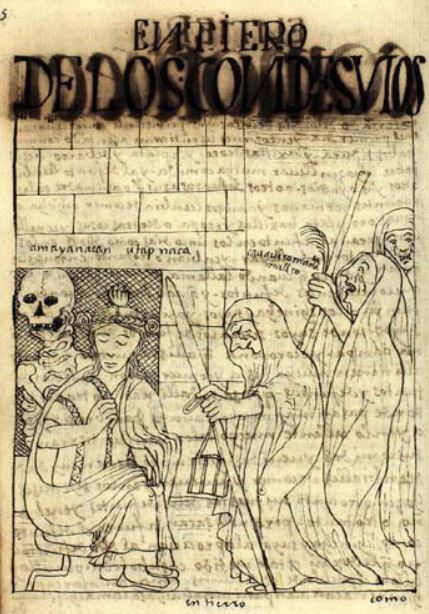
This image depicts the burial practices of the Condesuyo region in the Inca Empire. The author explains that the deceased would be adorned in garments and buried sitting upright. They would also put gold and silver in the mouths of the deceased. The deceased in the image is depicted sitting upright in front of the tomb labelled as amayanacan uptapnaca [town of the dead]. There is a skeleton to demonstrate that it is a tomb. The figures on the right are depicted crying and mourning the dead.
On the left side is a man sitting. He wears a long tunic and a short bucket-hat. The man is holding a creature and is petting it with his left hand. The creature has ears, four legs, and a tail, possibly a small puppy. Next to the man is a donkey on its hind legs, and another person is behind that donkey, raising a long piece of wood in the air ready to whack it.
A framed portrait of Joseph Sedley holding a gun while riding on the back of an elephant, with a native driver sitting behind its head. In the top right of the painting is the letter I, from “If”. The picture is tagged in the top left corner with a paper labelled “LOT369”.
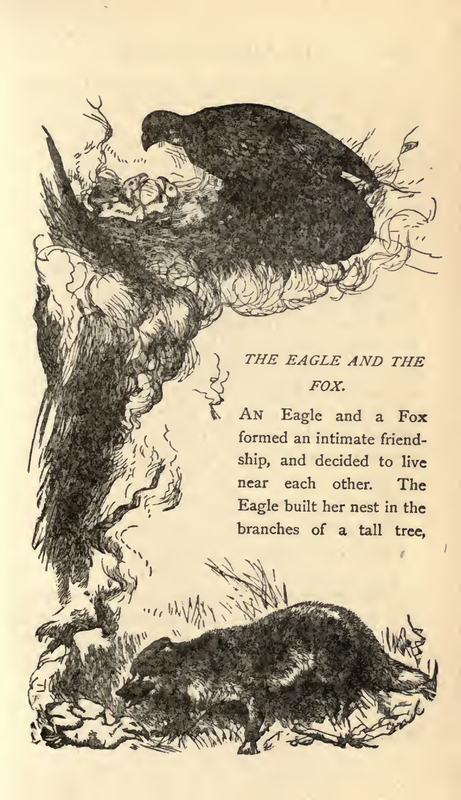
When Celestina returns home, she finds Sempronio waiting there with Elicia. She tells him that she has good news, but she makes him wait until they are with Calisto to hear it. They go to Calisto’s house together, and Pármeno sees them as they approach. He tells Calisto of their arrival, and Calisto orders him to open the door.[This illustration is identical to the one found on page 27 of the text (folio b7r): [Act I (Third Illustration) – Celestina and Sempronio Talking as Crito Descends the Staircase].
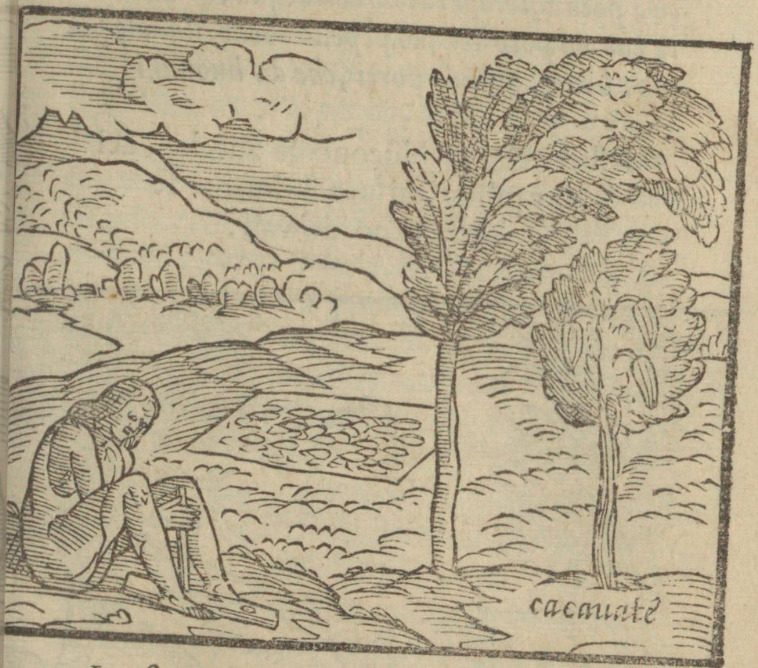
An Indigenous person sitting on the ground is in the process of starting a fire by twirling a smaller stick against a log. Nearby there are two trees, the smaller one labelled ‘cacauate’ (a cacao tree) has several large seeds amongst its branches. In the background, a number of the seeds have been picked and laid out to dry on a blanket on the ground. This image is identical to one found on page 102 of Venice, 1565.
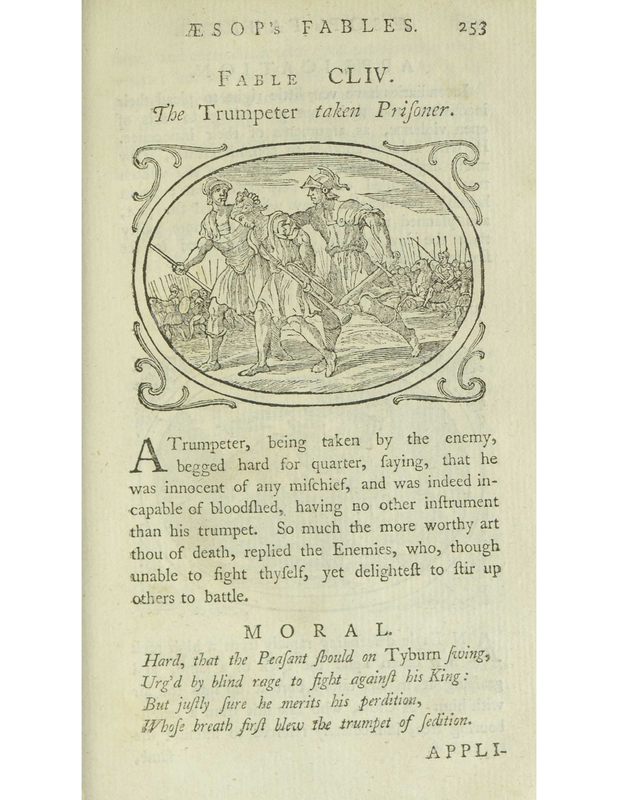
In the foreground, two soldiers in armour and carrying weapons are on either side of a man carrying a trumpet. They are holding him aggressively and scowling at him. In the background there is a large army, that includes a horse. Any of the soldiers in the background are carrying spears.
Rebecca Crawley sleeping alone in her bed after waving goodbye to her husband. She has a sleeping cap on and looks peaceful and content, not at all concerned about the regiment’s departure to the battlefront.
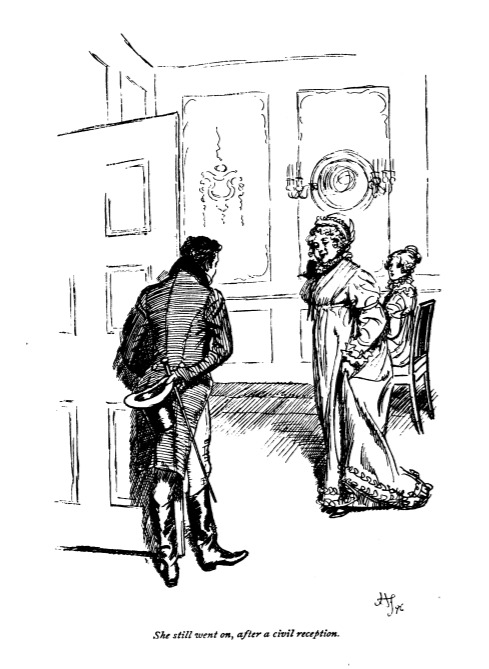
Here we see Lady Bertram exiting the breakfast room as Mr. Crawford came in. Fanny is seated at the table. Mr. Crawford had come to Mansfield to propose to Fanny, but she refused. She felt they were too incompatible, and she did not approve of how he led on both of her cousins, Maria and Julia. He persisted in his pursuit of Fanny until he ran away with Maria in London. This scene occurs in chapter 31. The characters are shown in the traditional regency style. Fanny and Lady Bertram wear regency style dresses with empire waists. Mr. Crawford wears a tailcoat and breeches, holding his top hat behind his back as he bows slightly to Lady Bertram. The regency period dated to the early nineteenth century (1811-1820) when George, Prince of Wales, later George IV (r. 1820-1830), reigned as regent for his mentally ill father, King George III (r. 1760-1820). The regency period is associated with the rise of neoclassicism in art and fashion.
In the picture there are only two people, El Cid and the king. The king is recognizable by his crown. He is wearing robes and El Cid appears to be wearing a cloak that is hiding his clothes. He is also wearing a hat with a feather on it. At El Cid’s waist the end of a sword is visible. Around them there are plants tree, and shrubbery. On the left there are very apparent flowers and in the background there are two buildings visible. This is the abode of the Bishop El Cid is visiting on a pilgrimage before his wedding. A river separates the Bishop’s abode and the two men.
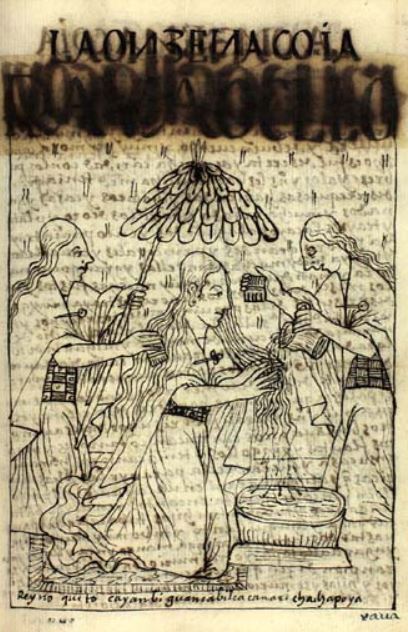
This image depicts Rawa Ocllo, the eleventh Coya [Queen] of the Inca Empire. She was married to her brother, Huayna Capac, the eleventh Inca king. The author describes her to be an incredibly beautiful woman who was charitable towards the poor and sick. She is illustrated kneeling in the centre of the image as her hair is being combed and washed by two female servants. The servant on the left side of the image is also depicted holding a fan of leaves over her head for shade. The words “Reyno Quito, Cayanbi, Guanca Bilca, Canari, Chachapoya” are written at the bottom of the image which describes the cities that this king and queen reigned over.
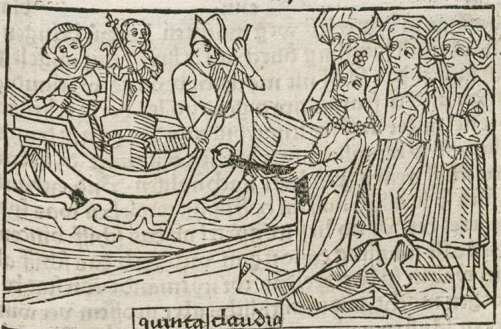
This engraving depicts Claudia Quinta, a Roman woman, standing on land as she pulls a ship to shore. Her name, written as “Quinta Claudia”, is engraved at the bottom of the image. Boccaccio explains that after Claudia Quinta was accused by other matrons of not being chaste, she prayed to the goddess Ceres to help prove her virtue. After a ship that contained a statue of Ceres had gotten stuck on a sandbar, Ceres gave Claudia Quinta the power to pull the ship to shore as proof of her chastity. The women who accused Claudia Quinta of being unchaste are standing behind her in the engraving as they watch her pull the ship to shore. The statue of the goddess is illustrated on top of a platform on the ship. Claudia Quinta’s name is engraved below her body to identify her.
Two women are standing by the entrance of a house. They seem to be embracing each other. There is a window with two birds near it. Inside of the house through the window we see a man who looks upset.
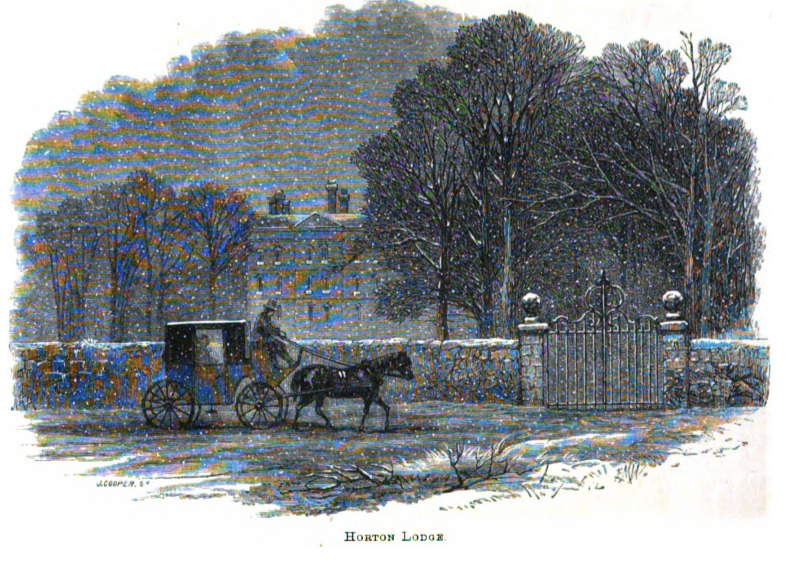
Here we see Horton Lodge, a house where Agnes Grey worked as a governess. A horse-drawn carriage drives past the gate. Horton Lodge is a large estate. Large trees grow in the courtyard, and partially obscured the house.
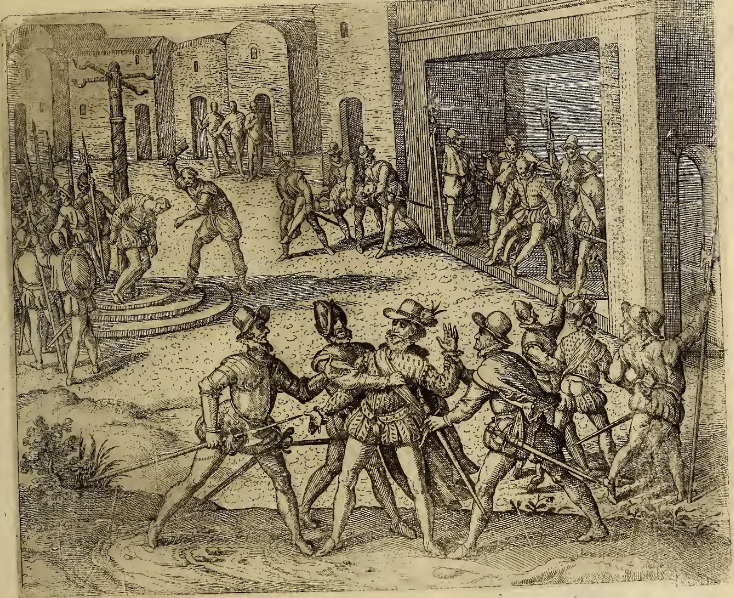
This storied image shows the imprisonment and execution of Diego de Almagro in Cuzco, at the hands of Spaniards loyal to Francisco Pizarro. In the foreground, Diego de Almagro is seized by three Spanish soldiers. He is escorted towards a building used as a prison on the right. Inside the prison, de Almagro is strangled using a rope tied to a wooden pole while three Spanish soldiers watch. His body is then carried to the left into the public square, where he is tied to a post and beheaded with a hatchet in front of an audience. Three Inca men watch the proceedings from the background.
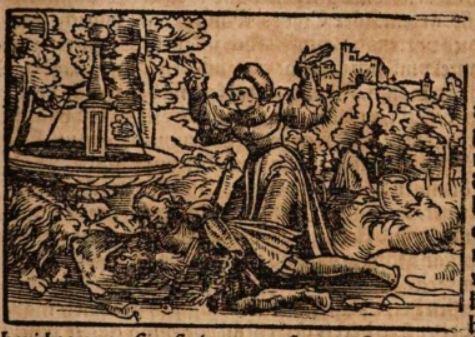
Thisbe, a young woman from Babylon, is depicted in the centre of the engraving with her arms in the air after finding her lover (Pyramus) dead. Boccaccio explains that the two lovers were forbidden from being together, so they devised a plan to run away. Thisbe waited for Pyramus by the fountain depicted on the left side of the engraving when a lioness appeared. Thisbe ran into the woods to hide from the animal. The lioness, with a blood-stained mouth, chewed on the cloak that Thisbe left behind after running. This is illustrated in the foreground of the engraving in front of the fountain. Pyramus had then arrived at the meeting point, only to find the bloody cloak of Thisbe. Believing her to be dead, Pyramus killed himself with his sword. Pyramus is depicted lying on the ground with his sword impaled through his chest. Thisbe found Pyramus as he was dying and impaled herself with the same sword in order to be with her lover.
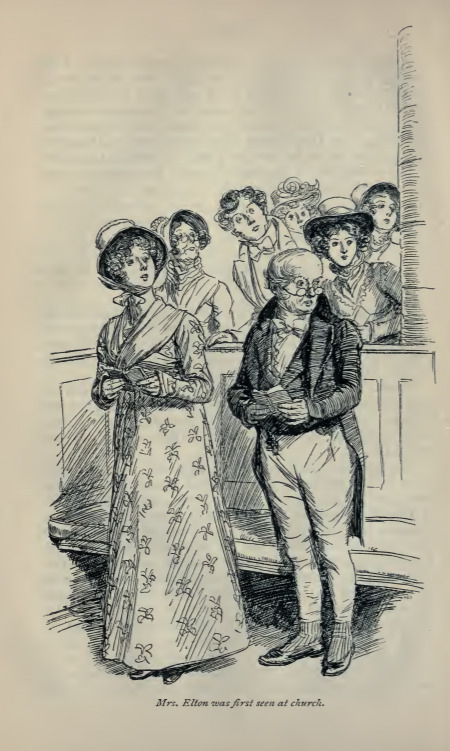
In this image Mrs. Elton sits in the front row of the church, standing next to Mr. Woodhouse. After Mr. Elton proposed to Emma and she turned him down, he left town for several weeks. When he came back, he was married, and his wife, Augusta, is seen here. She was a self-important and vain person and was not well-liked in Highbury. Nevertheless, societal manners and customs at this time meant that Emma, Mrs. Weston, and Jane Fairfax often found themselves in the other’s company. This scene occurs in chapter 32. The characters are shown in the traditional regency style. Mrs. Elton wears the regency style dress with an empire waist. She has a bonnet and has a scarf wrapped around her shoulders. Mr. Woodhouse wears a waistcoat and tailcoat, with a cravat and carries top hat. The regency period dated to the early nineteenth century (1811-1820) when George, Prince of Wales, later George IV (r. 1820-1830), reigned as regent for his mentally ill father, King George III (r. 1760-1820). The regency period is associated with the rise of neoclassicism in art and fashion.

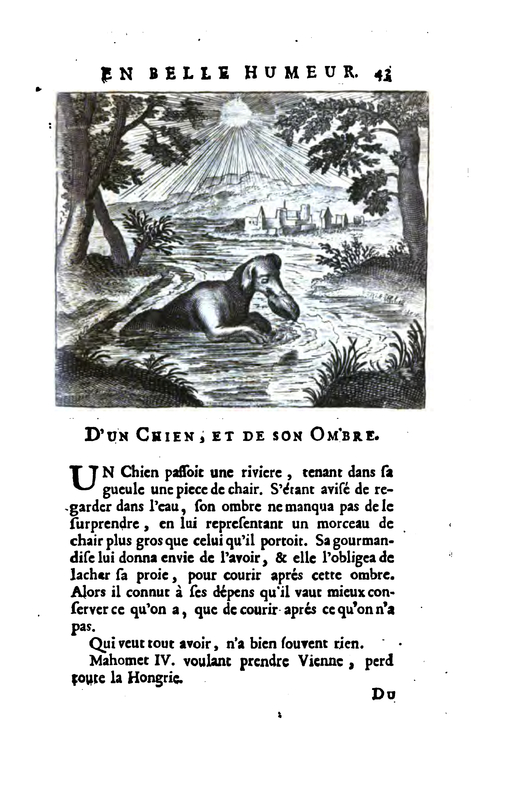
![[Gulliver is introduced to the Houyhnhnms of the household]](https://collections.cemvc.ca/files/large/dd2f8b0df352f0c933996dd8bc2c269ba9810fa7.jpg)
![[The Savage Donkey]](https://collections.cemvc.ca/files/large/d40b6499c50b9f356d8bbea5636016041e072131.jpg)
![[Vanity Fair Chapter XVII Historiated Initial]](https://collections.cemvc.ca/files/large/85380e3bdd8ff5b2058f16af4c828675e4565130.jpg)
![[Act V – Pármeno Opening the Door for Celestina and Sempronio]](https://collections.cemvc.ca/files/large/95b9f239d9c85ee143182419400c33a7785a9526.jpg)
![[Rebecca Asleep]](https://collections.cemvc.ca/files/large/aae74093ef7bb69c5d6e076308ce8ec9561f9dc9.jpg)

![[The Cid on a pilgrimage to Santiago]](https://collections.cemvc.ca/files/large/526fdeead6af10b1c3f1df4a3d39b5a58a4fce33.jpg)
![[Sad man by window]](https://collections.cemvc.ca/files/large/ec1f34a1cbfc7d0144138cc03b05654afbd4bcb2.jpg)