In this image we see two stacks of cannonballs with two cannons. This image appears when Gulliver describes gunpowder to the king of Brobdingnag, offering to teach the king’s military to use it. The king is appalled at the thought of such a violent invention. The same image appears in the 1839 Krabbe edition.
This is a portrait of Jonathan Swift. The image is a part of Swift’s Biography which precedes Part One of Gulliver’s Travels. The purpose of this illustration in the biography is to provide context for the political atmosphere and insight into Swift’s satirical writings. The same image appears in the 1843 Krabbe edition.
Here we see Gulliver with representations of his travels. In the foreground we see Gulliver kneeling. A giant from Brobdingnag sits on top of a podium. The giant holds the floating island of Laputa over his head, with Gulliver’s ship in front of him. A Houyhnhnm and a Yahoo are inside of the podium. In Gulliver’s hands is a Lilliputian. This image also appears in the 1839 Krabbe edition.
Gulliver explains the various medicines used in England to treat disease. In this image we see a doctor in his office, with his back to the viewer. This image appears when Gulliver explains the practice of prognosis to the Houyhnhnms. The same image appears in the 1839 Krabbe edition.
This image depicts the soul of a man in purgatory. He is kneeling and is surrounded by fire and smoke. He has his hands together in prayer as an angel flies down to comfort the soul. The angel has one hand on the hands of the person and their other hand is putting a wreath over the person’s head. The angel is small and has wings on its back. The author urges people to pray for their loved ones who might be in purgatory. To do this, they must pray a half of a rosary, declare fifty hail Mary’s, five for the Lord, and then seven hail Mary’s again. This, according to the author, is what provide mercy to the souls in purgatory. The caption at the bottom of the image reads, “ánimas de purgatorio” [souls of purgatory].
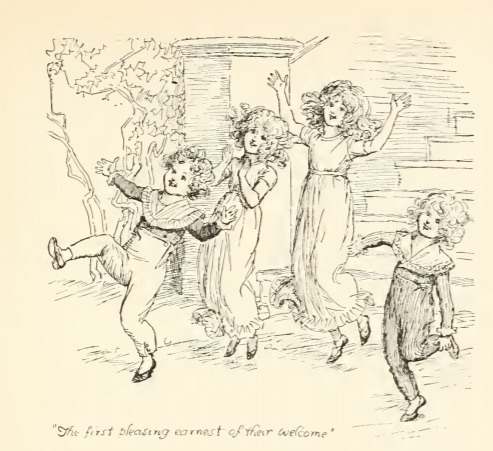
In this image the Gardiner children greet their parents and Elizabeth when they returned home from Derbyshire. Most of the family at Longbourn were distraught because of Lydia having run away with Mr. Wickham, and their greeting of the travelers was much more somber. The children, however, were very happy to see their parents. This scene occurs in chapter 47. The characters are shown in the traditional regency style. The Gardiner’s daughters wear dresses with empire waists, and the Gardiner’s sons wear short coats and breeches. The regency period dated to the early nineteenth century (1811-1820) when George, Prince of Wales, later George IV (r. 1820-1830), reigned as regent for his mentally ill father, King George III (r. 1760-1820). The regency period is associated with the rise of neoclassicism in art and fashion.
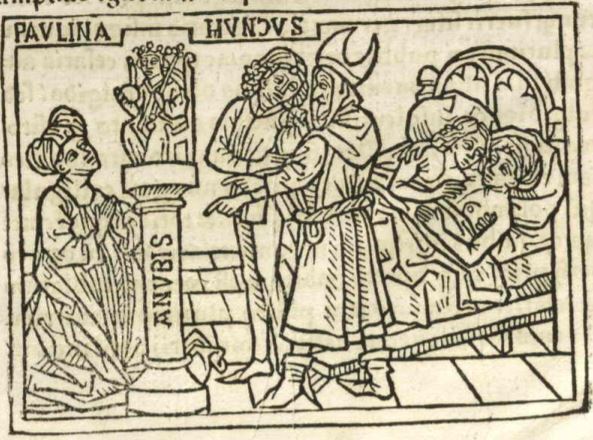
The Roman woman Paulina is depicted on the left side of the engraving as she kneels down in prayer. She is looking up at the statue of the Egyptian god Anubis. Paulina’s name is engraved above her head at the top of the image to identify her. The statue of Anubis is sitting on a tall platform, with the name “Anubis” engraved on the platform. Paulina was an incredibly devout and chaste woman and was completely faithful to her husband. A man named Mundus had fallen in love with Paulina due to her overwhelming beauty, and when she continuously rejected his advances, he devised a plan to have her as his own. Mundus is depicted in the centre of the engraving looking at a priest who is pointing towards Paulina. The priest of the temple and Mundus arranged for Paulina to sleep at the temple to have an encounter with the god Anubis in her sleep. The deception is that Mundus came to Paulina in her sleep and pretended to be the god Anubis and convinced her to sleep with him. This is depicted on the right side of the engraving. Paulina and Mundus (disguised as Anubis) are illustrated in bed together after having intercourse. Paulina is famous for having been tricked into losing her virtue and chastity. Mundus ended up being exiled, and the priest was tortured for his involvement in the deception.
A canine inspects the severed head and shoulders of a young person at the bottom of a ravine surrounded by trees, with a path leading away towards a hilltop building in the background. Cranes circle the scene overhead
Here we see a group of Yahoos fighting each other. Gulliver’s master explains the relationships among the yahoos in the Country of the Houyhnhnms. Gulliver’s master says that the yahoos fight more than any other species, seen here. The same image appears in the 1843 Krabbe edition.
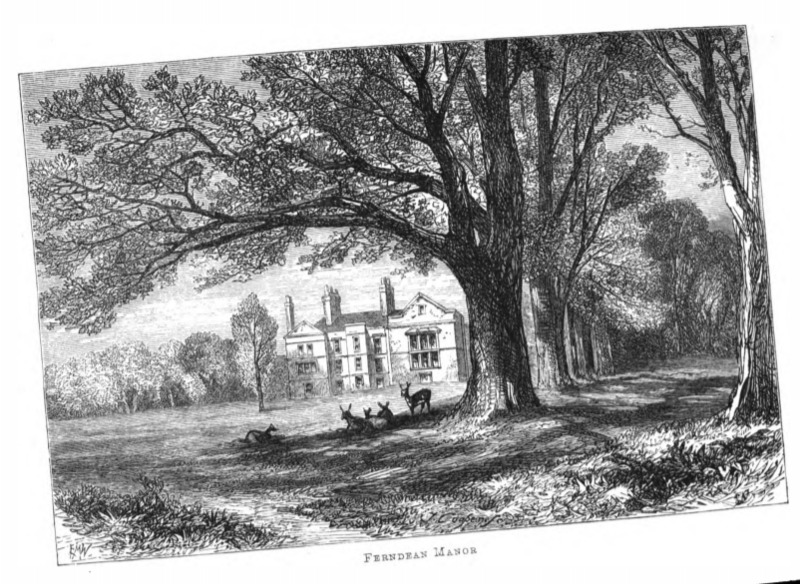
Here we see Ferndean Manor, a house owned by Mr. Rochester. Jane had a vision of Mr. Rochester calling out to her and so she decided to return to Thornfield. Upon her return she found that Thornfield was burned down by Mr. Rochester’s wife, who died in the fire. Mr. Rochester was blinded helping others escape and had to have his hand amputated. He then relocated to Ferndean Manor. Jane went to Ferndean and was reunited with Mr. Rochester, and the two were married shortly after her return.
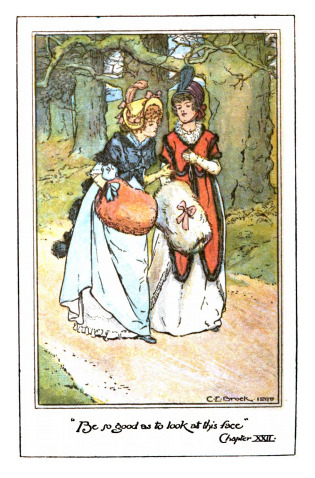
Here we see Elinor walking with Lucy Steele from Barton Park to Barton Cottage. Lucy Steele is a cousin of Mrs. Jennings and was visiting Barton Park with her sister Anne. Lucy took a liking to Elinor. While visiting with the Steeles at Barton Park, it came out that Edward Ferrars came to visit the Dashwoods the week earlier. Lucy walked Elinor back to the cottage and confided in her that she was engaged to Edward Ferrars, and they had been engaged for several year. She tells Elinor that Edward left from her home to go and visit Elinor. Elinor was taken aback by this news, but Lucy swore her to secrecy, and she could not tell anyone. This scene appears in chapter 22 as indicated underneath the image. The characters are shown in the traditional regency style, as Elinor and Lucy wear the regency style dress with an empire waist. Their hair is worn tied up, as was tradition for women after their “coming out” before the queen, signaling her entrance into society. They wear bonnets to protect their faces from the sun. Going for walks was a popular pastime among young upper-class women at this time, and bonnets were worn to protect the face from getting tanned, because having light skin was more fashionable. They also carry muffs used to warm the hands. The regency period dated to the early nineteenth century (1811-1820) when George, Prince of Wales, later George IV (r. 1820-1830), reigned as regent for his mentally ill father, King George III (r. 1760-1820). The regency period is associated with the rise of neoclassicism in art and fashion.
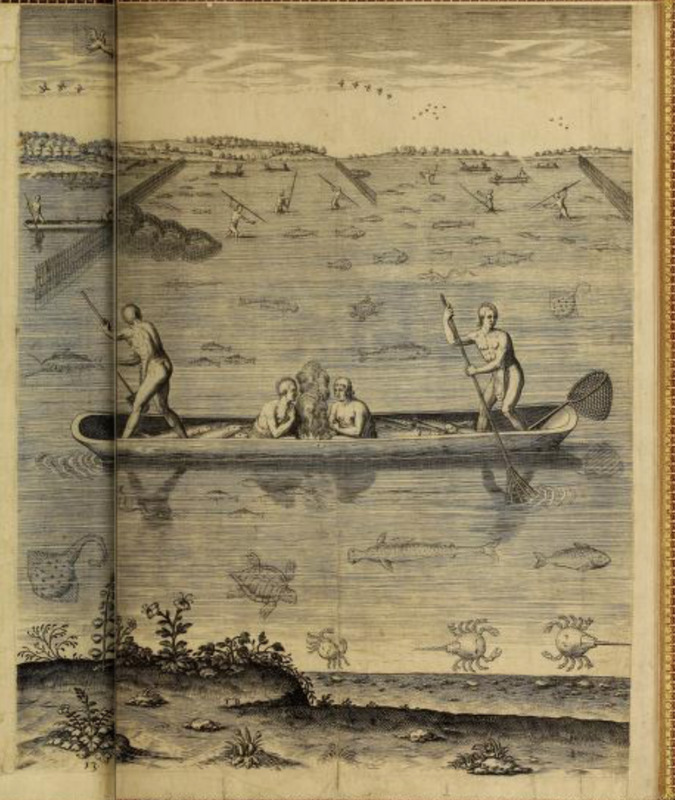
Four Indigenous people are shown in a canoe on the river. The person in the right end of the canoe fishes with a net on the end of a long stick, while the person in the left of the canoe appears to paddle. There are two individuals in the middle of the canoe sitting on either side of a fire. In the background several other Indigenous people fish in the shallows of the river on foot and in canoes using spears.
Close to midnight, Calisto and his two servants (joined here by Celestina) prepare to depart for Melibea’s house. In this image Calisto can be seen holding a gold chain - Celestina's reward for successfully arranging his meeting with Melibea.
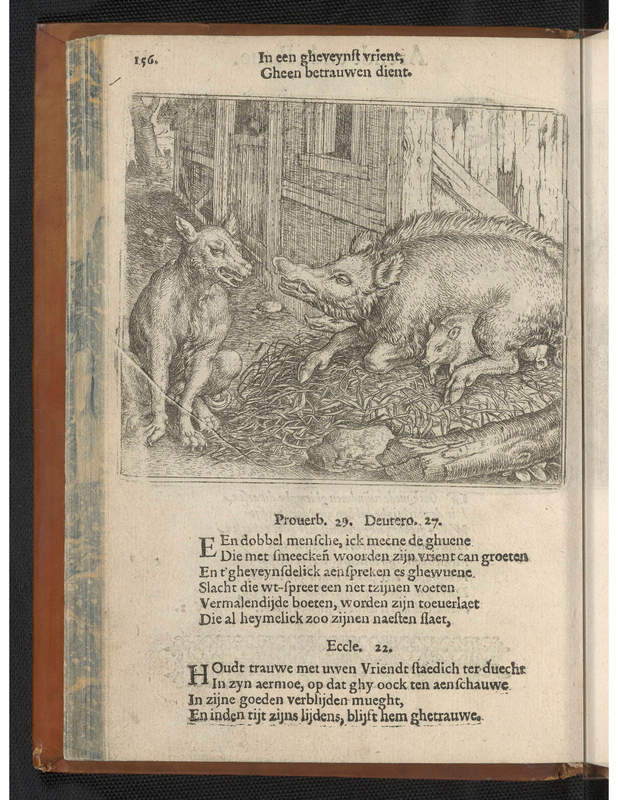
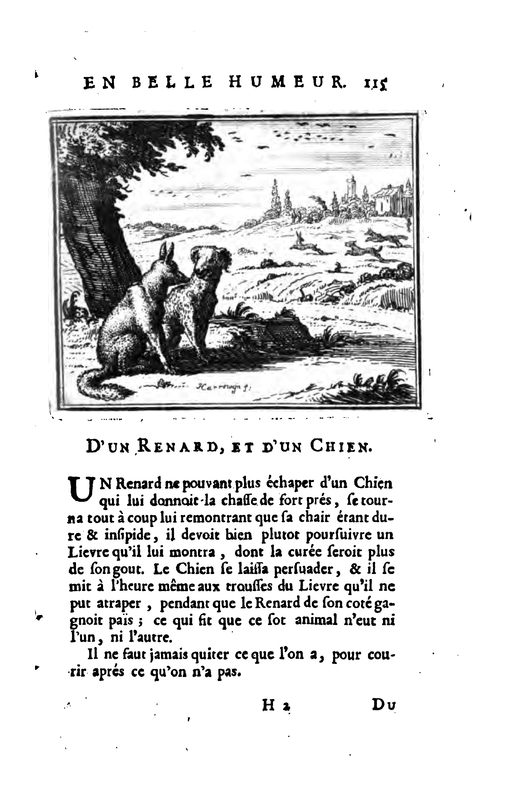
In the foreground of the image there is a dog and fox sitting together. In the background of the image there is a dog and a fox chasing a hare together.
Joseph Sedley stands opposite the Countess of Schlüsselback, holding her hand as they walk a Polonaise at a Court-ball. Behind them in the row are Major Dobbin and Amelia Osborne, with another decorated officer in the pair after. Below the illustration is printed in cursive its title, “Jos performs a Polonaise”.
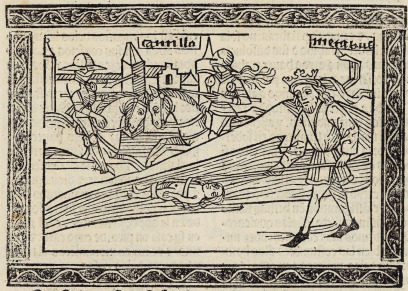
Metabus, king of the Volscians, is depicted on the right side of the engraving with a lance in his hands. We know that this is Metabus as his name is engraved above his head. Boccaccio explains that after being exiled from his kingdom, he took his only daughter with him to safety. When he came across a river, he tied his daughter Camilla to a lance and hurled it across the river in order to save her. They both survived, and Camilla grew up to be a strong, fierce warrior. Camilla goes to war against the Trojans and ends up getting wounded by a Trojan knight named Arruns. This is depicted in the background of the engraving, as Camilla is seen riding on her horse with a lance under her arm as she charges at the enemy. Her name is engraved above her head to identify her. The enemy’s lance is illustrated piercing the chest of Camilla which ends up killing her.
This image is illustrated in a chapter that discusses the Christian priests in the colonial government in Peru. This image depicts a funeral procession lead by a priest. The coffin is on the far-left side of the image and the priest is on the right side of the image. There is an indigenous person near the coffin who is illustrated holding a large crucifix which is resting on the ground. There is a banner being held by a person standing near the priest. The banner is dark and has skull and bones drawn on to it to symbolize the funeral. There is another banner on the left side of the image also depicted with a skull and bones.
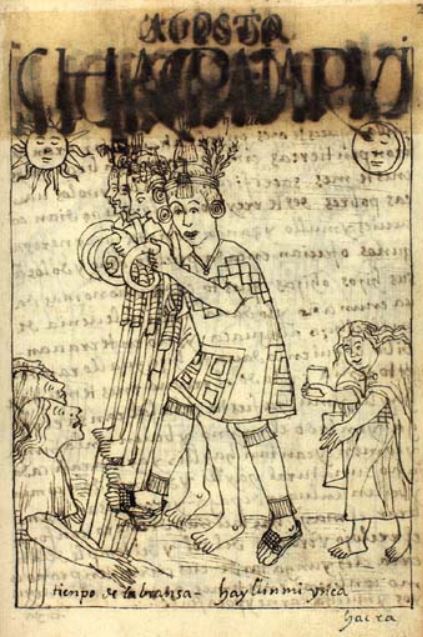
This chapter is dedicated to discussing the traditions and rituals of each month during the Inca Empire. The Incas tracked the months and years through the stars and their months consisted of thirty days. This image depicts the month of August which was dedicated to plowing fields for agriculture. This image depicts a row of men shoveling to prepare the ground to sow in their seeds. There is an old woman on the right side of the image carrying a cup and there are women on the left side of the image looking at the men shoveling. The caption at the bottom of the image reads “tienpo de labransa hayllinmi ynca,” which translates to “time for plowing, Inca farmer’s dance.”
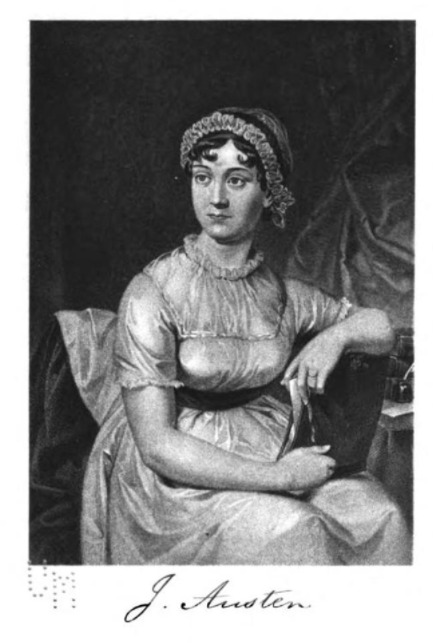
Here we see a portrait of the author, Jane Austen (1775-1817). Austen was the second daughter of seven children. Her novels became icons of the novels of manners of the regency period, in which she writes about the life and society of the upper class in England. Her novels describe social customs and values of this complex society. Austen wears the regency style dress with an empire waist. Their hair is worn tied up, as was tradition for women after their “coming out” before the queen, signaling her entrance into society. The regency period dated to the early nineteenth century (1811-1820) when George, Prince of Wales, later George IV (r. 1820-1830), reigned as regent for his mentally ill father, King George III (r. 1760-1820). The Prince of Wales was a fan of Austen’s work. The regency period is associated with the rise of neoclassicism in art and fashion. The same image appears in the 1892 edition of Lady Susan printed in New York by the Athenaeum Society.

![[Gulliver explains gunpowder to the King of Brobdingnag]](https://collections.cemvc.ca/files/large/e1568b645aea706796971e18de11afa4736f543d.jpg)
![[Portrait of an elderly Jonathan Swift]](https://collections.cemvc.ca/files/large/67f239014f3d5f65f38ff60e8db666bb701141ad.jpg)
![[Representations of all of Gulliver’s travels]](https://collections.cemvc.ca/files/large/7b7da8dfb20aafbbd7f6ee2e04bf46ea8545f044.jpg)
![[a doctor practicing prognosis]](https://collections.cemvc.ca/files/large/bdd5da16b7b395214b94927916375eeb8012fb33.jpg)
![S[an]ta Obra de las Animas de Pvr[ga]torio](https://collections.cemvc.ca/files/large/95d8f7721d6333ae446ecc7582ea450bd6428019.jpg)
![[a group of Yahoos fighting]](https://collections.cemvc.ca/files/large/16d10314d2ae86655213c20d4f24bd1ed187a000.jpg)

![[Act XI - Calisto and His Servants Leaving Celestina's House]](https://collections.cemvc.ca/files/large/65c354eae12c0ccaf0fdbbcf60ff70e6887b2188.jpg)
![[Rebecca and Amelia]](https://collections.cemvc.ca/files/large/e083e804337ea0eb2b37111d9797f391f6d4b793.jpg)

![S[an]ta Bvena Obra de Misericordia](https://collections.cemvc.ca/files/large/094a0e94ca821e1e5741df6bd2afc5b6ff12d47c.jpg)