Here Gulliver is caught by a monkey who belonged to a clerk of the kitchen in the court of Brobdingnag. Gulliver was left in his box while Glumdalclitch went out and left the windows open. The monkey got loose and found Gulliver’s box and reached in the window and picked up Gulliver. The monkey held Gulliver as though he were a baby about to suckle and Gulliver pulls away from it, which is seen in this image. The monkey was startled by a noise and climbed out the window, taking Gulliver with him. Rocks were thrown to try and get the monkey down, however someone had to go up to the roof to get the monkey down with Gulliver. The same image appears in the 1839 Krabbe edition.
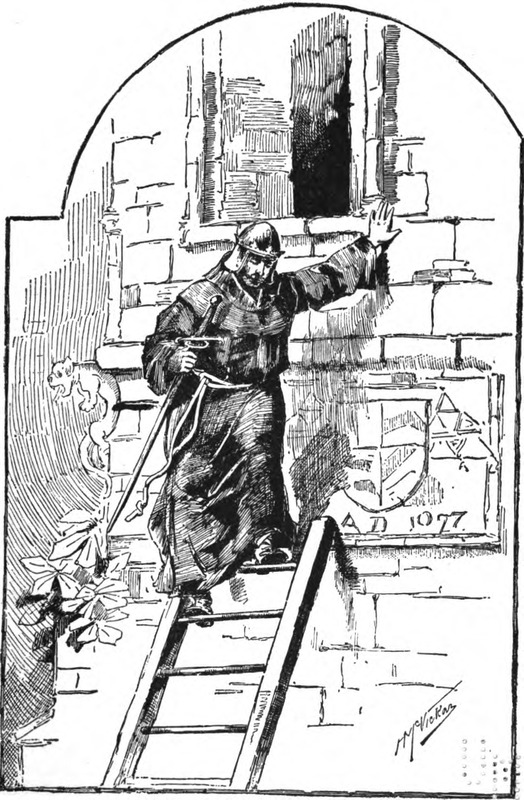
Don Alfonso escapes from the monastery in which he has been locked up by his brother King Don Sancho. Not satisfied with the territory he got as an inheritance from his father, Sancho has been trying to conquer the territories left to his siblings as well. Rather than kill Alfonso when he was captured, Sancho was convinced by his sister Doña Urraca and the Cid to send him to a monastery instead. Alfonso was able to escape quickly, fleeing to Toledo out of Sancho’s control.
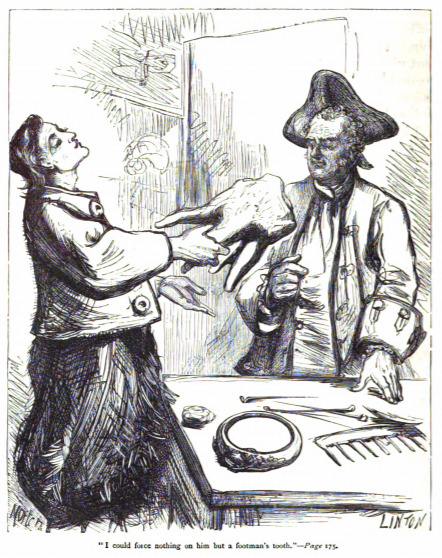
After he was rescued, Gulliver showed the captain of the ship some of the things he took from Brobdingnag. These included the comb he made with the King’s beard stubble, the Queen’s ring, stingers from the wasps, and a tooth pulled from a footman. Gulliver tried to give the captain the ring as thanks for saving him, but the captain would only take the tooth.
A woman in a coat and hat stands near the edge of a cliff, holding a pair of binoculars. In the upper right corner of the image is the letter W from “We”.
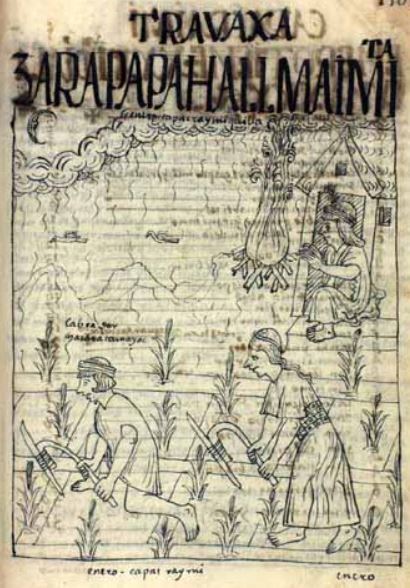
This image is reflected in the final chapter of Ayala’s chronicle where he provides a description of labours and festivals that occur in the rural areas of the Spanish colonial Andes during each month of the Inca calendar year. This image is a depiction of the month of January, which, the author describes, is a time of rain and agricultural labour. There is an indigenous man and woman illustrated in a corn field wielding digging devices as they harvest and sow the fields. There is writing above the native man which reads “labrador, chacara camayoc” [labourer, head of sowing]. There are clouds in the sky to further demonstrate the rainy season. There is an indigenous man sitting in front of a small house in the background of the image. His arms are outstretched as he warms his hands in front of a fire. The author explains that January was a month where there was a lack of firewood. The caption at the bottom of the image reads “enero, capac raymi” [january, second month].
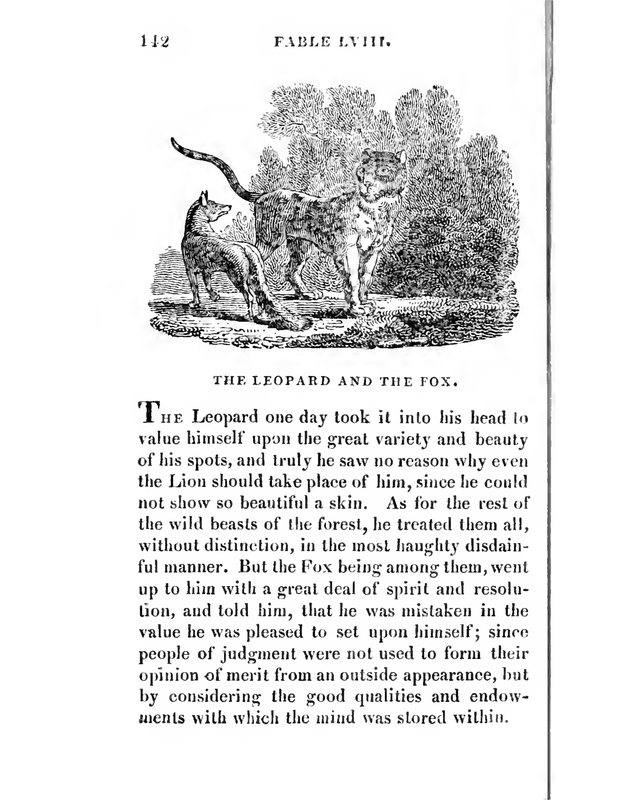
On the left-hand side of the image, a fox looks towards the face of a leopoard. Its tail drags along the ground, it lifts one of its front paws. In the centre-left of the image, a leopard looks off into the distance. Its tail hovers over the fox.
Hercules, in the red cloak, fights against Orithya and Antiope, the Queens of the Amazons, who wear blue and pink cloaks. Hercules was sent to fetch the royal girdle from the queens as one of his great labors. Because Hercules, with all his accomplishments, was sent against them, this means that their power was recognized and therefore a great honor to the queens.
Here we see a pile of brooms used to sweep the floor in the court of Luggnagg. It was a custom on the island of Luggnagg where someone who wanted to be accepted into the court would be required to lick the floor in front of the King. If the person licking the floor was a stranger, as was the case for Gulliver, the floor would be swept beforehand to remove most of the dust. The same image appears in the 1843 Krabbe edition.
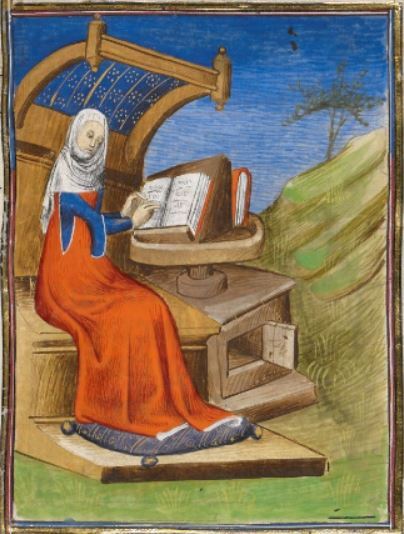
This illumination depicts a woman named Cornificia sitting down as she looks at a book. Cornificia is famous for her poetry and writing abilities. She is said to have written many Heliconian verses which were highly esteemed. Boccaccio explains that she is worthy of praise as poetry and writing was not something women excelled in or pursued during Cornificia’s time.
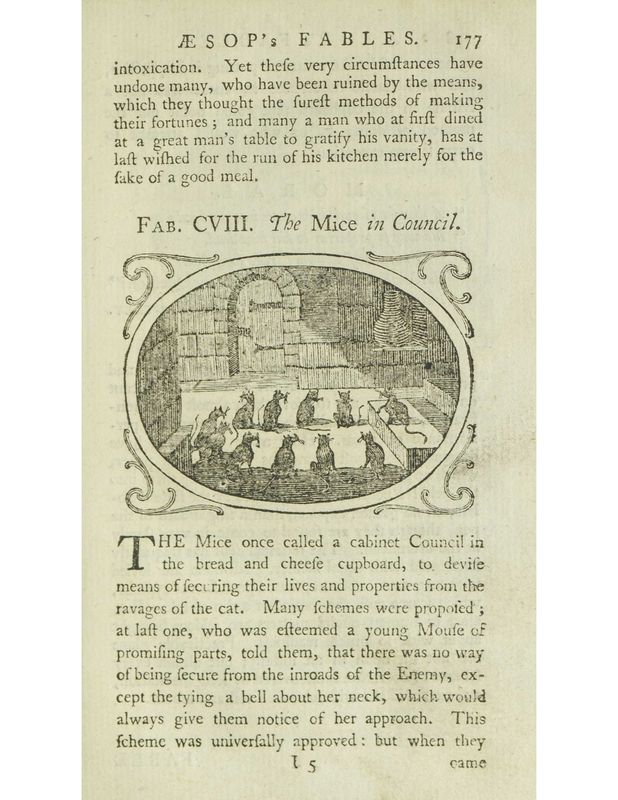
Eleven mice sit in a circle, all facing the center. The mouse on the rightmost side sits atop a small ledge. The mice are in a stone-walled cellar, with a door on the wall in the background.
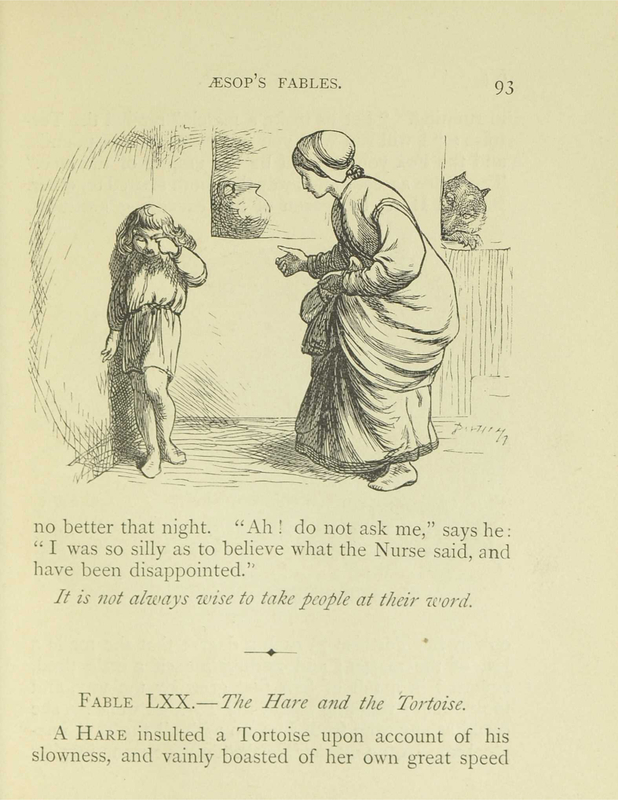
In a corner of a house, a young girl stands crying, wiping the tears from her face. Next to her a woman stands hunch attempting to console her. Behind the woman in the background, a wolf’s head appear over a fence line, looking at the two people intently.
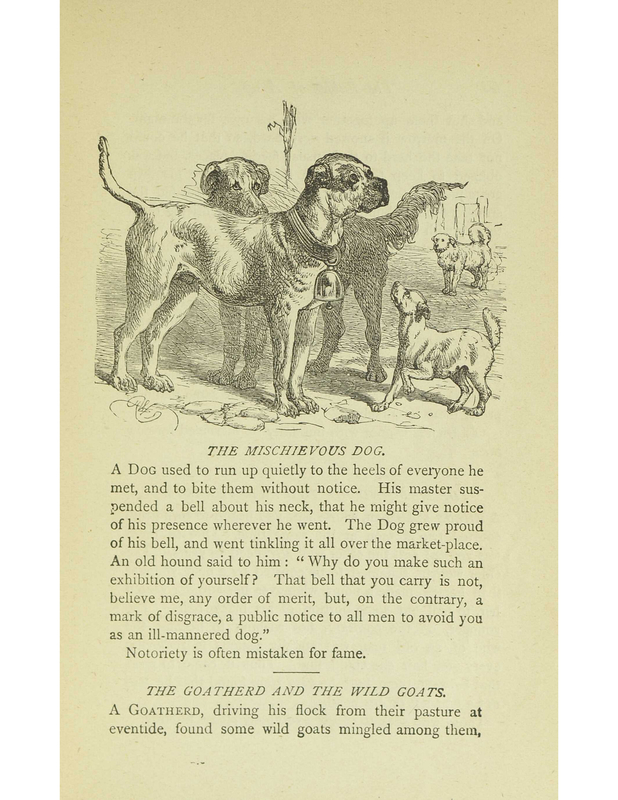
A Pitbull stands proudly in the foreground of the image, wearing a large bell on its collar. Behind it are other dogs. Another large dog stands behind it, a smaller one stands in front of it looking up to see the Pitbull’s face. Farther in the background, another dog looks in their direction but is staying put.
Rebecca Crawley kneels in front of Sir Pitt Crawley, clinging to his hand. He is seated in an armchair and seems inclined to help her, but Lady Jane, who is entering the room from the door behind them, is opposed.
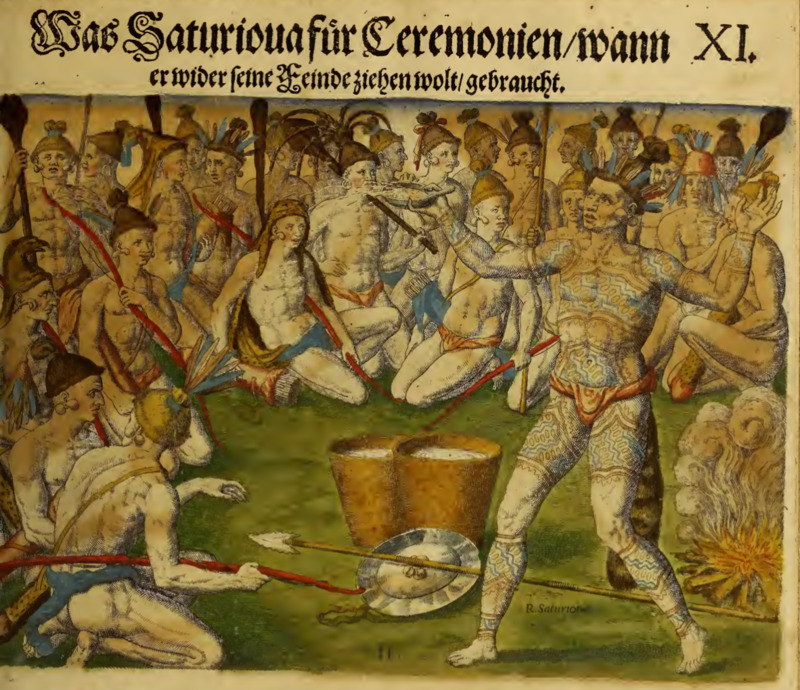
A group of Indigenous people is shown. Most kneel on the ground in a semi-circle, and hold various weapons including bows and arrows and spears. They all wear headdresses, some in the shape of birds or mammals, and some with feathers on top. In the center of the semi-circle one man stands. He is covered in tattoos and holds his arms above his head. In one hand he holds a vessel of liquid. He wears a loincloth with a racoon tail hanging from the rear and a headdress with feathers. Behind him a spear and shield and two containers rest on the ground, and a fire burns. This illustration is identical to the one found on page 57 of Frankfurt 1591, but colored.
A Lord of Balnibarbi shows Gulliver around the estate. On his tour he took Gulliver to this old mill. The Academy wanted to move the mill upstream, and although the Lord was not enthralled with the idea, he reluctantly agreed, pressured by his friends. The new mill failed, and the Lord was blamed. The same image appears in the 1843 Krabbe edition.
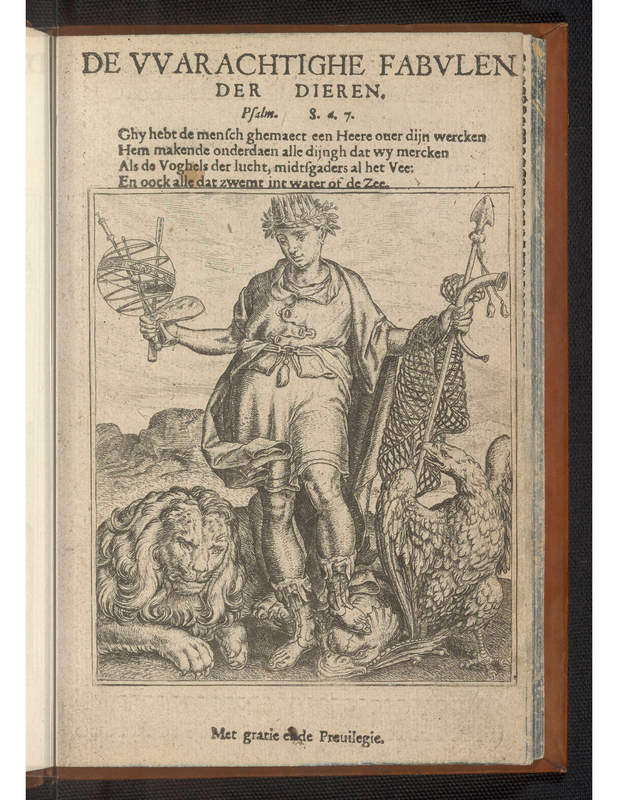
A man wearing a crown standing amidst many animals. The man’s left foot is on the head of a sea creature. A lion lies to his left and a bird stands to his right. A net is draped on his left arm. He holds a spear and horn in his left hand and a sphere in his right hand.
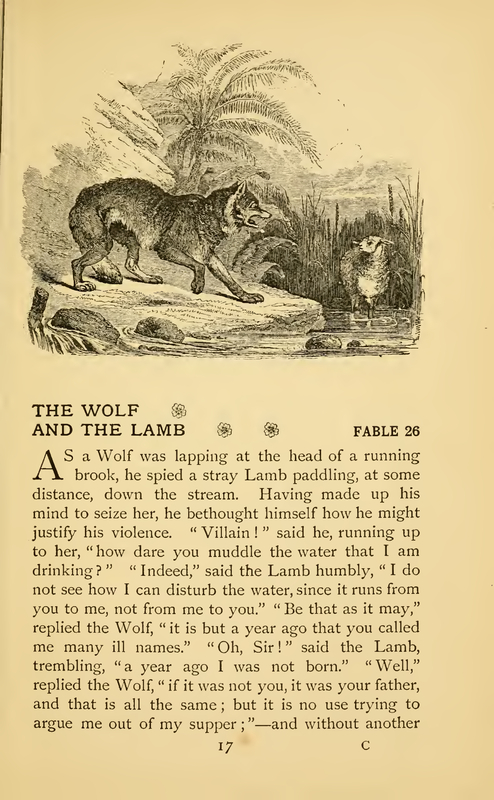
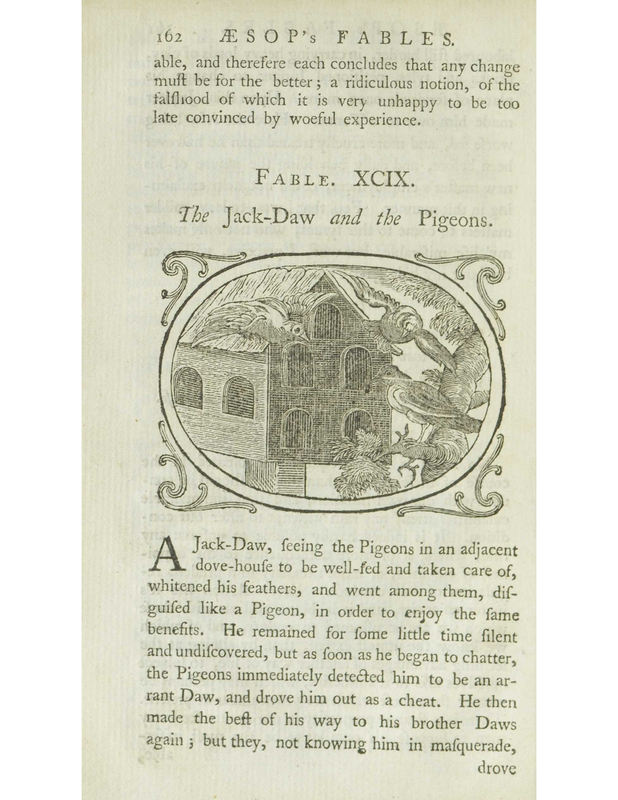
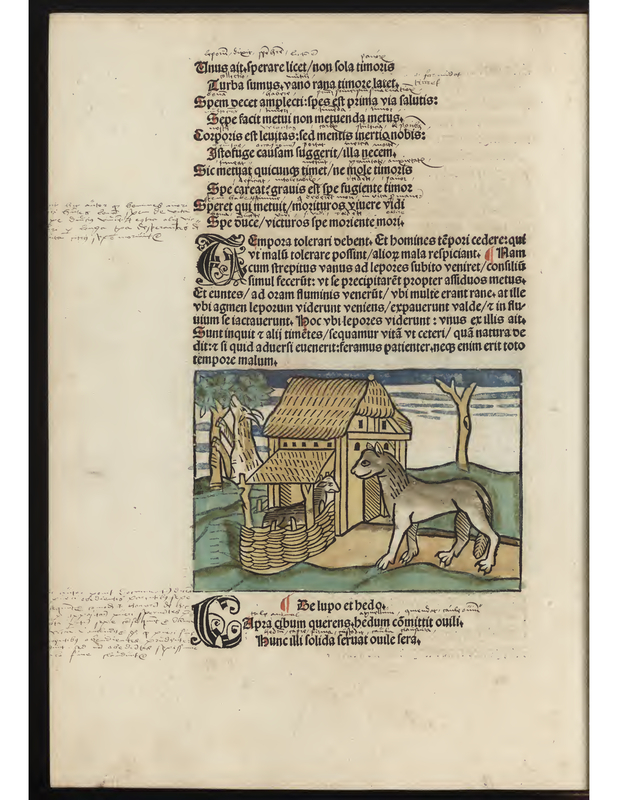
A small lamb is in a small lake among the high grass. A wolf is on the ground near the lamb. The wolf looks either surprised or ready to attack. The lamb seems undisturbed.
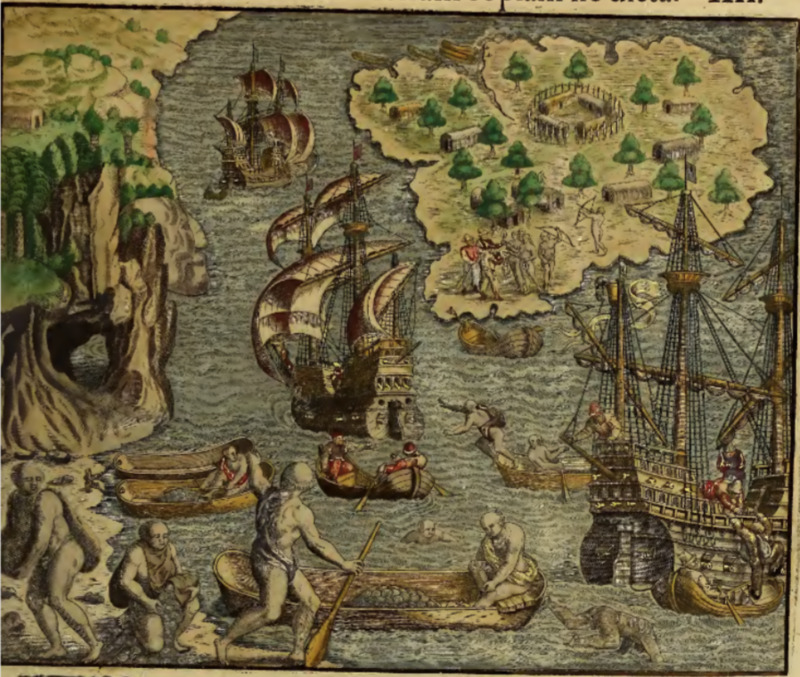
Near Cubagua, a small island off the coast of Venezuela, Indigenous people gather oysters to retrieve the pearls from them. They dive into the water to gather the oysters, which they load into small wooden boats and then into sacks carried over their heads. This island was known for its abundance of pearls. There are three large European ships in the channel between the island and the mainland. On the island, a group of Spaniards have come ashore and stand with a group of Indigenous people bearing bows and strands of pearls. There are several long dwellings on the island, including four arranged in a circle and surrounded by a fence. This image is identical to one found on page 171 of Frankfurt, 1594, but colored.
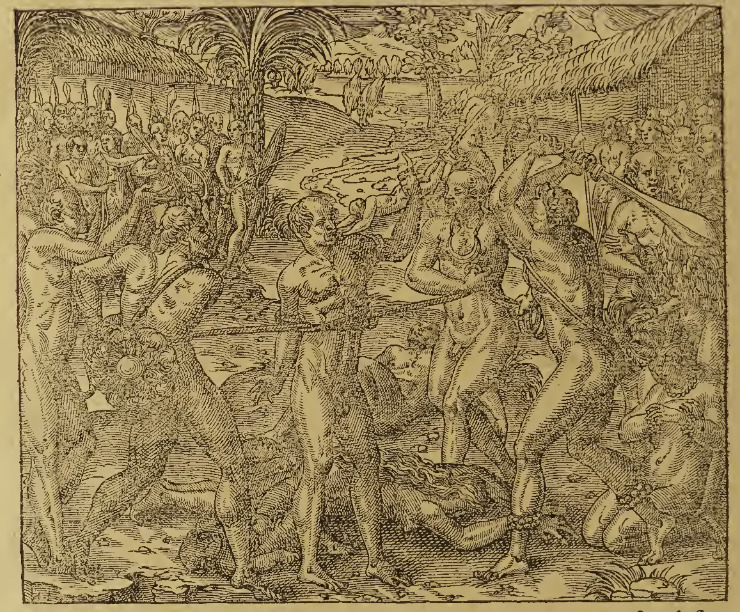
An Indigenous man has been taken captive by another Indigenous group and is about to be executed. He is restrained by a rope tied around his waist, with each end of the rope held taut. The captive gestures emphatically with one arm, perhaps in admonishment. Another man stands in front of him holding a club raised over his head, poised to swing. A woman and child lie prostrate on the ground behind the captive. Groups of people stand on either side of the captive to watch the execution, most of the men holding bows, clubs, and/or shields. Several structures are visible in the background. This image is identical to one found on page 945 verso of Paris, 1575 (l’Huillier).
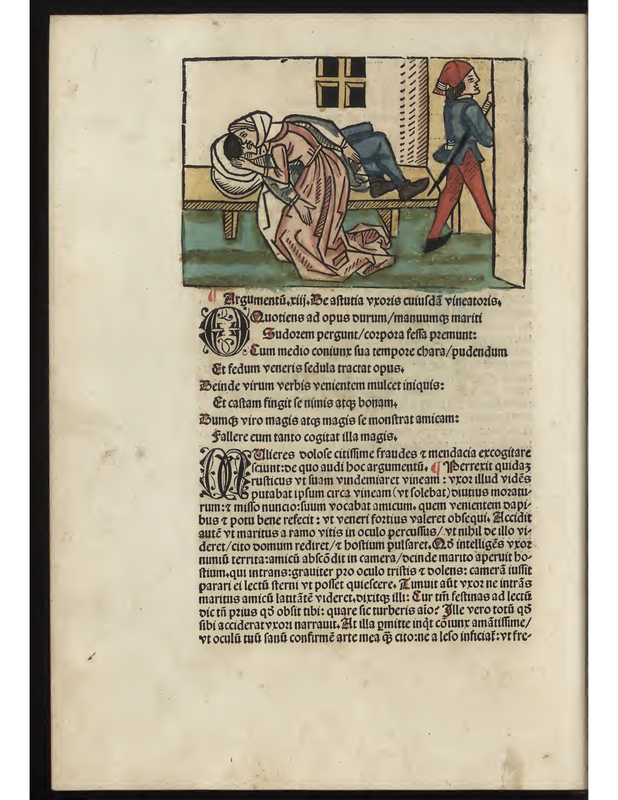
A woman comforts a man laying on a table inside of a house. He is very ill and possibly dying. A man with a sword is walking out of the house. There is a window in the background

![[A monkey from Brobdingnag holds Gulliver]](https://collections.cemvc.ca/files/large/f4e63551dfbfb2f0ea6e33fc7e7d3537a51535d6.jpg)
![[Vanity Fair Volume II. Chapter XXIX Inhabited Initial, W]](https://collections.cemvc.ca/files/large/3a98f2adf1ac55ea5f8129c3f2a81d70d24cc7a7.jpg)

![[Brooms used in the court of Luggnag]](https://collections.cemvc.ca/files/large/6b6de3a7ce43d9fb05c8a11e392e3e3849820e8d.jpg)
![[Becky Begs for Aid]](https://collections.cemvc.ca/files/large/90ca73de25b8498e26a676a120a529b7dd65f8b3.jpg)
![[Old mill in ruins near the academy on Balnibarbi]](https://collections.cemvc.ca/files/large/ec1cfd85c77db75c735fdc68d4e4ceeac5fed736.jpg)