This image is a depiction of a Laputan scholar. The image is a part of Swift’s biography which precedes Part One of Gulliver’s Travels. The purpose of this illustration in the biography is to provide context for the political atmosphere and insight into Swift’s satirical writings, as the Royal Society was satirized in the Third Part of the Book with the Philosophical Society of Laputa. The same image appears in the 1839 Krabbe edition.
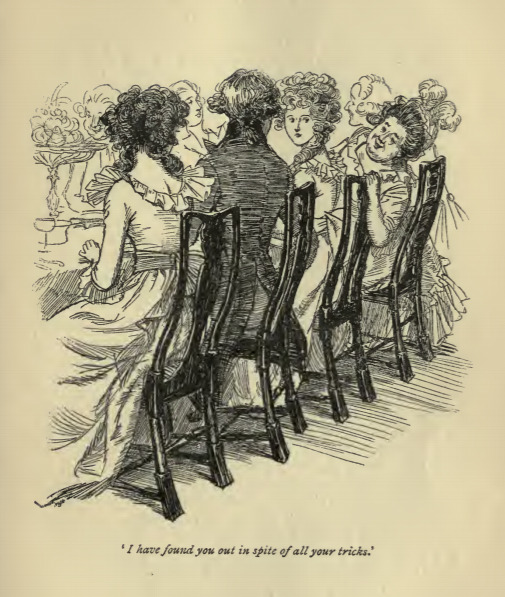
In this image Mrs. Jennings tells Marianne she knows where she and Willoughby had gone that day. Marianne and Willoughby had gone alone to walk through the grounds of Willoughby’s future estate, Allenham. Elinor felt that this excursion was inappropriate because they were not engaged and there was another woman living at the property. Mrs. Jennings tells Marianne this at a dinner hosted by Lady Middleton and Sir John. This scene occurs in chapter 13. The characters are shown in the traditional regency style, as Marianne, Elinor, and Mrs. Jennings wear the regency style dress with an empire waist. Willoughby wears a waistcoat and tailcoat with breeches and a cravat. The regency period dated to the early nineteenth century (1811-1820) when George, Prince of Wales, later George IV (r. 1820-1830), reigned as regent for his mentally ill father, King George III (r. 1760-1820). The regency period is associated with the rise of neoclassicism in art and fashion.
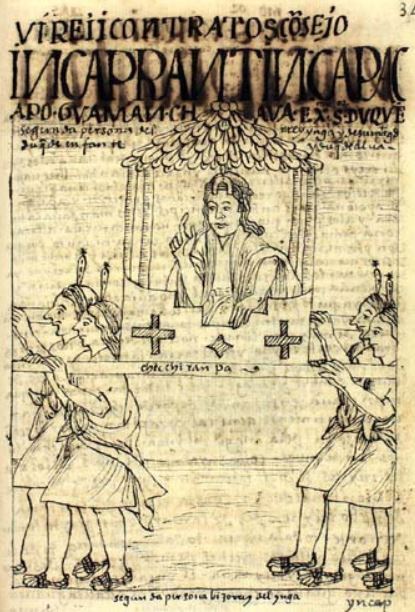
This chapter discusses the system of administrative officials in the Inca Empire. This image depicts Capac Apo Guaman Chaua, the Incap Rantin [Inca’s replacement] and viceroy to the Inca king, riding on his litter to act on behalf of the Inca. The litter is being carried by four figures with two in the front and two in the rear. They are carrying the litter by supporting the wooden posts on their shoulders. The author explains that not only was Guaman Chaua the second person to the Inca, Topa Yupanqui, he was also second to the Duke of Alba in Castile. He was authorized to travel in this litter to any region of the kingdom to represent the Inca. The author also explains that he himself was the grandson of this viceroy Guaman Chaua.
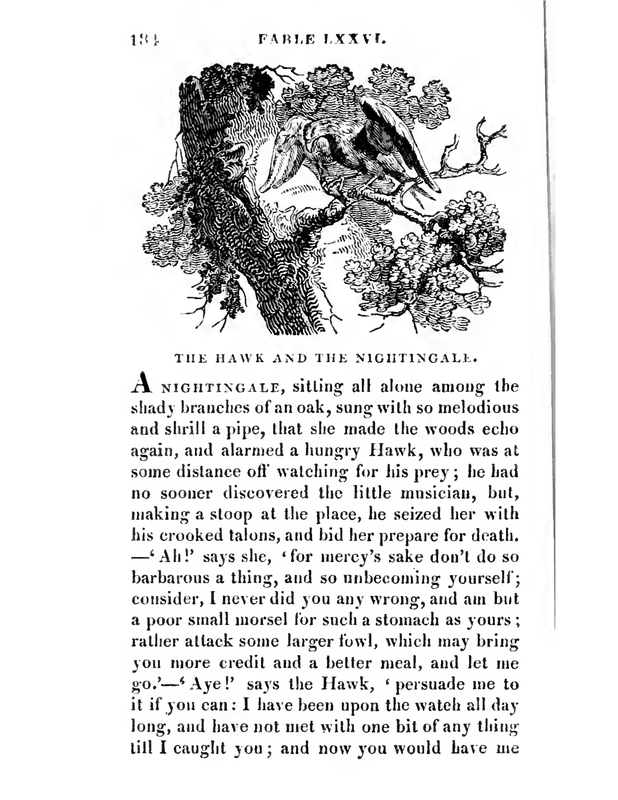
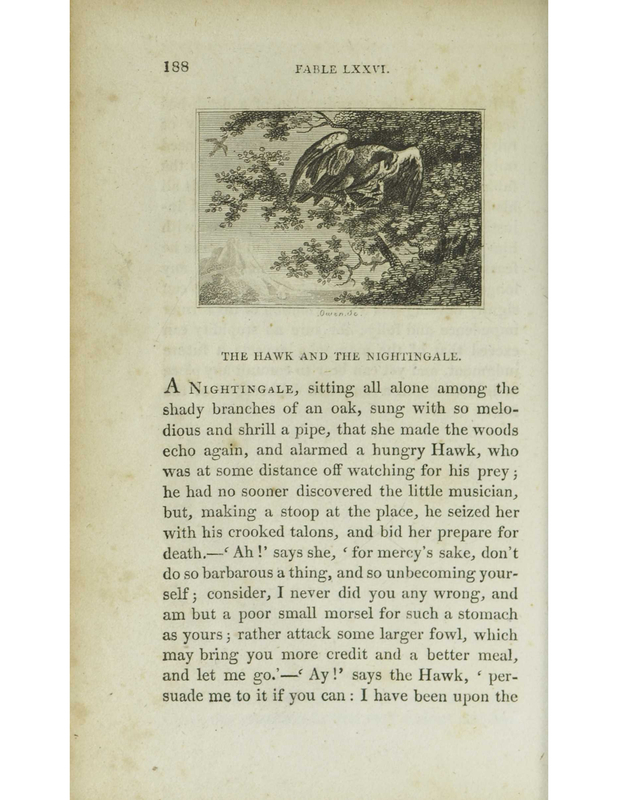
The image depicts a large hawk standing on a tree branch, looking downwards and observing a nightingale, with its wings spread wide. Surrounding the hawk are many other tree branches and leaves.
Here we see Gulliver’s reunion with his family. He was embraced by his wife and children, but he recoils. Gulliver finds himself disgusted by his family, preferring instead the family he lived with in the Country of the Houyhnhnms. Gulliver was especially distraught that he was a parent and had brought children into the world who lacked the virtues of the Houyhnhnms. The same image appears in both the 1839 and 1843 Krabbe editions.
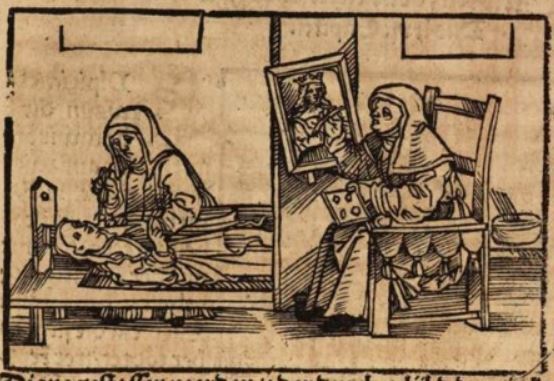
Marcia, a Roman woman who remained a virgin her entire life, is depicted on the right side of the engraving painting a portrait. Boccaccio explains that Marcia is worthy of renown for her chastity and for her painting and sculpting abilities. She is known to have mostly painted and sculpted figures of women, which is why there is a portrait of a woman wearing a crown in her painting. The left side of the engraving depicts Marcia sculpting a figure of a woman.
Here we see several types of reptiles and insects, including a snake, a spider, a slug, a worm, a caterpillar, and two lizards. They are shown because following Gulliver’s explanation of the various political and legal traditions in England, many of which were very corrupt, the king of Brobdingnag compared the English and their nobility, politicians, lawyers, among others to “vermin”. The same image appears in the 1839 Krabbe edition.
This is a portrait of Jonathan Swift. The image is a part of Swift’s Biography which precedes Part One of Gulliver’s Travels. The purpose of this illustration in the biography is to provide context for the political atmosphere and insight into Swift’s satirical writings. The same image appears in the 1843 Krabbe edition.
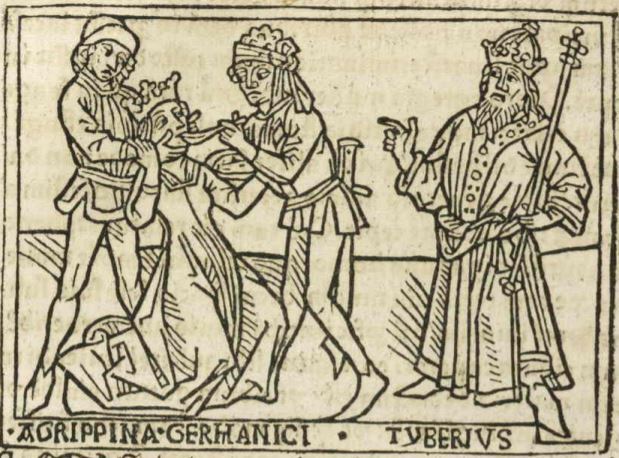
This engraving depicts Agrippina, the wife of Germanicus, being forced to eat food. Agrippina is depicted on the left side of the image on her knees as a man holds her head back while the other man is force feeding her with a spoon. The man on the right side of the image is Tiberius, the one who is ordering her to be fed. Tiberius is Germanicus’ father, and after he killed his own son, he sent his daughter-in-law Agrippina to prison. Agrippina decided to starve herself to death to avoid dying at Tiberius’ hands, however, Tiberius force fed her so that she would not die on her own. The creator engraved Agrippina and Tiberius’ names below their feet to identify them. The name “Germanici” for Germanicus is also engraved, however he is not depicted in this engraving.
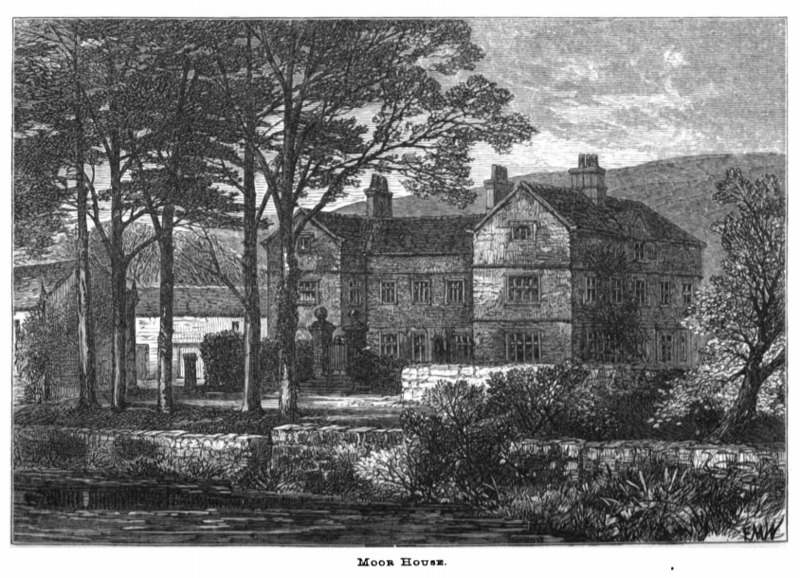
Here we see Moor House near the city of Morton. Jane recovered here after running away from Thornfield Hall after her engagement to Mr. Rochester was broken off when she found out that he was already married. Despite his pleas to stay with him, Jane ran away in the night and took a carriage to the North of England. She begged for two days and two nights before Mr. Rivers, the pastor at Morton, took her in at Moor House. She lived there for five weeks with Mr. Rivers and his sisters, Mary and Diana, and their servant, Hannah. At the end of the five weeks, Jane moved into a small cottage near the parsonage in Morton to become the mistress of the girls' school, recently opened with the help of Mr. Rivers and Rosamund Oliver, the daughter of the rich needlework factory owner.
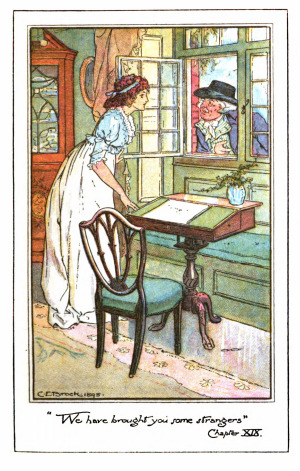
Here we see Sir John speaking with Elinor at the window of Barton Cottage. Sir John and Lady Middleton were distant relatives of the Dashwoods, and owned Barton Park. In this scene, Sir John, Lady Middleton, and Mrs. Jennings, arrived with strangers, whom they introduced as the Palmers. Mrs. Palmer was Lady Middleton’s younger sister and Mrs. Jennings daughter. Mrs. Palmer was kind and warm during the visit, admiring Elinor’s artwork hung on the walls. Mr. Palmer on the other hand, was cold and read the newspaper, not paying much attention to the conversation. Sir John speaks with Elinor through the window, announcing their arrival before coming to the door. Elinor stands behind a writing desk, a desk with a sloped surface to make writing easier. The top would open and writing supplies could be kept inside. A China cabinet is visible in the background where the family would keep their good dishes. This scene appears in chapter 19 as indicated underneath the image. The characters are shown in the traditional regency style, as Elinor wears the regency style dress with an empire waist. Her hair is worn tied up, as was tradition for women after their “coming out” before the queen, signaling her entrance into society. Sir John wears a waistcoat and an ascot. The regency period dated to the early nineteenth century (1811-1820) when George, Prince of Wales, later George IV (r. 1820-1830), reigned as regent for his mentally ill father, King George III (r. 1760-1820). The regency period is associated with the rise of neoclassicism in art and fashion.
Here we see a coat of arms of the family with whom he is staying in the Country of the Houyhnhnms. There are images of horses and other animals on the coat of arms. The image appears at the end of chapter six, when Gulliver explains various aspects of English society, including medicine, the Prime Minister, and the nobility. The same image appears in the 1843 Krabbe edition.
Gulliver explains the various medicines used in England to treat disease. In this image we see a man sitting on a chamber pot. At this point in the story Gulliver is explaining intestinal and digestive issues and their treatments. The same image appears in the 1839 Krabbe edition.
At the political school at the Grand Academy on Balnibarbi a medical doctor was attempting to use his knowledge of disease to heal the political system. One of his hypotheses was when conflict broke out between two parties, then he would take one member from each party with similar sized heads and then cut into each of their heads, and cut each of their brains in half, and swap half of their brains. By doing this, the doctor thought the two brains would debate within the skull, and come to a compromise, resulting in moderation and regularity of thinking which was desirable for the leaders of the country. The same image appears in the 1843 Krabbe edition.
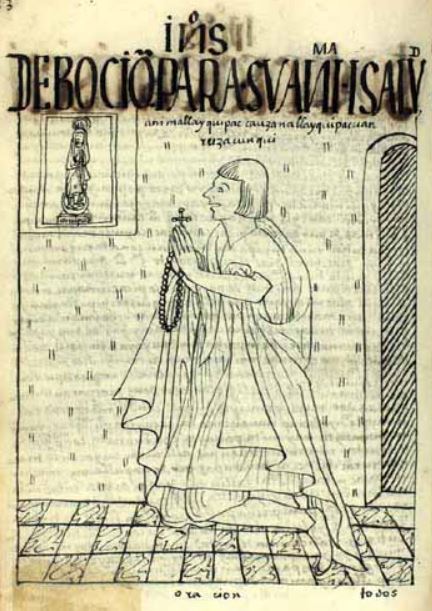
This image depicts an indigenous man kneeling on a tiled floor while looking up to an image of the Virgin Mary as he prays. He is holding a rosary in his hands as he prays. He is illustrated wearing a tunic with a pair of trousers beneath them and a cloak draped over his shoulders. The author explains that the indigenous peoples of Peru should devote themselves to daily praying for their souls, finances, and family. The caption written above the man’s head reads, “animallayquipac cauzanallayquipacuan rrezacunqui” [you must pray for your soul and for your life]. The caption at the bottom of the image reads, “oración” [prayer].

![[Vanity Fair Vol. I Chapter III Historiated Initial]](https://collections.cemvc.ca/files/large/89261b0a6dd2f06c3fd56658a00a30790e3faac5.jpg)
![[A Laputan Scholar]](https://collections.cemvc.ca/files/large/e11fbb338866e1947ccb4c368668ecbcff132d87.jpg)
![[Gulliver returns home to his family in England]](https://collections.cemvc.ca/files/large/d5482b19908fe493429b725c83a9be06f7ea1698.jpg)

![[Vanity Fair Volume II. Chapter II Inhabited Initial, I]](https://collections.cemvc.ca/files/large/20e7b2a02d6b42d7e1877e4ba471f3123827bc3a.jpg)

![[A variety of reptiles]](https://collections.cemvc.ca/files/large/eee7563d05c5c547ce71be9bfe87a08ac1685b5a.jpg)
![[Portrait of Jonathan Swift]](https://collections.cemvc.ca/files/large/8d1b4e98d517ba46c181da3f95166b659af632de.jpg)

![[A coat of arms of the Houyhnhnms]](https://collections.cemvc.ca/files/large/b0546e8764942442442c989314621b260508d3cc.jpg)

![[a man sits on a chamber pot]](https://collections.cemvc.ca/files/large/ba18b8ca8811b6f0238334b2086b205c56cb2839.jpg)
![[a hypothesis for resolving conflict in parliament proposed by a doctor from the Grand Academy on Balnibarbi]](https://collections.cemvc.ca/files/large/c9b38c5237d23fb4b240301024df4ef8d7955610.jpg)